Supper on a summer evening

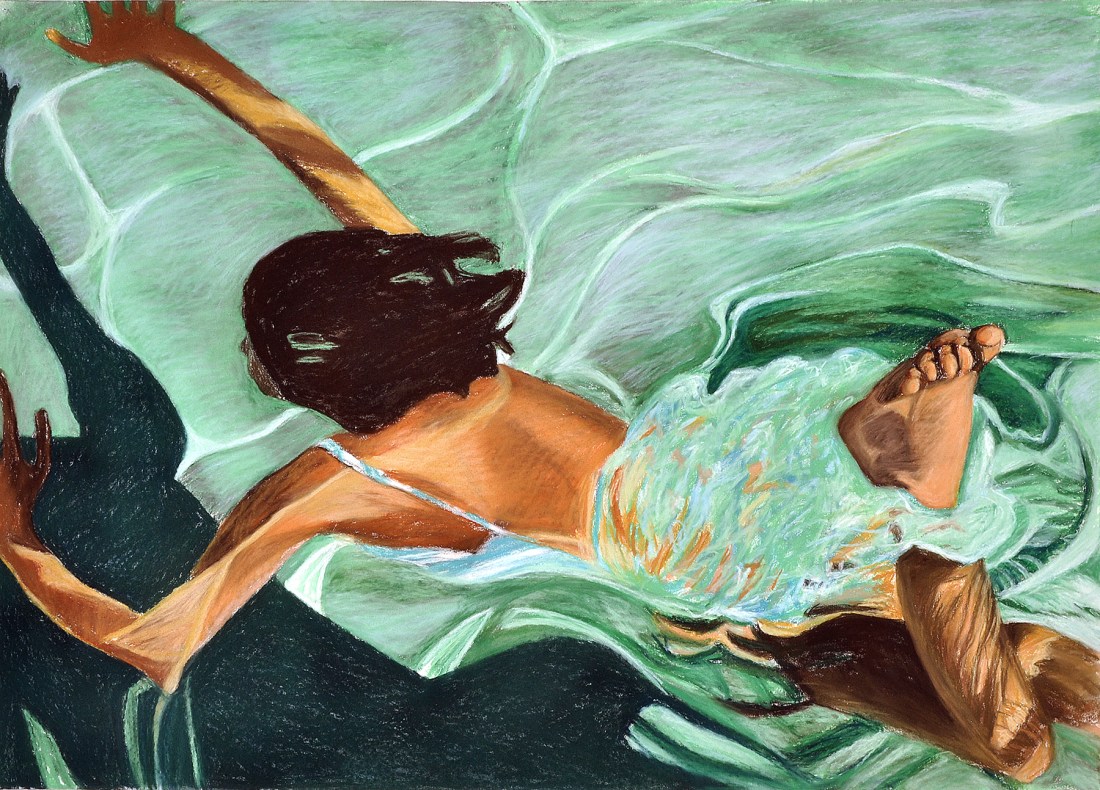
The swimmer

The Swimmer, pastel on paper, 30 x 41 inches

At the end of a summer day, perhaps after a swim at the pond, I crave something savory with a spicy kick for supper.  I’ve made tostadas for years and never tire of their crisp, smooth, crunchy combination of tortillas, beans, cheese and salsa.  As you know from my posts, I have been receiving quarterly shipments of beans from Rancho Gordo and have  upped our bean consumption.  I cook them with a piece of kombu (seaweed) and find this prevents any unpleasant bean gas experiences.  Plus, I think the more beans we eat the more accustomed our digestive systems are to them.

Anyway, here’s what I did:

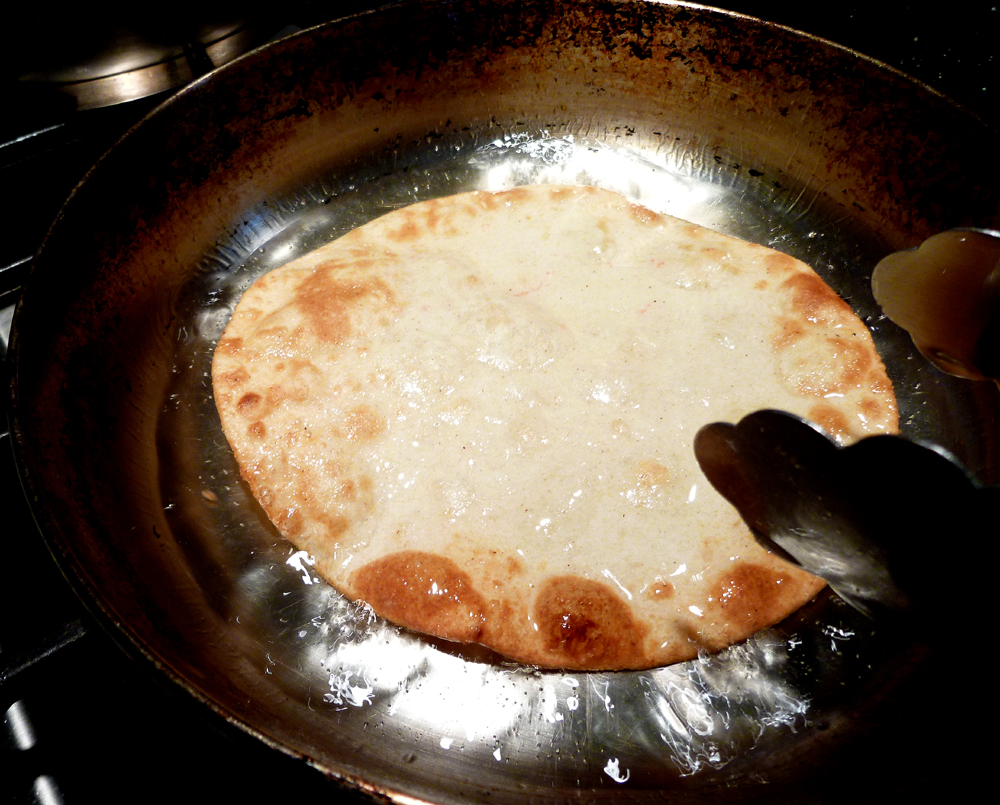
First I prepared the tortillas ─ 2-3 per person.  In a small skillet just bigger than the tortillas I heated sunflower oil ─ about a 1/4 cup ─ until almost smoking.  In went a corn tortilla, the oil bubbling and splattering (be careful). I turned each with tongs and cooked until crisp and brown. Drain on paper towels or a grocery bag cut open.

frying tortillas

I had cooked pintos in the freezer so that part was easy.  Check out my book for a method of cooking dried beans.  If you must use canned, rinse them well.  In a tablespoon of sunflower oil, I sauteed a chopped large clove of garlic until it was translucent then added the drained beans ─ about two cups.  Using the terrific wooden bean masher I had bought from RG I worked the beans to a semi-smooth paste, adding bean cooking liquid when the mixture got dry. I tasted for salt and added a tablespoon of pureed chipotle pepper.

mashing beansbeans with chipotle


Next I made the salsa. I have been loving the mangoes available in the market and imagined their sweetness against the chilés, beans and cheese in a tostada.  I make a tomato, peach or cantaloupe salsa with about the same ingredients so choose your favorite fruit.

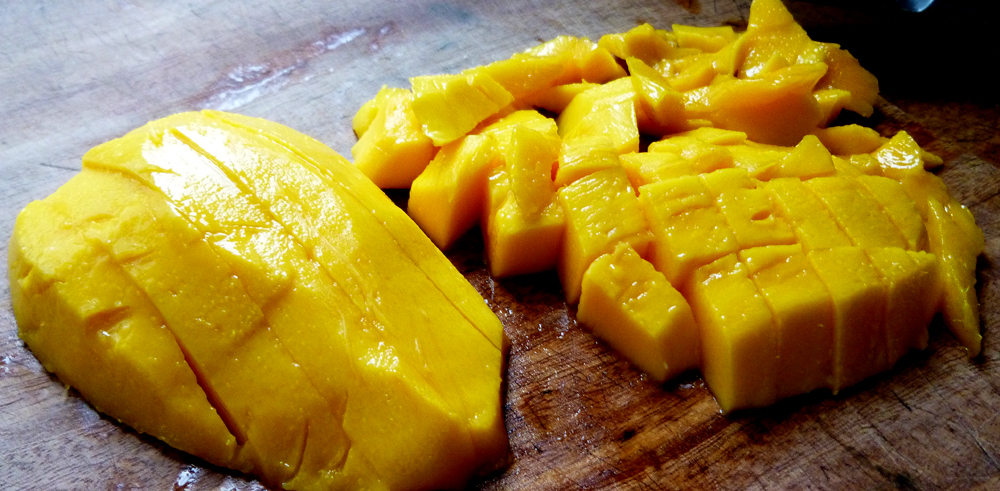
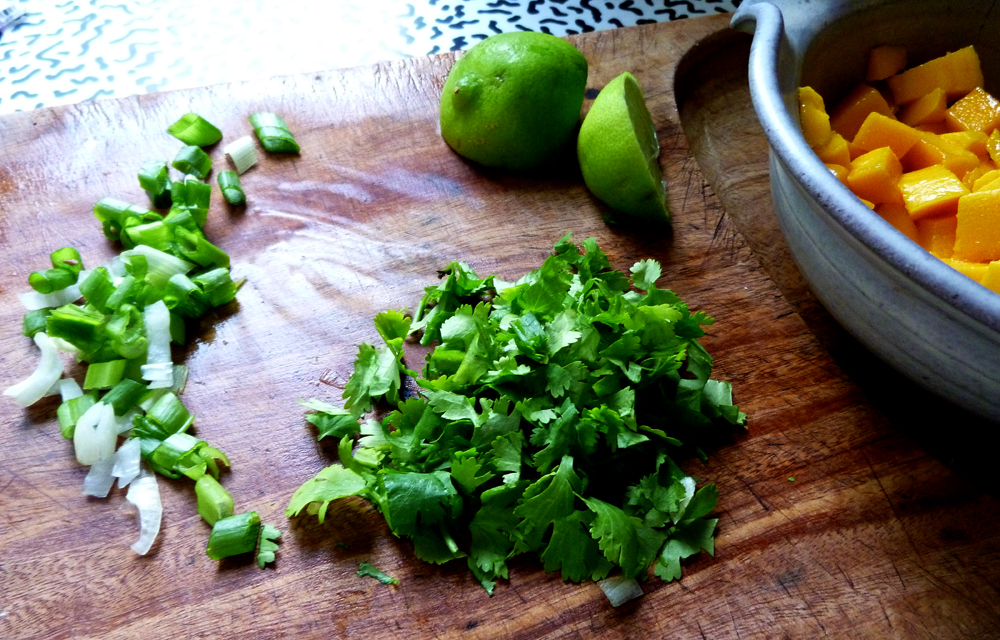
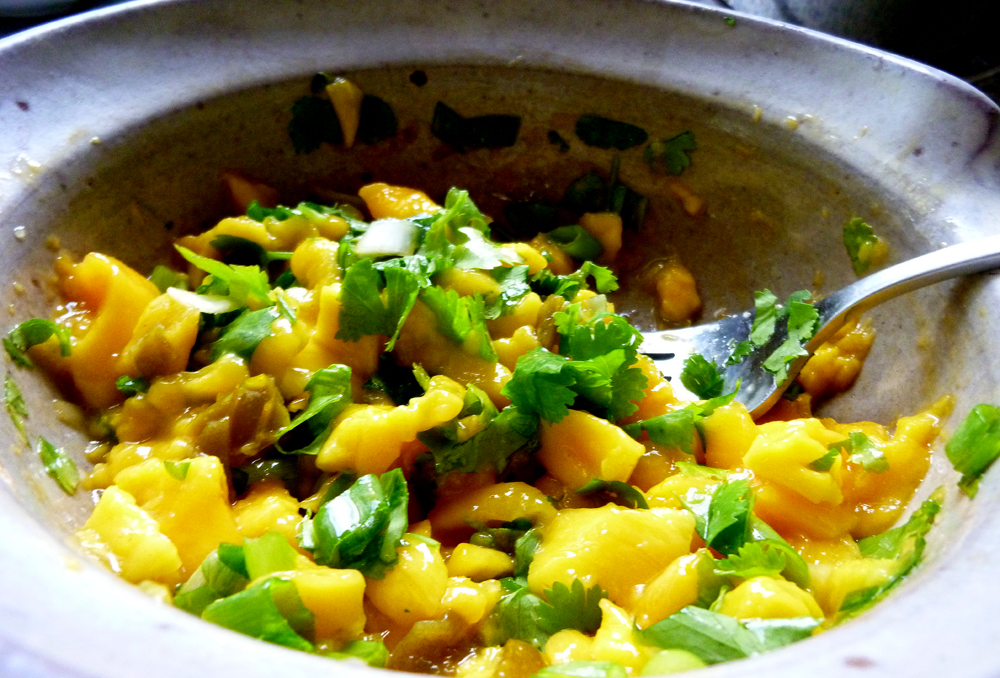
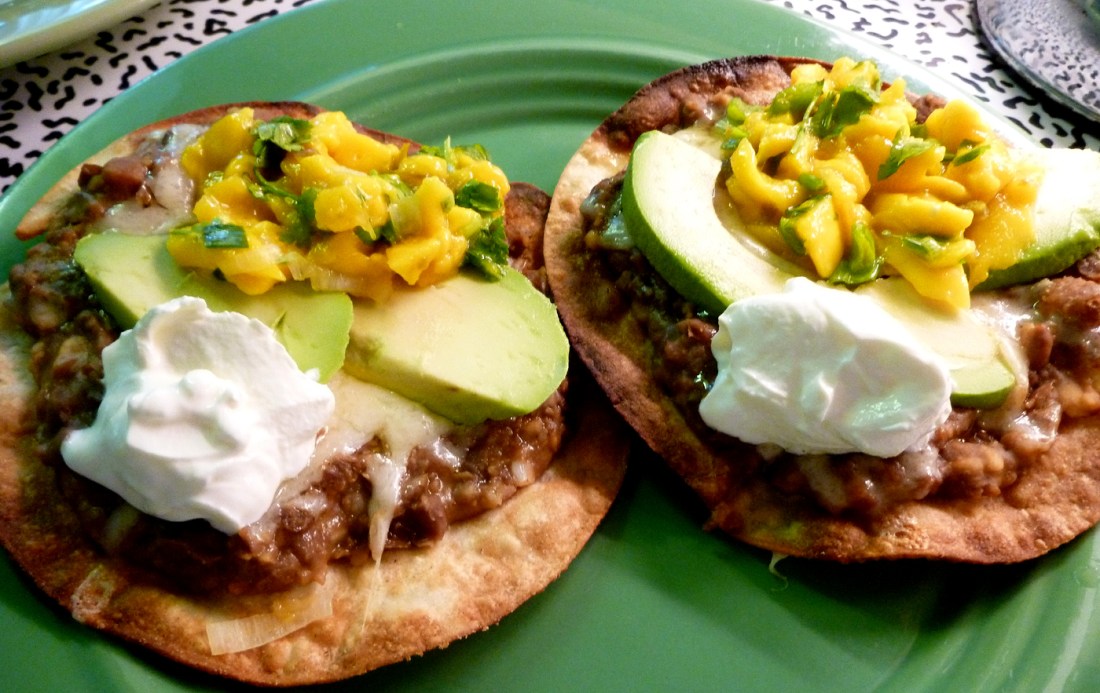
To the peeled, sliced, diced and lightly mashed mango I added a good squeeze of lime, a minced pickled jalapeño, a chopped green onion and a handful of cilantro.

mangoonion and cilantro

mango salsa

To assemble the tostadas, I had ready some grated cheese ─ I used Catamount but Jack or another favorite would be delicious. Spread the warm beans on the crisp tortillas, topped with the cheese and warmed in the toaster oven until the cheese was well-melted.

baked

I garnished the tostadas with salsa, avocado slices and a dab of sour cream leftover from cake baking.

Tostadas

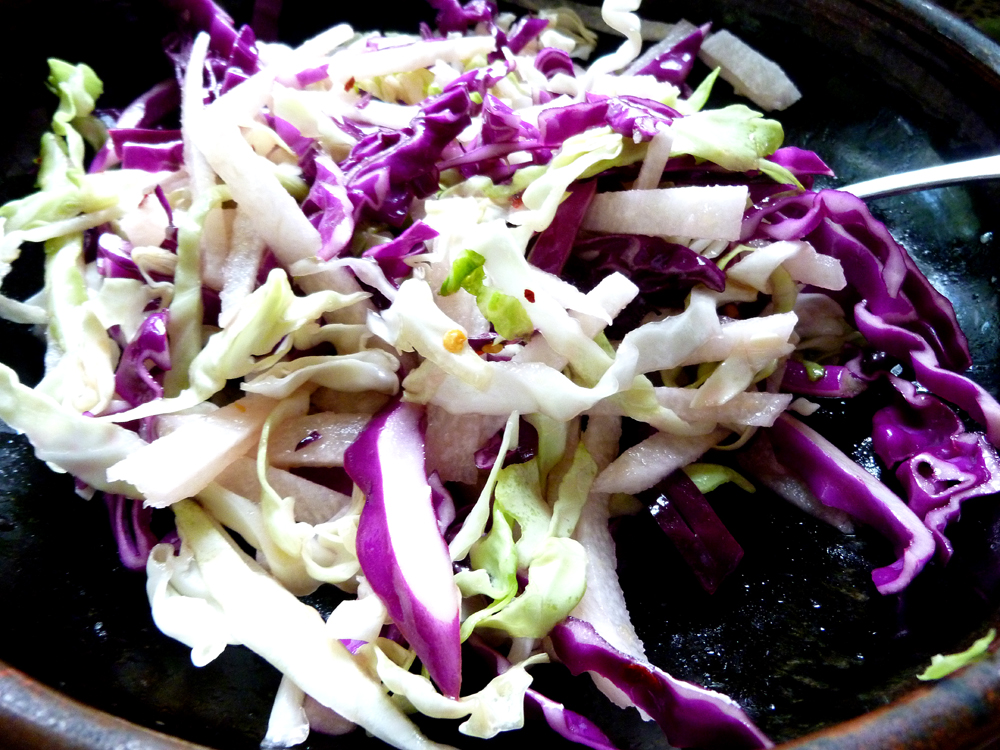
A tart salad is a welcome sidekick to these savory, rich disks of deliciousness.  I combined shredded red and green cabbage from Zweck’s with julienned jicama.

cabbage and jicama

For a dressing I simply added the juice of a lime, salt and pepper, and a little olive oil.  If I hadn’t made the mango salsa I would have added a sliced peach to the salad.

cabbage slaw

Provecho!


Fresh peas

tasting

I usually plan my meals around seasonal vegetables.  So, as we officially enter summer, I choose preparations using the wonderful vegetables and herbs growing in my garden and available at the Zweck’s farm stand.

shelling peas

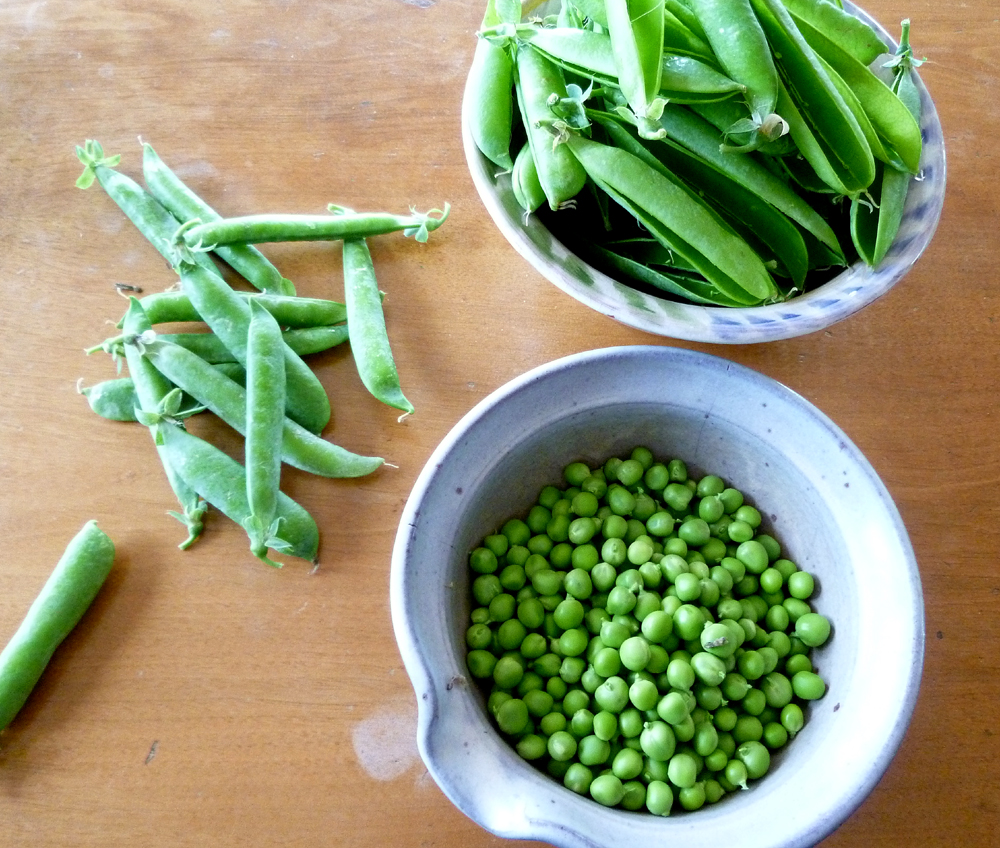
The short pea season is almost over but I scored a big bag of English peas to prepare with fresh green onions, mint and butter. Shelling peas is a pleasurable, contemplative task ─ splitting the shell, rolling out the peas clinging to one side, sampling the occasional sweet ball.

peas cooking

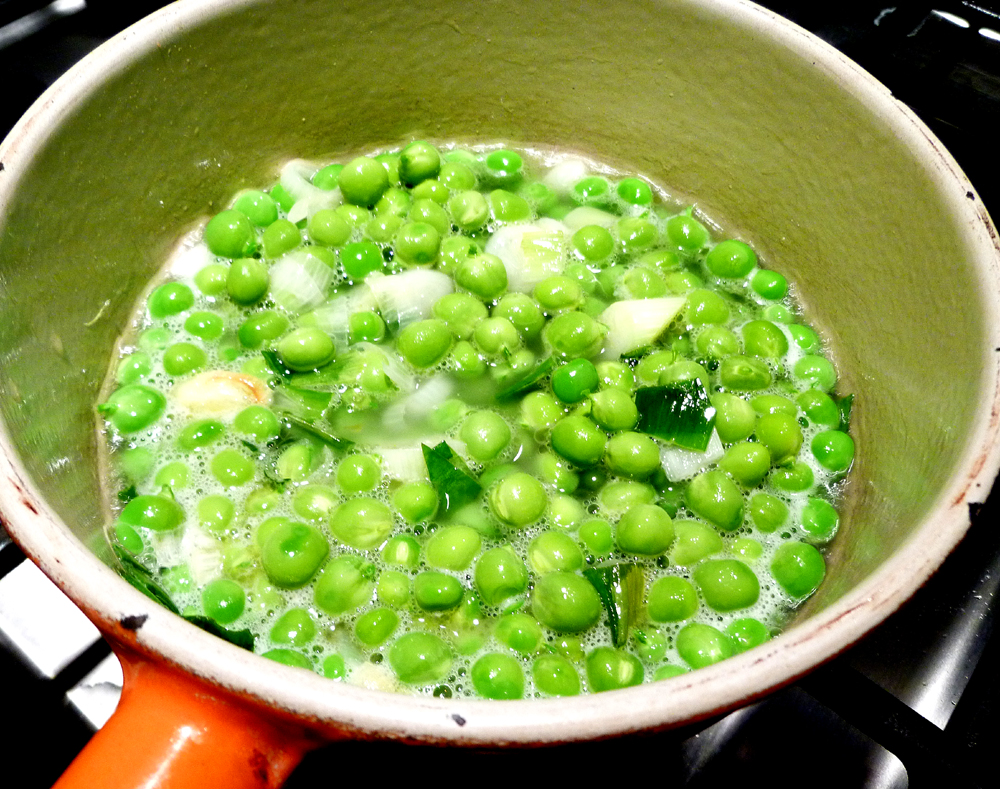
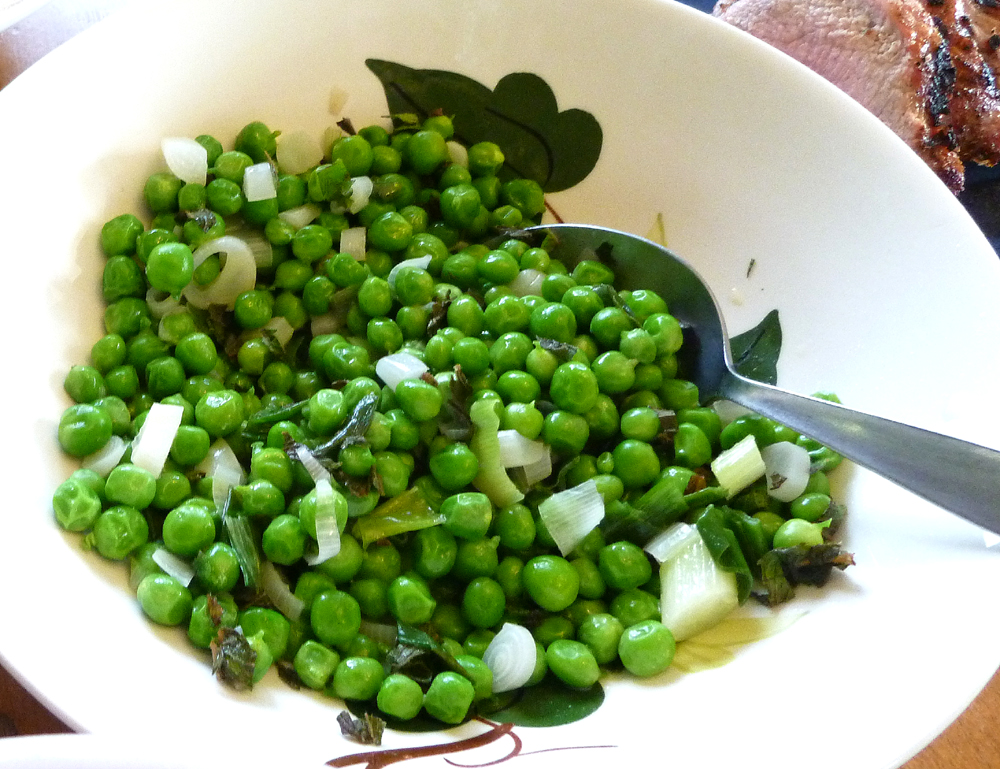
First, I sauteed a couple chopped green onions in butter ─ about 1 tablespoon ─ until softened, added 2 cups of peas and a little chopped mint, (saving the rest of the two tablespoons for a garnish), barely covered the peas with water (used just enough to prevent burning) and cooked until tender.  This takes only a few minutes so watch carefully to retain the lovely silky texture of the peas.  (If you only have frozen peas, cook very briefly.)

peas

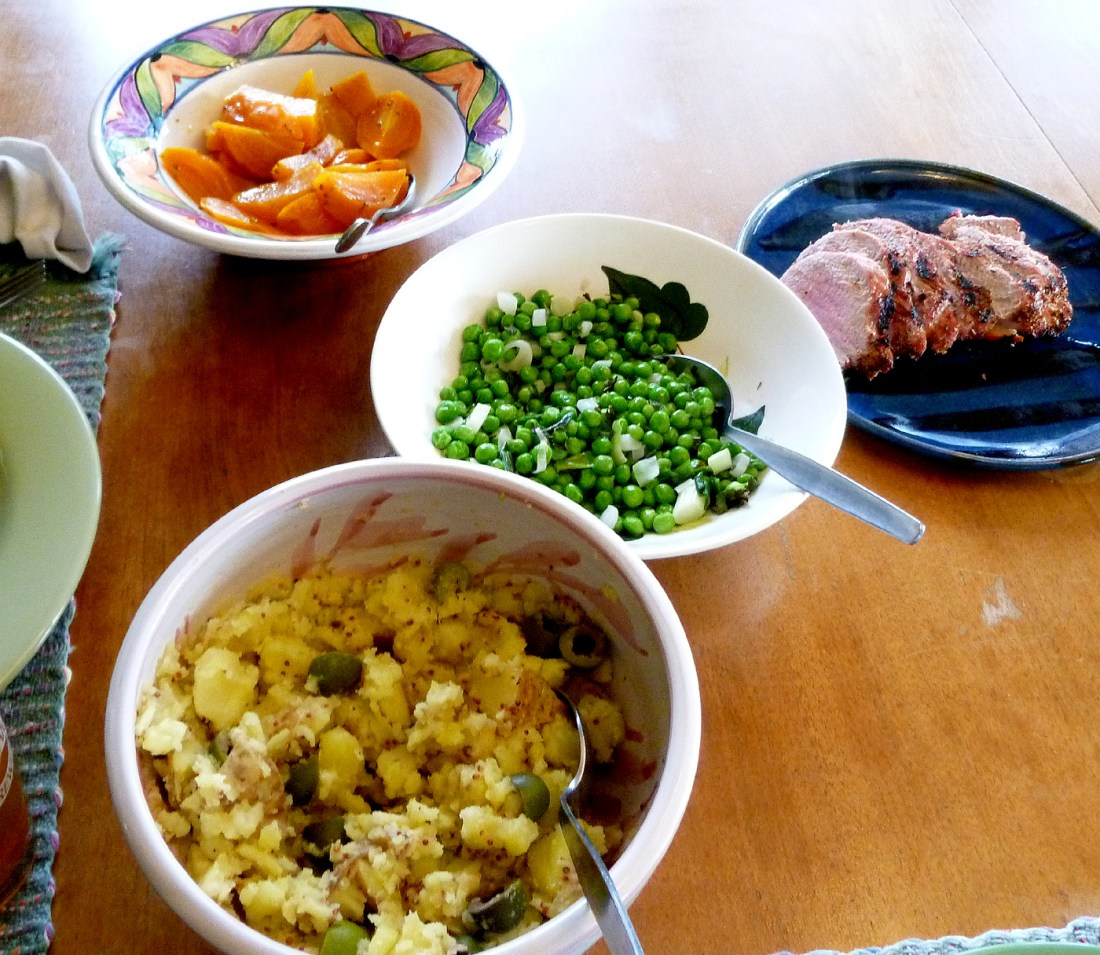
To accompany the peas, I made smashed potatoes, a recipe I devised for days when we crave the potatoes served with a roasted fish at Basta in Boulder. Our dinner also included a grilled pork tenderloin, and golden beets with anise that were lingering in the fridge. (Recipe in my April 30 post, Sunday Lunch.)

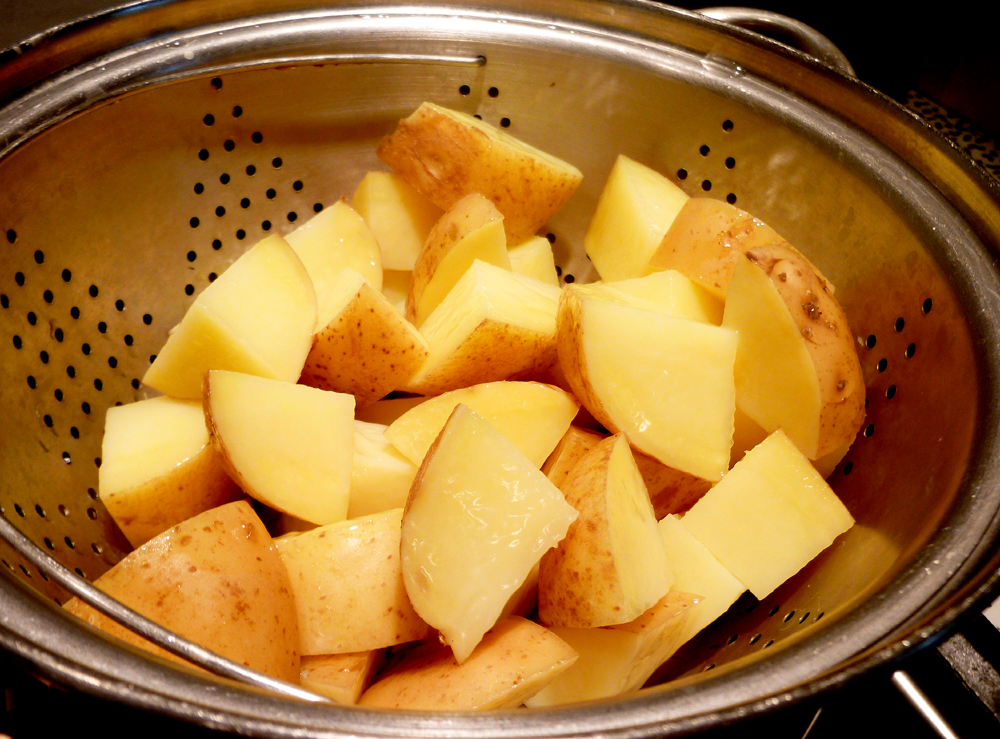
For the potatoes, cut a pound of Yellow Finn or red potatoes into pieces and steam until tender, 15-20 minutes.

potatoes steaming

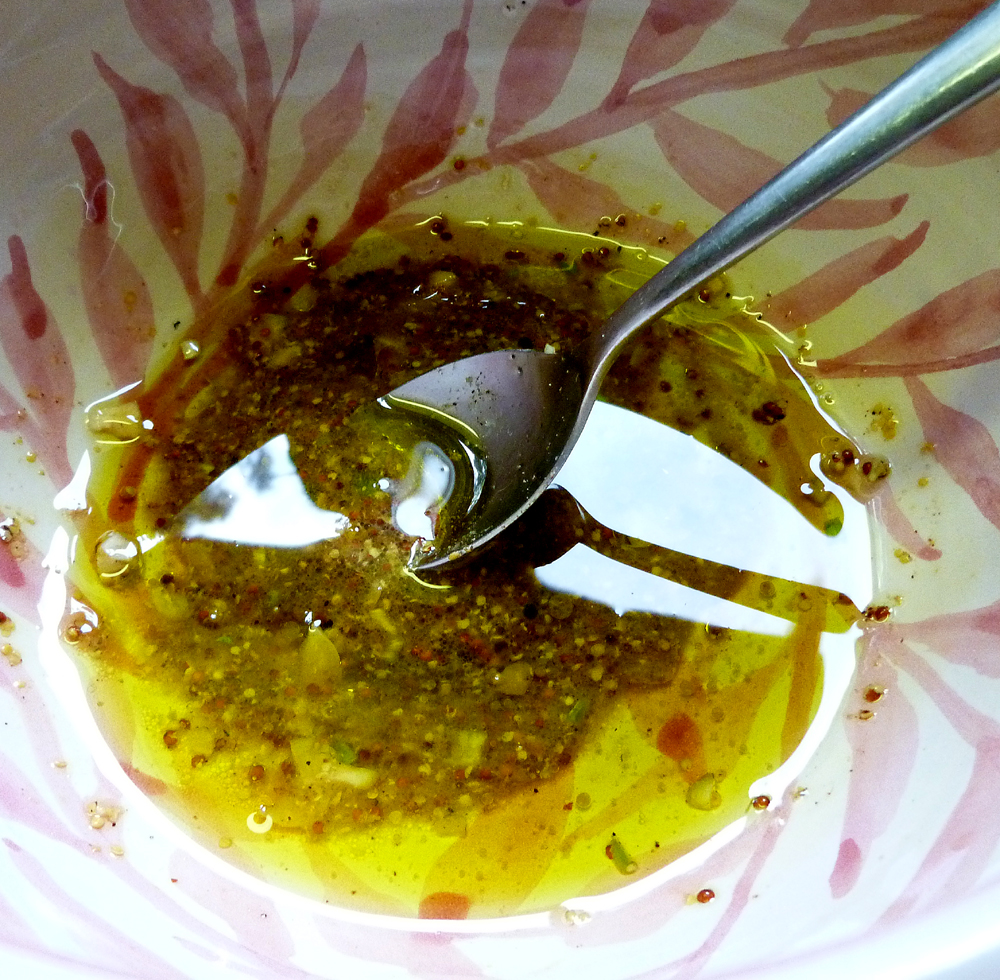
In a bowl large enough to hold the potatoes, have ready a vinaigrette made with a tablespoon of coarse  mustard, two tablespoons red wine vinegar and 1/4 cup of olive oil salt and pepper, all to your taste. I used a bowl made by Janis Hallowell.

vinaigrette

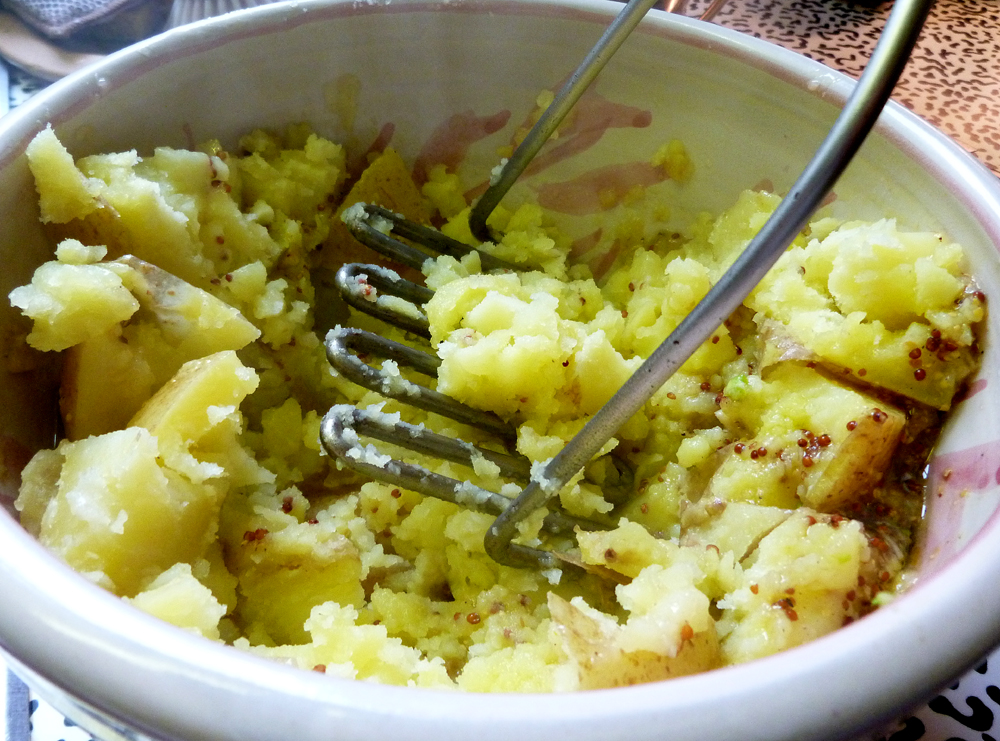
When the potatoes are tender, tumble them into the bowl of vinaigrette and smash.  Leave various size pieces, don’t get carried away!  Add a handful of green olives cut in half─ I like Castelvetranos.  Serve warm or at room temperature.

smashing the potatoes

adding olives

Pork tenderloin is delicious, and easy to cook as Bud is the grill master in our house.  I made a dry rub in the spice grinder (an old Braun coffee grinder dedicated to spices and herbs) with fennel seeds, hot red pepper flakes, black pepper and salt.  I left the meat in the fridge for the afternoon, removing it an hour before grilling. Bud cooked it to an internal temperature of 140°, about 20-25 minutes on a hot gas grill.

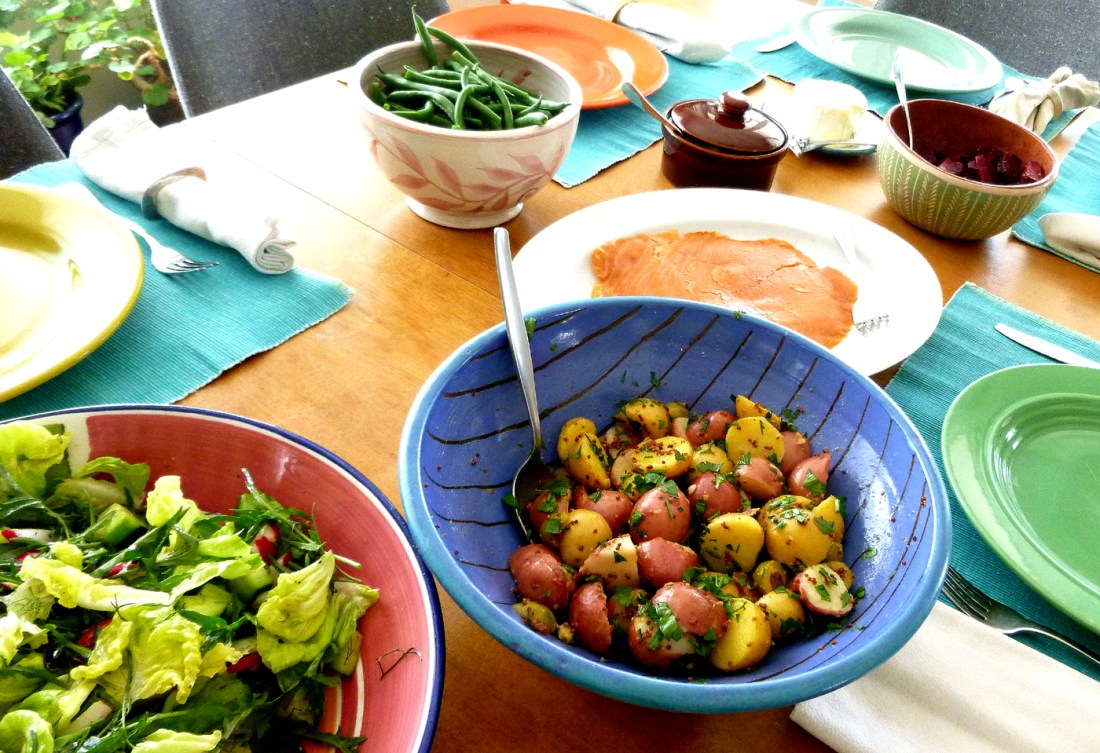
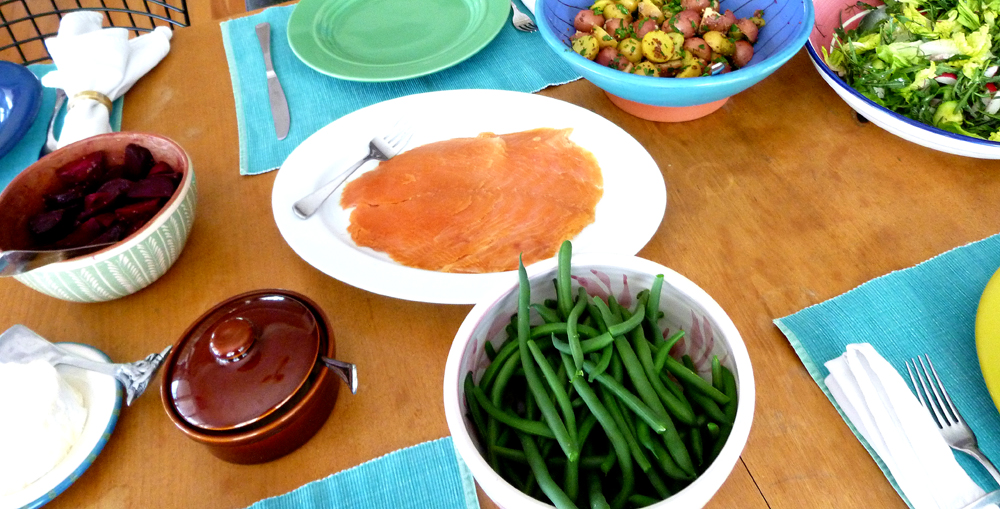
the meal

Buon Appetito!

Top:  Tasting, oil on canvas, 18 x 18 inches.

(A portrait of Nick Helbrun in his garden.)

Pie!

Apple Pie nikon copy

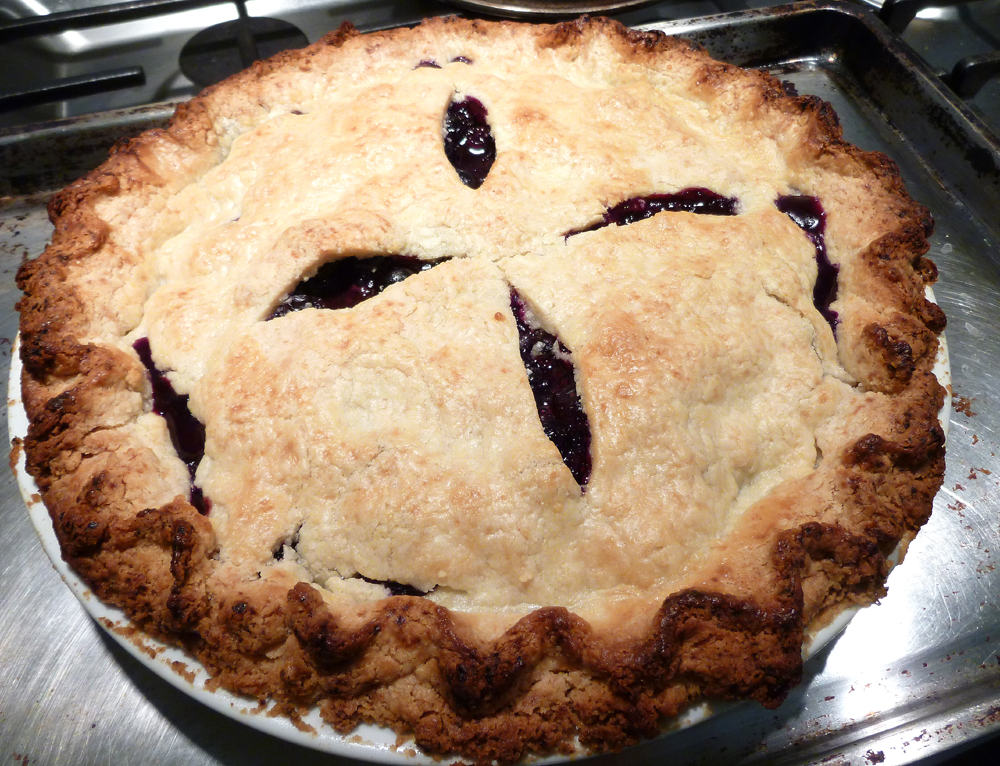
During my interview with John Lehndorff last week, we talked a little about pie and our love for this delicious concoction.  The pie I tasted with him was okay but it inspired me to make my own using a fabulous recipe for the crust that can be found in my book.  (I’ll write it here for you too.)  Organic blueberries were on special at the market and I bought a few punnets for my pie.  Since June is Bud’s birthday month the pie would be part of a studio lunch celebration.

I prepared the berries and let them sit while making and chilling the pastry.

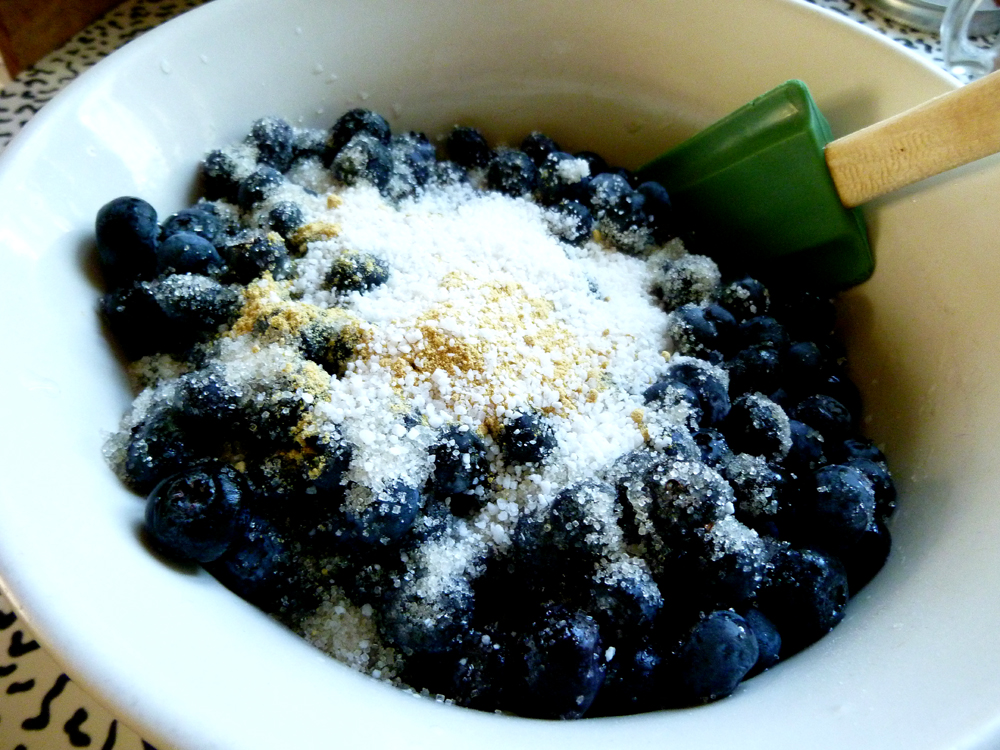
berries

I  combined 4 cups blueberries with 6 tablespoons sugar, a teaspoon ground ginger and a tablespoon of instant tapioca.  (James VanDyk turned me on to ginger with blueberries at his Gateway Cafe.)

The pastry:

Combine in the Cuisinart 2 ½ Cups unbleached flour, 1 teaspoon salt, 1 Tablespoon sugar and pulse 5 times to sift.  Add 10 ounces (2 1/2 sticks) cold, unsalted butter cut into tablespoon pieces and pulse 5 times.

Add, in three parts, 6 Tablespoons ice water and pulse each addition twice. Dough should not turn into a solid mass.  Turn crumbly mixture onto the countertop and grab together to make a cohesive dough.  Do not overwork. It may seem a bit dry but resist adding a little water unless it really cannot be compressed.

Divide into two, one a little bigger than the other. Flatten each piece into a disk, wrap in waxed paper, and refrigerate ½ hour.

crust

Roll each piece to about 3/8-inch-thick between sheets of lightly floured waxed paper.   Place the larger piece in a pie pan and fill with the berries. Cover with the second piece of rolled dough. Trim any excess and press the two edges together.  Don’t worry if the pastry breaks, you can patch with the trimmings. Flute the edges. Save the trimmings for a tiny tart or bake with a coating of cinnamon sugar for a cook’s treat.

fluting

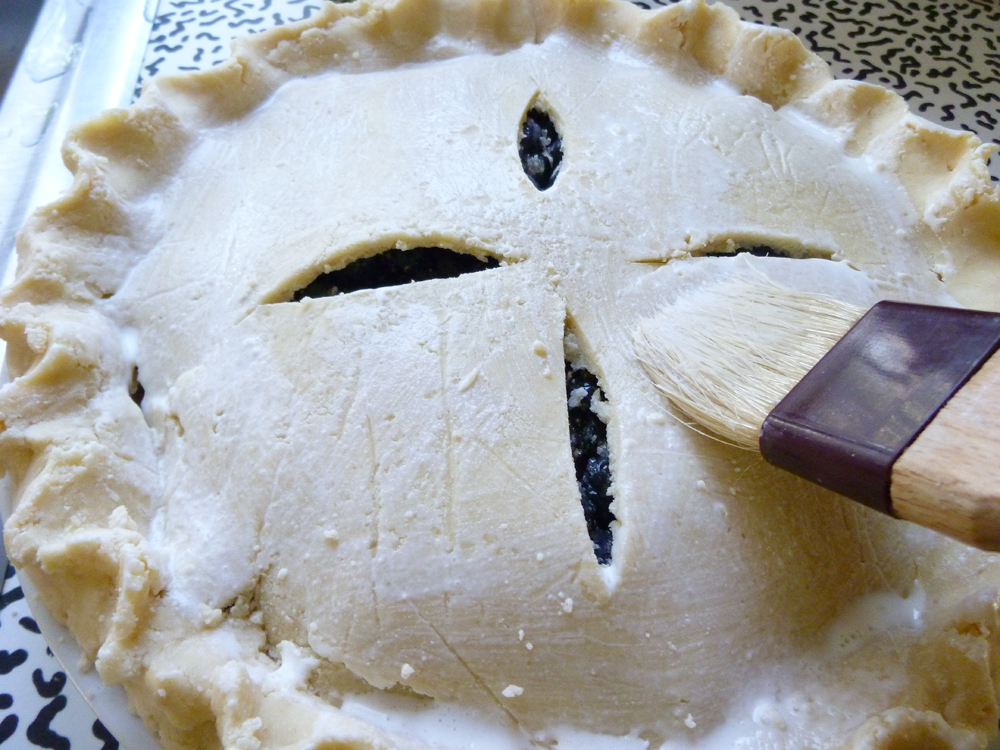
Pierce the crust in several places, then brush with cream or half-and-half .

glazing

Bake, on a baking sheet to catch any spills, at 450° for 45 minutes until brown and the berries bubbly.

the pie

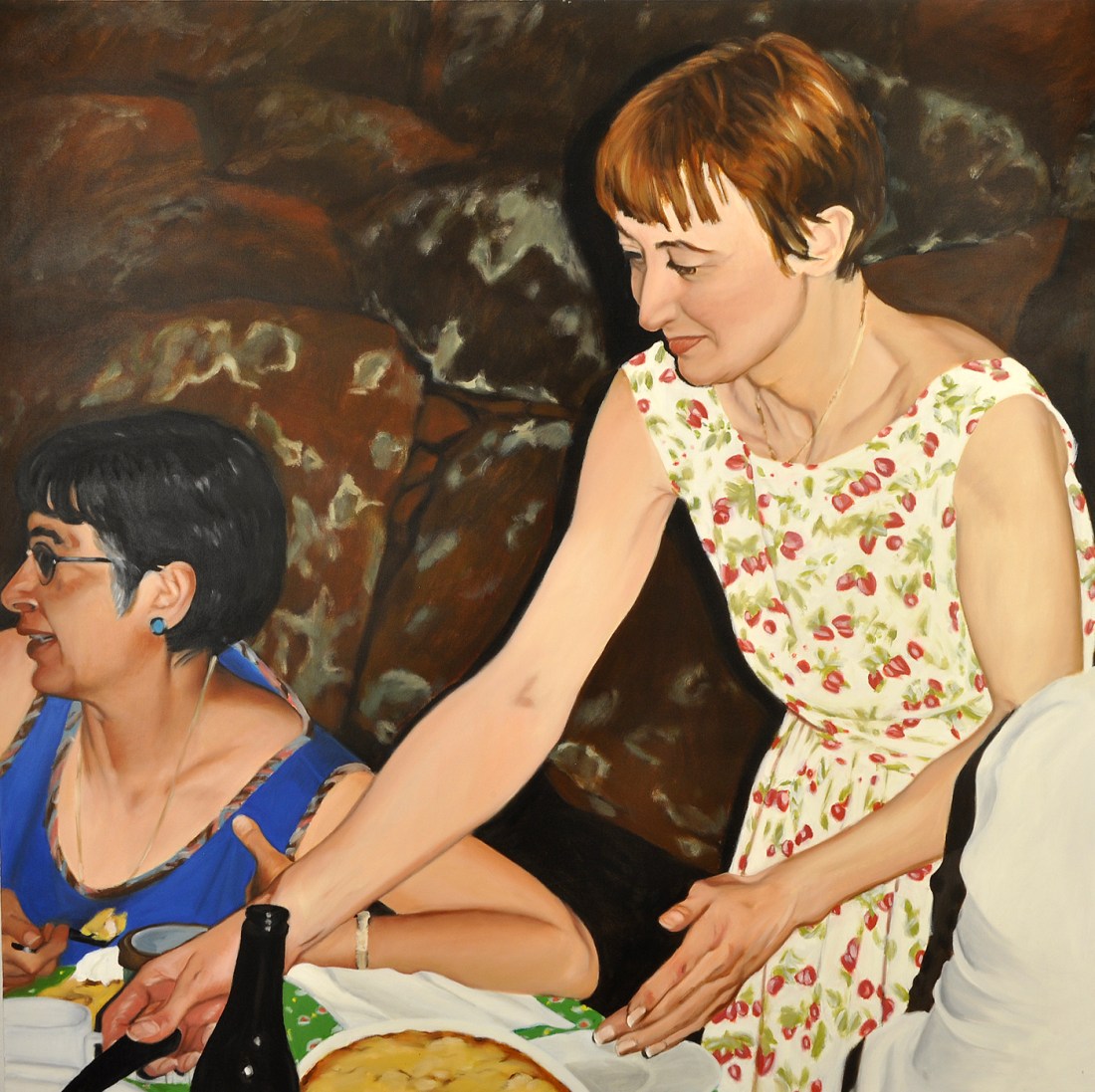
Top: Apple Pie, oil on canvas, 46 x 46 inches

(Maggie Gilboy and Roseanne Colachis, our other resident pie baker)


Every morning…

ginger flowers (2)

Just a reminder that I will be signing books at the Boulder Museum of Contemporary Art on Wednesday, June 20, 5:30 ’til 7:30.  Several paintings will be on display and books will be available for purchase.

A couple articles about the book came out this week.  One by John Lehndorff in the Boulder Weekly and one by Susan McCann in the Redstone Review.  Here are links: http://www.boulderweekly.com/cuisine/the-art-of-dinner/ and https://issuu.com/sdcmc/docs/redstonejunejuly2018/10

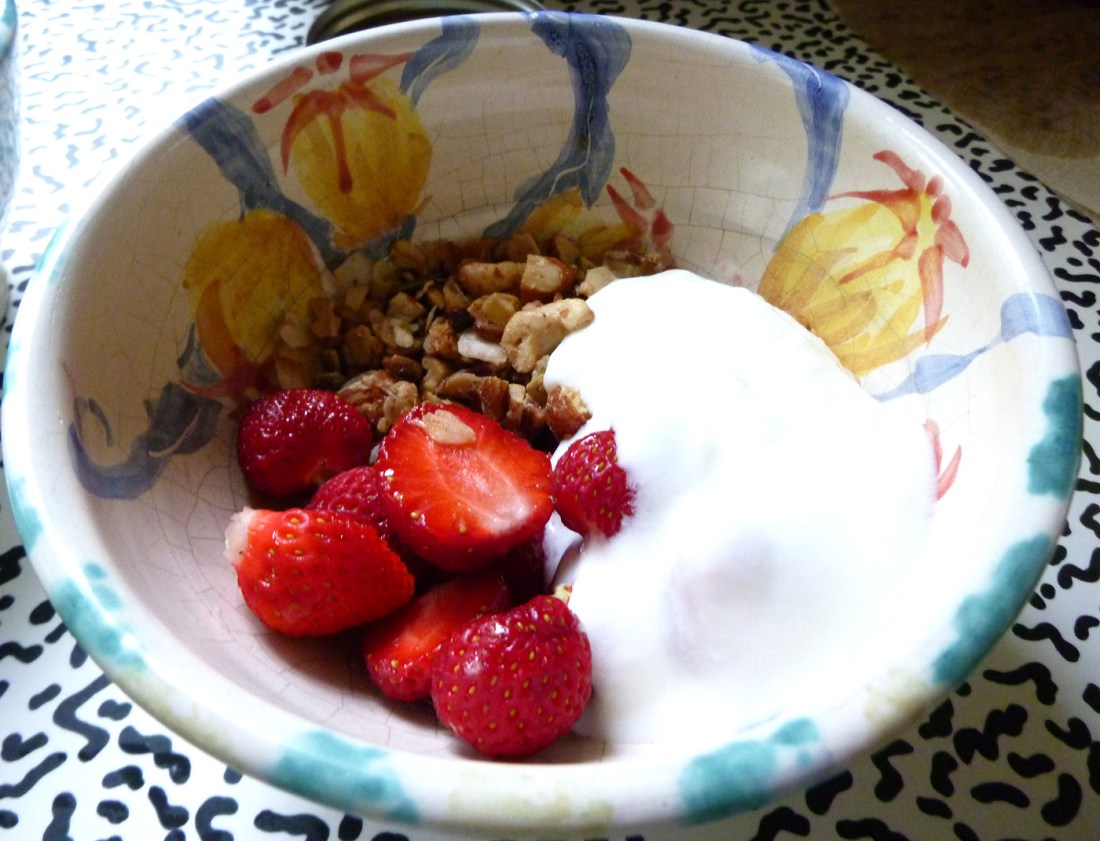
Lehndorff quotes me as saying I don’t like to repeat myself in the kitchen and that’s true.  I vary a dish each time I make it, either out of forgetfulness or boredom or the contents of my fridge. One constant in our life is a breakfast of granola, yogurt and fruit.  We take homemade granola on our travels to art fairs and on camping trips. Bud in particular even orders granola for breakfast in restaurants. I don’t go that far as I like something different every now and then such as pancakes or eggs and bacon. (Those cravings are satisfied by preparing breakfast for supper.)

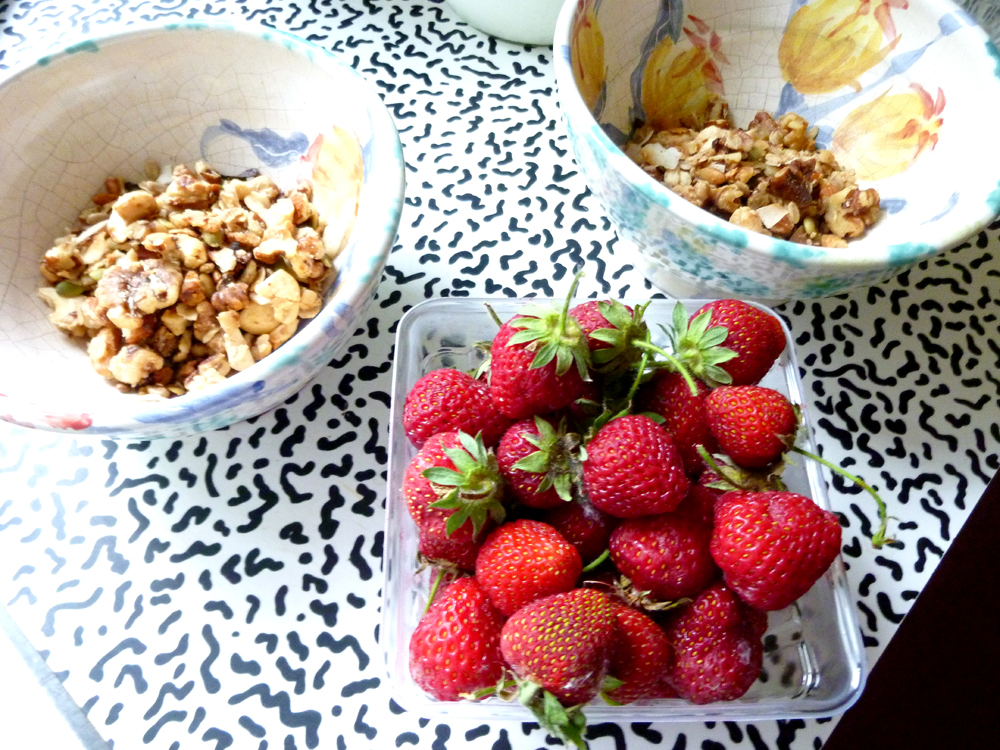
This week Connie Zweck had organic strawberries at her farm stand, the perfect complement to my granola.

strawberries


My current recipe for granola includes nuts, seeds, coconut and oats.  I make it without  oats for visitors preferring a grain-free dish.

I chop the nuts in my Cuisinart, almonds first as they are the hardest. Then in go walnuts, cashews, pecans and hazelnuts. I dump these into a large bowl to which I add seeds, seasonings, sweetener and oil.

Here’s the recipe:

granola1

In the Cuisinart chop with several pulses ─ or by hand:  6 ounces raw almonds, (about 1 1/4 cups), 6 ounces raw cashews, (1 cup), 6 ounces other raw nuts ─ walnuts, pecans, hazelnuts, (1 cup). You’ll end up with various sized pieces from crumbs to chunks.  Don’t overprocess.

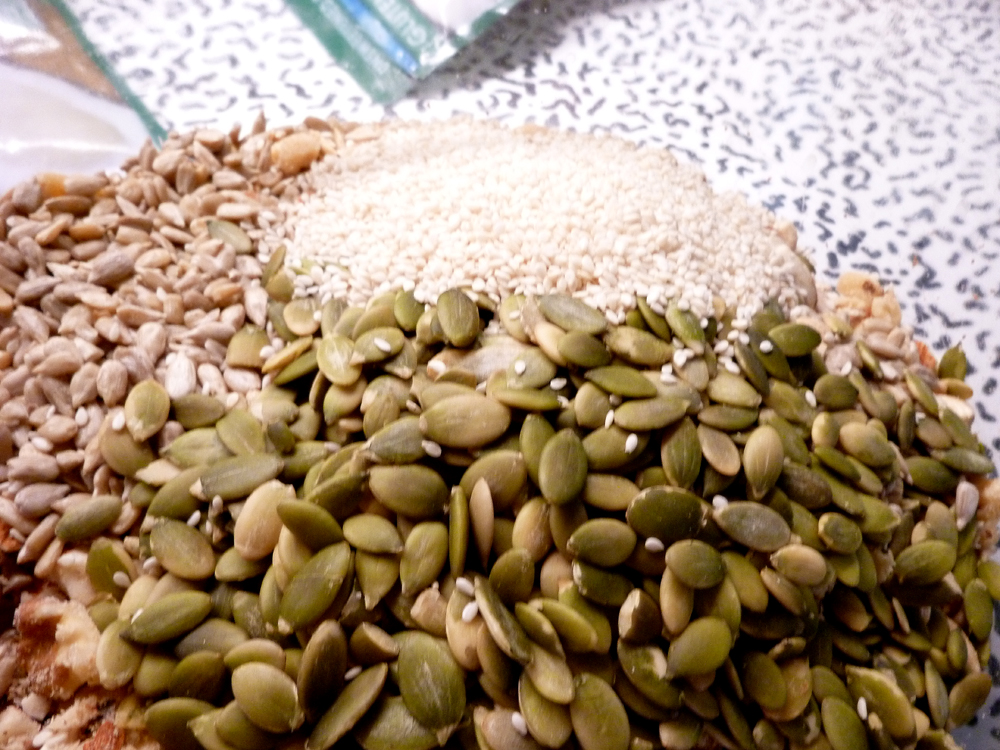
Place in a large bowl with 1 cup pepitas, 3/4 cup sunflower seeds, 1/4 sesame seeds and/or flax seeds. If you would like to include oats, add 2 cups.

seeds for granola

Stir in 1 cup unsweetened coconut flakes and 1/2 cup shredded, unsweetened coconut, 1/3 cup cacao nibs, 1 teaspoon cinnamon, 1 teaspoon ground ginger, 1 teaspoon freshly grated nutmeg, (about half of a nut) and a big pinch of salt.

Over all this, pour 1/3 cup honey or maple syrup and 1/3 cup canola or your favorite flavorless vegetable oil. (Though I think olive oil would bring a fruity deliciousness.)

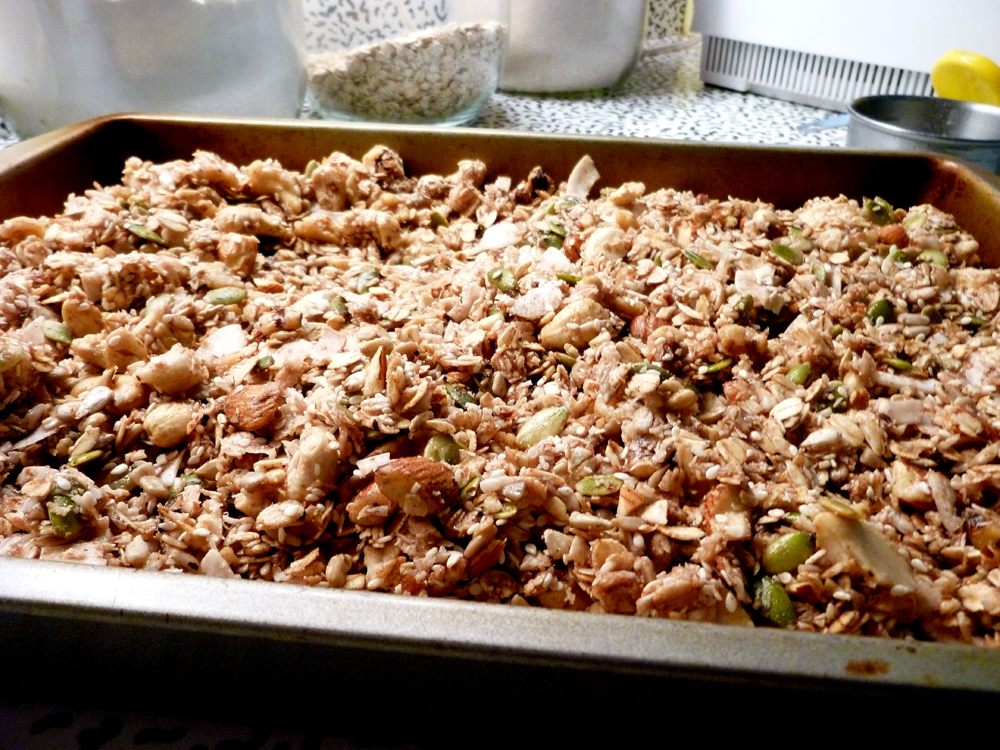
ready to bake

Stir until well combined and moistened. Spread in a high-sided baking pan,  9 x 13 inches, and roast in a 350° oven for 15 minutes.  Stir up and continue roasting, about 15  minutes, until browned, toasty and fragrant.  Cool, then store in a jar or tin.

This makes enough for a week of 1/2 cup servings for two. Pictured here in a bowl by Kate Villareal.

bowl of granola

Top: Ginger Flowers, oil on canvas, 60 x 40 inches

(our niece, Hilary Niceswanger Smith in the Holualoa kitchen)

Baked artichokes

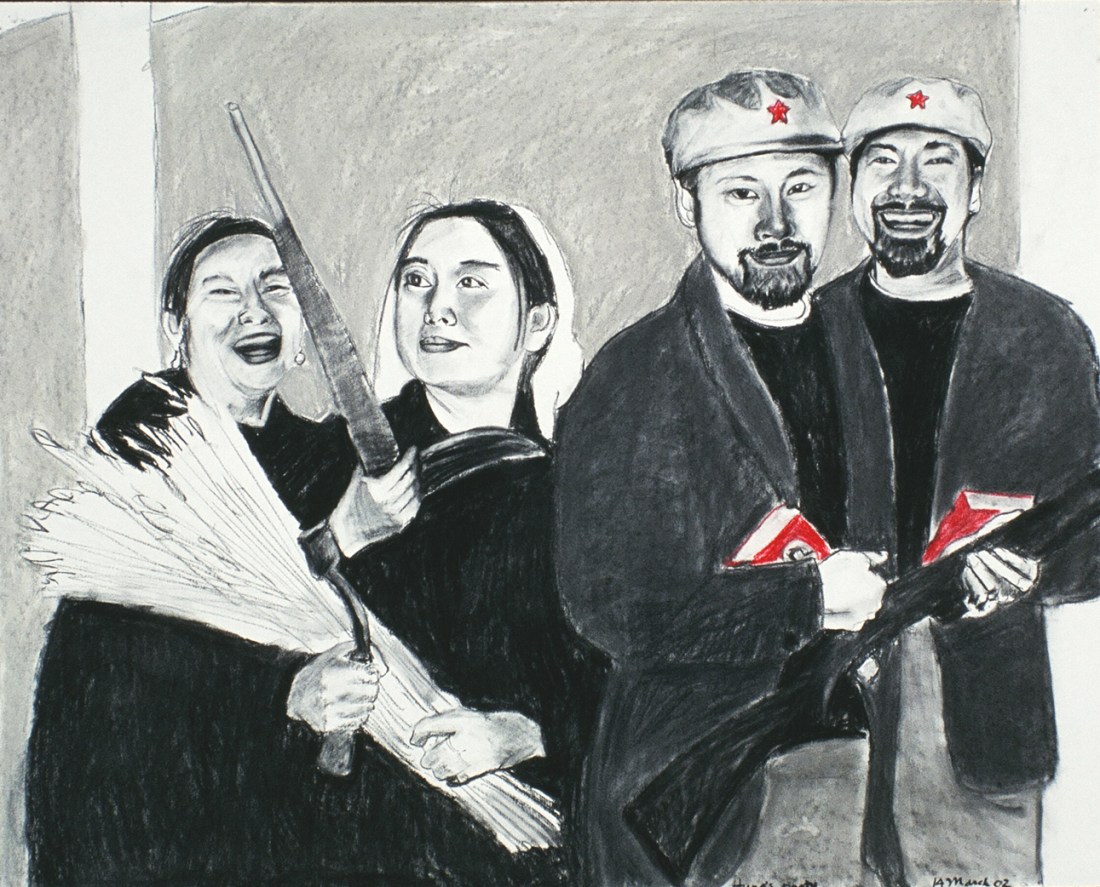
Hung's Party

We were leaving the next day for San Francisco and the opening of an exhibition of the monoprints Mildred Howard made with Bud this spring.  I needed to empty the fridge.  In it were the remains of a container of ricotta and a big, fat artichoke that I had bought, forgetting we would be away.  I couldn’t waste it so made it the star of our last dinner before flying off to the show and a visit with our Bay area pals.

Above is a drawing from a get-together at Hung’s Oakland studio a few years ago.  Probably more than a few but who can count? We were excited to see everyone, Mildred and John, Hung and Jeff, Kara and Enrique, Hardy and Francesca.

But back to that artichoke.  I remembered a recipe I had made several times from a wonderful cookbook by Evan Kleiman called Verdura, and pulled it off the shelf to remind myself of the ingredients.  Great, I have everything.

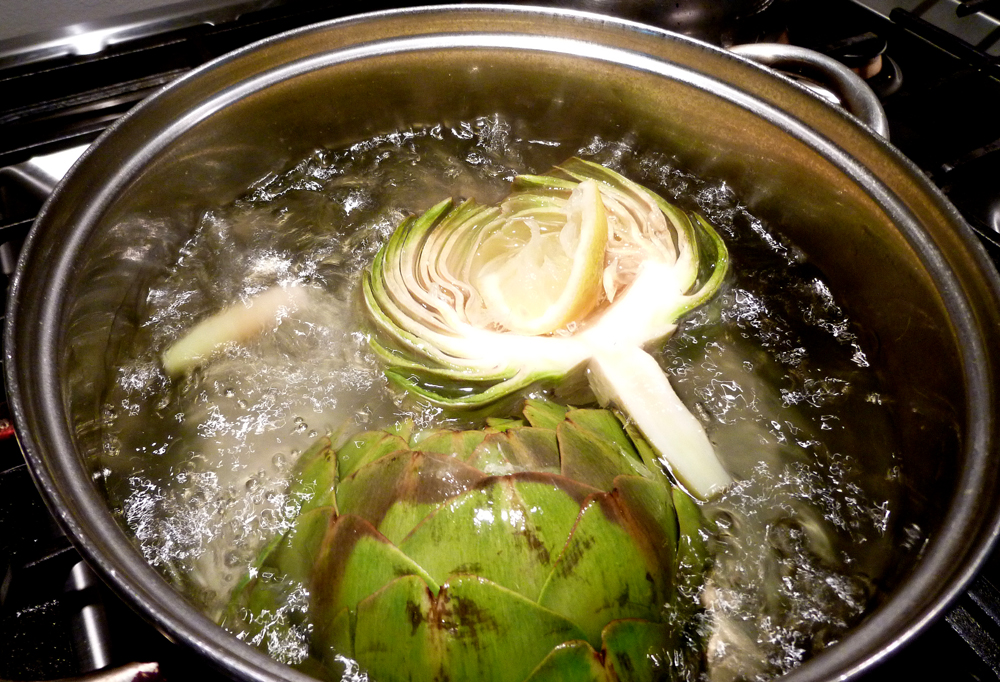
boiling artichoke

First I prepared the artichoke by pulling off the small, dry leaves, halving it, and cutting out the choke, rubbing the cut areas with lemon as I went.  I dropped the halves into boiling water with the chunk of lemon and cooked them until tender, about 12 minutes.  I tested them periodically with a skewer to be sure I didn’t overcook them.

The drained artichoke halves went into a baking dish. I preheated the oven to 375° and prepared the filling.

filling

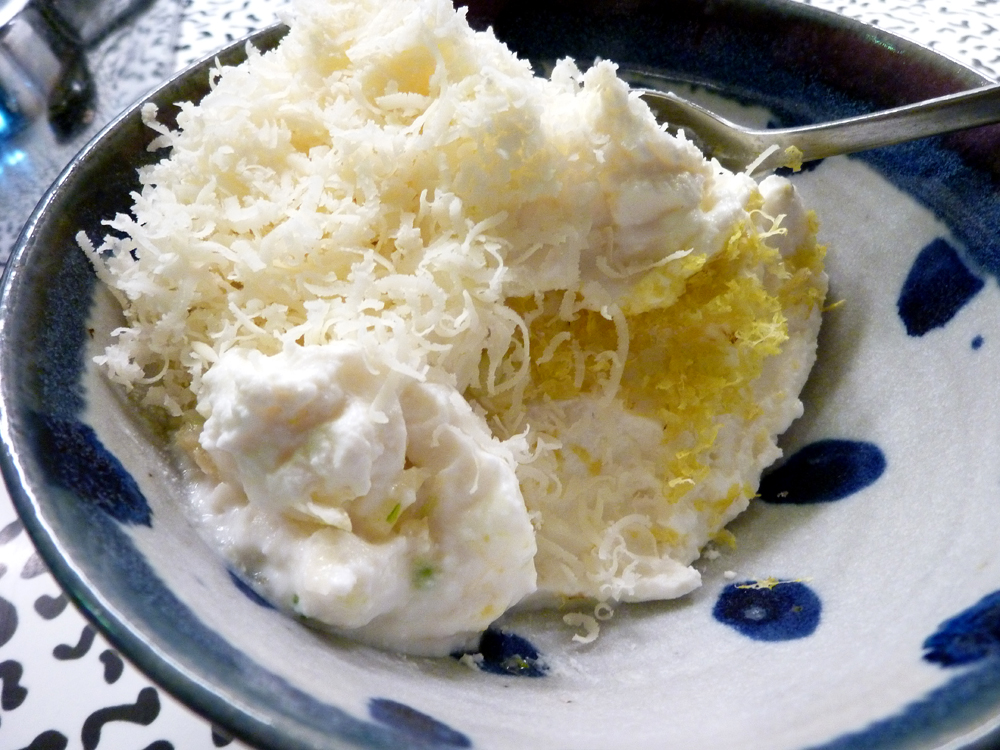
In a small bowl (made by Setsuko Morinoue) I combined a crushed clove of garlic, the zest of half a lemon, and a couple tablespoons of parmesan, a little salt and pepper with a cup of ricotta. Then I lightly toasted a small handful of pinenuts in a dry iron skillet, watching carefully and shaking the pan so they didn’t burn.  It took about 3 minutes.  (Walnuts would be a good substitute.)

filling2

This stuffing went into the artichokes, topped with panko, a little more parmesan and a drizzle of olive oil. They were ready to bake at 375° for 20 minutes until hot and browned.

ready to bake

To accompany the artichokes I made a simple green salad topped with a few grilled shrimp, some julienned radish and sliced avocado.  I squeezed the bald lemon half to make a dressing with olive oil, salt and pepper.

The artichokes perched on dragon plates made by Priscilla Cohan of Lyons.  To eat, a messy proposition, we pulled the bottom leaves off the artichoke and scooped up some filling.  When we reached the heart, we used fork and knife to finish the delectable dish.

stuffed artichoke

Top:  Hung’s Party, pastel and charcoal on paper, 30 x 42 inches.

(Hung Liu and Manuel Ocampo)


Maggie’s baked eggs

Parnassus Geisha

I read an enlightening column in the NYTimes last week.  Sam Anderson wrote in “New Sentences” in the Sunday Magazine about the “fleeting associations that make up a life.”  I’ve been thinking about the small thoughts that pop into my head when going about my day.

When I make tuna salad I picture Clare Forster conscientiously breaking the fish chunks into mayonnaise until she had a homogeneous combination.  The smell of diesel sends me back to a London street and the sound of the wind in our ponderosas puts me up in the branches of a pine tree at my family home in Iowa where I closed my eyes and longed for the forests of Colorado.  As the Times writer noted, we have almost no control over these associations. These reminders are precious, popping up as I work in the kitchen, garden or studio.

Last week I decided to make baked eggs for dinner.  This dish always brings the memory of my dear friend Maggie Gilboy into my kitchen.  She made these for me as we shared breakfast on the porch at Parnassus, her mountain cabin, or around her Englewood table.  She always said, “This is Moira’s recipe,” but I know she altered it to her taste, as have I.

onions and ham2

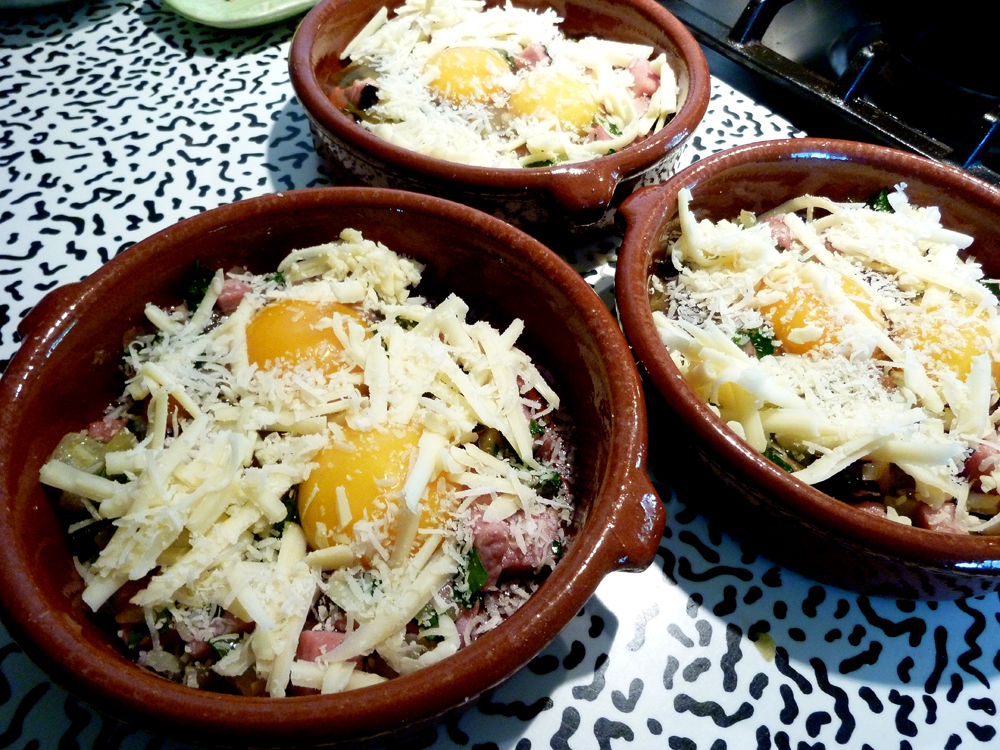
First I sauteed half a chopped onion in a tablespoon of olive oil and a teaspoon of butter.  (Sometimes I use a couple of shallots instead.) I added diced ham cut from a 1/2 inch thick slice and let that brown.  In went a handful of parsley. I arranged the combination in three baking cazuelas.

ready to bake

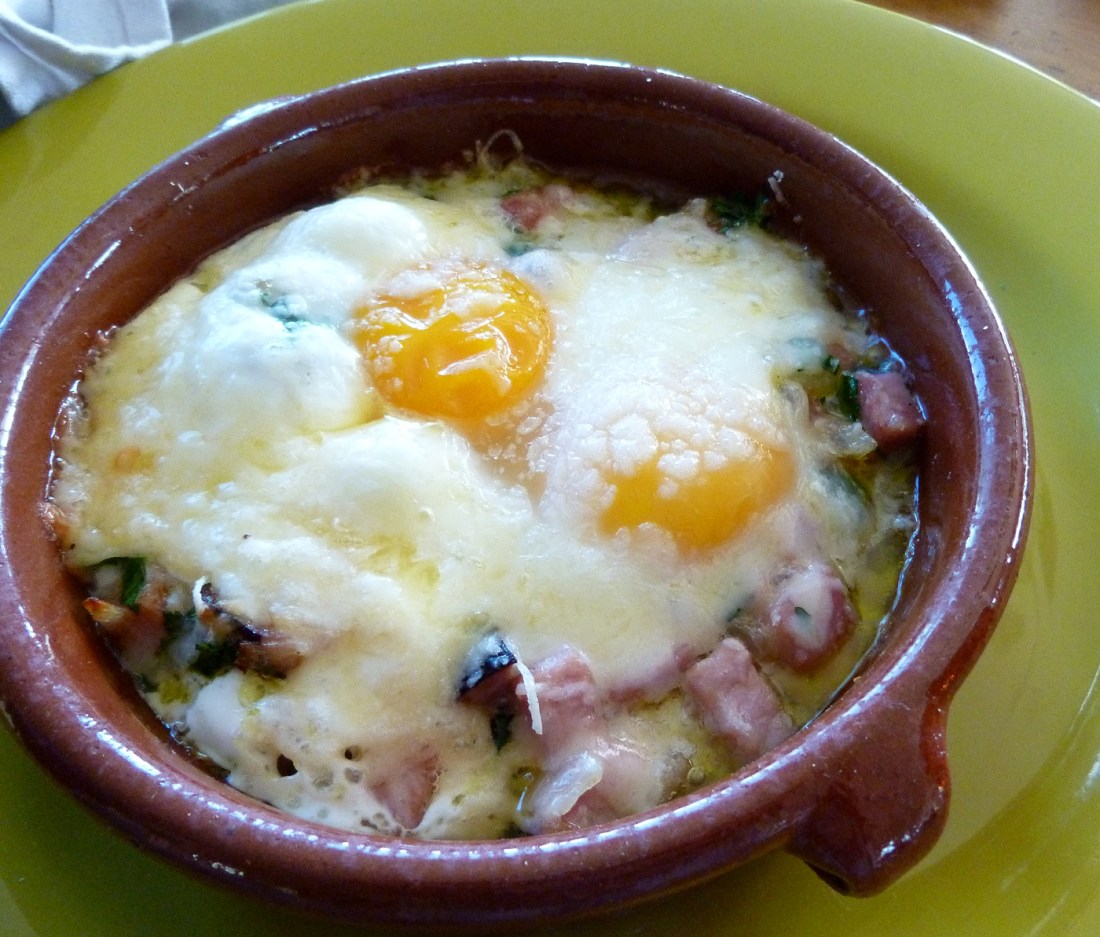
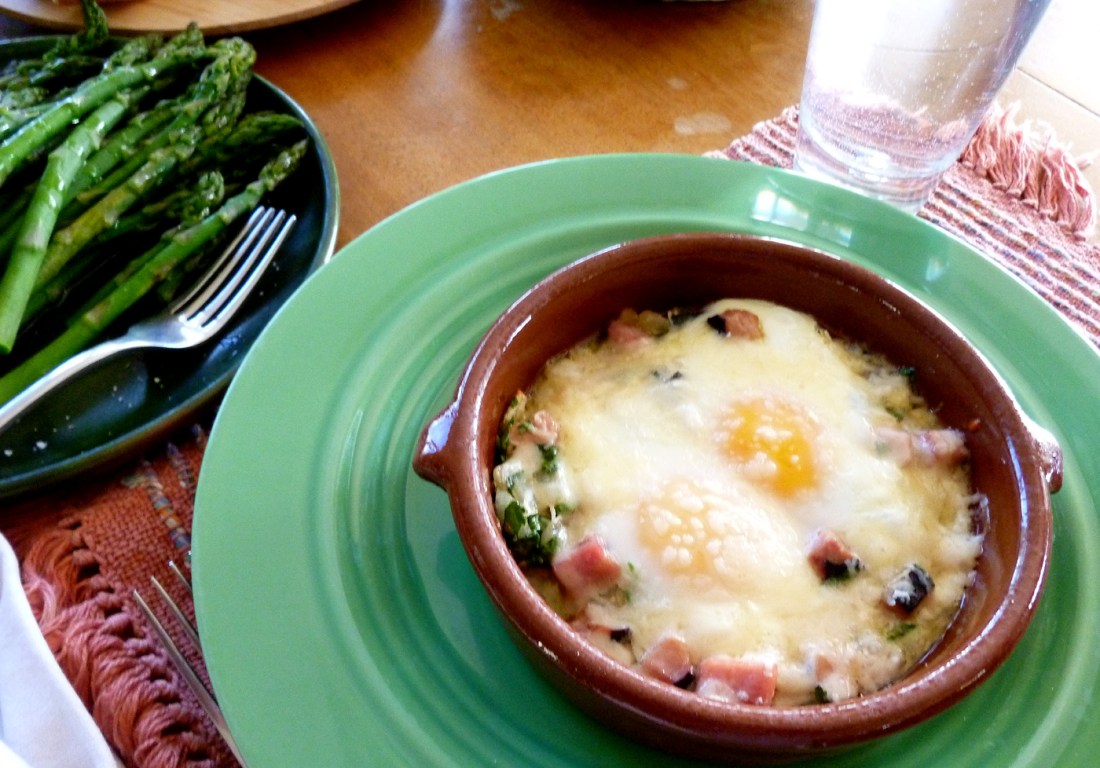
I cracked two large farm eggs into each dish, topped with a couple tablespoons of grated Catamount and a sprinkling of parmesan.  These baked at 375° for about 15 -20 minutes until the whites of the eggs were firm but the yolks still soft. Meanwhile I cooked asparagus in my preferred method ─  boiled in a skillet for 3-4 minutes in water to just cover.

asparagus

And with some crusty bread to accompany the dish, dinner ─ or breakfast ─ is ready.

baked2

baked

Top: Parnassus Geisha, charcoal and pastel on paper, 60 x 36 inches

Tortilla Soup for a grey day dinner

lunch in sausalito II

We have had several days of rain and clouds, fog and hail. Coloradans welcome this moisture but after three days we’re ready for sunshine.  Tortilla soup is my sunny exclamation for a grey day.

I started by making a chicken stock with chicken backs I had cached in my freezer along with various vegetable trimmings ─ leek tops, fennel fronds, celery stalks, carrots. This cooked for the morning, giving the house a warm, savory scent.  When the stock had cooked for several hours I added two boneless chicken breasts and poached them for 30 minutes, until tender.  I removed them to cool and continued cooking the stock.

Next, I prepared the tomato base.  I sauteed a chopped onion in canola oil until translucent, adding 5 or 6 chopped garlic cloves at the end.  I pureed these with a 14.5 ounce tin of crushed tomatoes and a tablespoon of chipotle puree.  I fried this mixture in a tablespoon of oil until it darkened then added it to six cups of my strained chicken stock.  This is the soup.

For the garnishes:

toppings2

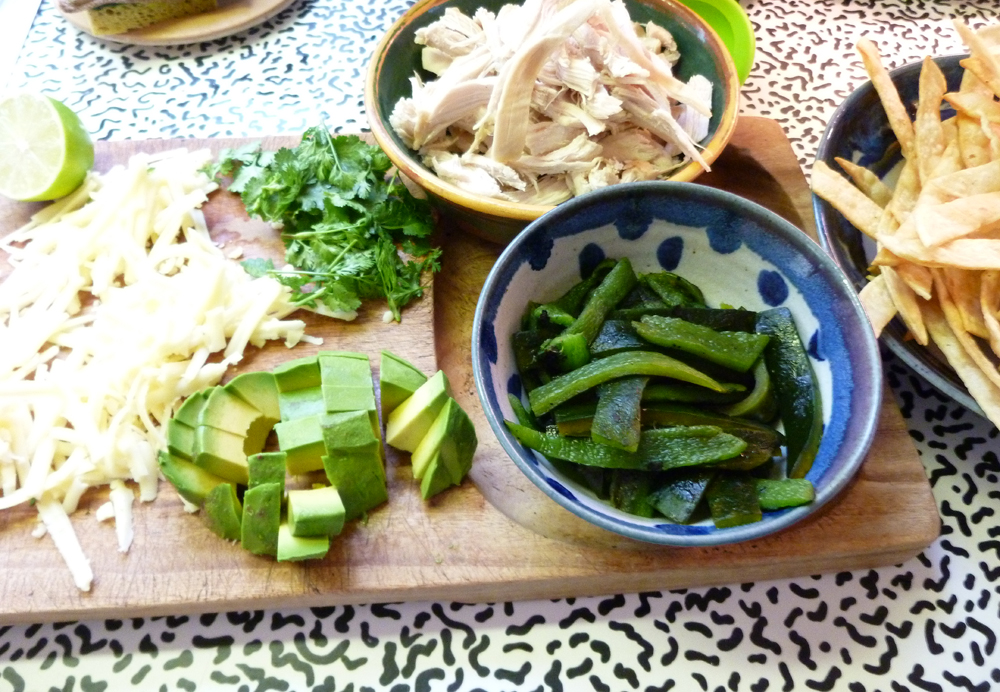
I shredded the chicken into bite-sized pieces and roasted two poblanos over the open flame on my stove, then peeled off the blackened skin and cut them into strips.

A delicious part of the dish is the crispy tortillas.  I cut six tortillas into 1/2 inch pieces then shallow fried them in oil until crisp.  I drained them by shaking in a brown paper sack.  It was hard to resist a taste of these morsels!

toppings3

Additional garnishes were avocado chunks, grated cheese (I used Catamount, cheddar or Jack are also tasty) and chopped cilantro. In large bowls, I stacked up portions of these ─ chicken, cheese, chilés, avocado, broken tortilla strips, cilantro.

bowls ready for soup

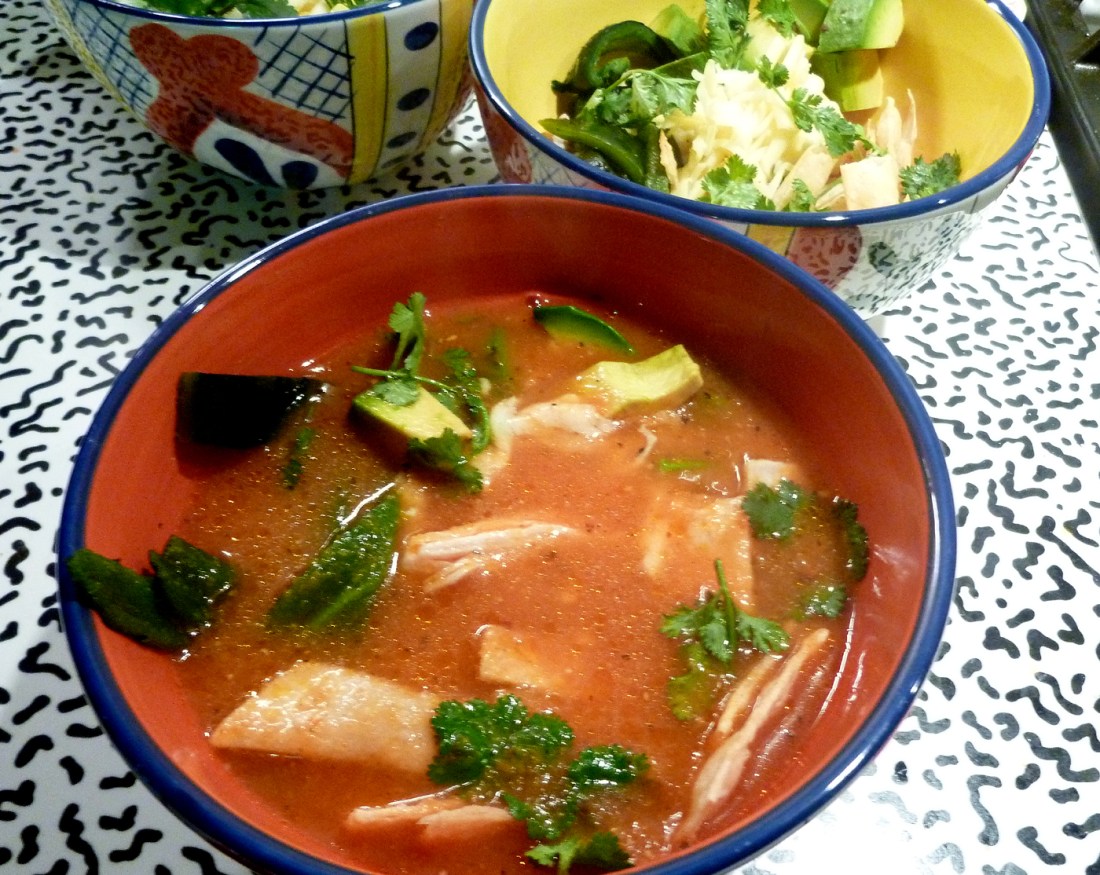
I poured the boiling hot soup over each bowl and served them with lime wedges and additional tortillas on the side to add as desired.  You’ll want more!

tortilla soup

Top: Lunch in Sausalito, oil on canvas, 18 x 44 inches

(Bud Shark and Cydney Payton)

Beans for Dinner

cooking in sayulita

I recently signed up for the Rancho Gordo bean club.  Sounds goofy but they sell the best dried beans around.  I will receive six pounds of a variety of beans every three months. So I better start cooking.  Often, I prepare beans to accompany Mexican food or a buffalo steak, but Italian preparations are another great way to use them.

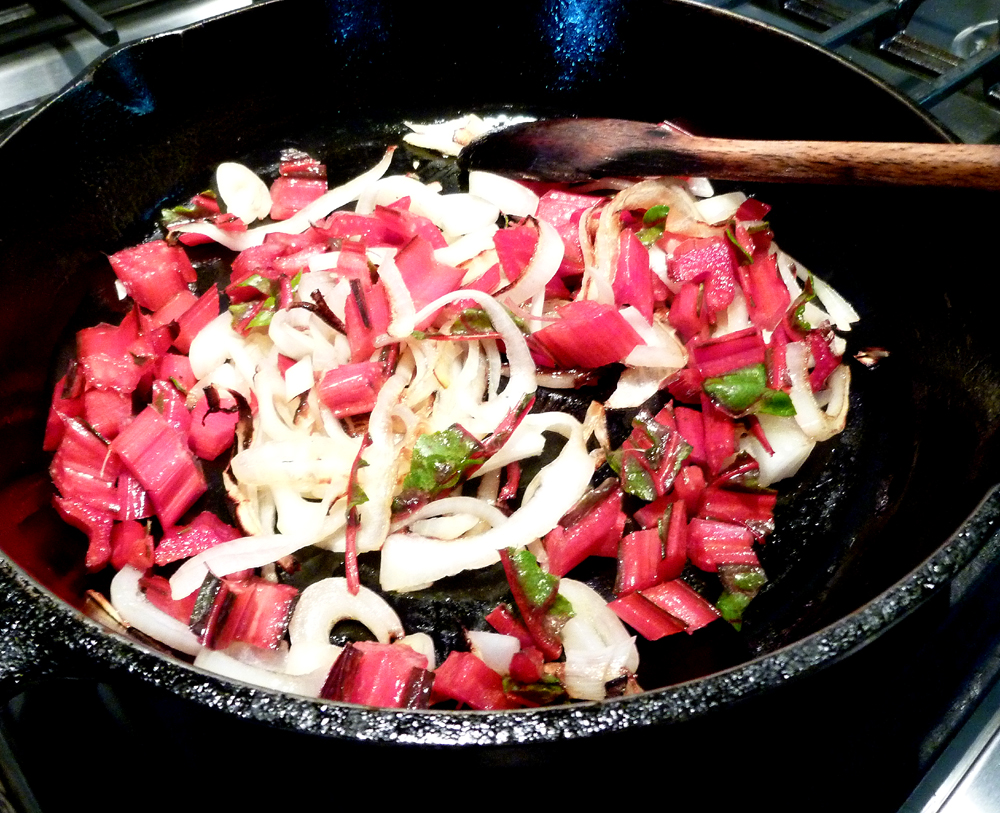
I had a bunch of chard in need of cooking and some hot Italian turkey sausage in the freezer, just the ingredients to go with the pot of Alubia Blanca beans. First, I sauteed a sliced onion in olive oil, then added the chopped chard stems and let them cook until tender.  No need to discard them ─ they are a delicious addition to a dish, adding a slight crunch to counter the silky cooked leaves. And the red stems add a welcome note of color.

chard stems

Next I added two crumbled Italian sausages and cooked until they browned.  I stirred in a couple cloves of chopped garlic and a pinch of hot red pepper flakes.  Then I piled on the shredded chard leaves, covered the skillet and let them wilt.  Two cups of cooked beans went in next with some of their cooking liquor. I cooked this for several minutes to blend all the flavors then served up the dish in our new bowls from the pottery studio of Thea Tenenbaum and Lele Malferrari.  A good bit of grated parmesan and some chopped Italian parsley went over all.

beans and sausage

To go with this savory and succulent dish I made a salad with asparagus and oranges.

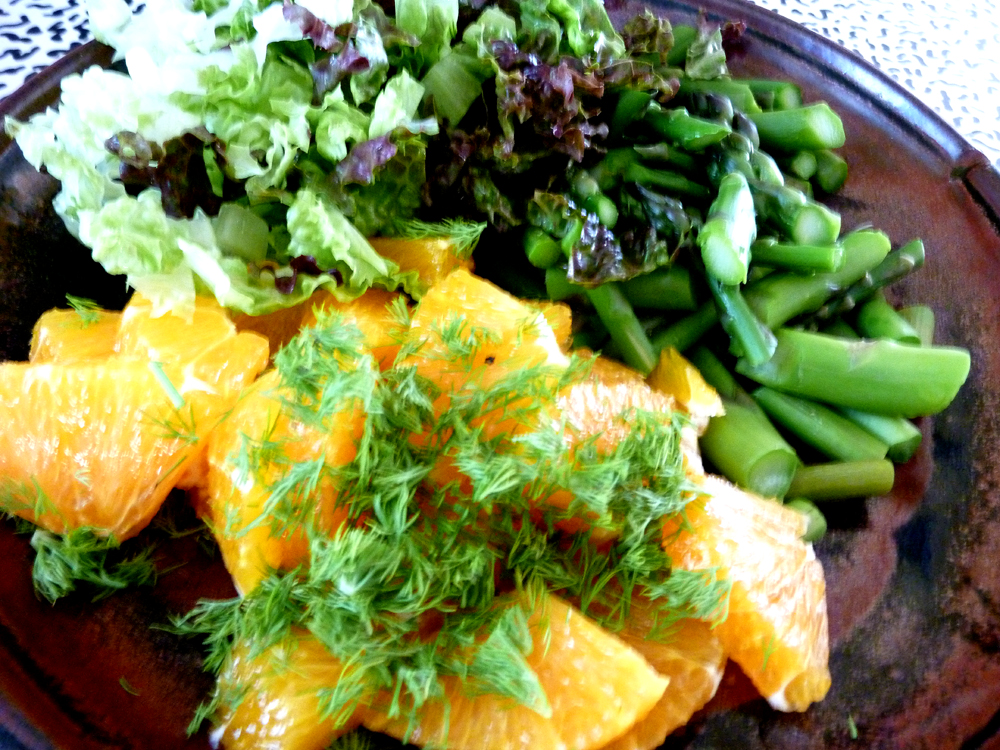
This is how I always prepare citrus fruit to go in a salad ─ cut the peel off close to the fruit, removing all the pith, then slice.  Sometimes I pull the segments from the membrane to make little orange supremes. Later, squeeze the peel over the salad to use all the yummy juice.

orange

I cooked half a pound of trimmed asparagus by laying it in a large skillet with water to just cover and boiling for two minutes. Then I cut each stalk into two inch pieces.  I sliced three or four leaves of red lettuce into ribbons and minced some fresh dill.

salad fixings

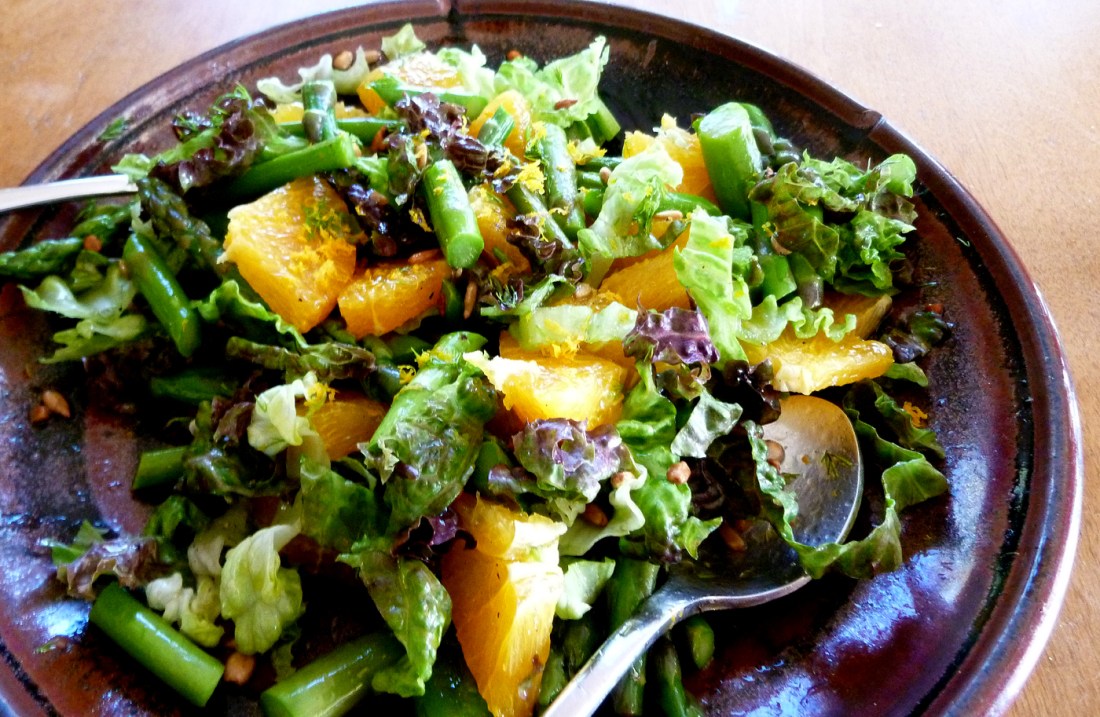
Tossed this with olive oil, orange juice from the peel, salt and pepper. I had some toasted sunflower seeds to strew on top, along with some grated orange peel.

asparagus and orange salad

Buon Appetito!

Top: Cooking in Sayulita, oil on canvas, 30 x 54 inches


Sunday lunch

rhubarb2

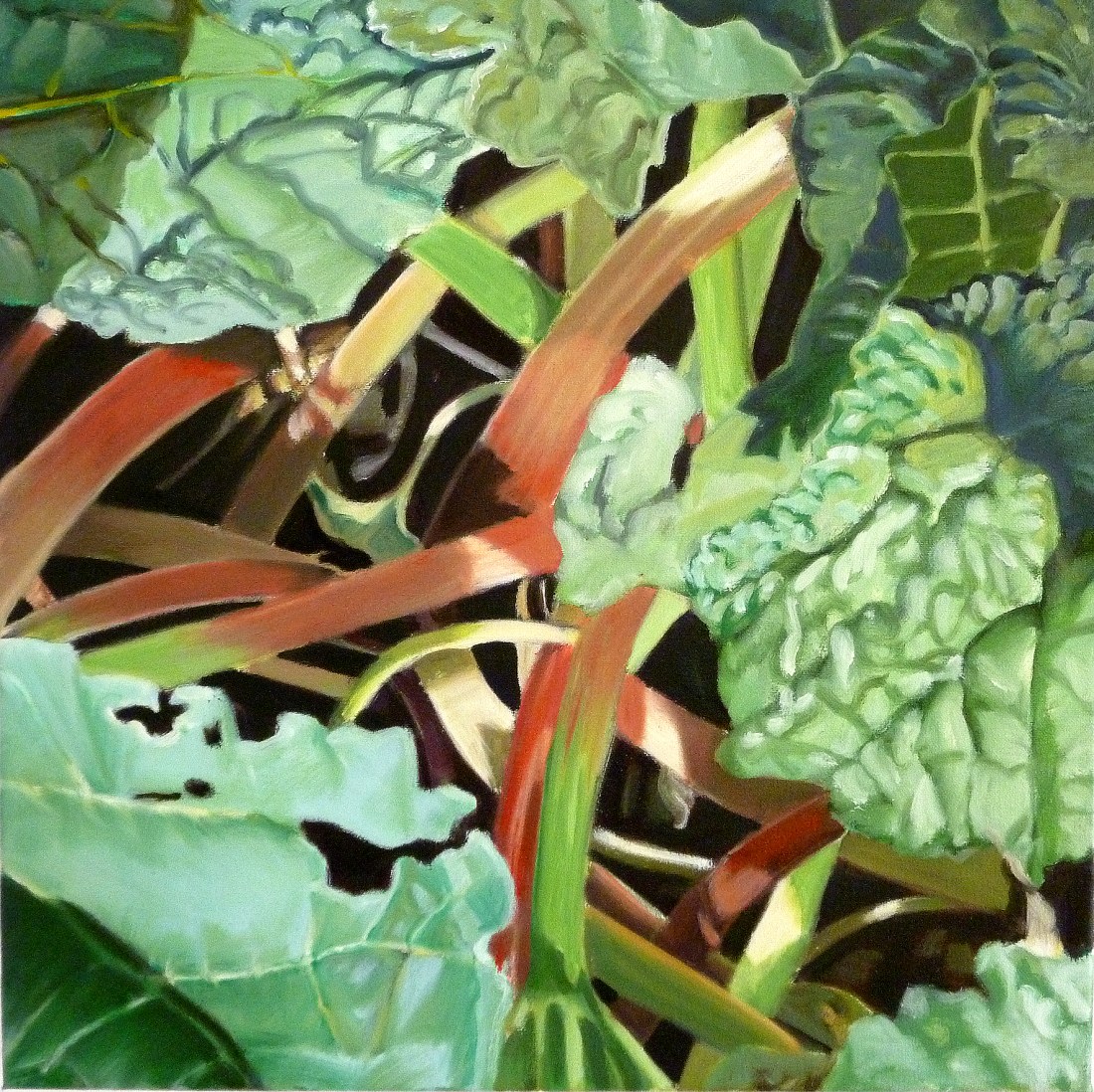
Each spring,  the rhubarb in my garden re-emerges in a glorious whorl of stalks and leaves. Last Sunday I cautiously picked a  bunch to make rhubarb muffins.

Several years ago, I was preparing a dinner party and planned to make roasted rhubarb and strawberries for dessert.  As I picked rhubarb from the vigorous plant growing next to my compost pile, I was bitten by a small rattlesnake hidden in the tight mass of stalks.  Now, I am cautious and poke into the plant with a stick  to be sure no unwelcome creature is hiding there.  After my encounter, I reclaimed the plant by making the above painting.

These muffins were inspired by those we once had at Xoco, a Rick Bayless breakfast spot in Chicago, where we exhibited annually at ArtChicago.  The combination of anise, corn and vanilla intrigued me and I figured out a recipe when we got home. Here it is:

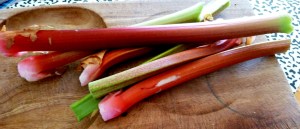
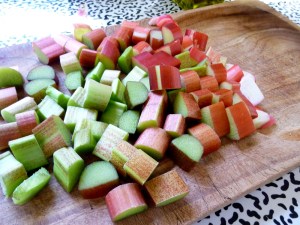
First, with caution, pick the rhubarb, then clean and cut  into 1/2 inch bits ─ enough for two cups.

stalks

cut rhubarb


For the muffins:

Combine 1 cup of cornmeal and 1 cup of unbleached flour with 1/2 cup brown sugar, 2 1/2 teaspoons baking powder, 1 teaspoon salt, and 1 teaspoon anise seeds.

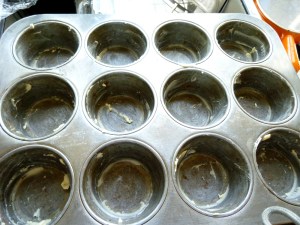
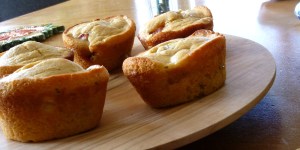
Stir in 1 cup of milk, (whatever you have ─ even unsweetened almond or soy milk), 6 tablespoons canola oil, 1 large egg and 1/2 teaspoon vanilla. Add the rhubarb. Fill muffin cups 3/4 full with the batter, distributing the rhubarb chunks evenly.  I like to pour the batter into buttered cups in order to get a nice brown crust.  Use muffin papers if you like.  Bake at 400° for 20 minutes.  Let cool on a rack for a few minutes before unmolding.  These are a bit delicate.  This makes 12-14 muffins.

muffin tinrhubarb muffins

While preparing the muffins my mind wandered to other recipes that include anise. Look for the Bizcochitos and Lisa’s Almond Biscotti recipes in How I Learned To Cook, An Artist’s Life.

Another great match with anise seed are these golden beets.

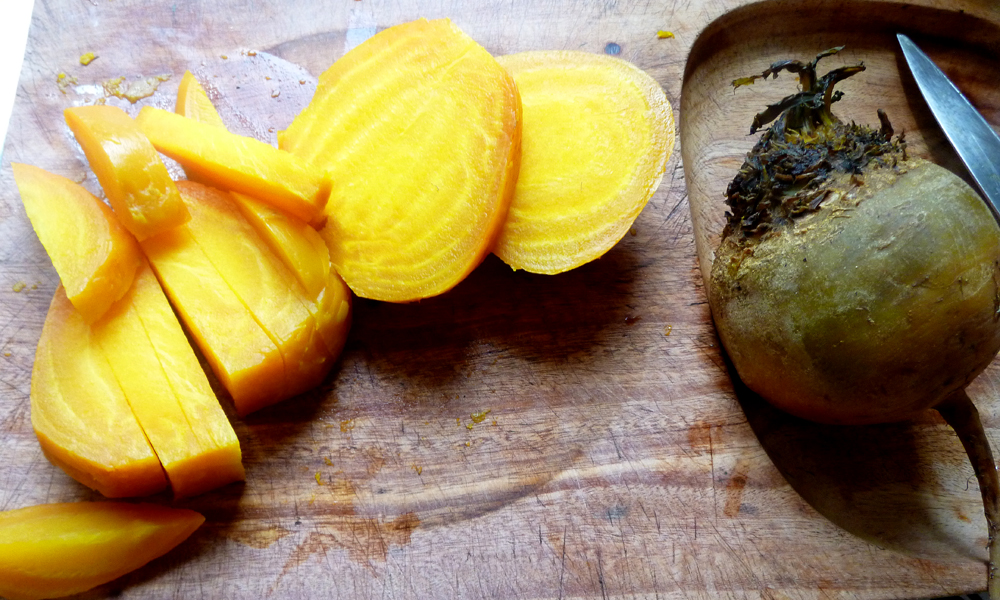
beets

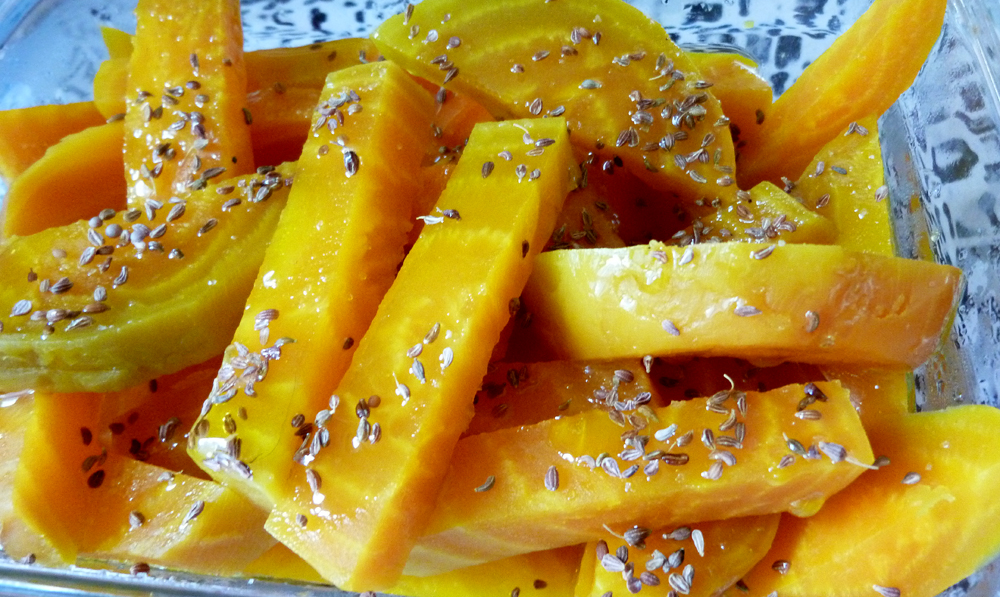
I steam whole beets until tender for about 30-40 minutes, depending on their size.  When cool enough to handle, I peel them and cut into batons about 1/2 inch wide.  For three medium beets, I add the juice and zest from 1/2 a lemon, a little salt, 1/2 teaspoon anise seed and a tablespoon or two of olive oil to the warm beets. Taste and adjust the seasoning. These are a great addition to a salad or alongside a sandwich or a spinach quiche.

beets2

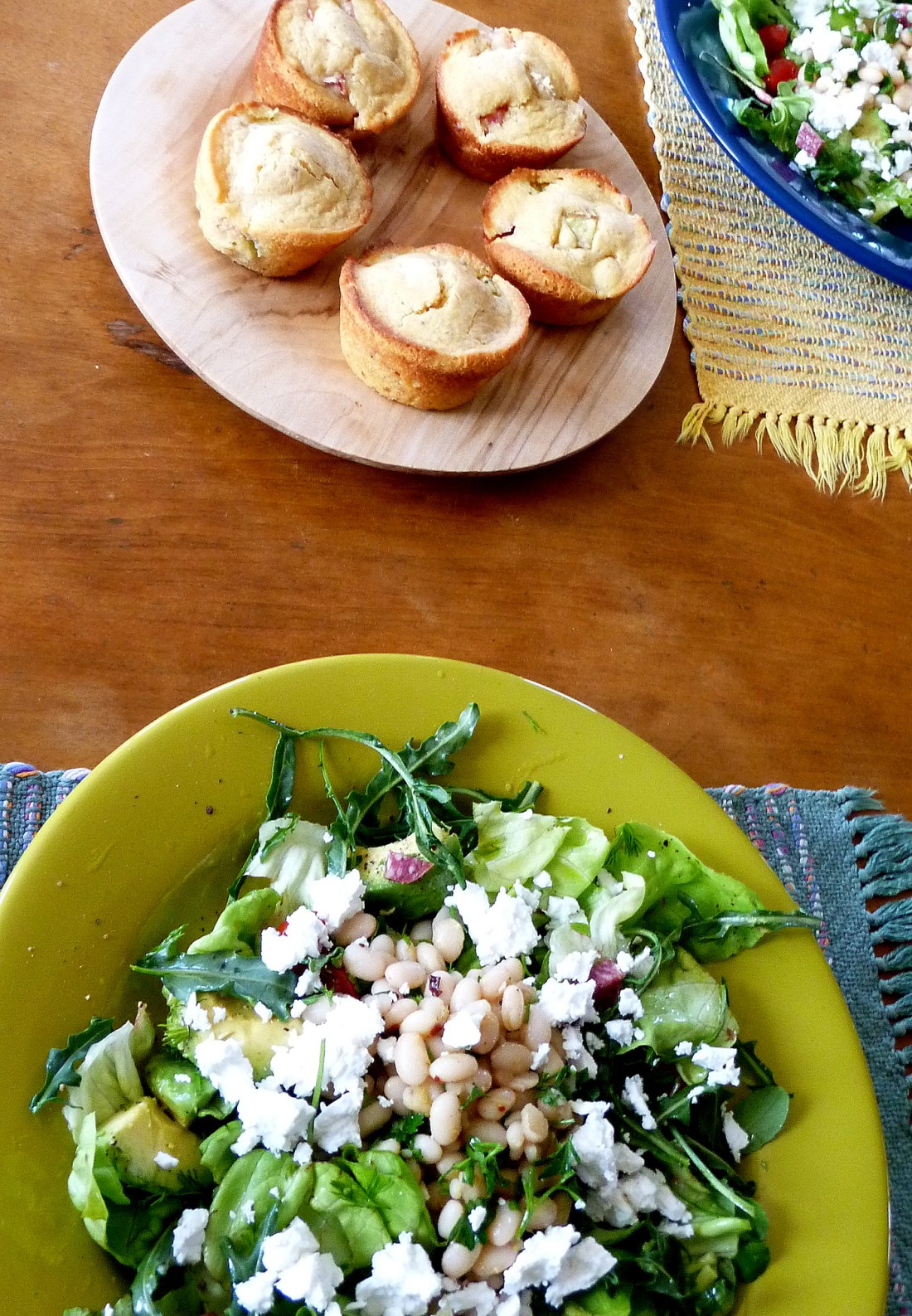
For our Sunday lunch I prepared a salad to go with the rhubarb muffins.

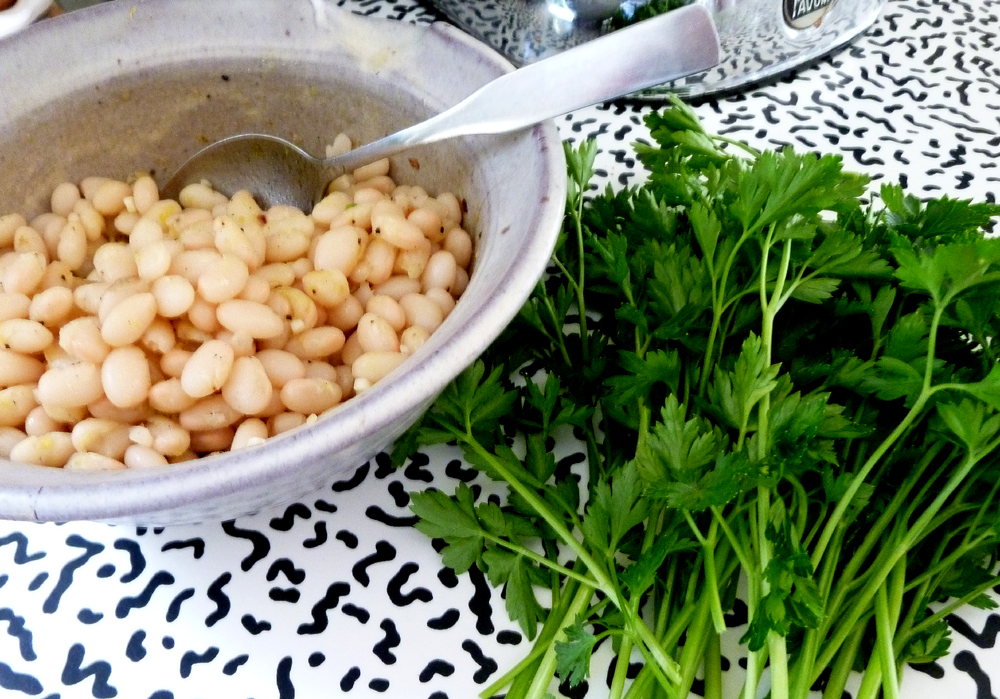
I had cooked some Alubia Blanca beans from Rancho Gordo and combined a cup and a half of them with a vinaigrette made of red wine vinegar, salt and pepper, olive oil, a big pinch of hot red pepper flakes, the zest of 1/2 a lemon and chopped parsley. If your beans are cold, warm them a little before marinating.  Canned beans are okay but nothing like the Rancho Gordos.

beans and parsley

For the salad, I combined some wild arugula (sprouting everywhere in my garden) with torn butter lettuce leaves, avocado chunks, a little diced salami, and halved cherry tomatoes.  I dressed this simply with olive oil, salt, pepper and lemon juice.  The beans went into the center of the greens and I crumbled some feta over all.  And there was lunch.

sunday lunch

Top: Spring Rhubarb, oil on canvas, 18 x 18 inches

A week with guests

MH18-01

Last week flew by in a rush of work.  Artist Mildred Howard was here and spent seven days working with Bud on new monoprint/collages.  She is a good cook so we have much in common ─ art and food.  I enjoyed cooking for her and didn’t run out of ideas.  Whew!

Each morning we ate our usual granola, fruit and yogurt.  For lunches I prepared salads.  One day I had no time to get into town for  supplies so I raided my pantry for beans, from Rancho Gordo of course, and the freezer for shrimp. (Using what food I have is a challenge and a pleasure.) shrimp salad

To arugula and torn lettuce leaves I added halved cherry tomatoes and julienned radishes.  I tossed this with a tablespoon or two of olive oil and a good squeeze of lemon, salt and pepper. There were only nine large shrimp  in the freezer ─ luckily nine is divisible by three! After broiling them in the toaster oven, I halved them lengthwise.   The warm beans were dressed with olive oil, lemon juice and a good bit of lemon zest. I crumbled feta over the salad and added a boiled egg to each dish for extra protein.

By Friday, we were all pooped after the intense work week.  Mildred flew back to Oakland and a busy weekend; Bud and I took a nap and watched a movie.

Then on Sunday we celebrated our friend Larry’s birthday with a lunch party.  Six of us sat around the table and told stories, drank champagne and laughed a lot.  I had decided to make a variety of tapas for the meal and the table was loaded with dishes.  There were tuna empanaditas:

empanaditas2empanaditas

And roasted red peppers.  Stuffed mushrooms and grilled artichokes and asparagus.  Roasted potatoes with a spicy Spanish tomato sauce. Cheese, including the delectable Nuage, ripe and creamy. Olives, white anchovies, salami, and bread from the St. Vrain Market in Lyons, where they bake a delicious baguette tasting like no other.  Arugula and endive salad with pears, and to top it all off, a wonderful chocolate tort made by Roseanne. A new friend, Françoise,  brought homemade chocolates flecked with gold.

Table

I was so busy cooking, then eating, and enjoying our guests that I forgot to take pictures.

Here are recipes for a couple of the things I made:

Stuffed Mushrooms

This is a versatile recipe ─ add whatever sounds good ─ crumbled, cooked sausage ─ chorizo or Italian, cooked spinach, ricotta etc.

Start by cleaning large mushrooms, white, cremini, or portabello. Cut off the dry end of the stem and a bit off the edge of each to make a flat surface. (If using portabellos, remove gills and throw in the compost.)  Finely chop the trimmings and the stems. If the trimmings are meager, chop up a couple whole mushrooms.

Mince a small onion and saute in butter or olive oil until translucent.  Add the mushroom trimmings and cook until tender, then add a chopped clove of garlic and cook a minute.    Let cool a bit then mix in fresh goat cheese.  For a pound of mushrooms I used about half a small log. I added fresh chervil, an early spring arrival in my garden. Chives, basil, mint, thyme or parsley would also be good. Stir in a couple tablespoons of panko or other breadcrumbs.

Sauté the caps in olive oil until browned.  Arrange in a baking dish, then pile the stuffing on each. Top with grated parmesan and a few more crumbs.  Drizzle a little olive oil over the mushrooms. Bake at 350° until brown, about 20 minutes.

Grilled Artichokes

Once we had eaten these it was hard to go back to a simple, boiled artichoke.

First, prepare the artichokes by pulling away the small or wilted leaves at the base.  Peel the stem if you like.  Cut in half and scoop out the choke.  Drop into a big pot with plenty of boiling water and cook until just tender, 10-15 minutes. (Or steam.) Test with a skewer or small knife. Drain and brush with a little olive oil, salt and pepper.  Grill, cut side down, for 10 minutes.  Watch so they don’t burn.  Serve with a vinaigrette made with red wine vinegar, minced garlic, salt, pepper and olive oil.

Happy Spring and Buon appetito!

Top: Mildred Howard, Incontro con Casanova: il potere dell’ Altro, 20 3/4 x 17 inches

(Meeting with Casanova: the power of the Other)