by Mimi Hedl
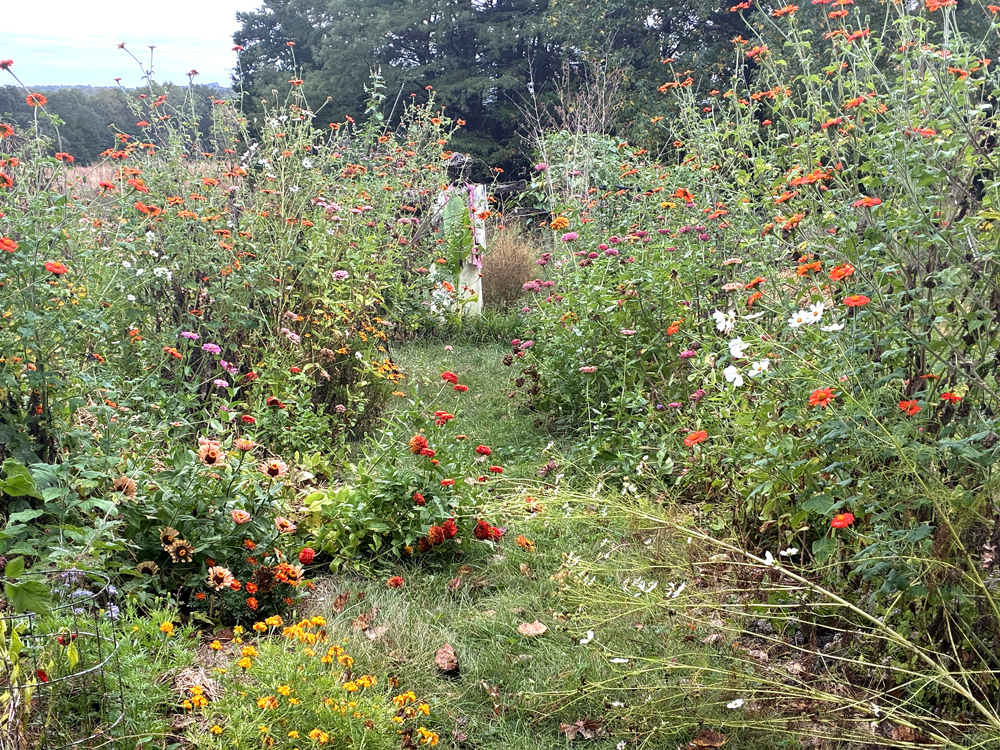
With mid-October arriving early, the sun hasn’t figured out how to shine into the house. The angle still isn’t quite right for this passive solar house to invite him in. I have the front door open as I can’t bear to think I’m shut in already. The chilly air feels good but every once in a while I walk outside and let the sun reassure me. Soon I’ll be taking down the screen door, putting on the vent covers for the two roof turbines upstairs. Then I won’t be able to pretend we haven’t moved into the dark seasons.
My energy level seems impressive. The intense summer heat turned me into a slug from noon until five as we all waited for the sun to withdraw. (We have a fickle relationship with him, no doubt.) Now I can work until quitting time at three without complaining. So it really wasn’t just age that was slowing me down, there was an outside influence too. That is a huge relief. We never know what we might lose next!
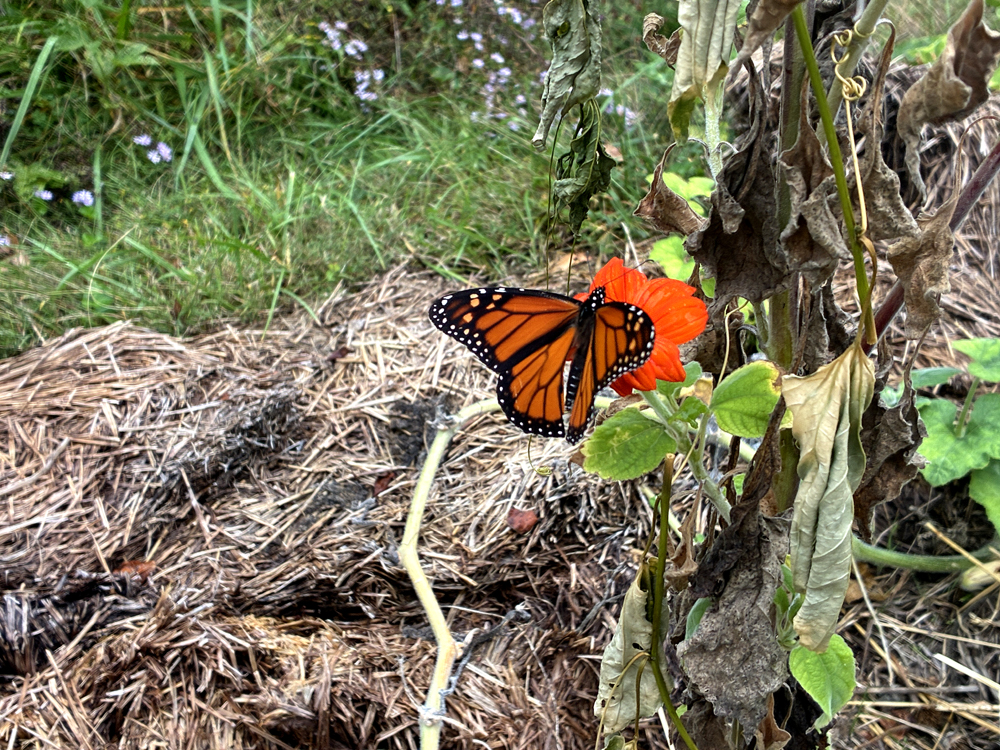
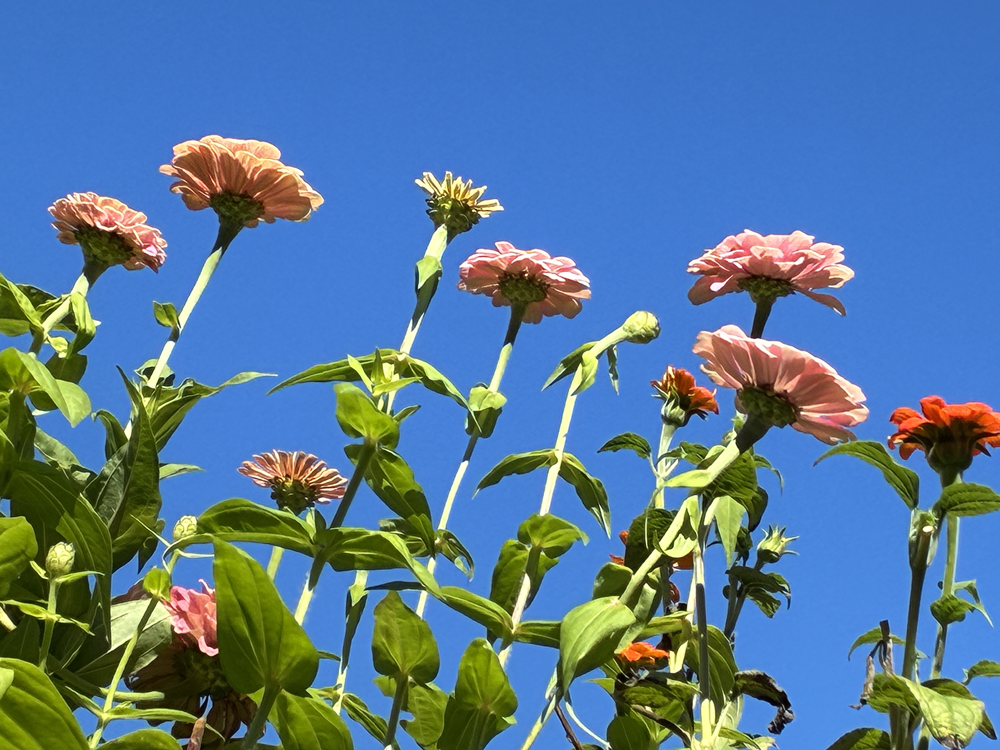
The monarch migration has ended. A few lost souls may show up, but the throngs are well on their way to Michoacán and the oyamel fir forests where they’ll spend the winter with millions of others. Maybe you’ve seen them. A friend of mine has. Words fail, she says, as often happens when Mother Nature floods us with wonder. To have some here all summer and then the multitudes that come through, sipping nectar from the asters, zinnias and Mexican sunflowers, gives me a feeling of communion. They spread the word, however that works with butterflies, and more come every year. As the adage goes, if you grow them, (the nectar plants) they will come. Hallelujah and Amen.
Seed saving continues in earnest. I have to submit my offerings to Seed Savers Exchange by the first of November. I limit my offerings as it takes time to send off entries etc. and that time has passed for me. I remember the years when that task took all day on Sundays to fill requests. I did my time and now I’ve moved on to naps, reading, writing letters.
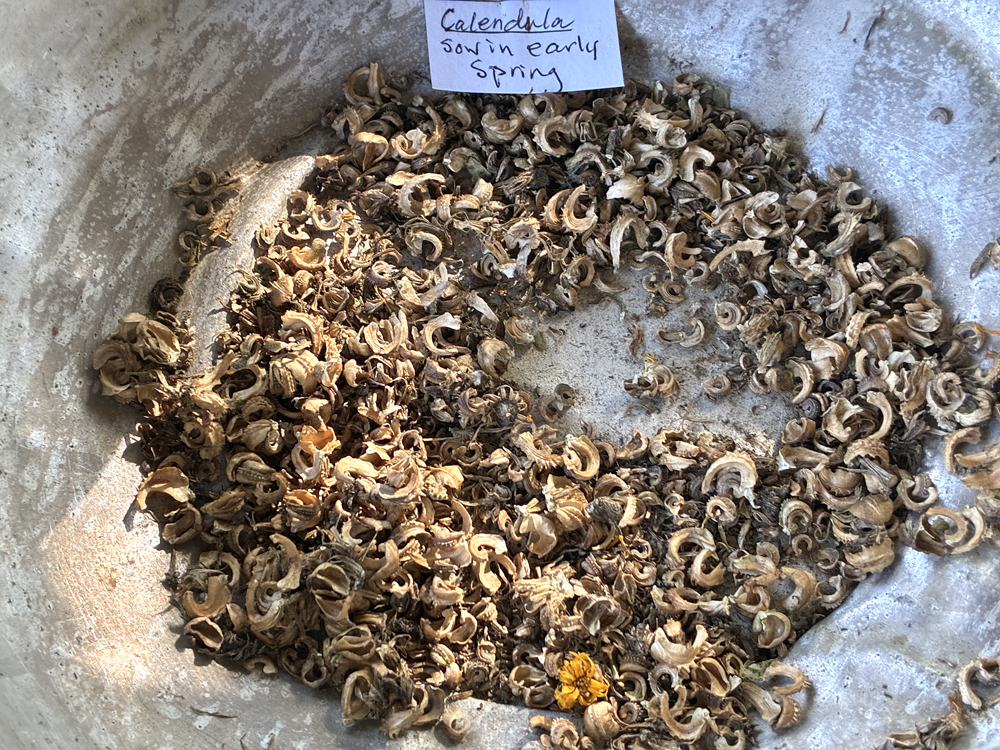
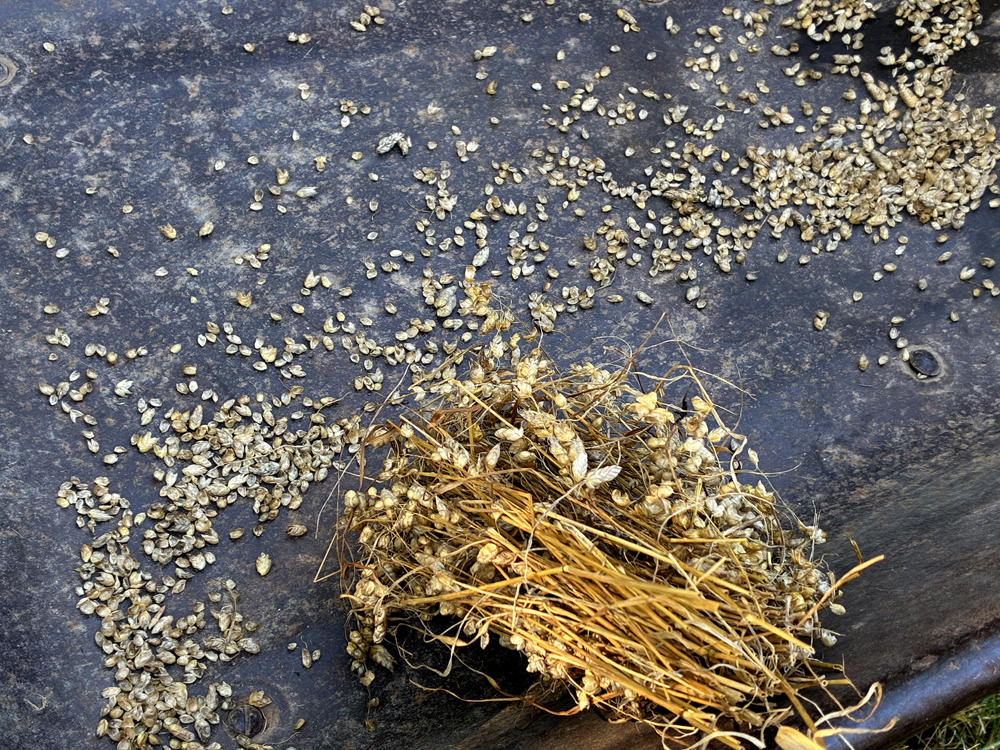
The process still invites. Seeds fascinate me. I see them as treasures, things to gaze at, like any work of art. Each variety of seed requires a different way to separate the chaff from the seed. The calendula for instance. Each seed pod has an outer layer of semi-stiff ‘chaff’ that looks like the seed, only larger and bendable. It exists like a placenta, to protect what’s inside. You cannot bend the seed. If you collect large quantities of seed pods, you’ll be tempted to thresh them all together. That’s fine if you’re in the business and have equipment that can do that separation. But if it’s you and wheelbarrow, it can be a little frustrating. Don’t you find it funny that directions can be a dozen words and then it takes an afternoon of strong words plus frustration before you’ve solved the problem? Directions should come with warnings.
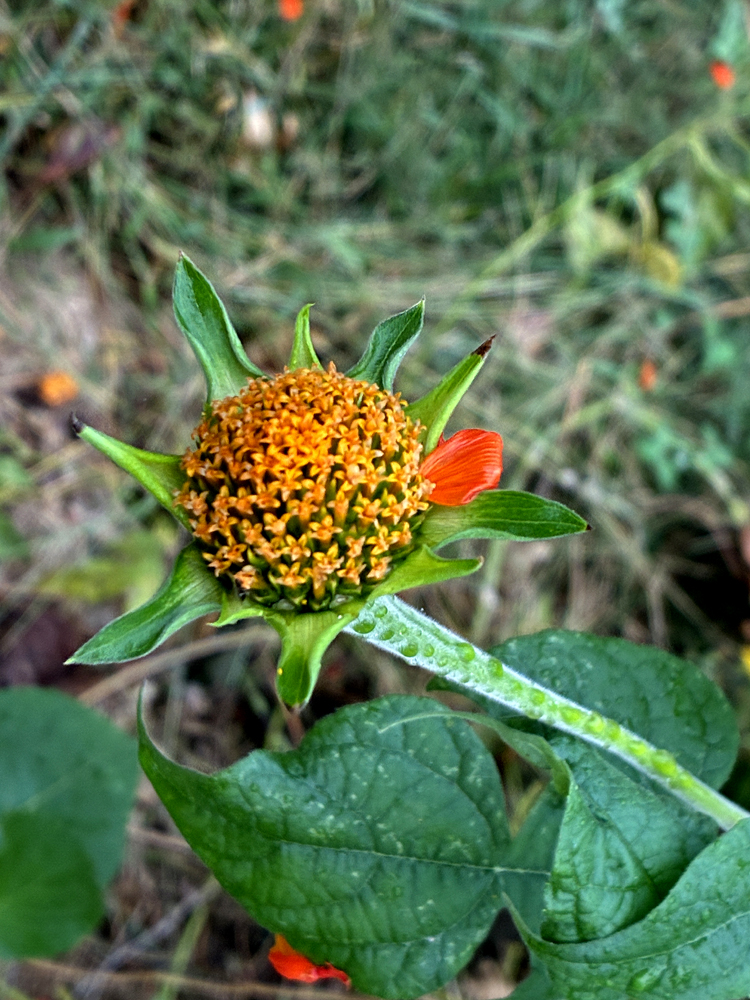
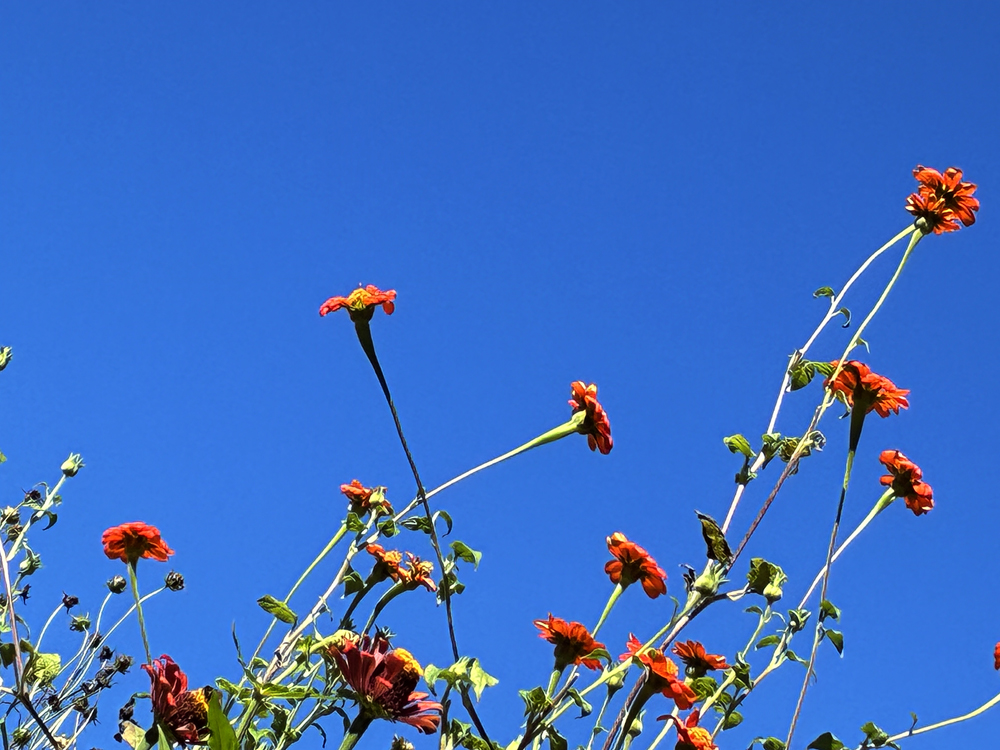
I went out to warm up on this sunny October afternoon. I took scissors along to cut back the spent tithonia flowers, the Mexican sunflower. You can see how polished off the flower looks after the monarchs sucked the nectar and bees collected the pollen. They need to feel like the tank is limitless. As I cut the flowers, I saw several monarchs, then two more and another one over there. Yeah, I said to myself. Then I saw two monarchs joined together on the main stem of a tithonia. I stood and watched for at least five minutes. I took a chance they’d still be there and ran into the house to get my phone so I could photograph them.
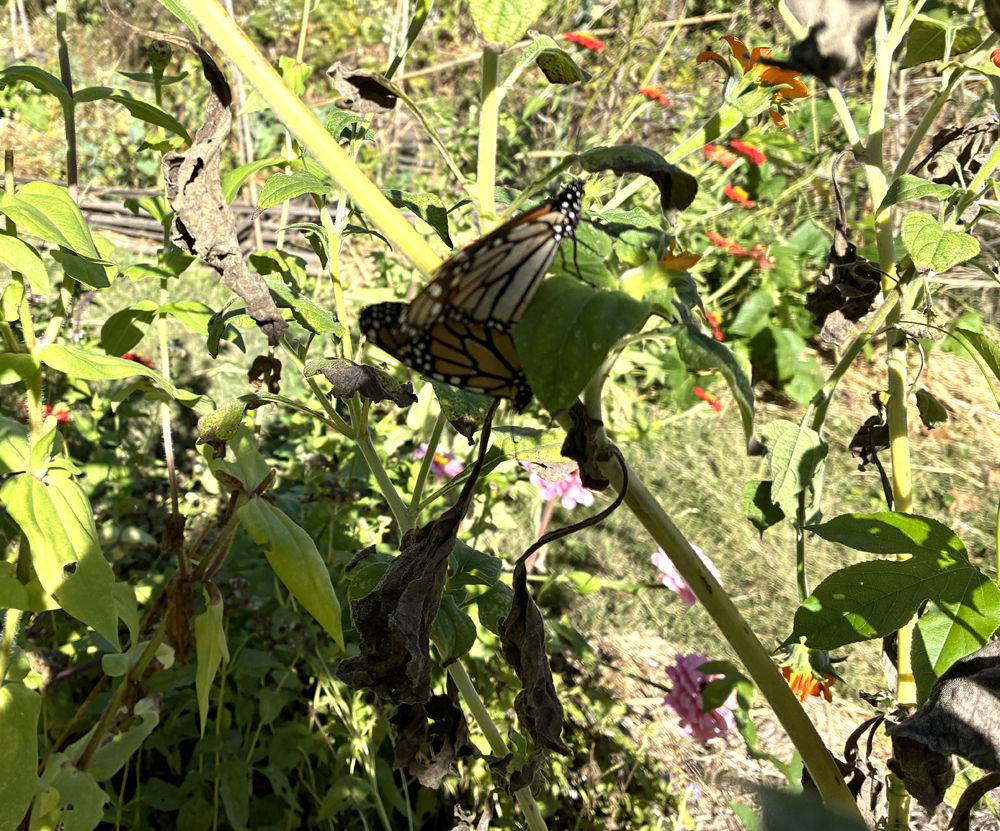
Phew, they were still there. I stood for another five minutes, then I decided to lie down. Wish I’d brought a pillow with me. After another ten minutes, since I had my phone, I decided to ask Google why two monarchs would stay together so long. And out came the answer: after mating, the male will fly them to a safe spot and they can stay in that position from thirty minutes to sixteen hours! (for biological purposes). Well that ended my moment with them. I am not spending the night staring at two monarchs carrying on biologic needs. But another window opened into their world, staying still for all that time, and I feel grateful for that gift.
It’ll get down to 40° tonight so I don’t expect they’ll want to stay. There is still milkweed around for her to lay her eggs, but it’s unlikely the cycle can be completed before frost. She’ll have to fly further south to lay. I’d say this was poor planning on the male’s part. As for the female, she’s a victim of his strength although she can mate with other males and choose what sperm she wants to use. Don’t ask me to explain that one. What a wondrous way to end the monarch season, to see another aspect of their transition.
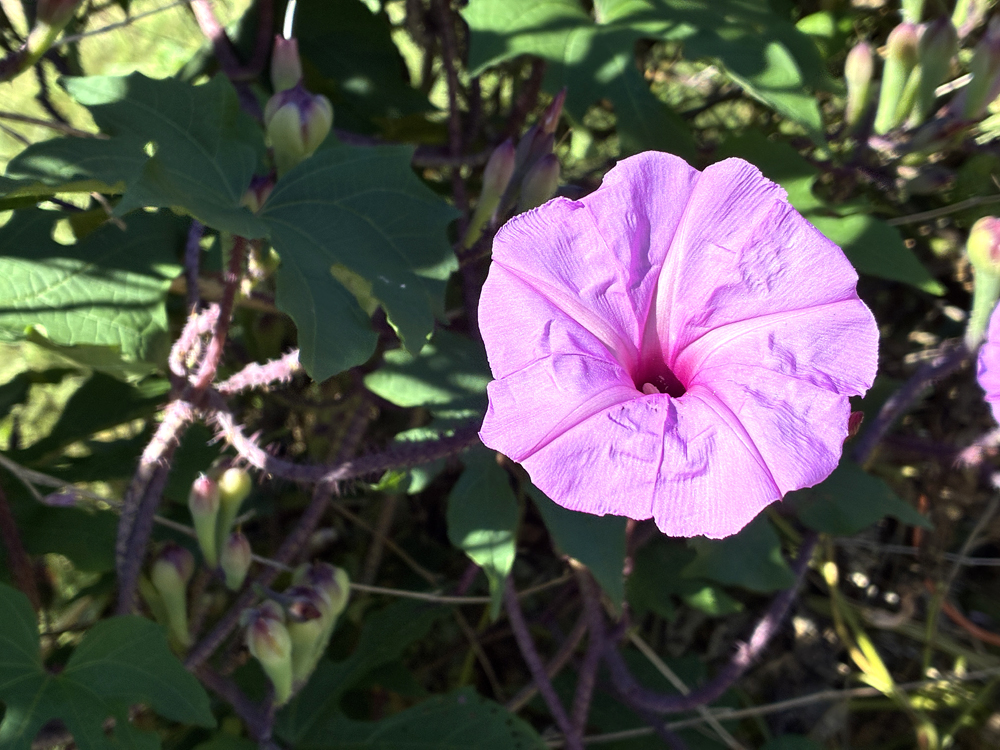
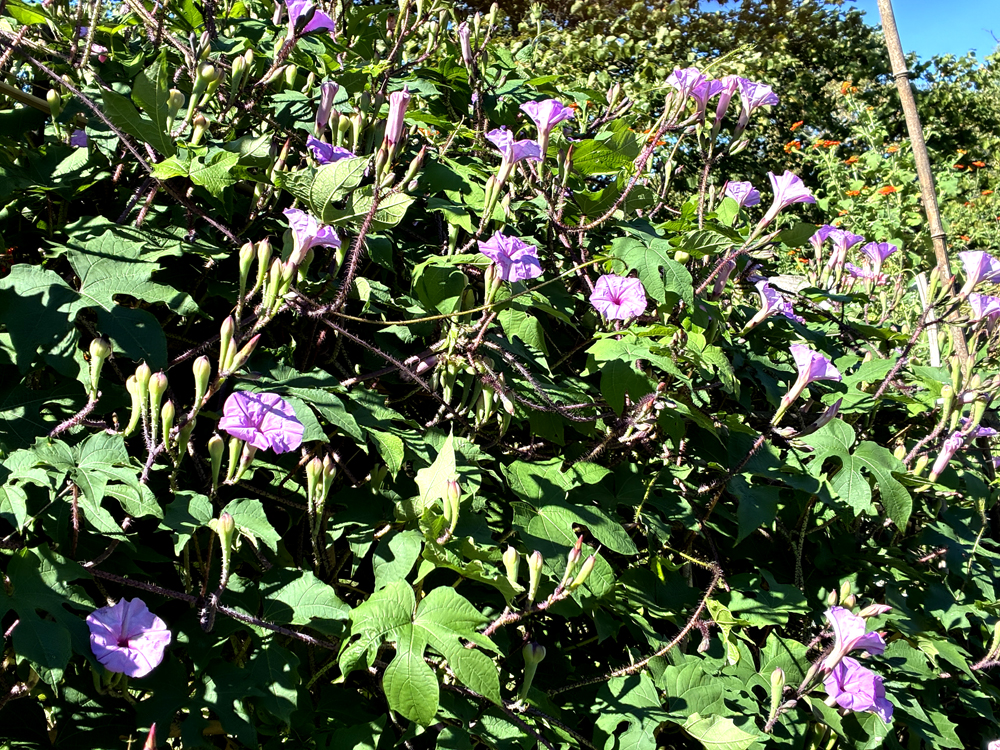
I’ll start a fire in the cook stove by four or so. I want to roast some jalapeños and the last of the eggplants for baba ghanoush. Also have pesto to make and greens to blanch. It feels good to greet the cooler weather with good food and happy thoughts of the passing summer. My nights on the summer kitchen are dwindling too. The down quilt keeps me cozy on these chilly nights. No insects keep me company, only the coyotes, calling to each other across the woods. Their cries pierce deep as I imagine them running through the field. We’re all navigating this change.