by Mimi Hedl

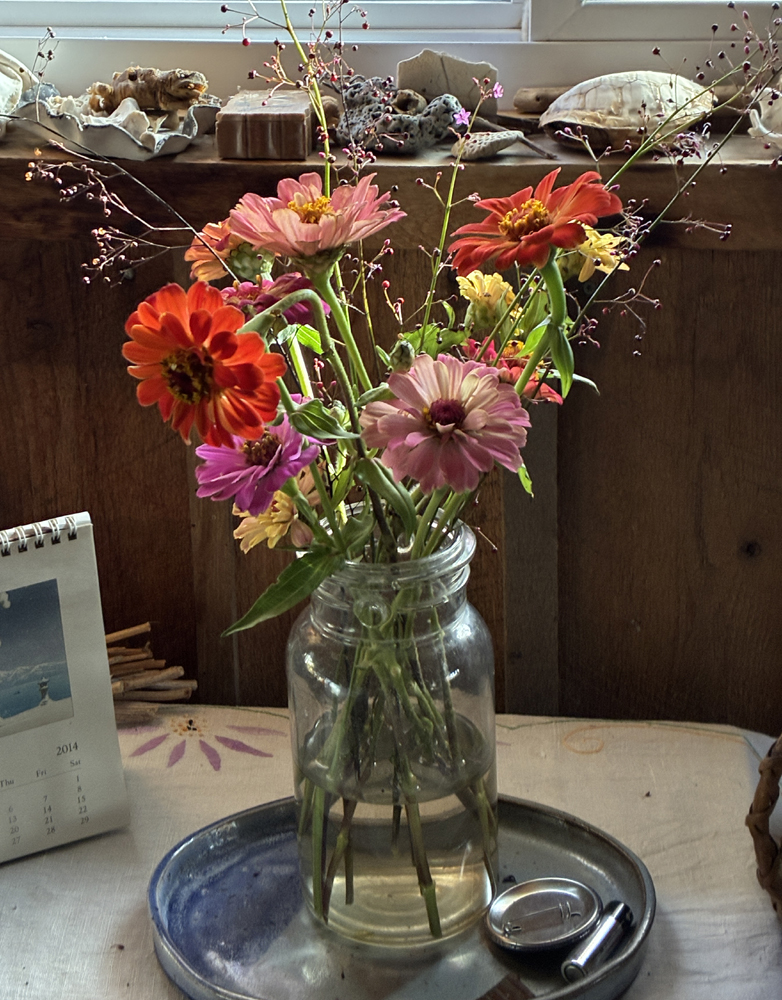
Much time has passed since I’ve talked with you. We’ve gone from a drought-filled summer to a monarch migration, the last of the monarchs passing through in early November. Luckily we still had nectar plants for their journey, thanks to the tithonia, (Mexican sunflower) African tuturu, white cosmos and the beloved zinnias. Usually many species of the native asters provide fuel for the monarchs, but our severe drought reduced their brilliance and many of them bloomed later than usual.
After we dig the garlic in early July, we have sixty empty square feet. In years past, we’d sow bean seed and late cucumbers and zucchini. Now with different needs, supplying beauty and nectar becomes a priority. No doubt this beloved earth of ours gave the monarch, buckeye, sulphur, blues, pipe vine swallowtail and many other butterflies the energy they needed to carry on. The head gardener and I stood by in amazement as these flower seeds germinated and prospered, with no help from irrigation, just that underground river I speak of with respect and appreciation.
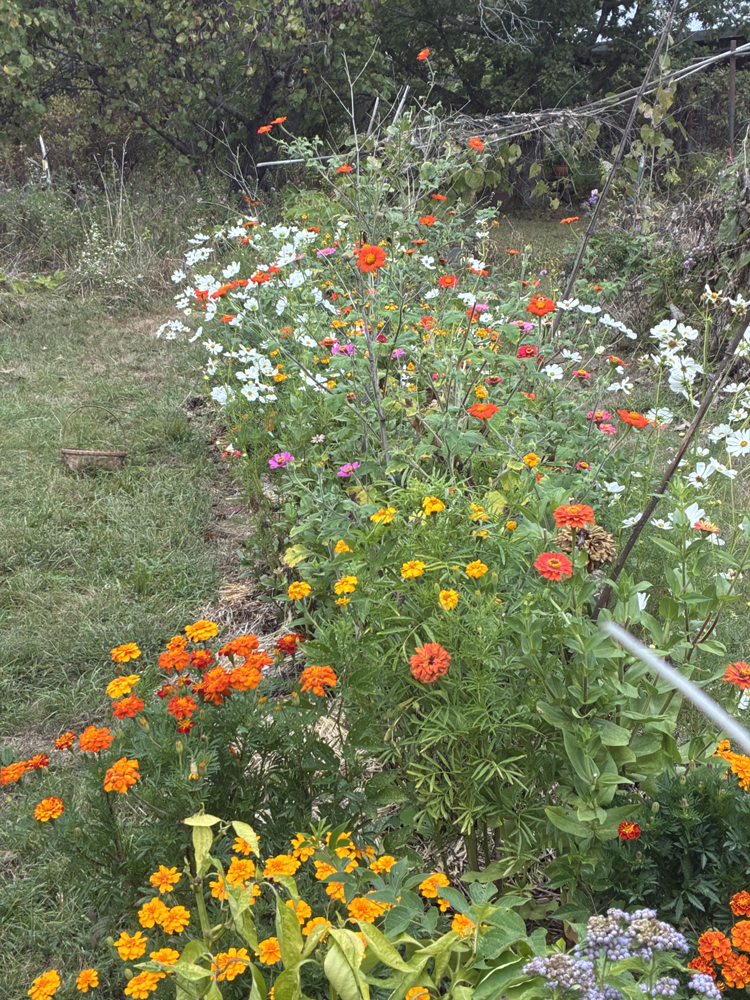
We added more straw to these flowers as they grew, hoping to fortify them against the drought, an extra layer of protection, like a down vest in the winter. We couldn’t see what went on underneath the surface of the soil but my imagination certainly painted pictures of an underground world maintaining order for the plants above ground. The head gardener only rolled her eyes when I waxed poetically, which is my nature, but not appreciated by many except me!
Of course not everything prospered as the drought dragged on and on. The tomato plants tried to leverage their losses by abscissing the bottom leaves, a fancy botanical word for dropping leaves. It was sad to see all the dried up leaves but encouraging to see tomatoes still forming, ripening, and peppers simply going crazy. We’ve never had such a pepper crop! They can survive dry conditions and obviously thrive too.
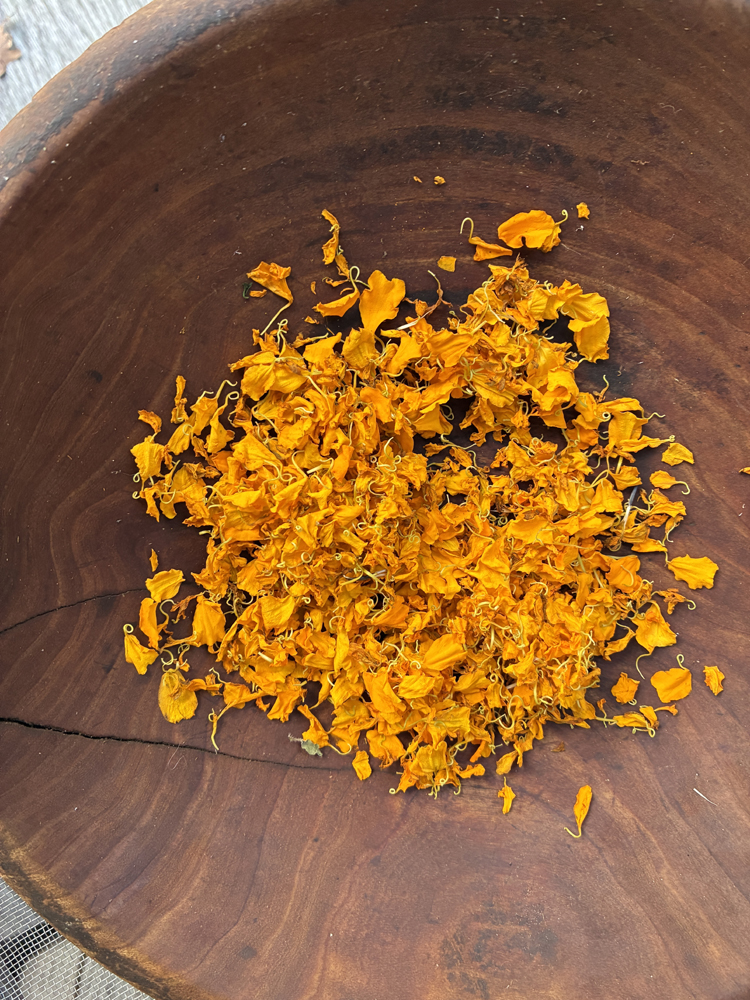
The drought allowed us time to observe how everything dealt with this summer. We didn’t have much to process in the kitchen. Drying peppers, herbs, tuturu flowers became easier because of the intense heat. These lessons will come in handy as the climate continues to change and we need to adapt. Letting the plants adjust to the water shortage showed me each variety’s strengths and weaknesses. I cataloged those points.
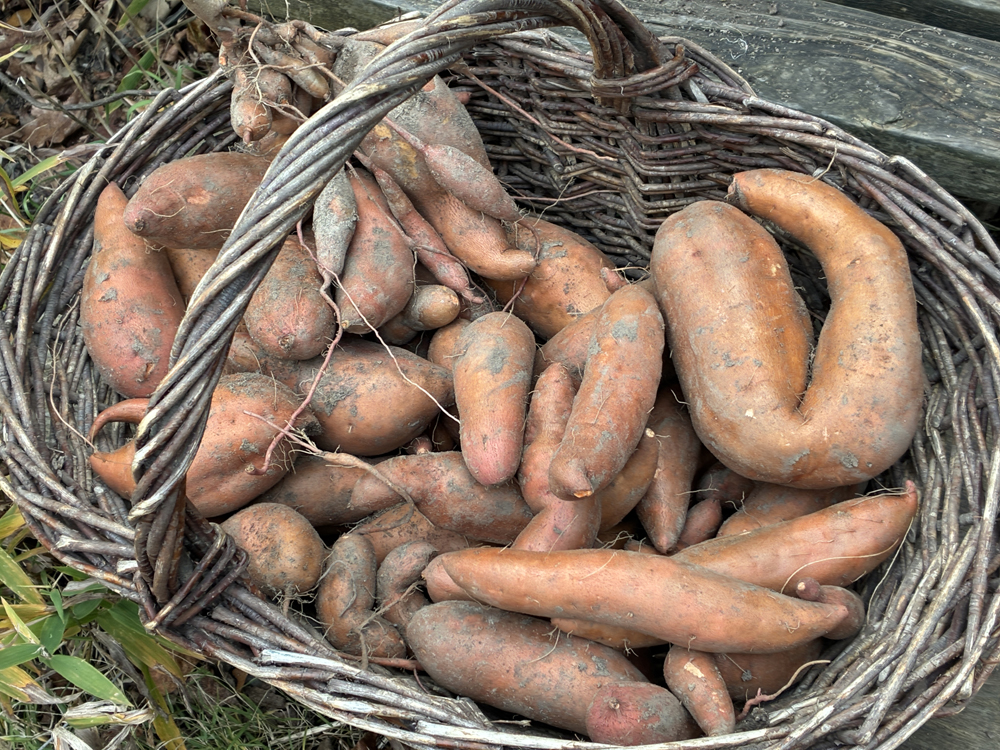
The sweet potatoes have never been more beautiful or prolific. Because they were grown in the container garden, in a wooden box, one foot wide by two feet long and one foot high, the voles didn’t dig their way through the soil, spoiling the potatoes as they usually do in the regular garden. These boxes have no bottom to them, so they roots can go as deeply as they need to for the roots to pump up water and nourishment.

The highlight of the season came in early autumn, when a friend brought Lilly, a researcher and part of Missouri Prairie Foundation, to Strawdog to tag monarchs. My friend, Gen, has been here during other migrations and has seen the scores and scores of monarchs hanging from the trees as they bedded down. On that mid-October day the monarchs were plentiful enough for the three of us to tag thirty in short order.

It was such fun to watch Gen and Lilly both go after the flitting monarchs. They’d throw their net over the monarch, then flip the net to prevent an escape. They’d come over to me, sitting in the shade, with clipboard and spreadsheet. They’d carefully reach into the net. With their first and second fingers they’d clasp the butterfly with wings upright, around its thorax. Carefully pull them out of the net while I had a tag with number on the tip of my finger to hand off so they could place it on the ‘mitten’ shaped scale on the left side of the outer wing. Phew!!! A lot of explaining, a picture would make it easier, but we were so excited to be doing it all we didn’t take time to take photographs until the last tagging.
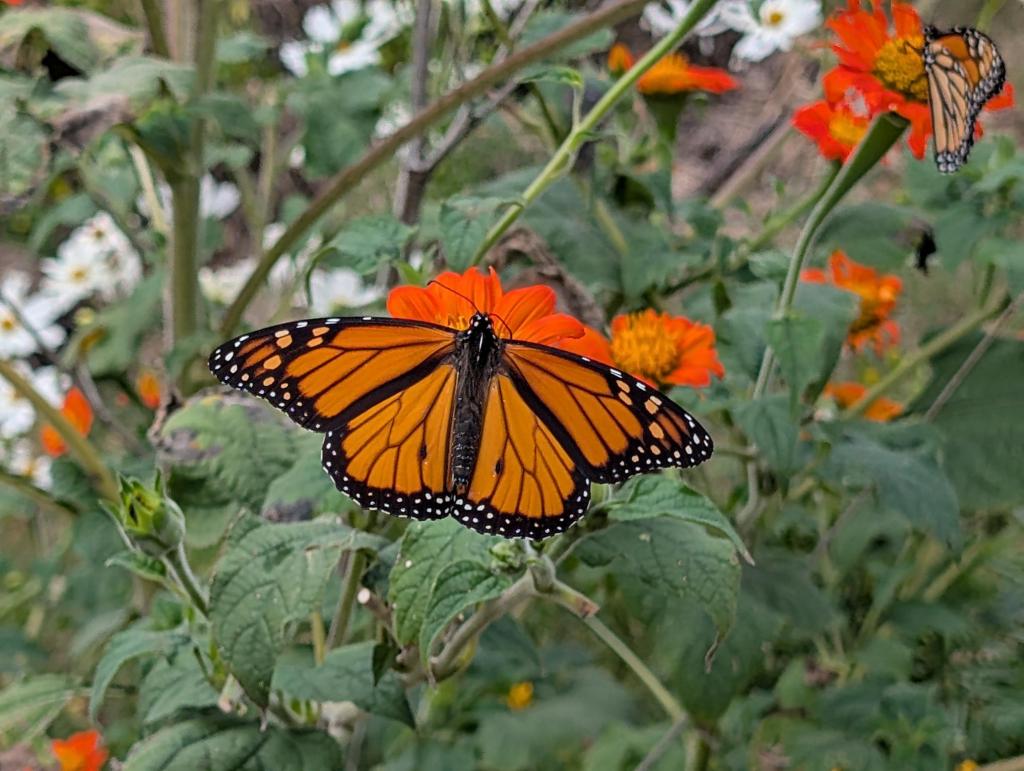
Before they released the butterfly, they’d again, carefully open up the wings so we could see if it was a male or female. (The two black dots on the lower inside wings say it’s a male.) I’d record the sex and we’d cheer as the butterfly was released. It was such a success Lilly said she’d like to bring some entomologists here next year and could she come back to visit? How delightful to meet a new friend, in tune with what I do here on Strawdog.
With a high today of 36° and a ‘feels like’ 18°, it’s time to take down the screen on the front door. It’ll be easier to haul in wood and a sure sign we’ve entered another season. I look forward to bedding down the gardens, feeding the birds, and watching the deer lope through the fields. Winter naps are another favorite with dreams of what next spring may bring.