It’s All About the Seeds

by Mimi Hedl

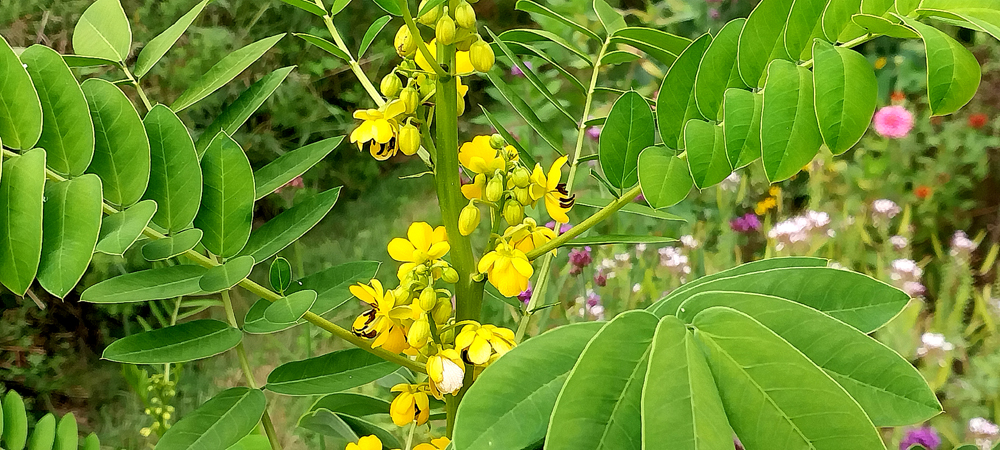
American senna

How quickly the height of summer has changed to the approaching autumn. I feel both relief and sadness. Walking the paths of the garden doesn’t require a scythe; everything has lightened up, lost weight, let go of their earthly bounds. I can see under the wire frame that the cucumber vines clambered over, pull the grass growing there and wonder if it’s too late to plant more beans. My mind starts to list all the cool weather crops we can plant.

Sunflower heaven

I take note of the skullcap, parsley, Rocky Mountain cleome and countless other plants making seed, some ripe and the head gardener reminds me we must not wait to gather them. Of course she is correct but I haven’t come to terms with saying goodbye to summer, when the house over flows with seed. The coming week of brutal heat should cure me, and probably will, but it’s like all transitions, it’s not easy to let go. Maybe that’s why I shy away from extended goodbyes. After all, isn’t every moment of our lives a slow farewell? Yikes! don’t let the head gardener hear that. You know exactly what she’ll say. I think of Ronald Reagan every time, “there you go again…” and for all I know, she doesn’t remember Reagan, it’s just her way of looking at my philosophical musings that she so disdains.

Seed collecting doesn’t begin in late summer. In spring we collected the first seed, from chervil then the Flander’s poppies. Every week this summer we’ve collected seed from several species. The seed pods first go into a paper bag, a five pound flour bag or a large grocery sack. Some seeds, like the poppies, are so small they get threshed directly into a bowl then poured into a seed packet. If not, the tiny seed would get trapped in the folds of the bag and then mixed with whatever variety landed in that sack next.

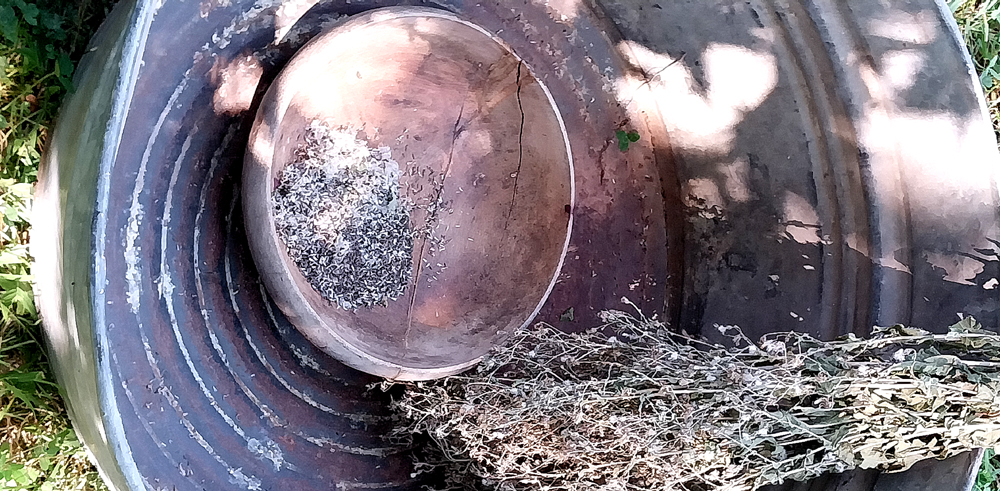
Threshing lettuce seed

We put these sacks on top of the wood box inside, clipping them shut with a clothespin so no mice can decide to investigate and end up feasting on a MRE. (Meal-ready-to eat in the military). Of course we learned the hard way and mourned the loss of valuable seed. When the wood box gets too full, we’ll take the time to thresh seed, always learning more efficient easy ways to do that too. Then the seed gets packaged, labeled and set aside to store appropriately in a cool dark spot.

This year my friend Agnes harvested the wild geranium seed, geranium maculatum. She cut the plants back and threw all the tops, where the seed was, in a big feed sack. We thought the seed would fall off and then sink to the bottom when we shook the bag. I’d never harvested the seed before. I thought about calling the crew up at Missouri Wildflowers and asking, but I didn’t want to bother them. I should have. The seed stayed attached to the tops and we had to go through the entire bag and laboriously, on a rainy day, separate out the seed after we decided just where the seed was. Next year we’ll know. That’s why I suggest to all new seed saver’s that they save some of the original seed, so they can see what it looks like and not feel confused when they go out to collect the seed.

Now we have two varieties of lettuce going to seed. They’re close to each other and will cross pollinate. We cut back the Cimarron lettuce seed heads and allowed the ‘really red deer tongue’ lettuce go to seed.(It IS really red and in addition, delicious!) The Cimarron lettuce will make another seed head later, plants never give up, and by that time we’ll have harvested the ‘really red deer tongue’ seed, so no problem.  We’ve been stalking all the wild lettuce around too, as if it crosses with any of the domesticated varieties, the saved seed will produce bitter, bitter, lettuce.

Passionflowers everywhere

The shapes, sizes, textures, colors of seeds and the pods they may come in fascinate me. We strung strings across one section of the ceiling so I could hang seed pods there. After 30 years, those hundreds of bundles of seed pods became filled with dust. A textile artist was visiting when I said I was taking them all down, she asked if she could have them. How convenient, I thought. We piled them into her van and she headed home to Texas with her enormous dog and slightly obnoxious boyfriend. I never heard what she did with them, but it made me feel good to pass them on, though I had to explain this to the compost pile, that had eagerly awaited the fresh ‘blood’.

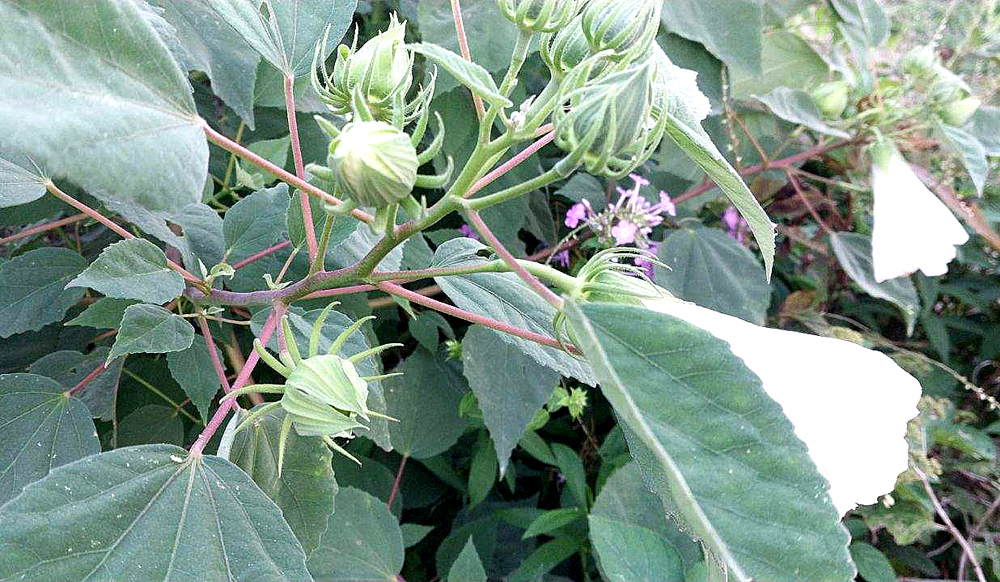
Hibiscus

As much as I love seeds, some seed simply has designs on domination. I cut back the hibiscus to keep it from being a mono-crop in the flower gardens. And then I pull up every seedling that manages to sprout before those roots can go down in calculated aggression and take hold of every square inch of the underground world. “Know thy plants! And their seeds” This adage should be inscribed on every gardeners frontal lobe to reduce the chances of losing control of our gardens. Do not be seduced by beauty! Nip it in the bud. That’s our only course of control. And don’t leave the seed stalks laying around. To the compost immediately. Some seeds will mature even when the seed stalks have been cut down, of course not the seeds you want, but rather the seed of those pesky plants you’re trying to rogue out.

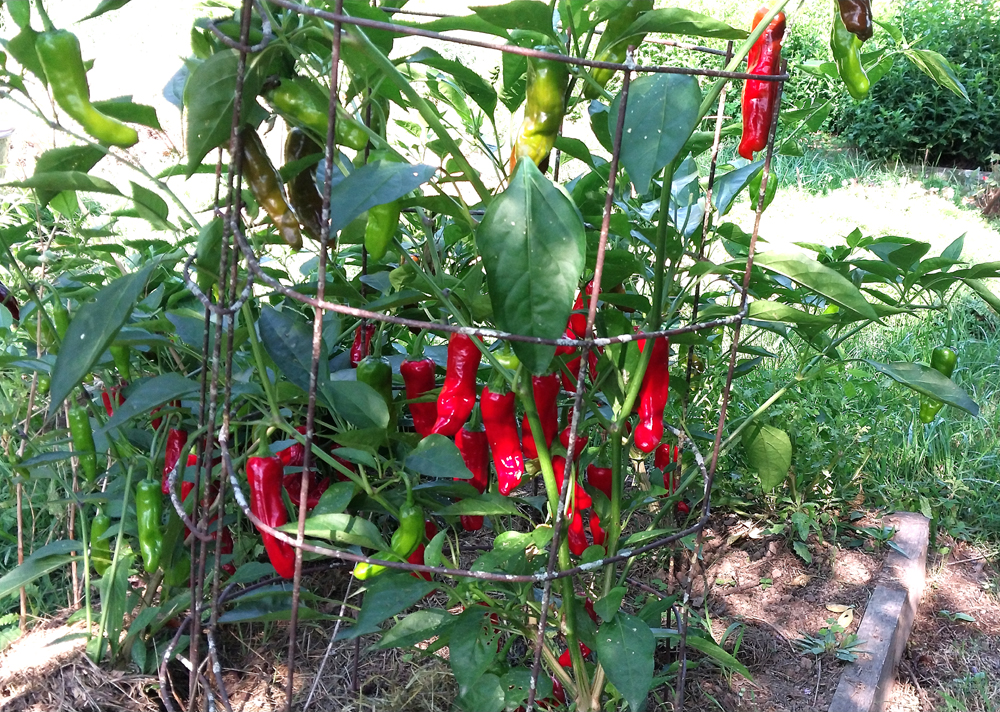
Chilaca pepper

The fall rains will begin with the cooler temps. Now the gardens look tired, worn out, having given their all. When the rains do come, we’ll witness another transformation with the asters and goldenrods of many species providing nectar for the migrating monarchs who have begun to appear. The maestra may have her baton but it’s merely ceremonial. She follows the lead conductor and bows graciously at the mysteries of this universe.

There’s always something interesting to observe on the farm.

Facing an emergency

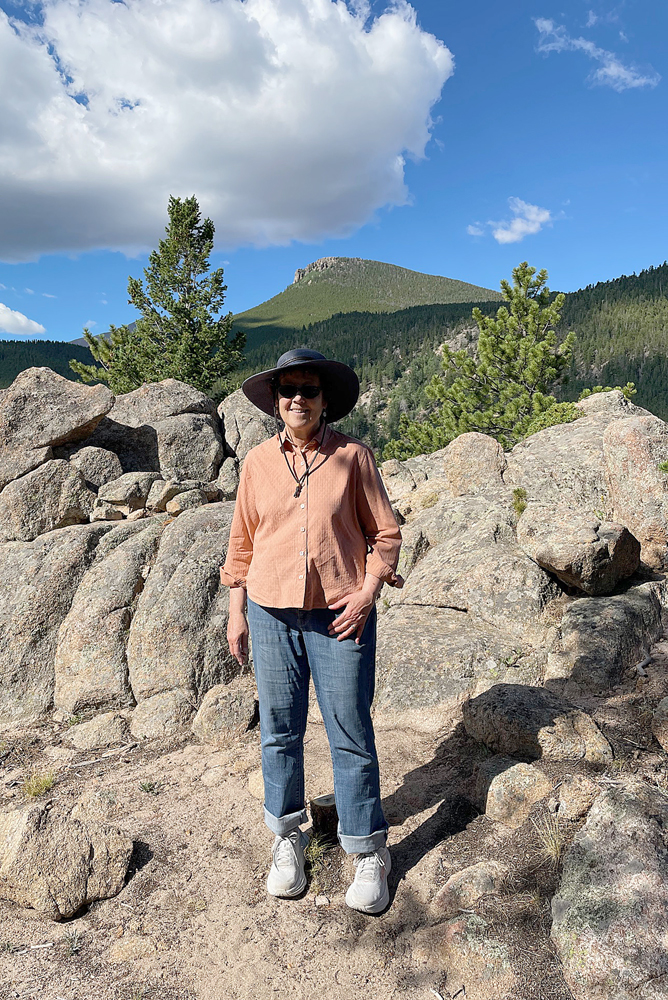
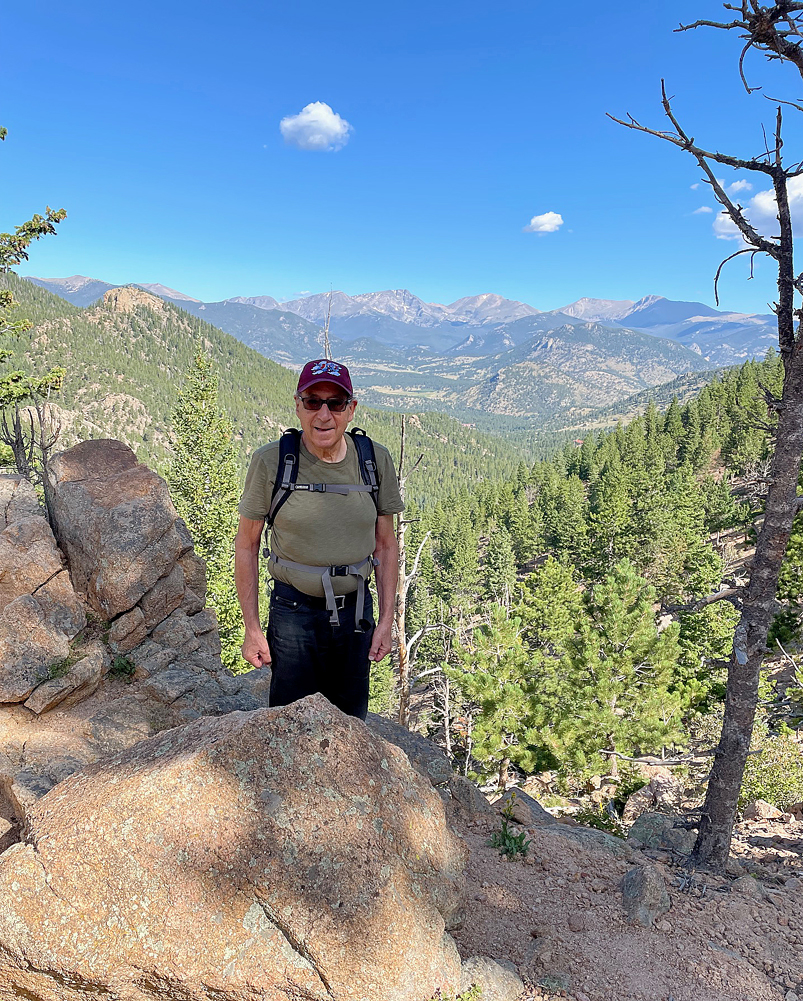
Zoë and Bud on the Adams Falls trail in Rocky.

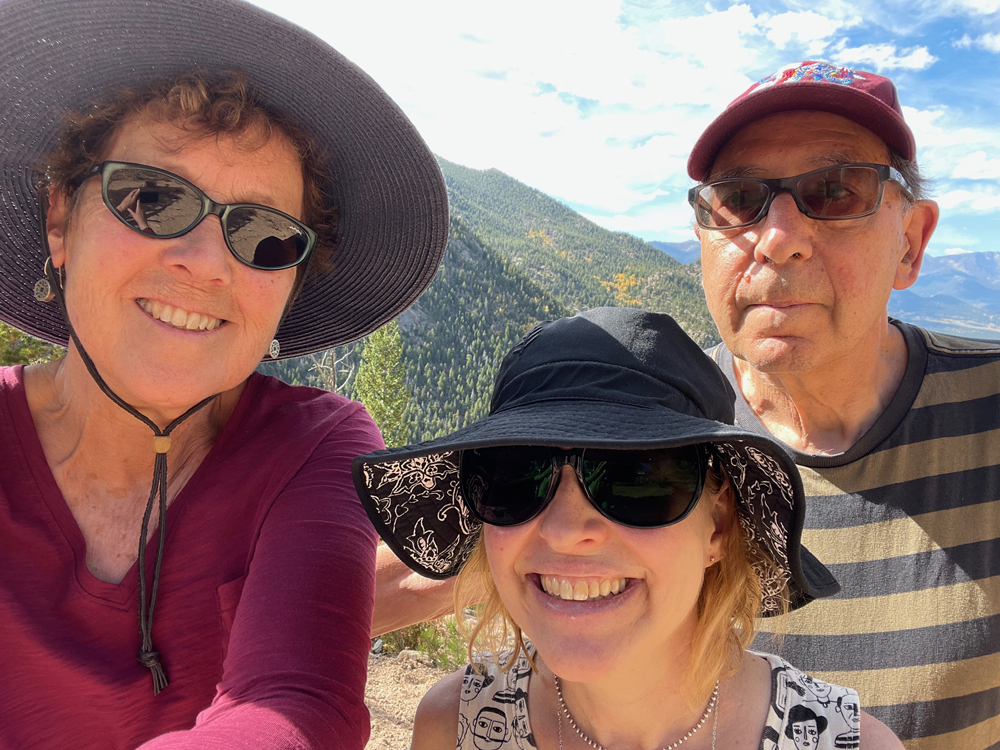
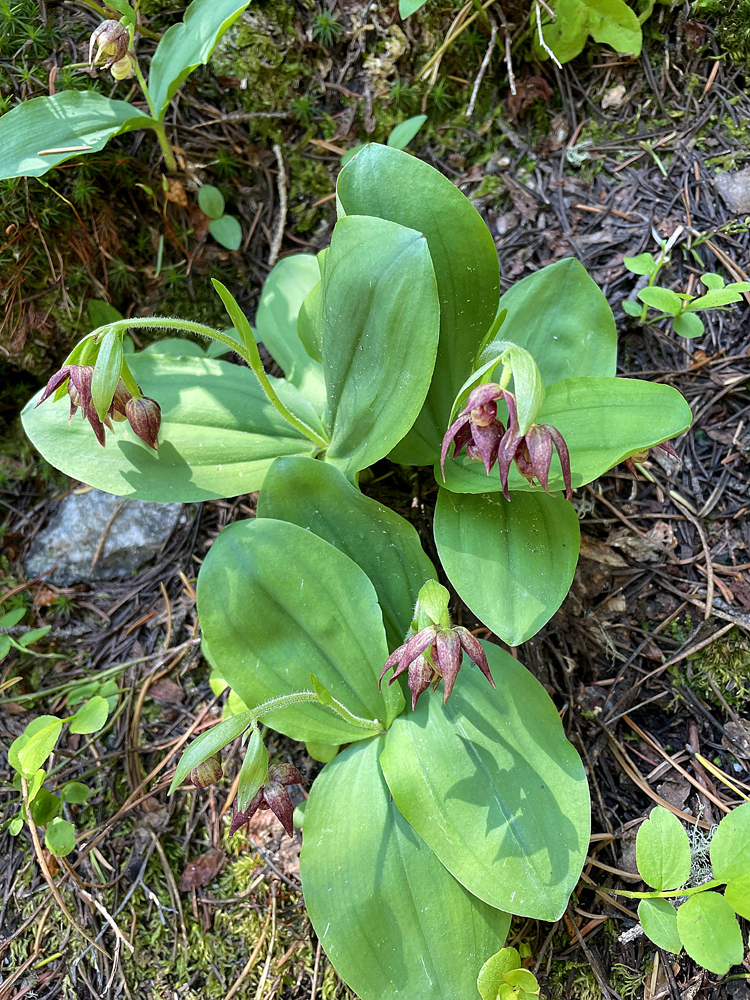
In the heat of summer here on Blue Mountain Road, we’ve taken a few excursions to hike in the high mountains. In July, the flowers were blooming in abundance on the Camp Dick trail. Bud, Zoë and I discovered this sweet orchid, previously unknown to us, in a damp spot along the path and many columbines.

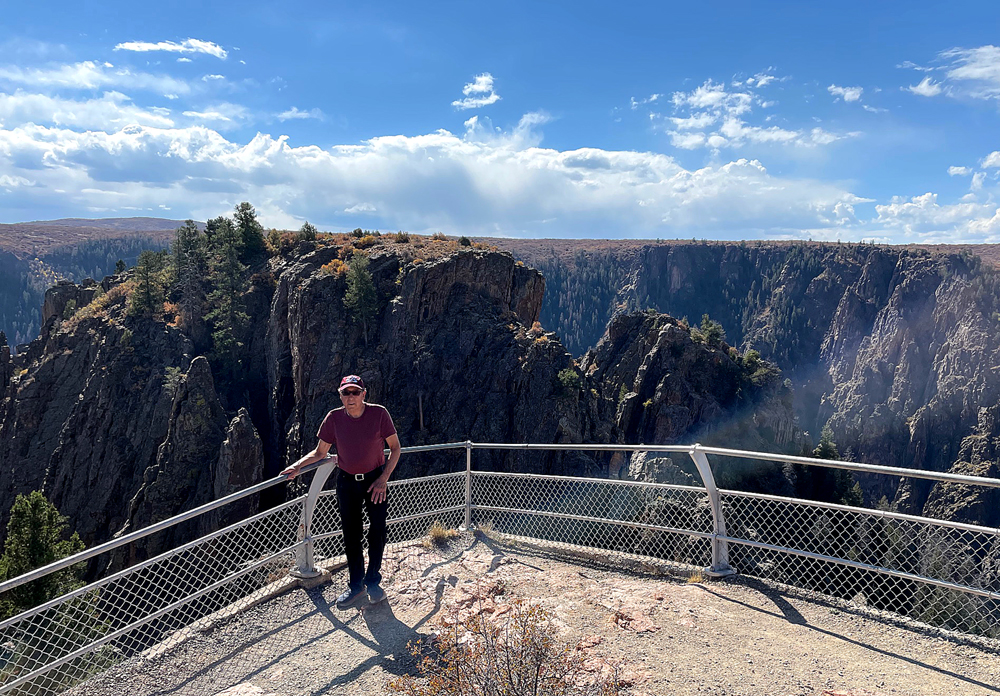
At the end of the month we traveled over Trail Ridge Road to Grand Lake for a two night stay at the Grand Lake Lodge. I was again struck with the magnificence of the Park, the wide vistas of peaks and forests, the precipitous drop-offs, the cold air up on the tundra. The Lodge is a classic log structure with the requisite western décor – antlers and wildlife paintings, a stone fireplace, rocking chairs, and swings on the porch. The comfortable cabins have been refurbished but are still small, surrounded by trees and wildflowers, with lovely views of the lake. We hiked at Adams Falls along meadows and through shady forest.

As we drove back home over Trail Ridge we saw a huge cloud of smoke to the north from the Alexander Mountain fire burning west of Loveland. We arrived home to a smoky valley. Zoë was concerned about one of the Fort Collins Natural Areas threatened by the fire and headed home.

Later that day we began to get word of another fire burning to the east of us, two ridges over, the Stone Canyon fire. I blithely spent the day preparing for my weekly writing group until, part way through the Zoom meeting, Zoë called and said, you need to pack and leave, the fire is too close. You’re a quarter mile from the evacuation zone. I was in a tizzy. We had planned for what we’d do in such circumstances but for a moment I was immobilized. I can’t do this, I thought. She said, I’m on my way.

Zoë arrived focused on convincing me we must evacuate. I resisted but we soon began checking our list and packing up. Of course, some of the things we had thought important to take seemed silly, but we gathered them into the cars. We’ll revise our list later, for the next emergency. The big project was unhooking the computer setup in the studio. We decided to take all the parts, monitor, keyboard, mouse, CPU, everything. We put inventory books and other papers in crates and headed to Fort Collins where we would stay with Zoë. By the time we reached her home it was past ten. We were all beat.

Our daughter is a great host and we felt safe and comfortable with her. In the morning she went off to work and we settled in to our books, constantly checking to see the status of the fire threatening Lyons. When Highway 36 reopened I figured we could get home so after dinner with Zoë we headed to Lyons. At the bottom of Blue Mountain Road the sheriff had set up a roadblock. No one could enter. But we live only a half mile up, I pleaded. We’re not in the evacuation zone. No luck. What to do now. I lost it for a minute and couldn’t face the hour drive back to Zoë’s. I called Sherry. She said, come. Our wonderful friends took us into their beautiful home in Boulder for the night.

Now the fire is out, we’re home, we’ve gone on hikes, I cook, back to normal. It will probably happen again and I’ll temporarily freak out. But we know we can do it, we know how long it takes to pack the basics. I feel grateful to the firefighters and sad for those who were more directly in the fire’s path. This was a drill for us, a practice and we did it.

The smoke is gone but it’s been very hot so my cooking is minimal, salads, grilled fish, pizza. Here are some summer recipes for you to try.

This zucchini pizza recipe is minimally adapted from The Smitten Kitchen.

Zucchini Pizza

For the pizza dough, combine 2 cups unbleached flour (I put a heaped tablespoon of wheat germ in the cup before measuring the flour), 1 teaspoon salt, 1 teaspoon instant yeast, 1/3 plus 1/4 cup water, 1 tablespoon olive oil. Stir into a moist dough and then knead until smooth.  Place in an oiled bowl and let rise until supper time. The longer the better. I make this in the morning and let it rise all day. Punch down when necessary.

Coarsely grate a pound and a half of zucchini and yellow squash (3-4 medium sized) in the Cuisinart or on a box grater. Sprinkle with a teaspoon salt, toss and let sit in a colander for half an hour. Place in a cheesecloth or light kitchen towel and squeeze the water out. In a bowl, toss with 6 – 8 ounces of coarsely grated Gruyere and a big pinch of red pepper flakes. Pat dough into an oiled  9 x 13 inch sheet pan. It will be thin. Spread squash mixture evenly over the dough. Bake at 500° for 20 – 25 minutes until brown and bubbly.

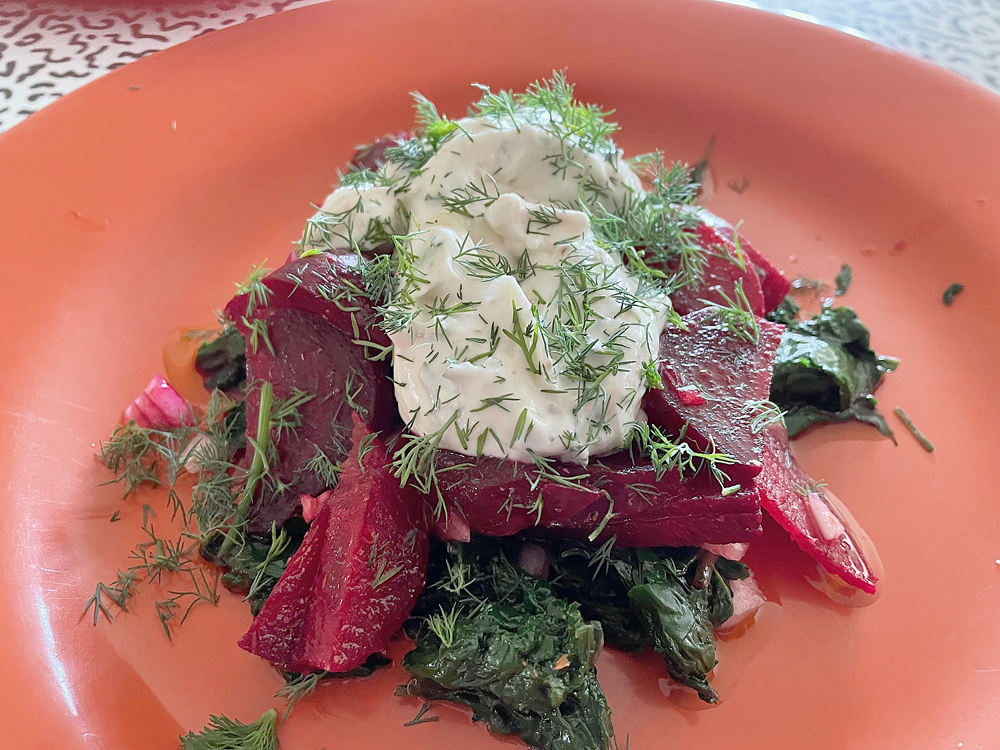
Another favorite during this hot summer is a beet and greens salad adapted from a NYTimes recipe.

Beet and Greens Salad

Steam or roast 3 medium sized beets until tender. After they are cooked remove from pot and use the steaming water to cook the beet greens you have washed, and cut into 1 inch ribbons. Drain the greens and when cool squeeze out the water. Arrange on a serving dish or on individual plates as I did here. Sprinkle with a half of the vinaigrette. Peel the beets and cut into ½ inch chunks. Toss with the remaining vinaigrette and arrange on the greens.

The vinaigrette: Combine ¼ cup red onion or shallot, diced, a clove of garlic, grated, 1 ½ tablespoons red wine vinegar. Leave for a few minutes then add ¼ teaspoon ground cumin seed, ¼ teaspoon ground coriander seed, a pinch of red pepper flakes and 3 tablespoons of olive oil. Salt and pepper to taste.

Top beets with a dollop of yogurt sauce: 1 cup whole plain yogurt, a grated garlic clove, ¼ teaspoon ground cumin seed, ¼ teaspoon ground coriander seed, a tablespoon of finely chopped fresh mint, a pinch of salt.

Strew the salad with chopped fresh dill. Enough for 2.

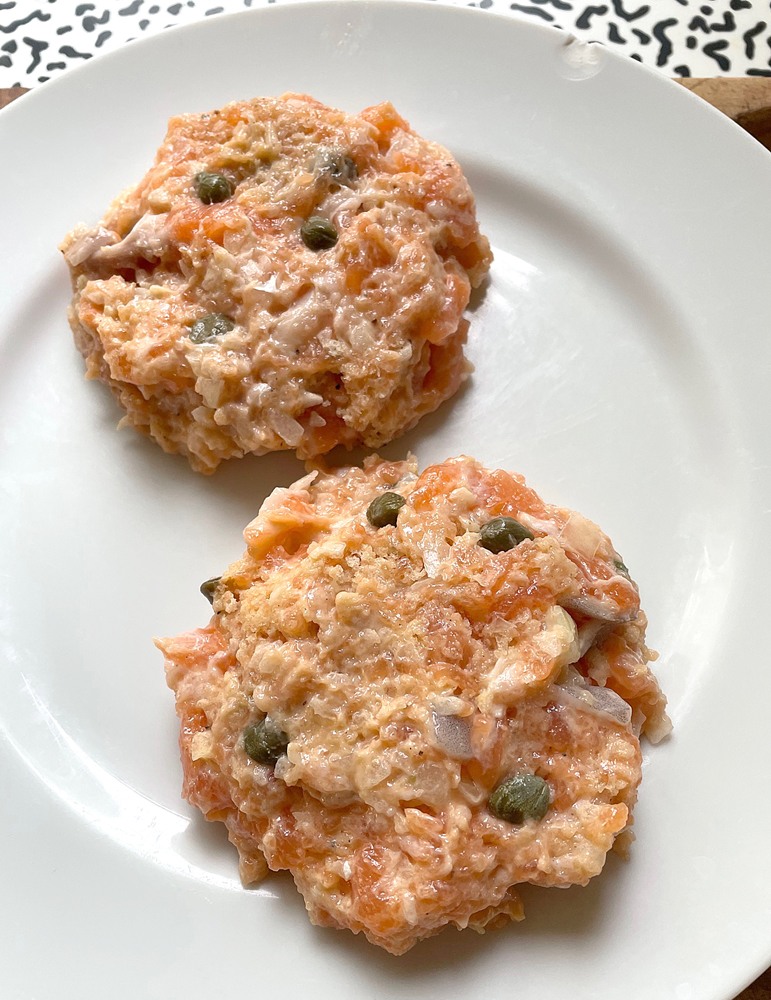
And lastly, a dish I’ve made every week, sometimes twice. Salmon cakes/burgers from Mark Bittman in the NYTimes. I’ve served these with a salad and as a burger on a bun. So good.

I forgot to take a photo of the grilled burgers. Too eager to eat them.

Salmon Burgers/Cakes

For two cakes skin a ½ – ¾ pound piece of fresh salmon. Chop 1/3 of it and puree in the Cuisinart with a generous teaspoon of Dijon mustard and a ¼ cup chopped onion. This acts as a paste. Add the rest of the salmon cut into 1 inch pieces. Pulse a couple times but don’t puree, you want small chunks to remain. In a bowl, combine the salmon with a tablespoon of capers, 2 tablespoons panko and a pinch of salt. Form into two cakes and refrigerate until cooking time. Grill for 2-3 minutes a side or pan fry in butter.

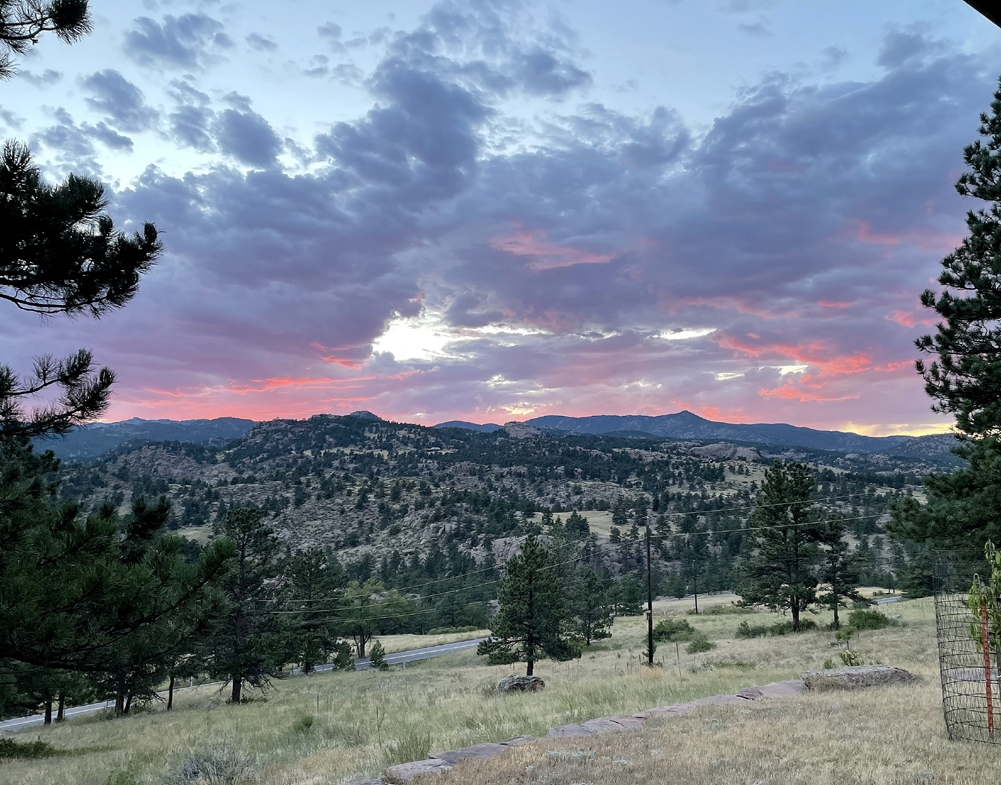
Summer sunset, not a fire.

Little Pleasures

by Mimi Hedl

Lost in quiet contemplation, the shouts from the head gardener knock me out of my reverie. “What are you doing down on your hands and knees, staring at the ground? Have you lost your wits? What’s going on, we have serious weeding to do. The vitex needs pruning. There are thousands of mimosa seedlings everywhere. When will we get rid of those nuisance trees?!” I’m looking at her as she delivers her diatribe, amused, but trying to look castigated and ashamed, like a child whose hand is caught in the cookie jar.

Royal catchfly

I’m doing what I’ve watched many people do as a way to relax, breathe deeply, and let everything float away, a mindless task. For my dad, it was looking for four-leafed clovers. He’d be down on all fours, looking, and always find one maybe two or three. We’d come home from school and find Mom sitting peacefully on the sofa, doing absolutely nothing.

American bellflower – a favorite

For me on the morning the head gardener found me, I was digging out plantain, the broad-leafed weed the English brought to America. Granted it’s a medicinal plant. I’ll chew a leaf when I get in the way of a wasp and get a nasty sting or when I run my arm through a blackberry bramble, eager to get that juicy berry in the middle of the canes and have a bloody mess. I want to have a few select plantains around.

Longfellow talks about plantain in Hiawatha, calling it the white man’s foot. Everywhere the English stepped they left plantain in their wake. Because it’s a broad-leafed weed, nothing else will grow where it does. When I walk the maze of our gardens, I’ll notice plantain in all the paths. It’s been so wet this summer that I found I could bend over and pull out a plantain, effortlessly. I feel like a kid when I’m doing that, erasing the white man’s foot print. When I find a colony of six or more I kneel down to do the job. I carry an old butcher knife with me in case I encounter stubborn weeds and sometimes the grandmothers need convincing, their fibrous roots firmly established. The seed heads look like miniature cattails. Eunice, a crabby older friend from our early days, used to cuss at the seed heads and call them those “dratted weeds”. She took personal affront at their appearance and Ron would get out her lawn mower and cut them down. Her mood changed immediately and she became demure and sweet until the next offender assaulted her. Believe me, it could be anything!

Hibiscus

I stood up, looked at the head gardener as all kinds of explanations rippled through my mind, but I know her, know how she’ll react and knew if I started philosophizing, which I love to do, she’d go into a tail spin. So, instead, I said, “Shall we get on with it?” And we did.

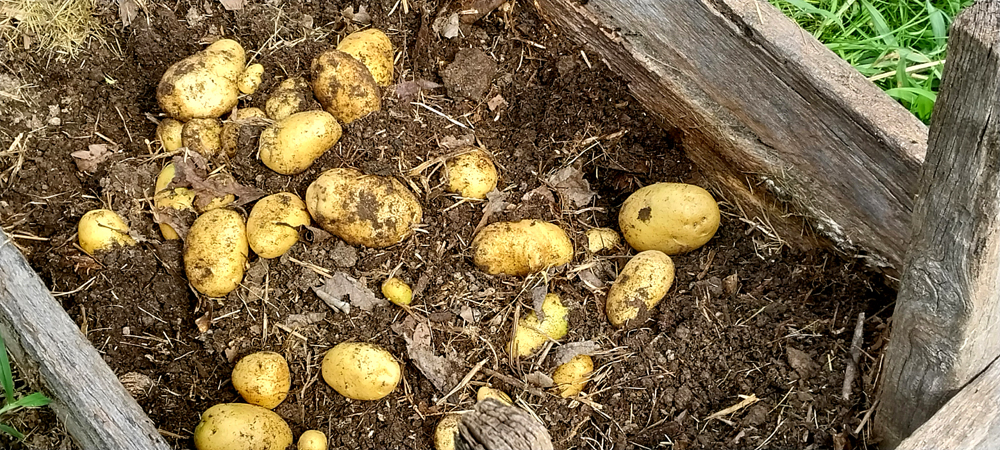
As we weeded, lifted the potatoes out of the straw, marveled at the beautiful summer kale, and admired the palette of color everywhere we looked I thought about how I’ve learned to love cantankerous people and even appreciate their take on this crazy world.

We never know everyone’s full story and my joke is, it’s always hemorrhoids that turns us into monsters of sorts.  (I still remember that from giving birth.)  We need each other even when we drive each other crazy. Always good to have a friend, or a professional, to help us see the light and navigate troubled waters.

Blackberry lily

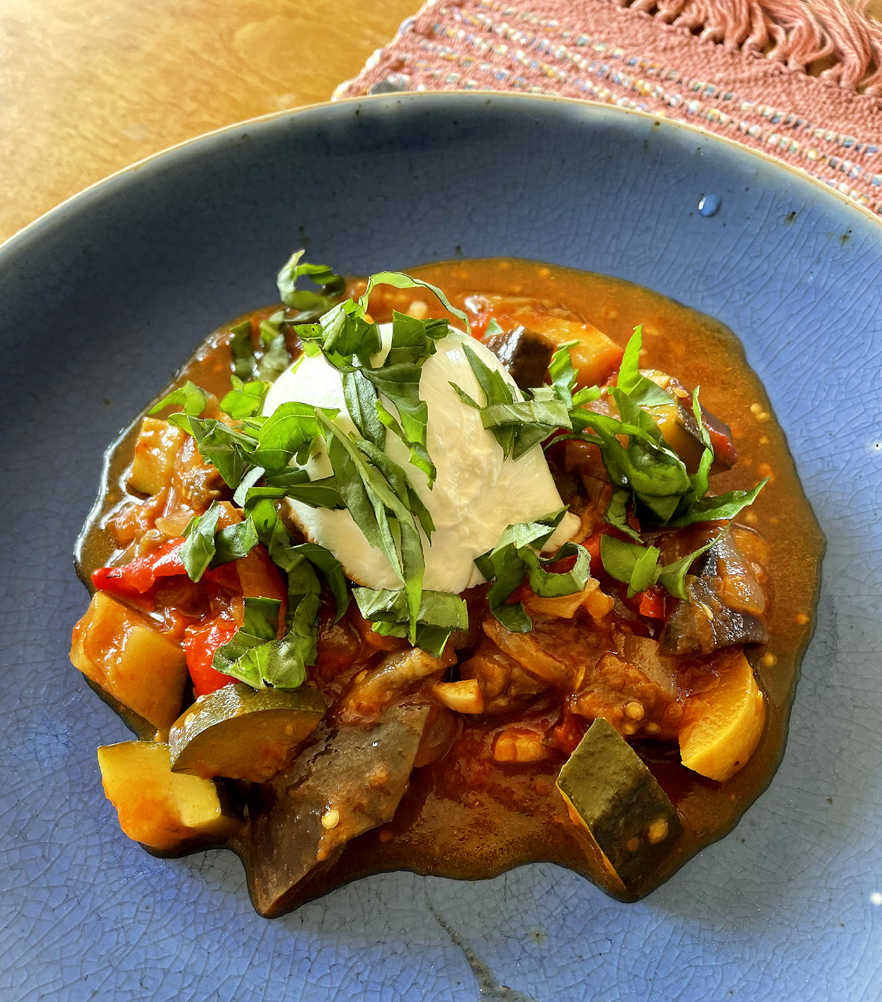
No doubt the gardens, working with the earth, give me great pleasure and comfort. I eat simple summer meals, the heat making it unpleasant to make a fire for any longer than cooking a grain, roasting a few peppers or an eggplant, a patty pan squash. Soon I’ll have beans.

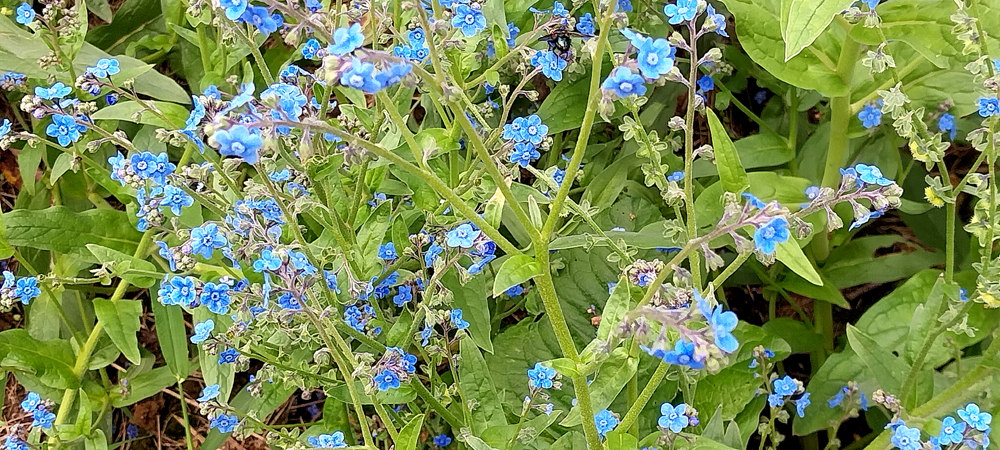
Forget-me-nots for Dad

I sit on the summer kitchen when the sun’s in the west and look out at the colors enticing the pollinators. When it cools down enough, I walk the paths, picking and admiring the jungle-like growth as a new batch of pipe vine swallowtails flit in and out, dazzling me again and again. And if you see me bending down, you know another foot print has disappeared.

Pipe vine after feeding pipe vine swallowtail caterpillars

Our June Adventure

After dinner hike in Salina

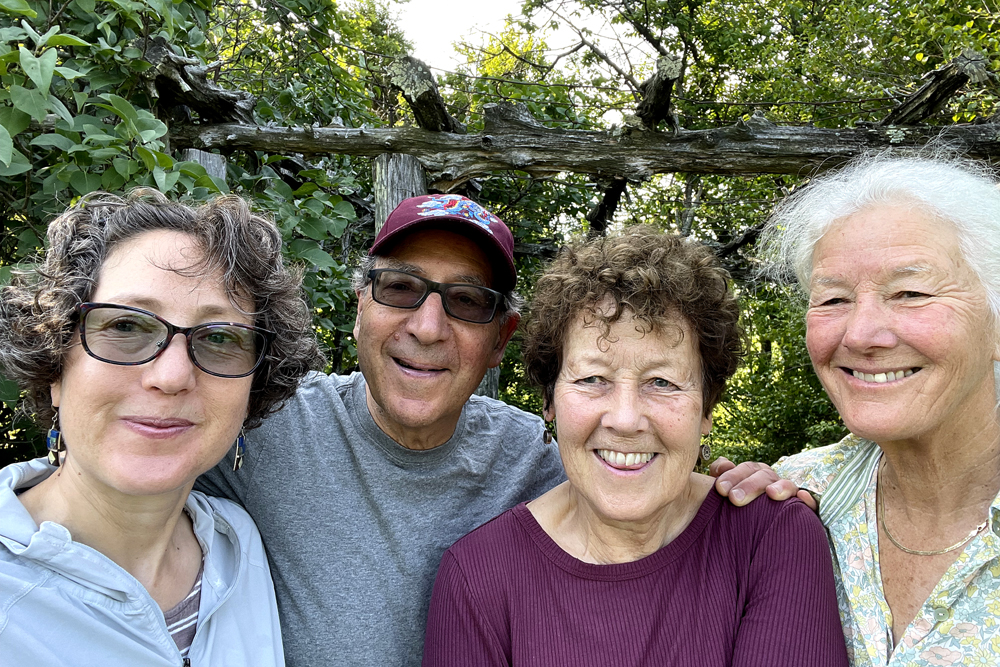
Bud, Zoë and I set off on a road trip to visit Mimi on Straw Dog Farm in central Missouri. I dreaded driving across the flat, empty plains of eastern Colorado and western Kansas but of course, we discovered they weren’t empty at all. There were flat, straight sections on I-70 that made it hard to stay awake but we also encountered unexpected things to see. We drove through Post Rock country where, lacking wood for fence posts on a treeless prairie, early settlers had quarried limestone posts and strung them with barbed wire. The posts are weathered and irregularly shaped, fascinating. We finally got some elevation as we passed through the Flint Hills, a preserved tall-grass prairie stretching for miles of glorious rolling green hills.

We planned a midway stop in Salina Kansas, six and a half hours from home. I had booked a table at a restaurant that I hoped would suit us – Yaya’s Bistro. It did. We had a lovely meal of Mediterranean flavored food. We looked forward to returning for dinner on our way back home in a week.

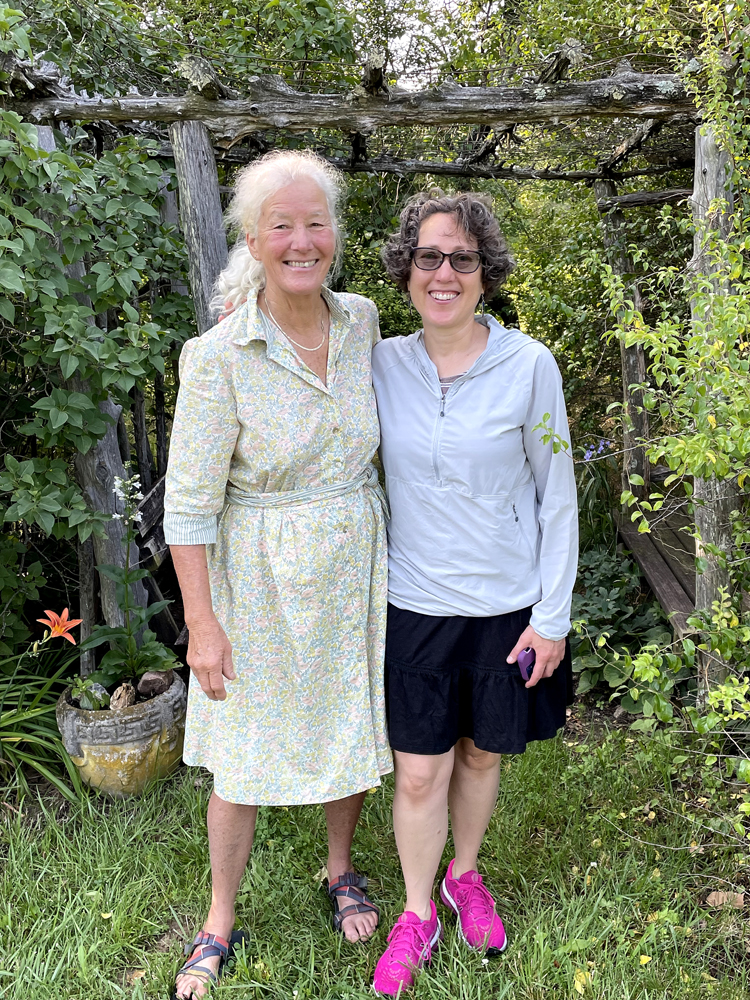
Mimi welcomed us at the trellis marking the entrance to Straw Dog. We got settled in the house then had a walk in the gardens. Everywhere wildflowers attracted butterflies, moths, bees and other pollinators. She told us that many local folks consider these plants weeds. They don’t recognize that she has cultivated a paradise of native plants where the bugs and other critters thrive.

We walked the mown paths beside meadows of wildflowers buzzing with activity. We admired the thoughtfulness with which Mimi has organized her cultivated garden beds, letting a bit of chaos reign as the plants have their way.

Black cohosh blooming amid skullcap.

Zoë noted that the once bare acreage she remembered from her last visit as a college student now has many mature trees. Sweet gum and redbud, sassafras and dogwood and many other trees foreign to our arid Colorado foothills. Much has changed in the forty two years Mimi has worked this land.

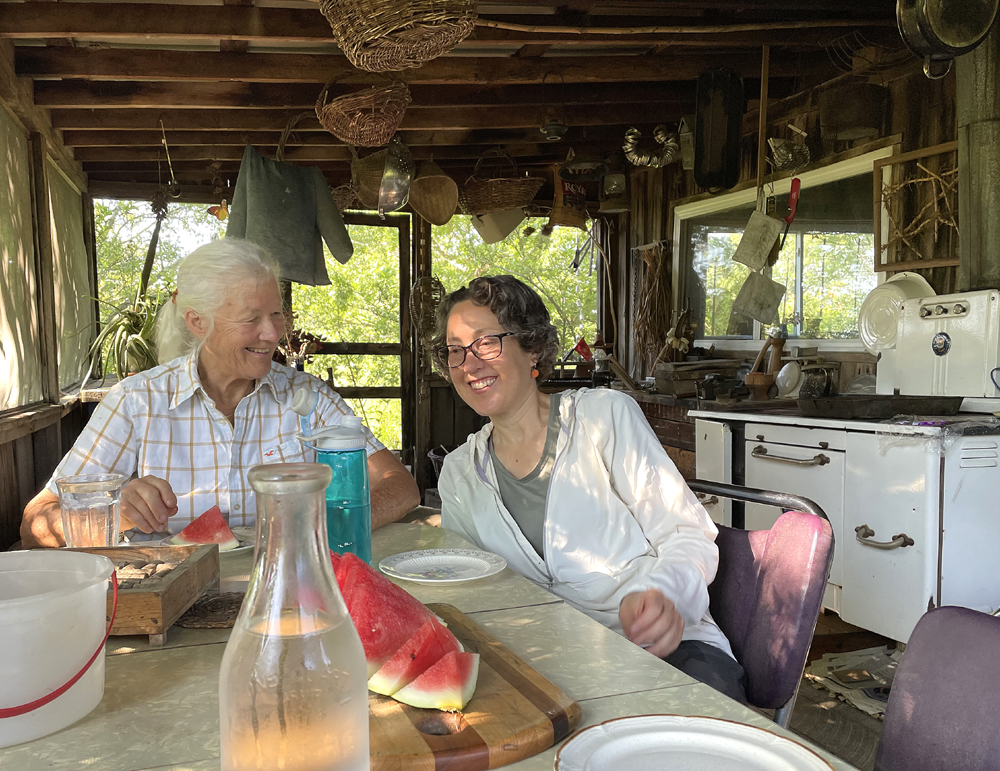
We cooked together using the bounty of the gardens. Peas, asparagus, herbs, lettuce, berries. Mimi made her delicious flour tortillas on the wood stove top in the summer kitchen. We ate bean and veggie burritos for Zoë’s birthday dinner.

A snack on the summer kitchen.

We had a lentil curry, watermelon and feta salad, spring rolls with three sauces, and day lily salad. Zoë and Bud prepared handfuls of orange day lilies by pulling the petals from the stamens to make a beautiful salad dressed simply with olive oil and vinegar. The taste was magical, crisp and vegetal. After that first salad, Zoë insisted we add day lilies to each meal. I thought of how the deer love them too. Here on Blue Mountain Road I dare not plant them.

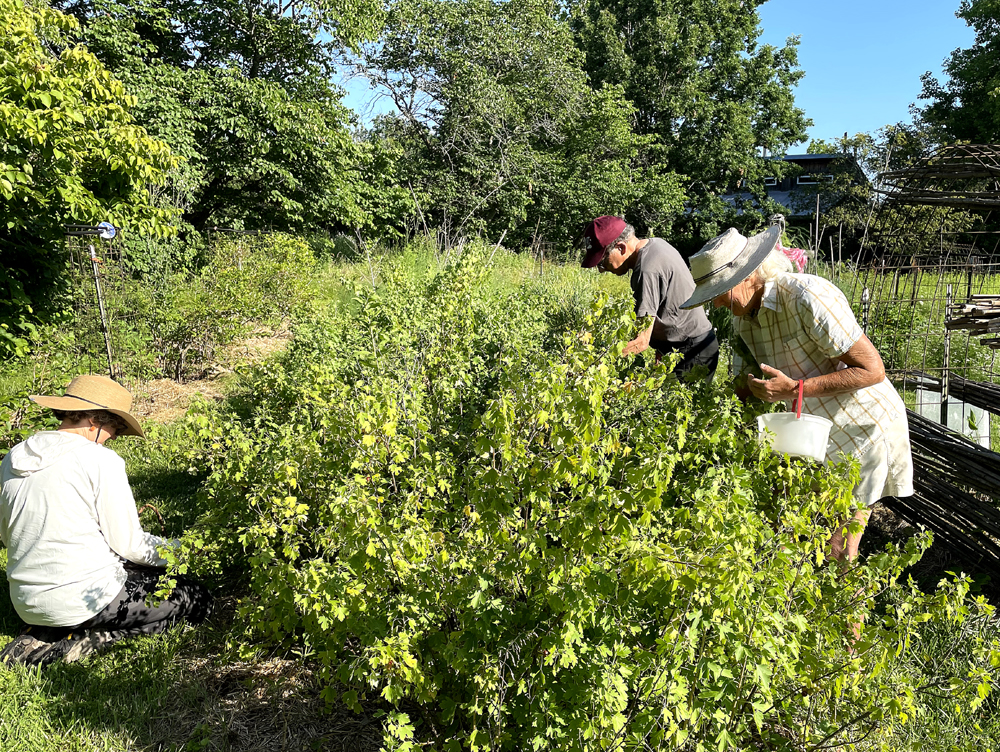
The blueberries, raspberries and black currants were producing masses of fruit so we picked berries each morning. And ate them. Mimi cooked a mess of currants and made a black currant fool. After cooking she passed the berries through a sieve/colander with a wooden pestle then combined them with sugar and whipped cream – an English recipe from Elizabeth David. So good.

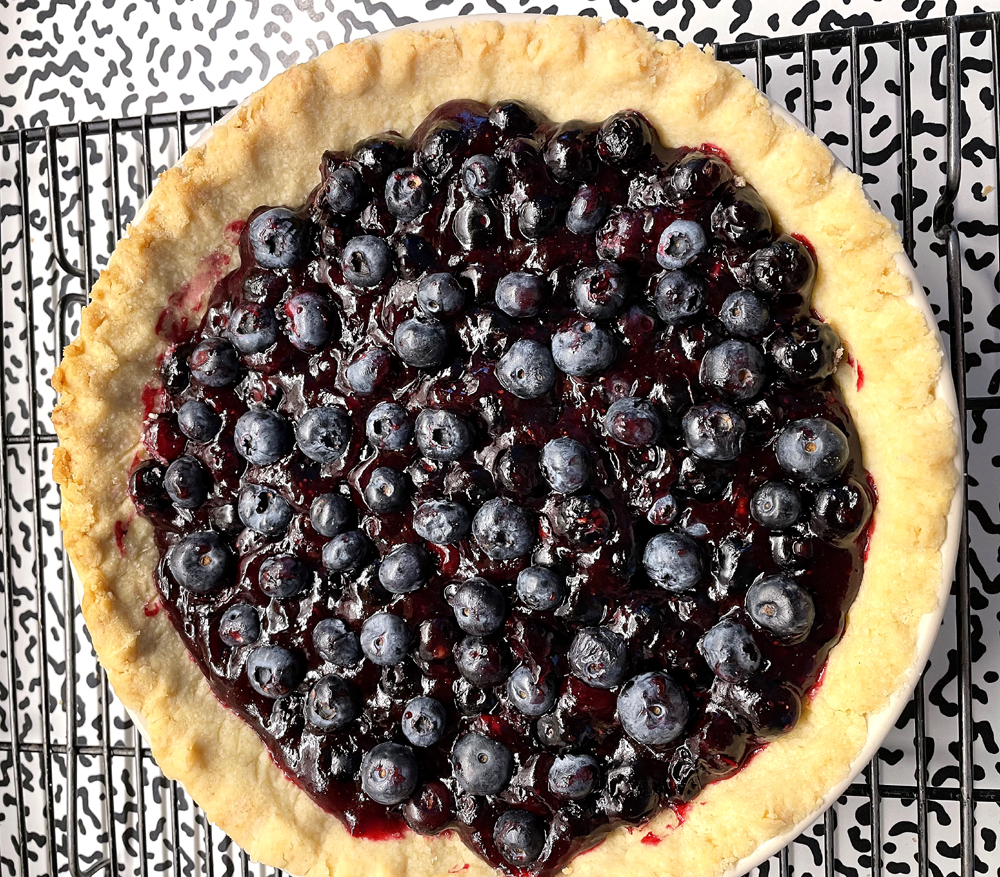
Mimi sent us home with two quarts of blueberries and a recipe from her friend Jesse who had it from a Benedictine monastery in Vermont. I adapted it a bit.

Blueberry Tart

Prepare a tart shell. I used my favorite based on one from Patricia Wells. Combine 1¼ cups unbleached flour, ¼ cup sugar, pinch of salt, 1/2 cup melted butter, cooled. Press dough into tart/pie pan and chill while the oven heats. Bake at 375° for 20 minutes until brown and cooked through.

For the filling:

5 cups fresh blueberries, 1 ½ tablespoons
cornstarch, 2 teaspoons finely grated lemon zest, 3 tablespoons fresh lemon
juice, ½ cup sugar, pinch of salt 

Reserve 1 cup of the prettiest berries for the
topping.  In a medium saucepan, bring ¼ cup water and 1 cup berries
to a boil over high heat.  Reduce heat, simmer, stirring
occasionally, until berries begin to break down (3 to 4 minutes).  In
a small bowl, mix cornstarch with 2 tablespoons water. Stir into berries in
pan.  Add lemon zest and juice, sugar and salt.  Bring to a
boil then reduce heat.  Simmer, stirring, just until mixture begins
to thicken (30 to 60 seconds).  Remove from heat.  Stir in
remaining 3 cups fresh berries.

Immediately pour hot berry mixture into
cooled tart shell and smooth with a spatula.   Scatter reserved
berries on top, pressing down lightly to help them
adhere.  Refrigerate until cool.

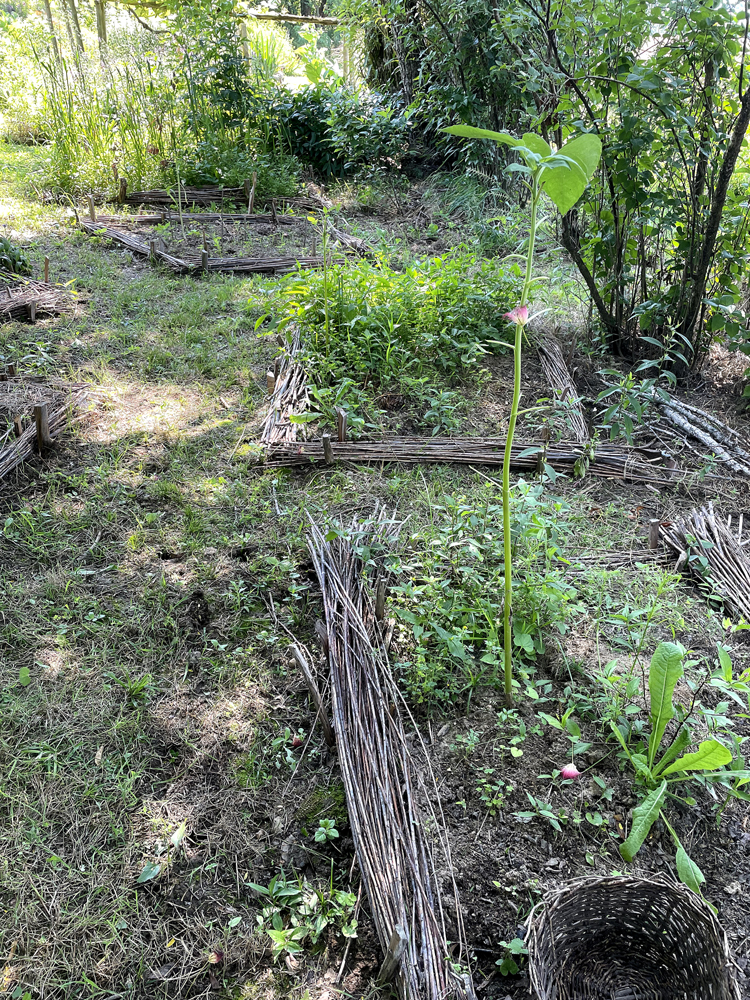
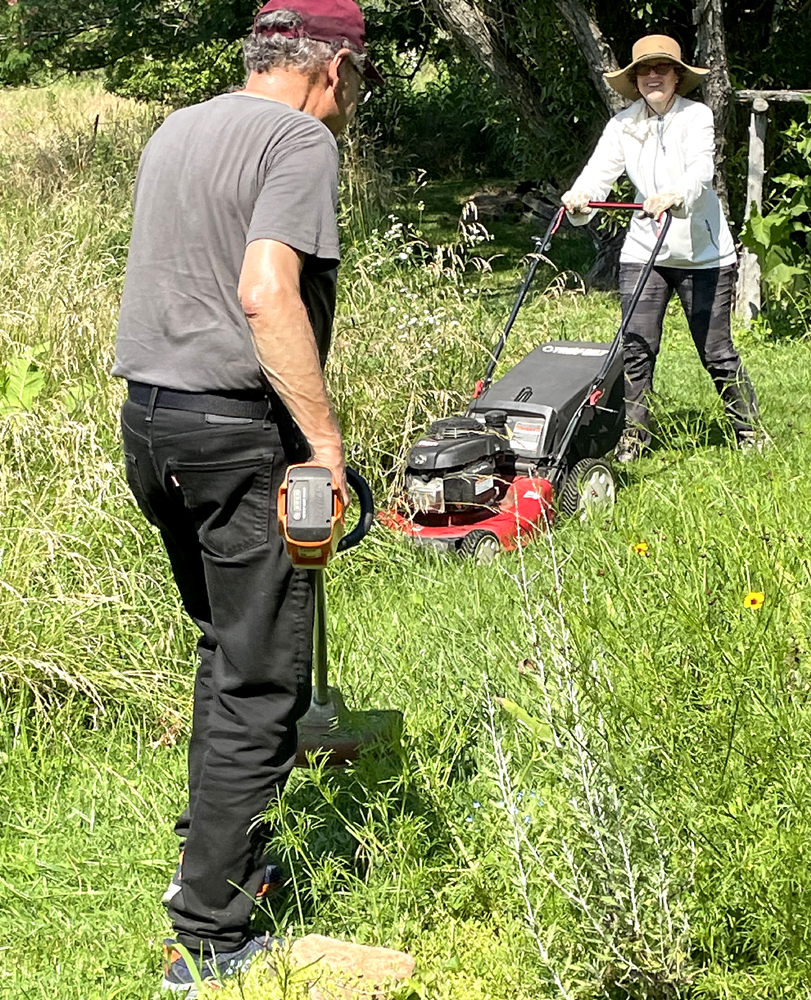
One morning we helped mow the paths in the park. Here are pictures of the beds Mimi lined with old letters, before and after, now filling with volunteers until she decides what to plant.

Newly prepared beds

Beds with volunteers

I took a break and tipped off the end of a bench into an ant pile. Ouch. I jumped into the shower to dislodge the tiny critters feeling very foolish.

Each day on the farm I noted my sister’s serene attitude to everything around her. She observes the pace of life on the farm, the weather that determines what grows when, and the unexpected – the seeds that suddenly sprout, the patch of native plants that become a thicket. Mimi takes such pleasure from all the things she sees. I learn a lot about expectations, patience and laughter from my sister. She lives a simple, rich life full of wonders. Thank you for a wonderful visit.

Conducting the Symphony

by Mimi Hedl

A perfect poppy

Would you laugh at me if I told you planting a garden in spring is like conducting a symphony? A symphony composed by Mother Nature. I follow her cues, sowing seed or planting plants when she deems it the proper time. I’ve never thought about the garden in quite this way before. Somehow all the staging that takes place when a large garden’s planted, how each piece feeds into the next, made me see this comparison.

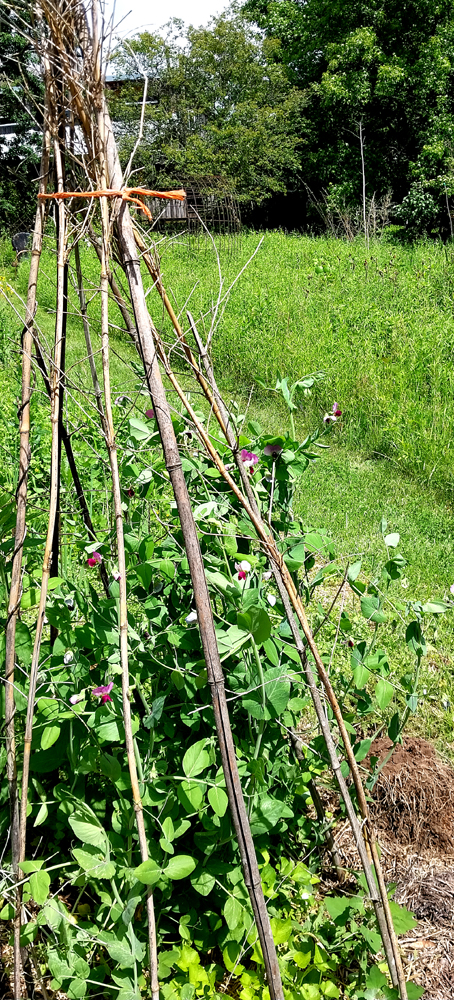
Dwarf grey sugar promise

My symphony doesn’t follow the usual order of sonata, adagio, scherzo or minuet, and then the rollicking finale. The opening of this symphony begins slowly with an adagio on Valentine’s Day and the sowing of lettuce seed when all seems calm and possible; the arrival of the hopes and promises newly imprinted on our winter weary minds. With the cool weather, planting seems leisurely. We walk around as if we own the world. Neither the head gardener nor I feel the pressures that will come. The Irish potatoes go in on St. Patrick’s Day, peas too with their bamboo teepees. Still dressed in winter clothes we exude confidence, smiles come easily. Greens and brassicas follow soon thereafter. Everything takes their turn. We rest. We weed. We think about summer. The conducting seems gentle.

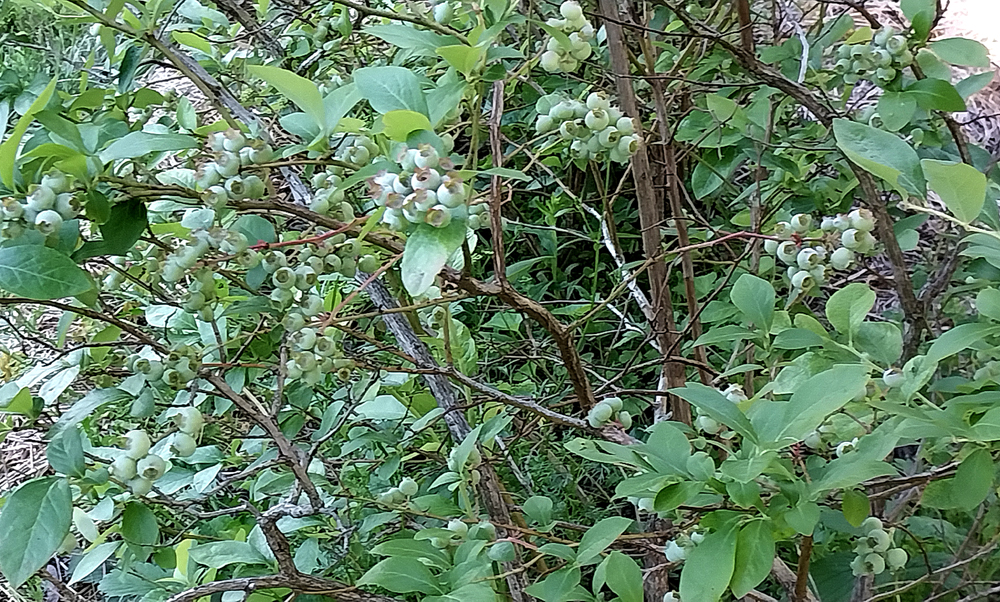
Blueberries beginning to ripen.

After weeks of little activity, the temperature rises and Mother Nature insists the sonata begins. All hell breaks loose. The warm weather crops shout for immediate attention. Everything feels tired of sitting under the lights, their roots feel bound in pots. The tomatoes especially want to go into the deep earth. Peppers and eggplants want to see and feel the sun. The head gardener and I make frantic looks at each other. She complains I move too slowly. I scowl at her. We run into each other’s wheel barrow. And the conductor waves her baton in grand gestures.

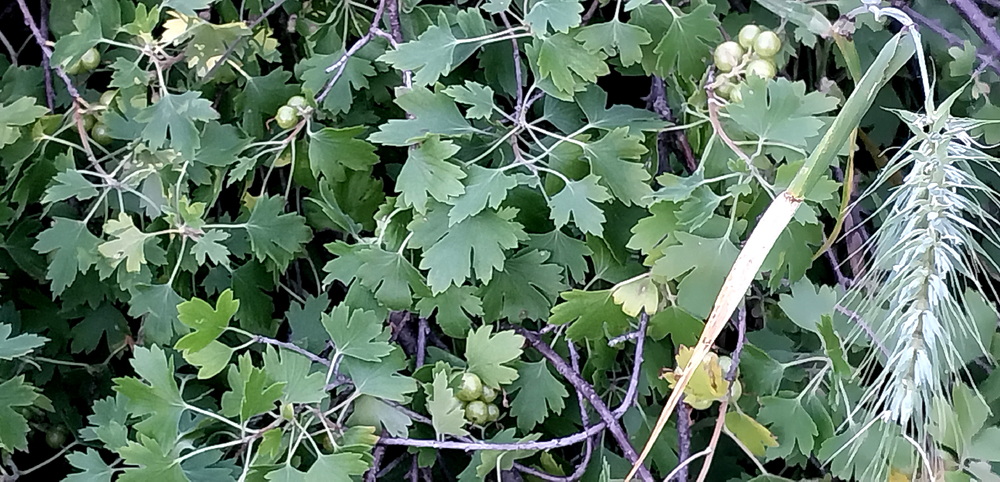
Black currants luxurious.

I used to make gigantic pushes to get these crops planted in a few days. Everything from tomatoes, eggplants, peppers to melons and squash of all kinds, then beans of many colors to herbs and flowers.

Yes, I’d feel exhausted after this push, but my body recovered quickly, and I didn’t see the work as anything other than what I did. Now I see it as heroic. My eyes bug out when I watch young people do magic in moments and think, ”that used to be me”. I have a message in front of old journals, reprinted spring after spring. In bold, capital letters: DO NOT PANIC. IT’S SPRING. IT TAKES SIX WEEKS TO GET EVERYTHING UNDER CONTROL.  Now, I would amend that pronouncement. I wouldn’t use bold or capital letters. I’d make no guarantees. Six weeks? What a laugh. I might say something like, “All in good time. Relax, enjoy your good fortune.” And my sonata now seems more like an adagio.

In fact, my entire symphony may seem more like a prolonged slow, lyrical movement. I can’t follow protocol anymore.  Or, like Ron, choose not to. When we went to Hilary’s graduation from the Naval Academy, Ron wore his Marine Corps dress blues for the ceremony. He felt proud that the uniform still fit. He had a pony tail and a mustache. Commanding officers came up to him to shake his hand after looking at his medals and ribbons, realizing he’d been in Korea. One of the officers motioned to his mustache. Ron looked at him and smiled, “Age has its privileges, sir.” And the officer laughed and smiled back.

This May, when I came to the part of the symphony when the beans moment arrived, I sat on the summer kitchen with our bean seed collection, a bowl, and the compost bucket. I felt nostalgic looking at the dozens and dozens of varieties we’ve grown over so many years. A few names: Molly Frazier Cutshort, Foot-long Green, Purple Yard-long, Christmas Lima, Dixie White Butter Pea, Greek Gigante, Goat’s Eye.

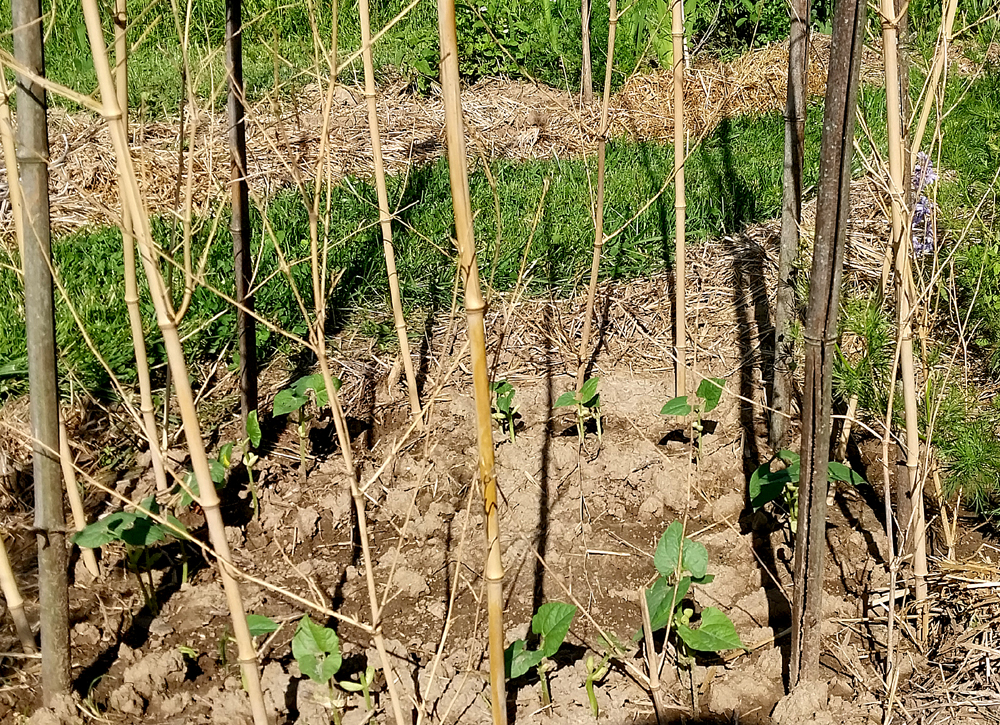
Anasazi beans sprouting.

Any seed not grown out for eight years went into the compost bucket. I knew they’d germinate for me, but for the average gardener who uses fast-acting yeast and wants immediate gratification, I knew it would be frustrating to wait and wait for the seed to germinate, so no sense taking them down to the seed bank at our local library. The compost has an insatiable appetite and as I dropped the seeds into the bucket, it felt like a gentle offering to the earth. I wasn’t throwing them away, I was giving them back to where they came from. The newer seed went into the bowl. These seeds would feed my body. A last hurrah for them.  I had them with lamb’s quarters. Beans and greens, a favorite on Strawdog. There are still six or eight favorite varieties like Borlotti and Anasazi that we’ll keep going as long as the conductor still conducts.

Indian pinks in morning light.

Each day the music continues, a slow minuet rather than a scherzo. Finally the day arrives when the finishing touches, the herb and flower seeding begins, tying all the crops together with their beauty, fragrance, so that I and the head gardener feel stimulated. The enticing nectar and pollen activate the pollinators and their work for successful fruiting. The seed packets, bags of seed that have waited on trays have now found their way into the warm earth. The symphony’s rollicking finale.

Pale purple coneflowers open.

With a sigh of appreciation and relief we rest over Memorial Day weekend and at least one of us bows her head in memory of all that came before. The other one is plotting and scheming what will come next. It feels wonderful to collaborate with Mother Nature and to watch each seed pop out of the earth, bear fruit over the summer and then seed in the autumn. The symphony continues. No conductor needed.

Spring?

It’s been several years since we’ve visited one of our favorite places – Canyonlands. So last month we took a trip to Moab, Utah, ready for a more advanced spring and a taste of the glorious red rock country. We stayed at a lovely spot, the Red Moon Lodge. Sitting on a piece of land on the edge of town, the lodge felt like home.

Our charming host prepared homemade yogurt and granola, jams, breads and really good coffee for breakfast. We enjoyed late afternoons by the shaded pond and in the surrounding gardens. We took a few hikes, saw a wall of petroglyphs, and found pretty good food in town.

Driving home along the Colorado River we felt a pang at leaving the embrace of the canyons. We drove out onto the vast, dry plains of eastern Utah. As we traveled east we began to see small bushes, a slight green tint to the landscape. The land slowly rose toward the Rockies and soon we were among snowy peaks. What a trip to see this progression. From the bowels of the red canyons to the heights of the mountains.

Back home, as the weather cannot settle, neither can I. Every year holds a weather surprise that dictates my menus. In previous springs I’ve written about making an asparagus frittata and a nettle soup, a pasta Bolognese with bison, and bean soup. Use the search button on the blog to find these recipes.

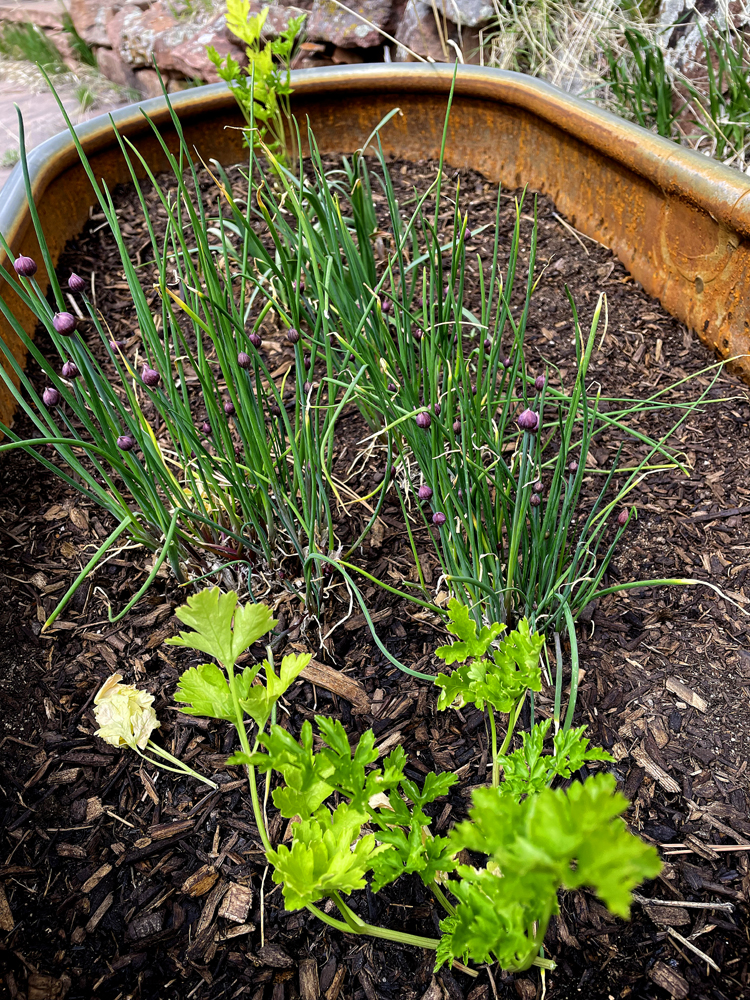
With the night temperatures still in the 30s and 40’s I’m late to plant the garden – some snap peas in April and lettuce last week. We did prepare a new herb garden in an old, leaky stock tank. I’ve wanted to have a supply of nearby herbs to grab when I’m in the midst of a recipe. The garden (and the herbs growing there) is on the far side of the studios, too far for an impatient cook. I’ve transplanted chives and garlic chives, bought parsley plants and sowed cilantro seeds. I will add a tarragon plant and basil seeds when the weather warms up.

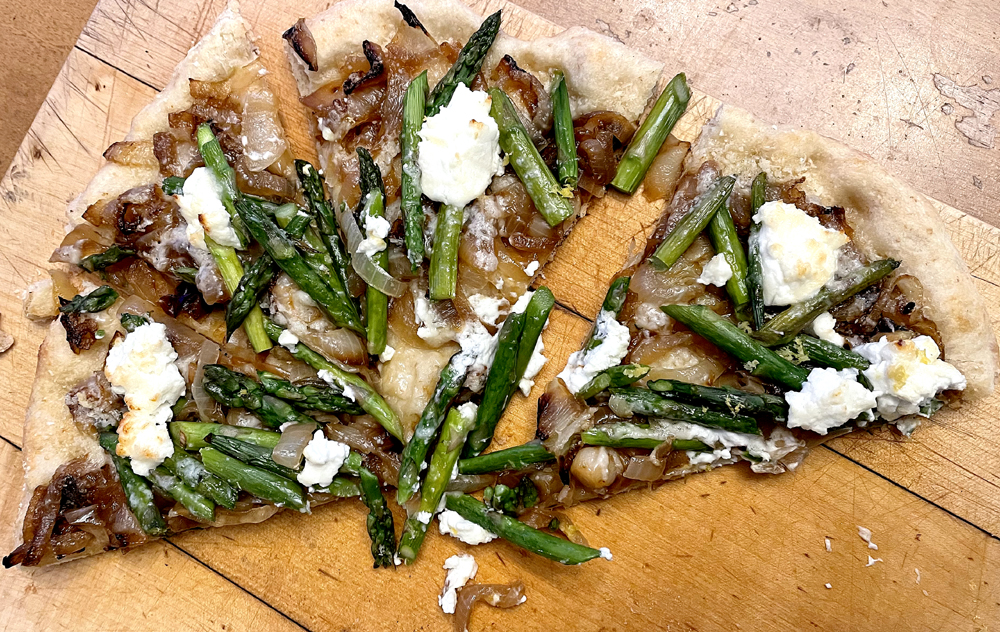
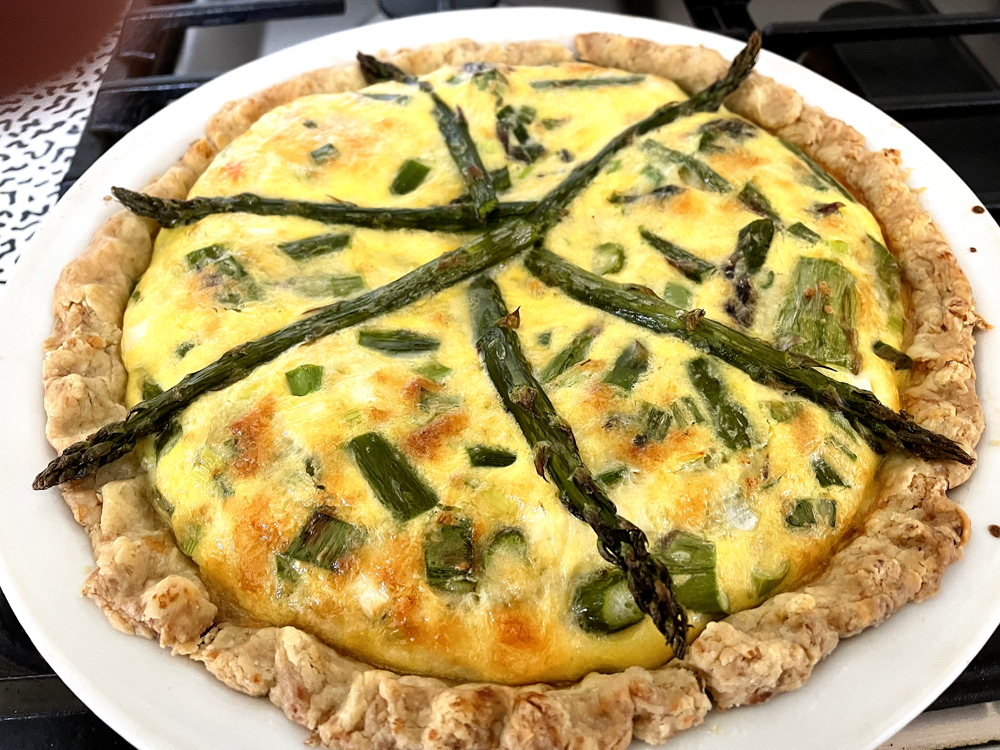
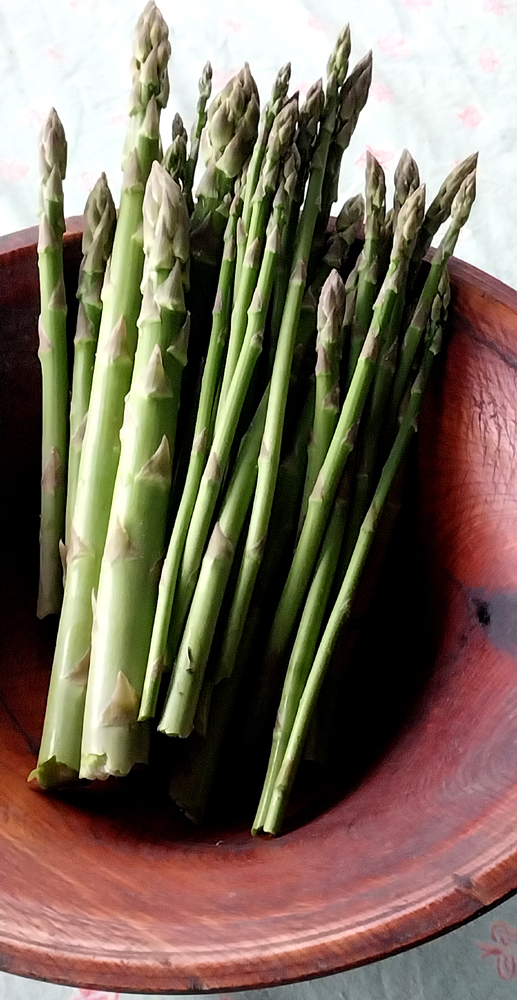
We’ve again been eating a lot of asparagus. Here’s an asparagus pizza and an asparagus tart.

Pizza dough

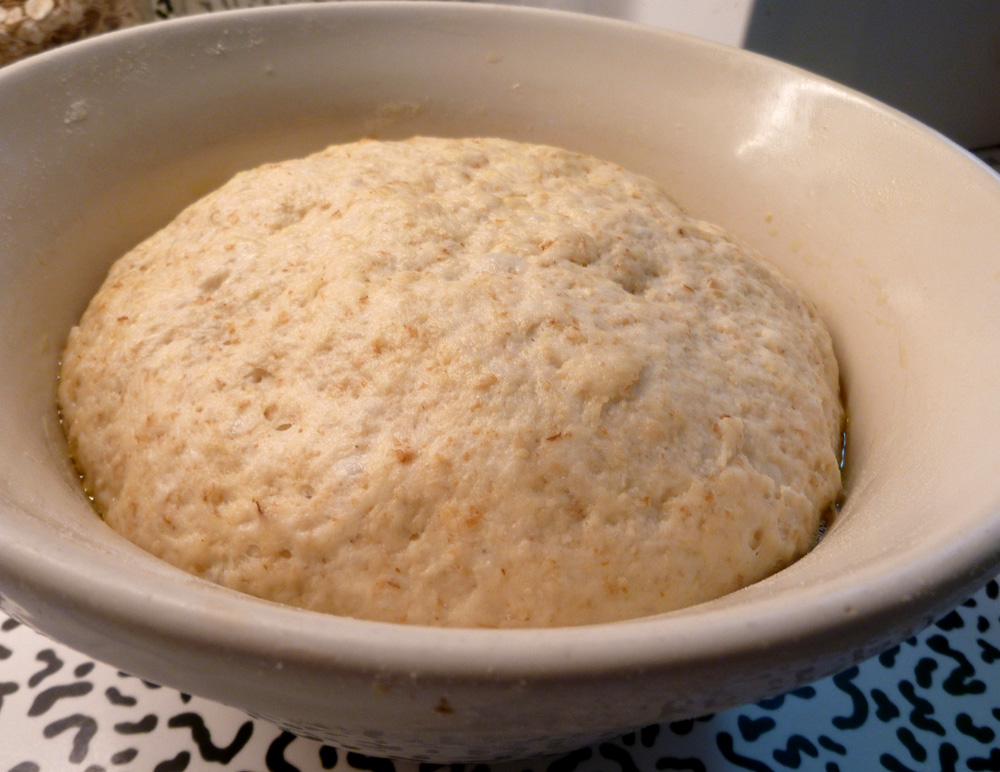
Combine 2 cups unbleached flour, 2 tablespoons wheat germ, a teaspoon instant yeast, (or proof a teaspoon of dry yeast in ¼ cup of the water), a teaspoon of sea salt. Stir in a scant cup of water and 2 tablespoons olive oil. Knead in the bowl and then on the counter, adding bits of flour as necessary to keep from sticking. Knead until smooth and barely sticky. Keep the dough moist. Oil the bowl lightly and turn the ball of dough in the oil. Top the bowl with a plate or plastic wrap. Let rise as long as you can. I mix this dough in the morning and let it rise all day. Or stick it in the fridge overnight.

I usually make caramelized onions as a base for our pizza. Thinly slice a large onion and cook in a tablespoon of olive oil, stirring until the onions begin to shrink. Add a pinch of salt, cover the pan and turn the heat to low. Cook, checking now and then to see they are not burning, for 25 minutes until brown and caramelized. (Or until you can’t wait any longer!) Cool.

Steam or roast a pound of asparagus until barely tender – 2-4 minutes. Chop into 1-inch bits.

On a piece of parchment set on a peel or baking sheet flatten and stretch the dough into an oval, 12-14 inches wide. Distribute the cooled onions over the dough, top with the asparagus pieces. Cover with 1 ½ cups grated cheese. I use what I have – cheddar, mozzarella, jack, goat cheese, gruyere, or a combination.  I dabbed goat cheese on the pizza pictured. Sprinkle with a cup of freshly grated parmesan.

Bake the pizza in a preheated 500° oven for about 12 minutes until bubbly and brown.

 I took this special asparagus tart to friends and it looked and smelled so good I made it again for our lunch. I’ve written about the simple pastry before but here is a reminder of the easy recipe from cookbook writer Patricia Wells.

Olive Oil Pastry:

Combine 1 cup unbleached flour, 2 tablespoons wheat germ (optional,) a pinch of salt. Stir in 1/4 cup olive oil and 1/4 cup water. Press the dough into an 8 or 9-inch pie plate or tart tin. It will cover the pan, just keep gently pressing from the center and up the sides. Prick the bottom with a fork. Chill in the fridge. I like to prebake the chilled shell. Preheat oven to 375° and bake the pastry for twenty minutes. No need to weight the bottom as this pastry does not shrink.

For the asparagus filling:

Toss a pound of asparagus, tough ends broken off, in a little olive oil and a sprinkle of salt. Roast on a parchment-lined baking sheet – 375° for 5 minutes. I do this in the toaster oven. Or steam the asparagus until barely tender. Chop all but six stalks into ½ inch pieces.

In a bowl combine 3 large eggs, ½ cup of  half and half or milk, 2-3 ounces grated Gruyere, Comté or cheddar, ½ cup freshly grated parmesan, 3 green onions (scallions) cut across into ½ inch pieces. (Use the whole onion, white bulb and green tops.) Mix in the asparagus pieces and pour it all into the tart shell. Top with the six whole asparagus stalks arranged in a pinwheel. Bake at 375° for 30-35 minutes until set. Let sit for 5 minutes before slicing into wedges.

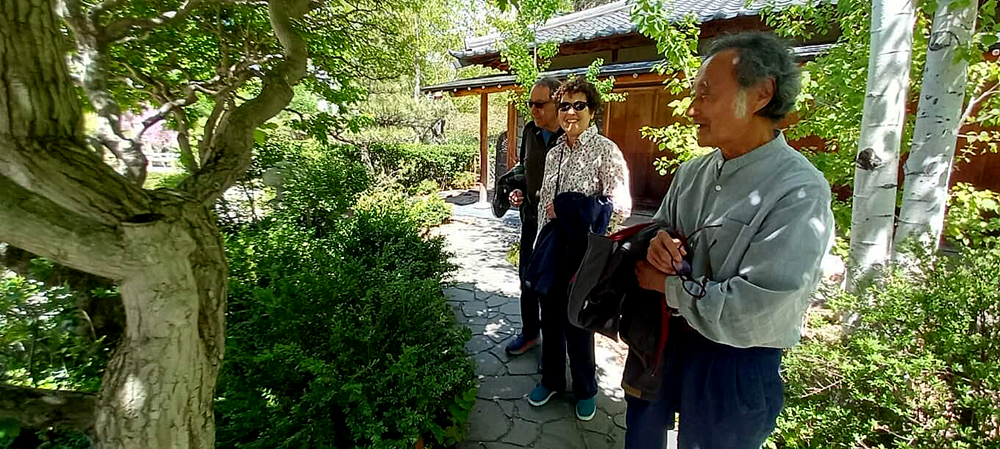
As a bookend to our busy days, our friends and artists Setsuko and Hiroki Morinoue came for a visit. We went to the Denver Botanic Gardens to see the Sharkive show in one of the beautiful new galleries. Then, of course, we meandered through the gardens full of blooming trees and flowers. A great day with great friends.

Musings on a Rainy Day

By Mimi Hedl

Blooming sassafras

When a friend wrote she was reading about Beatrix Potter’s garden, I heard the words “Beatrix Potter” and “garden” and flashed on my encounter with Mr. McGregor in Superior, Wisconsin. We lived across from Central Park in a great old house on a corner. Even though it was always cold in winter it felt cozy, with Dad’s books and Mom’s cooking filling the house with love.  Mr. McGregor lived right across the street from us on another corner.  McGregor’s yard was fenced in, a tall, tall fence and the gate was seldom open. I was seven or eight and curious as to what was behind that tall gate and what was in the yard. One summer day I saw the gate was open. I decided to go inside and explore. I looked right and left and didn’t see Mr. McGregor, so I walked in, a bit in a daze. There was so much to look at.

Plants grew everywhere. I bent down to check out this feathery top, in a row of many feathery tops, looking just like the carrots in Beatrix Potter’s Peter Rabbit that I loved to read. I looked lower down from the top and saw something orange and beautiful. It was a carrot! So I pulled it up. Right when I had it close to my mouth, I heard a shout and mean sounds coming from Mr. McGregor. He didn’t have a pitch fork but he had a loud voice and it sounded incredibly angry. He started to come after me. I ran as he roared, “Get out of my garden and don’t you ever come back!”

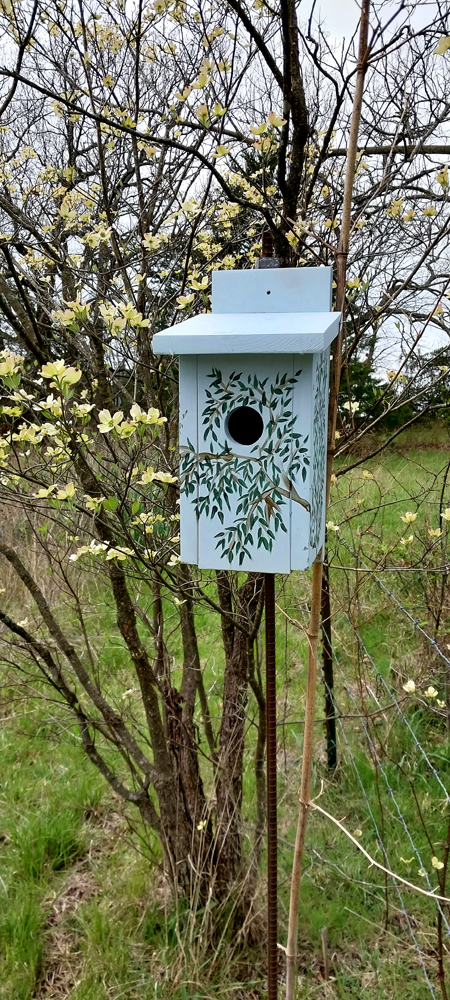
Bluebird house by Mimi

I’ve thought of that encounter over the years and have wondered what made Mr. McGregor so mean. I also wondered if I had finished eating the carrot. Gardeners may yell at squirrels or groundhogs, the deer and raccoons, voles and moles that burrow underground and eat our root crops but I’ve never heard a gardener complain about a child exploring someone’s garden. We may ask a child not to pick this or that and explain why we’ve done that. One “child”, Leo, in his 40’s, was picking our strawberries, not one or two, but all of them! He was embarrassed and we sent him home with a nice mess and a gentle castigation. Another time I let my daughter know she shouldn’t pick ALL the flowers when she blithely walked through the garden with a neighbor girl showing her all the pretty things. I hope I was gentle.

Narcissus jonquilla

I shouldn’t have gone into Mr. McGregor’s garden. I should’ve knocked on his door. I was shy. The gate was open. I was curious. We gardeners can be territorial. Our gardens are our domains, worlds we’ve created, an extension of ourselves. We want to protect them, honor them. We notice intruders of any kind and do not spare words addressing the aggressors. Still, I can’t help but wonder what a pleasant encounter I could’ve had with Mr. McGregor if he had shown me a little mercy.

Dogwood by the lagoon.

On a busy Superior street about eight blocks away somebody had a big old crab apple tree in their backyard. A gang of us kids would climb the tree and sit up there eating the sour apples until if we ate one more we’d probably puke. They tasted kinda like the Lik-M-Aid we’d buy in a paper envelope at the corner grocery along that busy road in the opposite direction.

Out the back door of 901 4th Avenue East in Superior, Mom had a long bed of chives on one side and on the other side a row of lily of the valley. I would eat and eat the chives and smell and smell the lily of the valley. One year, for Mother’s Day, sixty years after the fact, I sent Mom a bundle of lily of the valley, pips and flowers, so she could smell them again. I always think of her when they bloom, likewise with peonies, that grew in a long row by the driveway. Mom would pick bouquets of this fragrant flower and set them on the dining room table. Yet when asked at her 90th birthday party what flower she favored, she stumped us all with her answer ─ the daisy, the humble daisy.

Food was an ever-present thought in childhood. It was great when we discovered something we could eat that grew wild. Those are the only food stuffs I remember from childhood. I would’ve learned lots more if Mr. McGregor had become my friend. Now I have my own paradise where I constantly find something to nibble on and keep a salt shaker handy for people like my daughter’s friend Lysa’s sister, Tara. When she visited years ago, Tara walked through the garden eating the fresh tomatoes. She was in complete shock. She couldn’t believe how good they tasted and just wished she had a salt shaker. I should have run in to get one, but she was so happy going from one plant to another and sampling all the tomatoes.

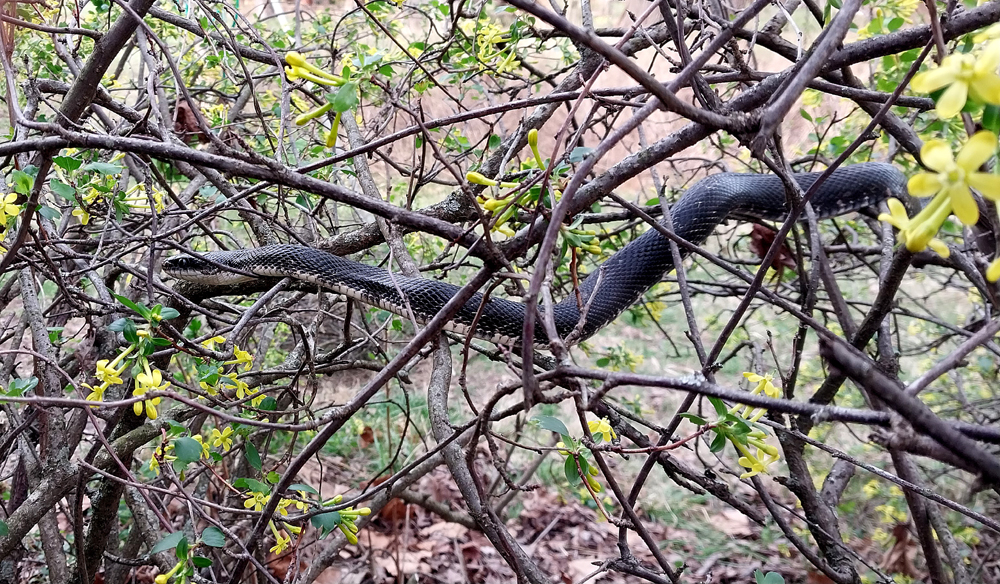
Spring surprise – a black snake in golden currant.

Here you’ll see some of what has enchanted me this spring. Thanks to Hilary for taking a photo of the cover page of The Tale of Peter Rabbit in the childhood book her son’s inherited. We kids found magic and wonder and never tired of the stories in that Better Homes and Gardens Storybook.  Remember Angleworms on Toast!!

Sycamore garden in early spring.

Books and Soup for a Snowy Day

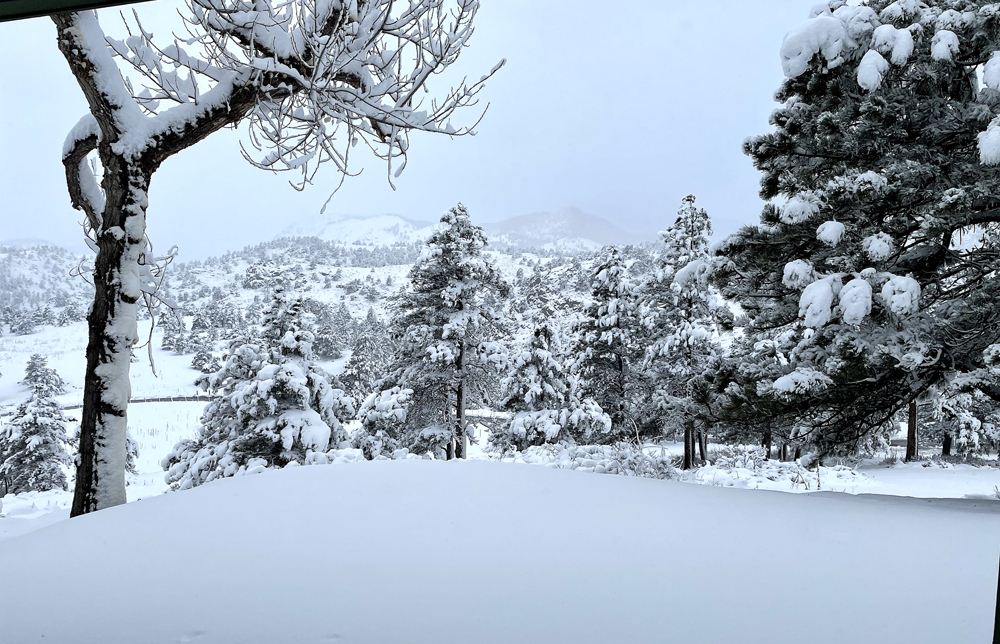
From the kitchen window.

Walking with Carolyn in Apple Valley one morning, we spoke of our childhood love of the ‘orange’ biographies we checked out of the library. We read every one in the series. I remember the Jean Lafitte story, she remembers moving on to biographies of Marie Curie and Helen Keller. What a wonderful beginning to our love of books and reading.

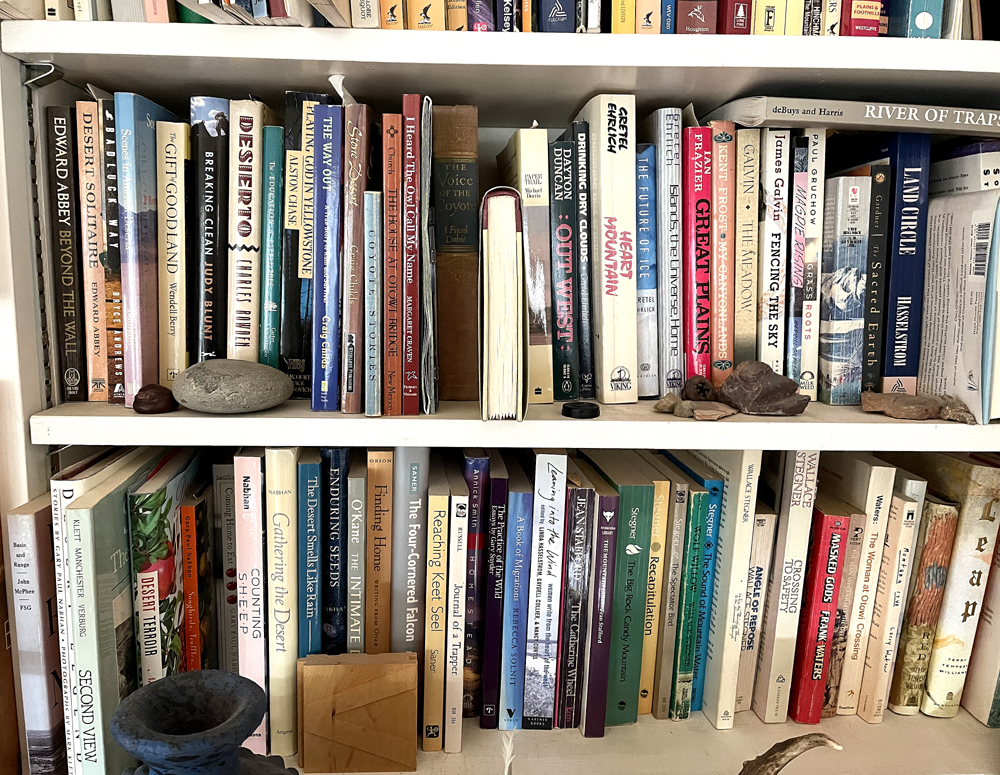
One of the many bookcases at our house on a day before the snow.

I’ve been thinking that my need to have a book on hand is a benign addiction, one I’ve had since the second grade. Our bookshelves are full and I find books to reread, like All the Light We Cannot See after watching the movie. In the last years I’ve moved from purchasing books from the Boulder Bookstore or for my Kindle, to visiting our local library. There is something about holding a book, seeing the typeface, the title page, the dedication, the chapters. They have a heft, a reality that the Kindle cannot match. And if they’re from the library I don’t have to find space on my crowded shelves.

A few of the shelves holding my ‘Western’ collection.

The Lyons Community Library is a haven. Not only do I peruse the new book shelves but I can order books from other libraries. I have interesting chats with the librarians about reading and life.

As a fast reader I finish four or five books each week. I’m not particularly proud of that as sometimes I read so fast I quickly forget the book once I’ve finished. Perhaps that isn’t my fault as many books are not memorable but simply provide a few hours of enjoyment. Not a small thing.

I do still buy some books, eager to have them at hand, to see their spines on my shelves, to have them to reread. I buy any book by Peter Heller, Ann Patchett and Siri Hustvedt. I have ordered the new book by Leif Enger due out in April. I can’t wait.

Here are a few of my recent favorites. My friend Mary, Roseanne’s mom, sent me The Frozen River by Ariel Lawhon, a compelling tale of a midwife and healer in 1789, a novel based on the life of Martha Ballard.

The Waters by Bonnie Jo Campbell also tells the story of a healer but this time she’s a contemporary woman living in the swamps of Michigan with her daughters. Much excitement in an unfamiliar landscape with neighbors, snakes and family revelations. I was reminded of Mimi’s life among plants and nature.

In a similar vein Lauren Groff’s spare The Vaster Wilds takes us with the heroine on her solitary escape from men, smallpox and servitude in a colonial settlement into the wilderness where she must learn to survive.

I’ve told everyone about Goodnight Irene by Luis Alberto Urrea, the story of brave women volunteers in WWII serving up doughnuts and coffee for a taste of home to soldiers on the front lines. I loved learning that what might have seemed to be a silly endeavor was instead a true comfort and lifeline for soldiers. And what an exciting tale.

March 14th.

Our March weather is all over the place from sunny 60° days to rain and snow. I prepared for the big snowstorm on its way with several new books and the makings for soup.

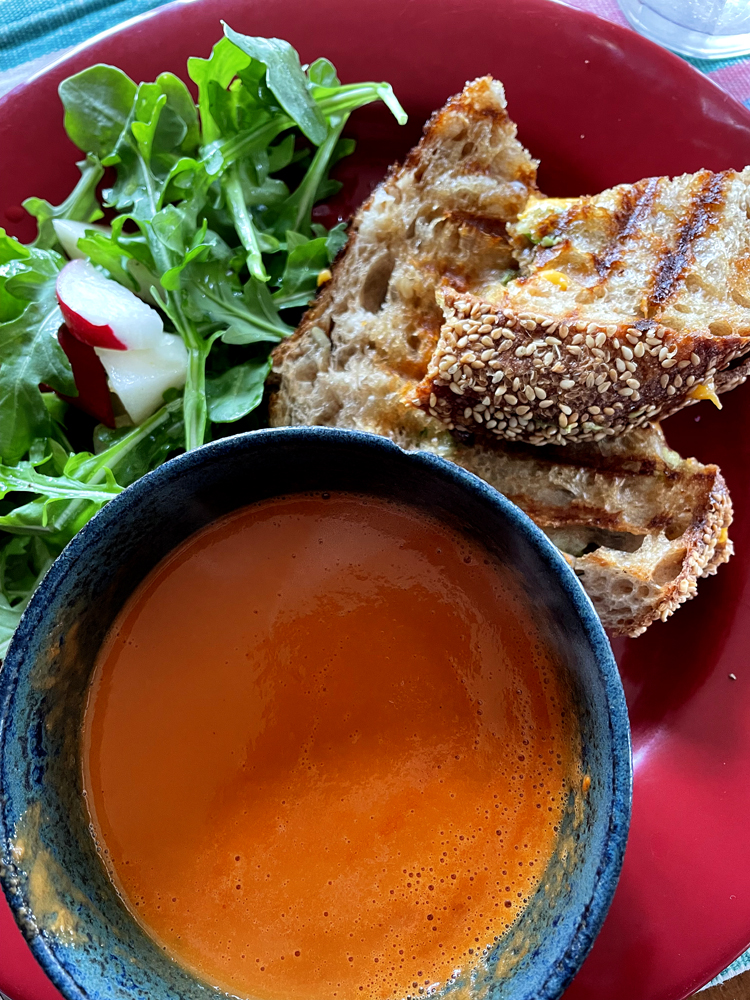
Yesterday we had a classic lunch of tomato soup and grilled cheese sandwiches. This soup is the only one I buy in a box, Red Pepper and Tomato soup by Pacific Foods. It’s nice to have in the pantry for those days I’m rushing to make lunch. But I’ll make chicken noodle soup for dinner tonight.

 Chicken Noodle Soup

In two tablespoons of butter or vegetable oil, soften a medium-size onion, two ribs of celery, two carrots, and a fennel bulb all cut in ½-inch pieces, and a couple of cloves of garlic, chopped. Add 4-6 cups of your best chicken stock, a handful of chopped fresh dill, and a little salt. Simmer gently until the veggies are tender. Add a cup or two of water if the stock has reduced and drop in two-four ounces of egg noodles. When tender, slip in 2 cups of shredded chicken and additional dill. Heat for a few minutes, taste for salt and pepper and serve. I use the stock from poaching the chicken with a carrot, onion, celery and parsley. Use boxed stock or Better Than Bouillon if that’s what you have. And a rotisserie chicken would make this even easier.

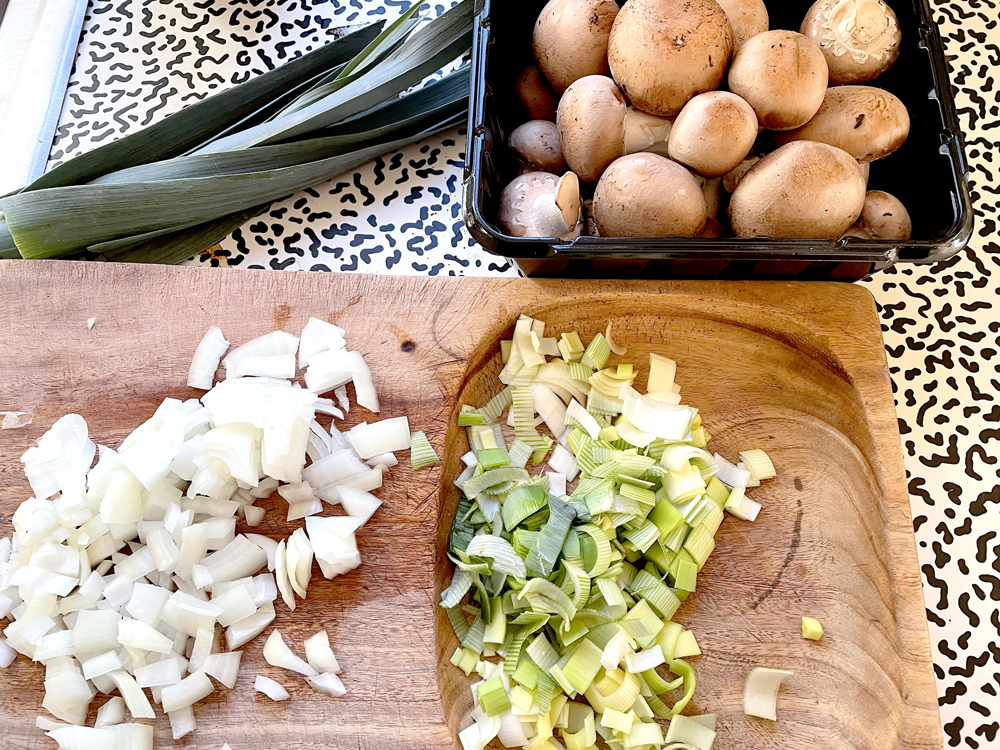
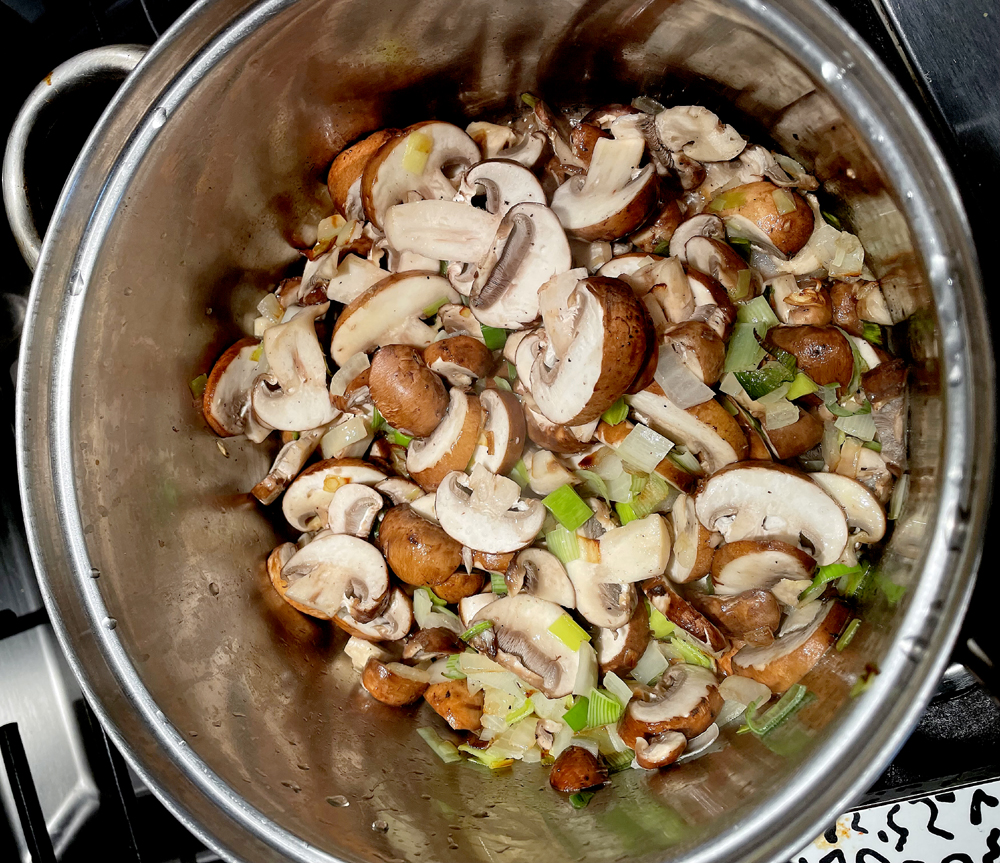
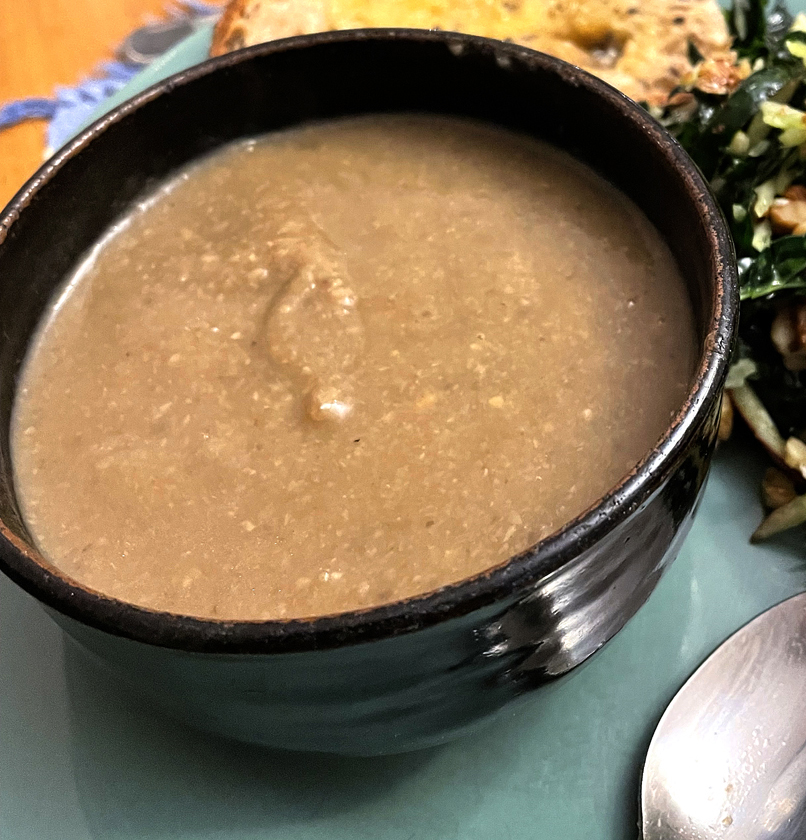
Another favorite this winter has been mushroom soup. I make this as I do other single veggie soups so use this recipe to make celery or carrot soup too.

Sauté a chopped medium onion or a large chopped leek in two tablespoons butter. (I used both.) Cook until softened and beginning to caramelize,10 minutes. Stir in a pound of sliced mushrooms (or 5 ribs of celery, chopped, for celery soup, or 5 chopped carrots for carrot soup). Add 2 tablespoons basmati rice and 5-6 cups vegetable or chicken stock. (I make a simple stock with the mushroom trimmings and the green tops of the leek. Cook in 4 cups water for 20 minutes. Strain into the soup pot.)

A simple stock with the vegetable trimmings.

Bring to a boil then simmer until all are tender. Cool a bit then carefully whizz in the blender until smooth or to the texture you prefer. Taste for salt and serve with croutons or a swirl of yogurt and finely chopped dill, parsley or cilantro.

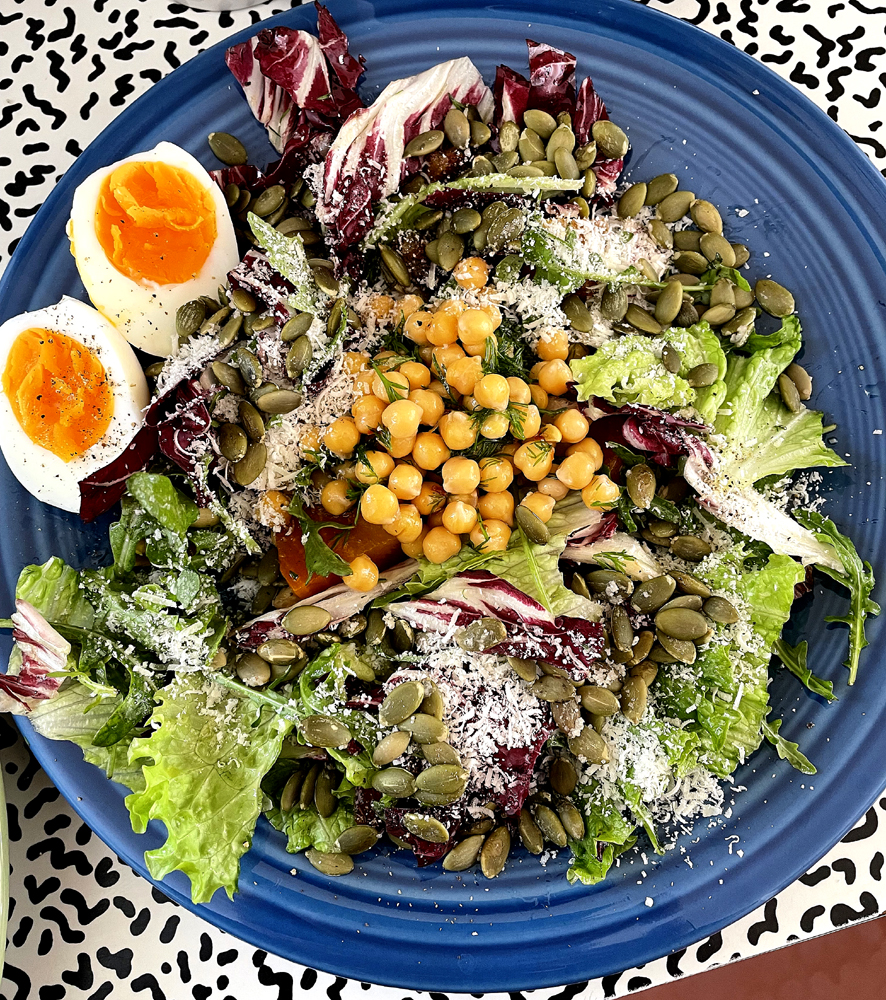
To accompany the soup make this garbanzo salad.

Marinate a cup of garbanzos, freshly cooked or canned, drained, in a teaspoon lemon zest, a big pinch of red pepper flakes, a tablespoon or two of lemon juice and 2 tablespoons olive oil. Add salt to taste and minced dill or another favorite fresh herb. Add to a salad of mixed greens and radicchio dressed with olive oil and lemon. Top with grated parmesan and toasted pepitas. Add a jammy egg if you like.

Enjoy the changeable weather of early spring and make soup!

Early morning March 14.

In-Between Days

by Mimi Hedl

Hazelnut catkins

Blue skies, sunshine on a 20° morning. Yesterday we had a record high of 82°. How do we make sense of this? Although spring won’t arrive for three more weeks we’ve had persistent, unseasonably warm temperatures and then a cold spell. The lilacs have dangerously leafed out, other shrubs and trees have swollen buds. Friends call and ask if they can put out their lemon grass or plant cabbage. We lose ourselves to any sighting of spring. In fact, spring seems like a more potent drug than coffee or alcohol or sugar or you name it. I’ve listened to the motorcycles racing up and down the state road close by, knowing the mostly young riders feel the lure of spring. I do too. I notice my mood lifting, my gait increasing, and my energy level seemingly boundless. (That may be an exaggeration.) Will we crash and burn?  Should we wait on ‘traditional’ spring or well, spring forward? Who knows. It’s a gamble. I’m cautious.

While I wait, I watch the earth erupt. I’ve noticed these snowdrops I planted last fall. Remember the tiny bulbs I planted under the short leaf pine? This is what they did this year. I never expected any of them to bloom. That tells me they like the space under this pine and in 40 years they might spread like these have.

Snowdrops after 40 years.

Here you’ll see the snowdrops I planted 2 years ago. This avenue in between the witch hazel and beauty berry shrubs has become one of those magical spots I used to find in childhood. Cozy, quiet, away from everything and everyone, a secret hideaway to play with sticks and look at all the wonders high and low. Humming, singing, pretending.

The soil inside this little woodland will make any plant want to luxuriate. As I dig holes for the Little Beauty miniature daffodil, (I had to move them out of a newly made path), the bulb almost leaps out of my hand into its new home. Snug inside, soil pressed, I scoot on to plant another bulb, feeling like that child I once was.

Down at the bald cypress I saw that some native bamboo canes crowded out the blooming daffodils. With pruners in pocket I sat again in a cozy spot and cut canes. Stretching, reaching underneath other canes, to find the offenders who smother the daffodils I saw these spring beauty leaves. 

I’d rescued the bulbs from the grass last spring as this spot, under the cypress, should make a much safer spot where the mower can’t reach them. And they look happy. This cypress knee isn’t anything like in the swamps of the southeast but still, it’s a knee!

Bald cypress knee

I walk by the latest sculpture and smile at my tribute to a story about Sambo and the pancakes the family ate after the tigers were turned to butter, or ghee, as they ran around the tree. Our family had the record with a picture book and I listened to the story over and over. Sambo ate 169 pancakes. In this case, the pancakes come from wisteria vines I eradicated and always thought I’d use for something. And once again, time and moisture made them mostly useless. They called out for a use and found one. It doesn’t take much imagination to see them as pancakes.

On another day I hurried to the pond as I heard a commotion. Scores, no hundreds of robins had showed up. They chattered loud and constantly except when they flew to the edge of the pond, almost circling it, and dipped their beaks down into the water, and then up, as if the action was orchestrated. I stood, not moving a hair, and watched them at their party. Oh how they carried on.

I never resist going out to the Park as something always catches my eye. The winter aconite puts on a sunny display and like dandelions they cover the ground. I like to move the tubers as the flowers just appear. They don’t resent the move and the seed that literally explodes from the pods can spread in a fresh location. Maybe these could turn into butter too.

These in between days, when neither the solitude of winter nor the ecstatic energy of spring reign, give me a chance to relax and do whatever the spirit of the day suggests. I look out through the screened in porch and see the daffodils dancing in the breeze, (Wordsworth close by), the hazelnut catkins looking golden from afar. The signs and signals arrive daily. It’s a slow dance, not to be rushed until it all cascades down on us and we can’t keep up and go into our frenzied dance.

Through a screen, brightly.

 Inside I admire the leaves that have opened on the witch hazel branches as the flowers fade. The veins look delicate, intricate and a little puffy, like seersucker. I have a front row seat to this unveiling and the other wonders of the in between days.

Another Birthday

Pawnee Buttes 2021

We have often spent my February birthday in a tropical spot but the last years have found us celebrating in the cold. Bud and Zoë will not let me forget our trip to Pawnee Buttes on a frigid birthday and a picnic lunch in the car. I threaten to revisit the site each year just to tease them.

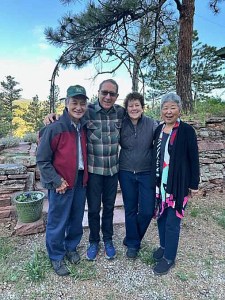
Renee, Rodney, me and Bud in the courtyard of the Mabel Dodge Luhan House.

This February we traveled to Taos for a stay at the Mabel Dodge Luhan House, a place I have wanted to visit for years. We skirted snow and bad weather on our way south. The drive is  a favorite part of the trip for me. Naming peaks along the Front Range, seeing the landscape open as we descend Raton Pass and winding through the canyon up and over the mountains to Taos.

Sited beneath looming Taos Mountain the charming historic inn is haunted by the many artists and writers who have stayed there. Our friends Rodney and Renee came from Santa Fe for a night and we talked and talked about our lives, aging, art, and food. I’m reminded of how important are our friends on life’s journey. Altogether a wonderful birthday weekend.

I can’t settle into any sense of winter as the weather swings from super cold near zero weeks to sunny over 50 degree days. I’ve been making salads one week, soups and stews another. Here are a couple of my cold weather concoctions.

Salmon Cakes

This dish is a trip into my childhood when we ate tuna patties for Friday meatless dinners. These are a vast improvement on those dry, rather boring patties and a nice pantry meal using canned salmon. Based on a recipe in the New York Times.

Combine 1 large egg, 2 tablespoons mayo, the zest and juice of 1/2 a lemon, 2 minced scallions, 1 1/2 teaspoons Dijon mustard, 2 tablespoons panko or other breadcrumbs. Stir in a handful of chopped dill or parsley. Add a large 15 ounce can of salmon, breaking it into smallish chunks, don’t mash it. I used salmon with skin and bones – a healthy choice – and picked out the bigger bones. Refrigerate for a hour. Form into four patties and sauté in olive oil until browned, about 2 minutes a side. Serve with Tartar Sauce:
Combine 1/2 cup mayo, 1/2 cup chopped dill pickles, 2 tablespoons finely minced red onion, 2 teaspoons capers, 1/2 teaspoon lemon juice, 1/2 teaspoon Dijon mustard, and some chopped dill. (I didn’t have capers but it was tasty without them.)

For dinner one cold night I made a pork and green chile stew. This is a free-form recipe so use what you have, in quantities you prefer, i.e. more chilé, meat, or other veggies – fennel would be nice here. I bought a pound of ‘pork stew’ at the butchers. You could use a pork shoulder cut into cubes, most of the fat removed.

Toss the meat with a few tablespoons of flour seasoned with salt and pepper. Brown in 2 tablespoons safflower oil and set aside. In the remaining fat cook a large sliced onion until translucent, ten minutes. Add a carrot and a large Yukon Gold potato cut into 1/2 inch chunks, and a few cloves of garlic, chopped. Deglaze the pan with a little water and scrap up the tasty bits. Return the browned pork to the pot. Add 2 roasted, peeled, seeded and chopped poblano peppers, a bit of salt and pepper. Add water to barely cover and bring to a simmer. Cover and let cook gently, do not boil, for an hour until tender. Add water as necessary for a brothy stew. Season to taste with salt and pepper. Serve with a handful of chopped cilantro, additional hot sauce, and corn muffins. Find the recipe at https://howilearnedtocookanartistslife.blog/2018/11/25/a-taste-for-corn/