As I prepare for my first trip since the onset of the ‘Pandamnic’, I walk the gardens, soaking up autumn’s sunshine. A seductive breeze blows, making me want to lie on the grass and daydream. And it’s Sunday after all, one of my days off. I should indulge, and will, knowing these magical days are numbered. In spring we feel the endless possibilities stretched out in front of us, in autumn we feel an impending doom, even though we have many, many days of happy moments before the big hand descends and wipes out most traces of greenery.
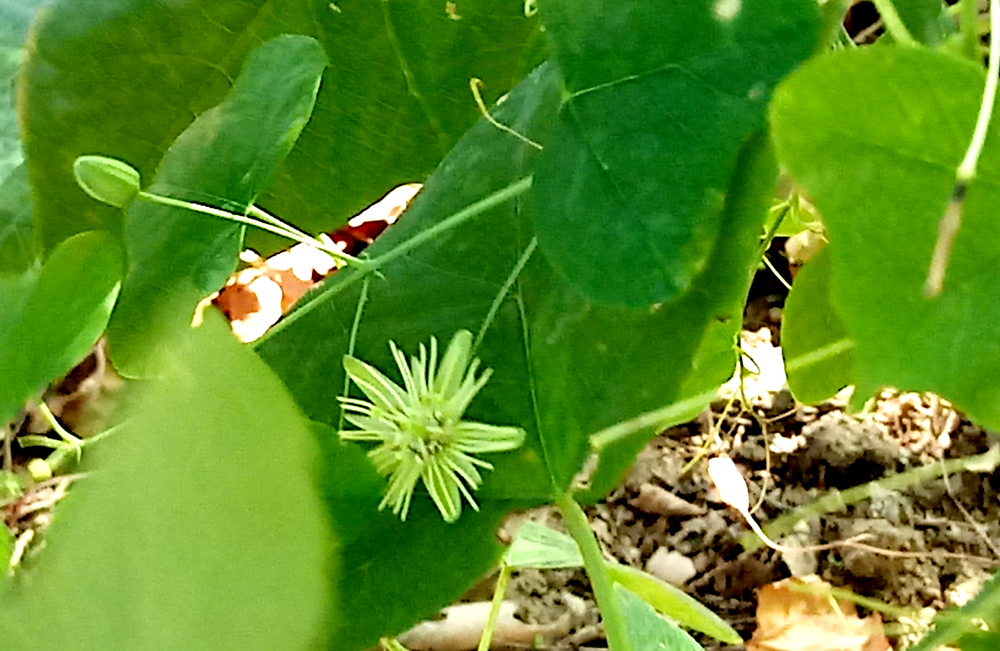
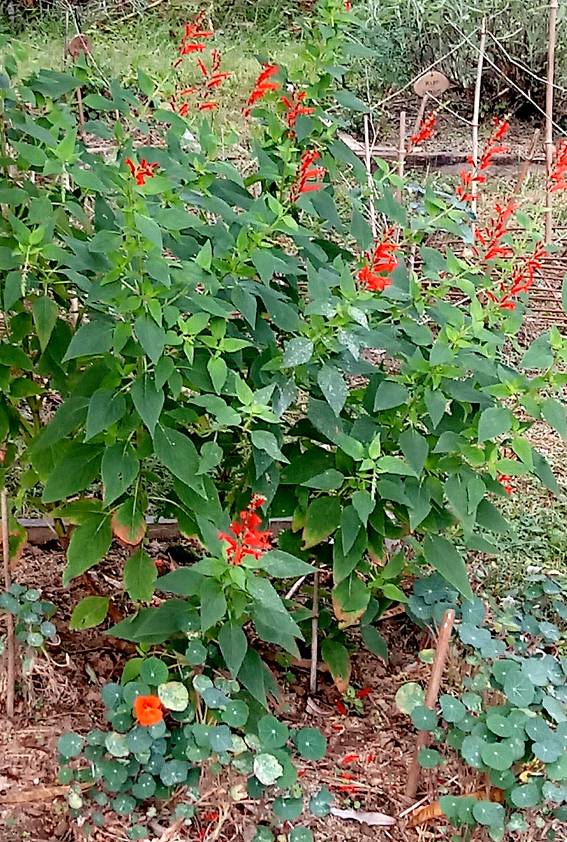
Everything looks vibrant and alive. The yellow passionflower even set on some late flowers, such a modest flower compared to the showier purple passionflower. I like its quiet ways. The pineapple sage outdoes itself in blooms though few hummingbirds remain to enjoy the nectar. Fall lettuce seeds have germinated since our 4” rain a week ago. Salads will delight again. Acorns fall, red buckeyes mature, and native trees and shrubs ripen their drupes and berries. The head gardener saw a mockingbird stealing some of the deciduous holly berries and I heard her scolding the poor bird, that he needed to wait for winter. I had to laugh at how wonderfully she wants to control the supply of winter’s food.
Pineapple Sage
I walk with her and point out the lush drupes on the flowering dogwood trees. These fruits have oodles of fat and the birds positively adore them, as do squirrels and our chipmunks, so much so we seldom manage to collect seed for starting new trees. We procrastinate and then, as if the trees never produced any fruit, the drupes disappear. I suggested she add that chore to her list. She loves lists and will add something to her list if she does a task but didn’t write it down. Curious, I say to her, and move on. I do not want to incur her wrath. And also, I’m sure I have my peculiarities, though I can’t think of any at the moment.
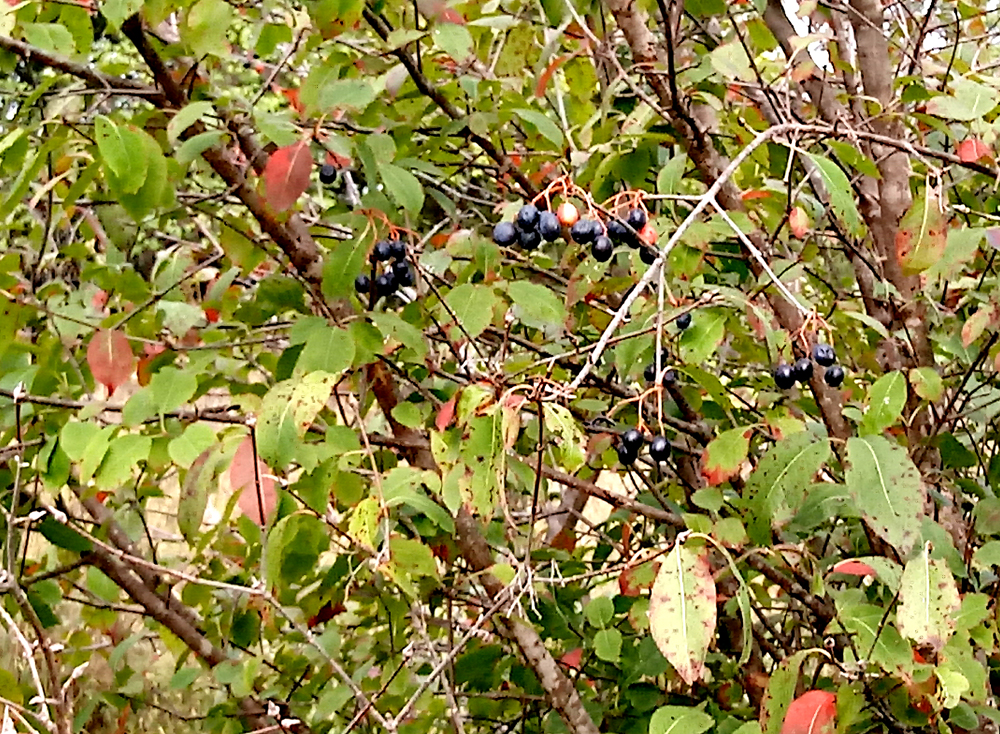
Rusty Blackhaw
The rusty blackhaw berries taste like prunes. Granted it would take a lot of these berries to equal one prune, but like my foraging friend Rebeka says, “they’re packed with nutritious goodies”. Mostly they’re fun to pop in your mouth when you’re out splitting wood or just walking by the shrub and nab a few for a treat.
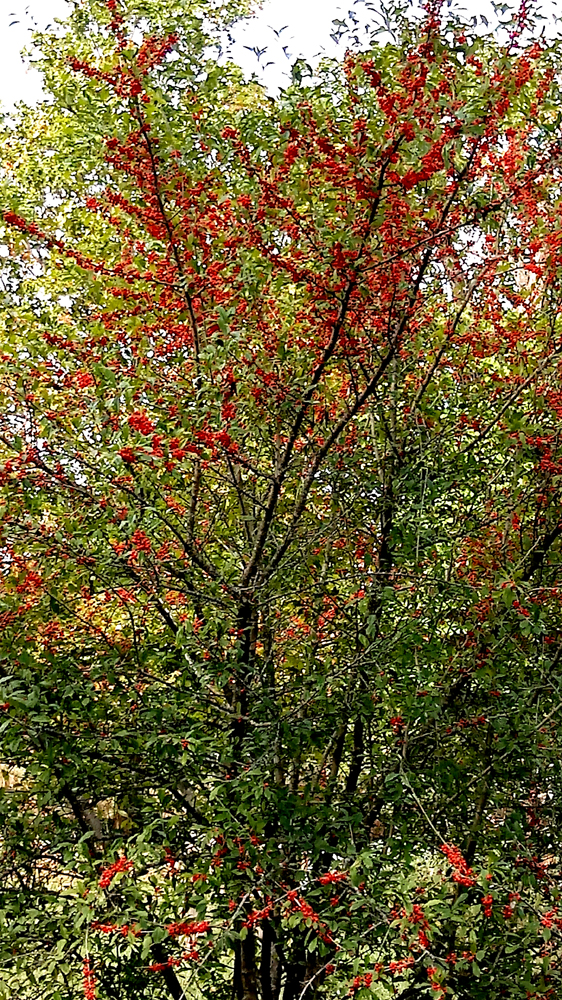
Deciduous Holly
Come a cold day in winter, a flock of cedar waxwings will descend from nowhere and devour almost every berry left on the deciduous holly. I’ve watched this mad, frantic orgy before. How comical the birds look with their black masks, pulling off such a heist.
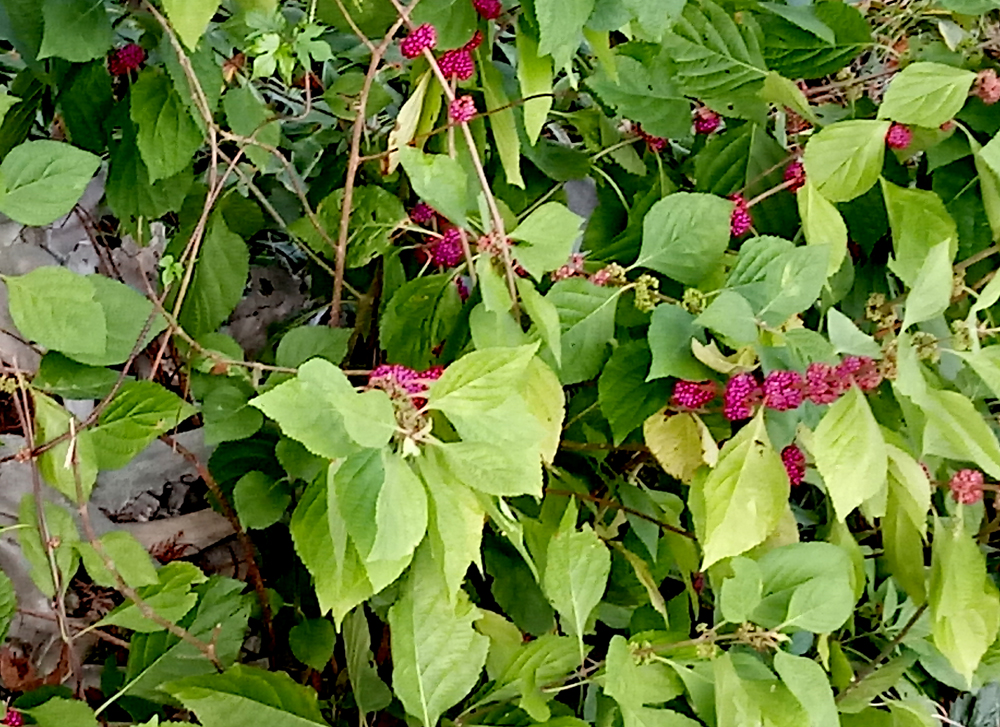
American Beauty Berry
The American Beauty Berry’s fruit doesn’t seem popular. Deer and birds are supposed to relish the seeds but I don’t see many takers. My attraction to the shrub is its leaves. They contain natural deet that works wonders on mosquitoes and flies that want to drive you crazy. It’s especially nice to use these leaves on babies delicate skin, the fragrance of the leaves giving a lovely perfume to their baby smell.
Doesn’t this strawberry bush, a member of the Euonymous family, look like something from another planet? This is its first year to produce fruit and has surprised us with its many permutations, this last one when the seed is ready to dehisce. Normally it only grows down in the boot heel of Missouri, but the changing climate has given it a chance here, especially in protected areas.
The last native shrub, pasture rose, produces beautiful hips. I’ll collect them after the first frost and use them for tea. Three hips provide as much vitamin C as an entire orange. It’s a delicate tea, tasty on a cold winter afternoon. When my new neighbor, Petra, saw these hips, she said, “This makes me remember my grandma in Germany, in Würzburg. She collected rose hips and kept them in a jar for winter too. Will you give me a start of this rose when I’m ready to plant my gardens?” No words could make a gardener happier, and I replied, “With pleasure.”
Monkshood! This is a triumph. It’s been growing in the Death Garden for years and years, to little fanfare. Last year I moved some to Brother Cadfael’s Garden, the medieval monk who’s good friends with the woman in the Cottage Garden, after all, their gardens are side by side. Well, just a few days ago the flowers opened up. Look at the incredible hoods, just like a monk’s. I’m reminded of an accidental poisoning in New York City when a monkshood flower fell into a diner’s glass, and that was that.
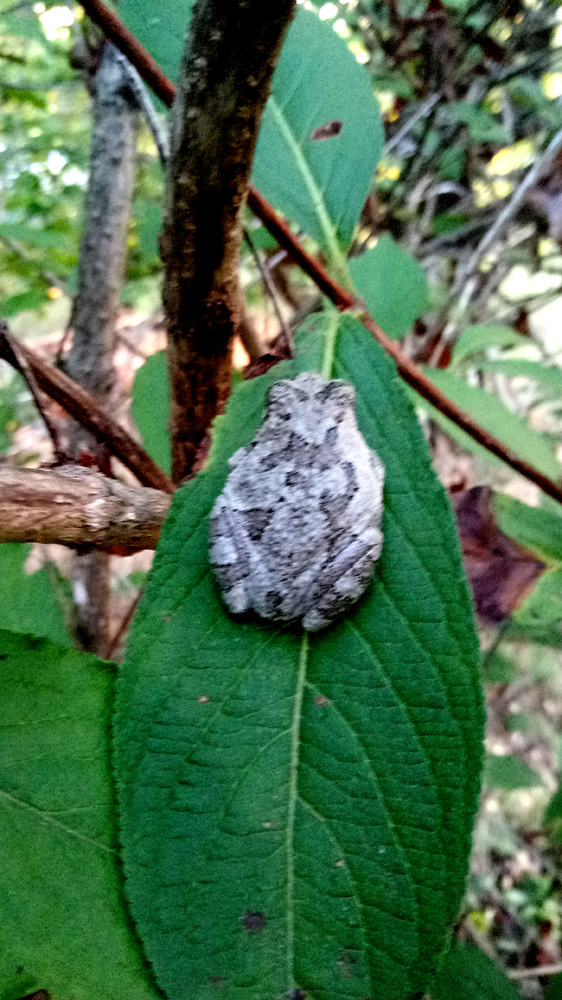
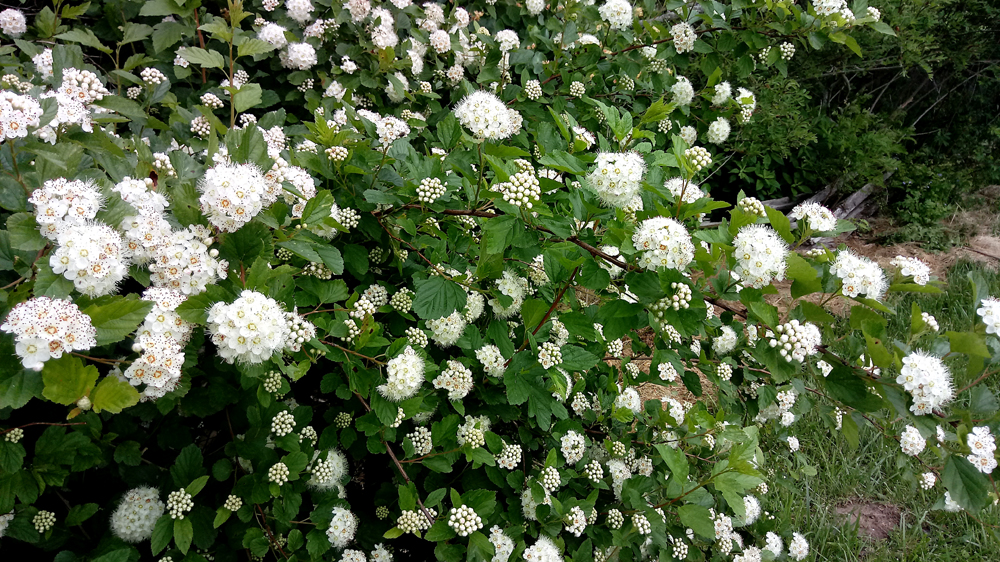
With all this bounty, heading into the dark months doesn’t seem so daunting. As the weeks go by the supply of berries will dwindle and the head gardener will remind me how she wanted to curb the birds early foraging. I’ll smile and let her know she was right and then remember that nap I took on the grass, looking up into the weigelia and finding my little friend, showing me the way.
Cache La Poudre, Virginia Dale, Tie Siding, Laramie, Happy Jack. These names evoke sweet childhood memories of car trips in the West. We had lived in Laramie while my father worked on his doctorate and after moving to the Midwest, spent each August traveling back to our beloved mountains.
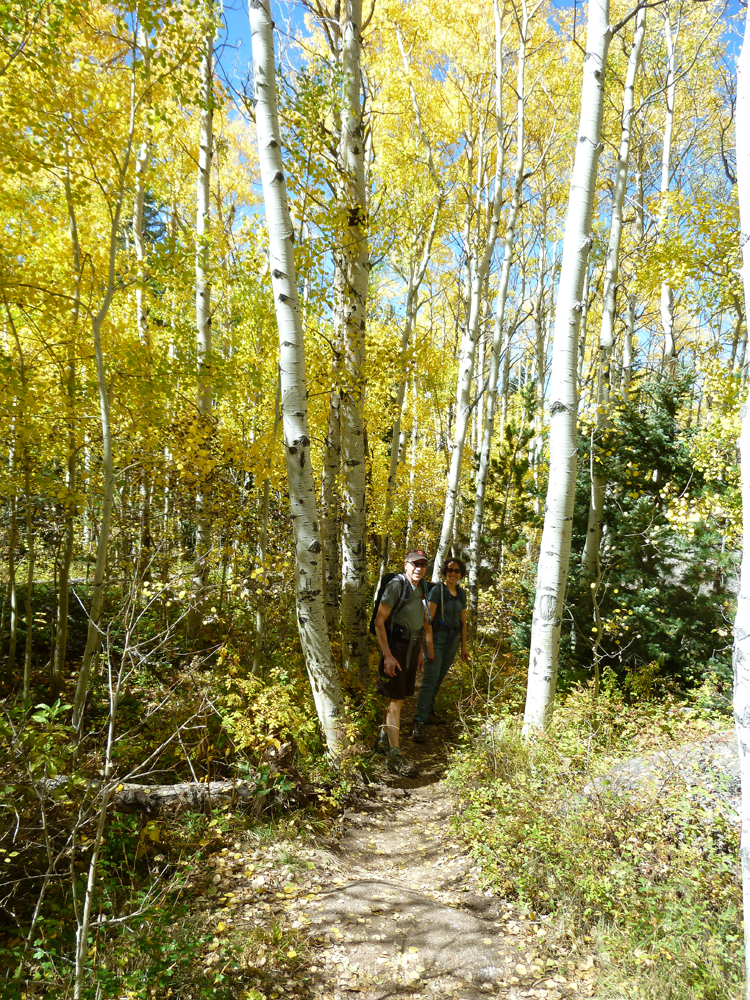
Recently, Zoë had scoped out a hike at Vedauwoo, a National Forest site between Cheyenne and Laramie that is one of those remembered names. We set out on a Sunday morning to explore. Huge tawny stones rise from the high prairie in a formation called Turtle Rock. More like Rocks as the granite outcrop is made up of many squarish, round-edged stones. Set between the crystalline blue sky and the golden aspen woods, our view of the rocks changed with every turn of the trail.
Three miles later we were ready for lunch. I had packed sandwiches and salads in metal tiffin boxes, perfect for transporting our meal.
These are a new sandwich favorite. Goat cheese on crusty bread topped with slices of summer tomatoes and strips of roasted green chilé.
We sat at a picnic table at the trail head among scattered boulders, content with the exercise, the food, the company, and the glorious day.
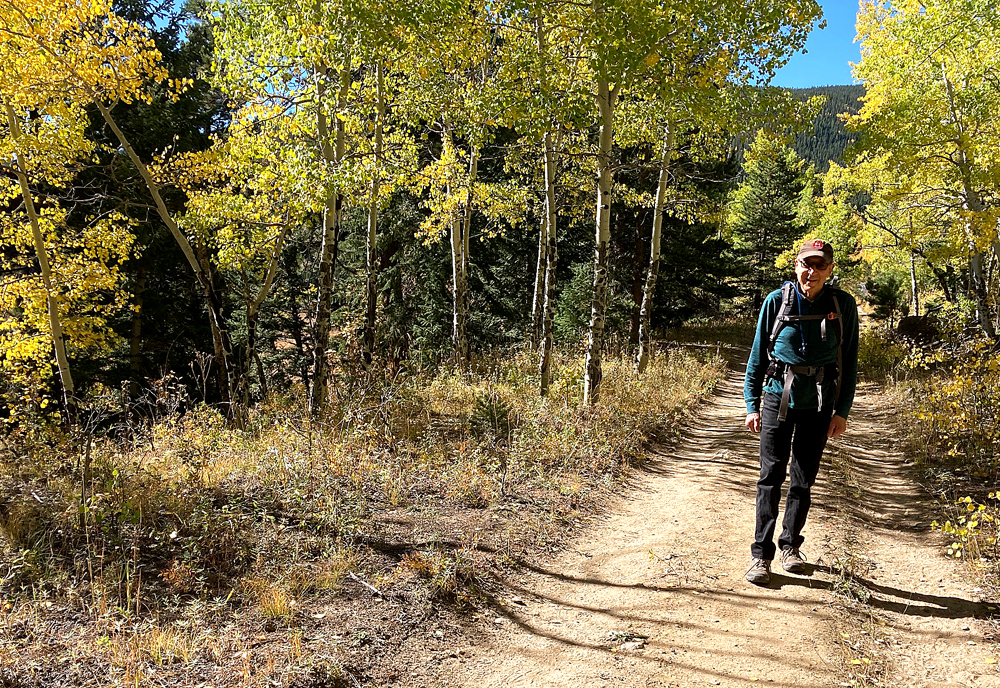
This week, Bud and I needed another dose of that deep yellow aspen color and made a trip to Caribou Ranch Open Space above Boulder. The drive along the Peak to Peak Highway was one stunning view of hillsides and roadside aglow with aspen light after another.
We were lucky to find a parking spot in the often full lot at the trailhead. The four mile hike begins on an upward path over a ridge through pine forest then drops to follow the edge of a large meadow. Patches of that amazing gold studded the mountainsides surrounding us. Some aspen had taken on a reddish-pink color. What causes that? Moisture? Temperature? Location? Probably all of those. There’s so much I don’t know. And what is it about that deep aspen yellow that resounds in my heart?
Rain continues to pass us by. We’ve had a few brief showers that tease more than give comfort. All the plants, trees and shrubs slough off leaves. Everything is a miasma of tiredness. This year we decided not to water anything except the eggplants in pots along with flowers and herbs on the deck. This cycle of drought will become the way of the future. We need to know what varieties do well in dry conditions, fortify themselves and survive. The head gardener looked in her notes and found our last big rain in mid-July, during blackberry season. That was over two months ago.
The underground river the native plants and deep-diving weeds have created lets these gardens thrive without rain. I can’t describe in technical terms what takes place deep in the earth, science was my worst subject, but I have a poet’s license and I pull it out at times like this. All the roots from thousands of plants surrounding and near the vegetable gardens go deep, deep down. The roots cross over and around each other and send feeder roots in every possible direction. They create a bed, a liner, a receptacle for storing water. When water in the upper layers becomes tough to come by, the roots of the flowers, herbs and vegetables dip into this underground lake, put their straws down and suck up water by osmosis to sustain their lives. This image belongs in a children’s book. (Hmm, maybe it was math…)
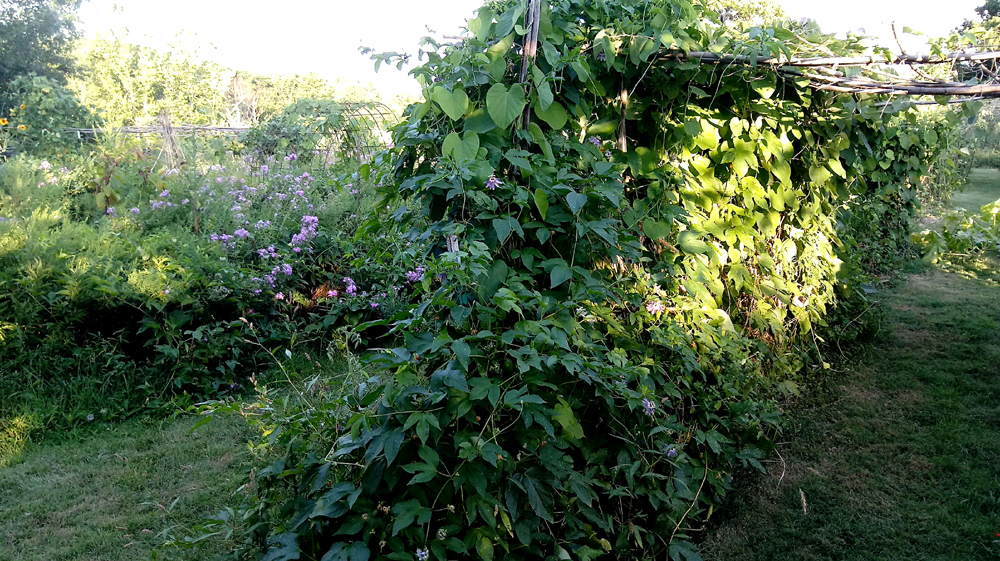
In addition to no rain, for weeks and weeks, the temperature hovered near 100° with humidity over 80%. We worked from 7am until noon. Then dripping with sweat and bordering on exhaustion, we’d hose off and retreat to the coolness of the house. This meant many tasks remained undone. Like not picking the pole beans. When we did remember to pick them, they were well on their way to becoming dried beans. If you leave too many beans on the vines through neglect or because you want to save the seed, the vines will stop producing flowers, hence no more fresh beans. And in high temps the flowers would appear and then fall off.
We don’t need seed of the Blue Lake pole beans so we pick the over-sized beans, shell them, and have shelly beans, a favorite in these rural parts. They taste delicious, kinda like fresh limas, though they take longer to cook than fresh green beans. I’m still hoping, the last resort of the desperate, for beans and go out every few days and pick whatever the vines offer.
Only one cucumber vine survives, looking sadder than sad. I felt tempted to water the cucumbers even though I needed to see if they’d hang on. The zucchini and white scallop squash have, much to our amazement. No fruits, but vines still alive. How did the squash bugs not devastate them with the extreme stress they endure? I wouldn’t brag about the way things look, but the gardens continue to soldier on. With temperatures next week in the mid-70’s maybe, just maybe, rain will follow.
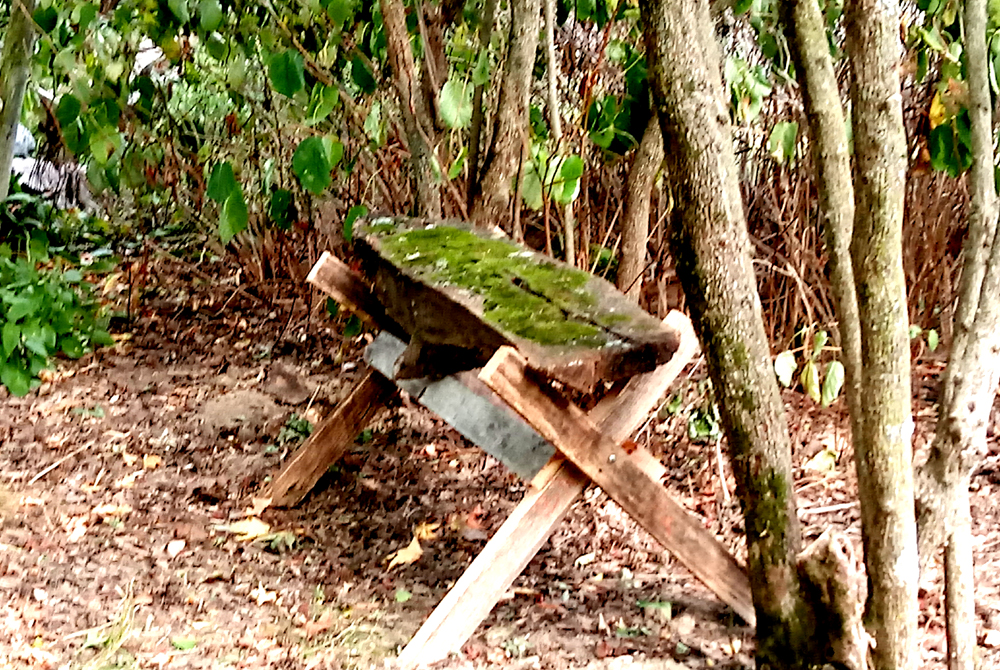
Reduced garden chores meant I could take the opportunity to build a cradle for the bench in the Meditation Garden, a task on my list for several years. The large slab of wood sat close to the earth and visitors have complained about the difficulty in rising from such a low position. And it was wobbly too and might throw you off balance when you tried to get up. So I lugged old oak 2 x 8’s over to my saw horses and set to work making 2 x 4’s for this cradle. I will spare you the grueling details of my trials and tribulations, the different hardware I tried before carriage bolts did the job. It took me a lot longer to put this together than I’d thought, but what doesn’t? And I had to take it apart two times before I finally got it right. When I carted it out to the garden in the wheel barrow and put the slab on and saw how nicely it fit, how comfortable and solid it felt, I shouted Yahoo!! for all the neighbors to hear. To sit on this bench and watch the gold finches feasting on the sunflowers, hear their happy chirping, and to watch them come right to the bird bath, ahhhh…
Where the finches come
On one of my trips to the Park, I stopped in my tracks when I glimpsed the unmistakable leaves of poison ivy on the edge of the Butterfly Garden. (Sort of silly to have a butterfly garden when the entire homestead is one, but I designed that back when I was young and naive.) Red flags go up when I see poison ivy. Just like I can visualize what goes on under the earth in our underground river, I can see poison ivy taking the farm. I’ve known people who had to sell their farms because they got sick or had to take care of a loved one and then poison ivy took over, literally. So I told myself to come back with a hoe and gloves. And I did.
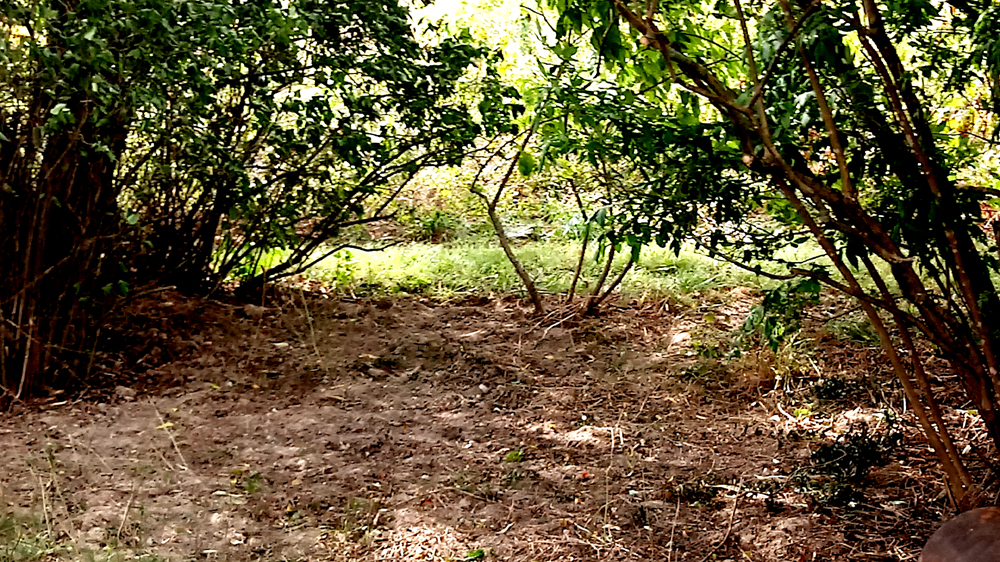
Poison ivy turns me into a mad woman. I go after those vines, carefully, but with determined energy. The hoe searches for the source of those running vines and then slays with bold strikes. (The vines grew around the button bush, the lone shrub in the back-middle of the photograph below, a butterfly magnet.) By the time I’d finished flay-ling about, the earth looked like a pig had rooted in the area. Let no root go unturned became my motto.
Suddenly this garden caught my imagination. I had neglected the interior for years and years, not finding time to tame it. But now, I felt inspired, and the drought gave me the gift of time.
The next day I went out with pruners, garden pruner, (a gift from Jeremy, a mini chain saw), garden fork and rake. I cut or dug out every tree or shrub seedling, all the blackberry canes, the buck brush and other seedlings that move into neglected spaces and decide to call it home. Inside this quiet garden, a clean canvas appeared.
Lilacs, vitex and button bush in cleared area
The lilacs on the south side of the garden and the summer lilacs, or vitex on the north side of the garden shelter the garden for its new life as a protected meadow. A beautiful, graceful meadow that could only come about after years of waiting for a transformation. There’s something magical about making a new garden out of an old one. When we began, we made gardens out of pasture land where nothing but grass grew. Now, 40 years later that Butterfly Garden became old and neglected only to find a new life. For a gardener to witness those changes and be an active partner feels like completing a cycle of birth and death. One couldn’t have come without the other.
Once I had the floor of the garden clean I raked everything to the sides. I could see the job wasn’t over. Branches hung in my eyes, caught me underfoot. The fun part began, pruning the lilacs and vitex. Whenever any of the young artists would come for ‘therapy’ in the gardens, the task they loved the best was pruning. If you’ve never had the pleasure, I encourage you. Learn pruning basics, then away you go. Most of these acolytes did a good job, but a few of the daydreamers would get carried away and there wouldn’t be much left of the shrub when they woke up. (I’d have to laugh as I remembered helping a handsome young man prune a fruit tree and while we talked away and I was smitten with him, more of the tree disappeared than I’d planned.) Everything grows back, I told the young women, so it wasn’t a big deal, only amusing to see what undirected direction looked like and the shock on their faces when they realized what they’d done.
The lilacs had years and years of dead limbs running in and out of the live branches. It didn’t take much thought to get rid of the dead wood. With the vitex it became a work of art. I wanted them to flow just so and give the gardeners or visitors easy access without branches hitting them in the face or impeding their walk. To look at the shrub and decide what should go, what should stay, and where you should cut it, well, it’s indescribably peaceful. Have you ever watched a gardener prune in a Japanese garden? It feels like that looks. You can’t see what the pruned vitex looks like in this photograph, but ‘lovely’ sums it up. Once the wildflowers take over in a few years this garden will become a secret garden of sorts, shrouded by fragrant shrubs. I am excited. Without the drought I would not have taken on this task.
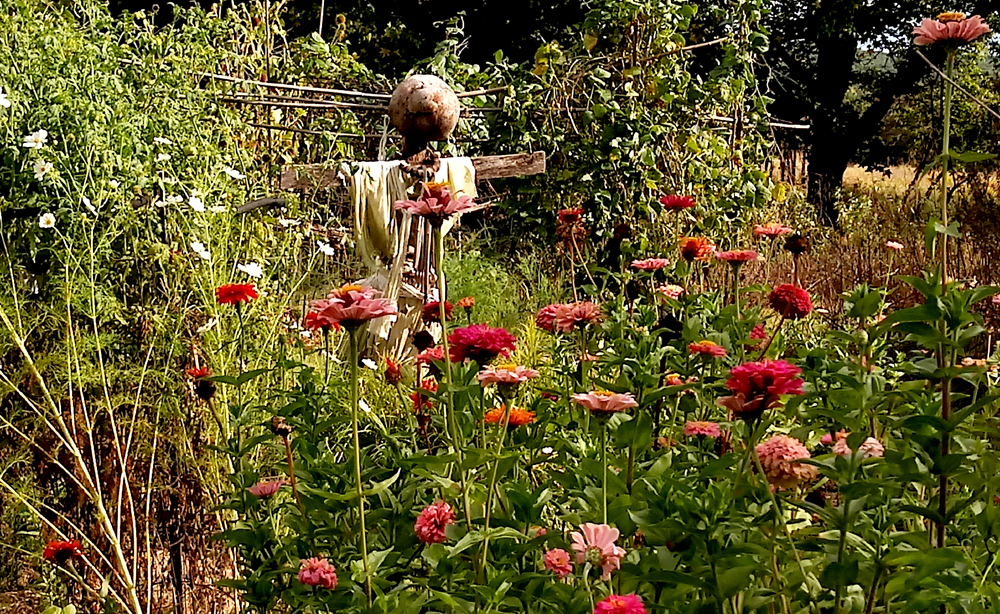
I’ve also watched the monarch caterpillars growing from little specks to big enough to go into chrysalis. You’ll see a sprouted monarch on one of the sad zinnias. Water in the bird baths has been number one on my list of chores. Everything from tiny bees to butterflies to birds of every sort have used these baths during the drought. The deer come at night. To watch a bird taking a bath is truly one of the seven wonders of the world. These small tasks take on a more significant hue in a drought. I have time to linger, to enjoy, and not scurry about trying to conquer the world on all fronts.
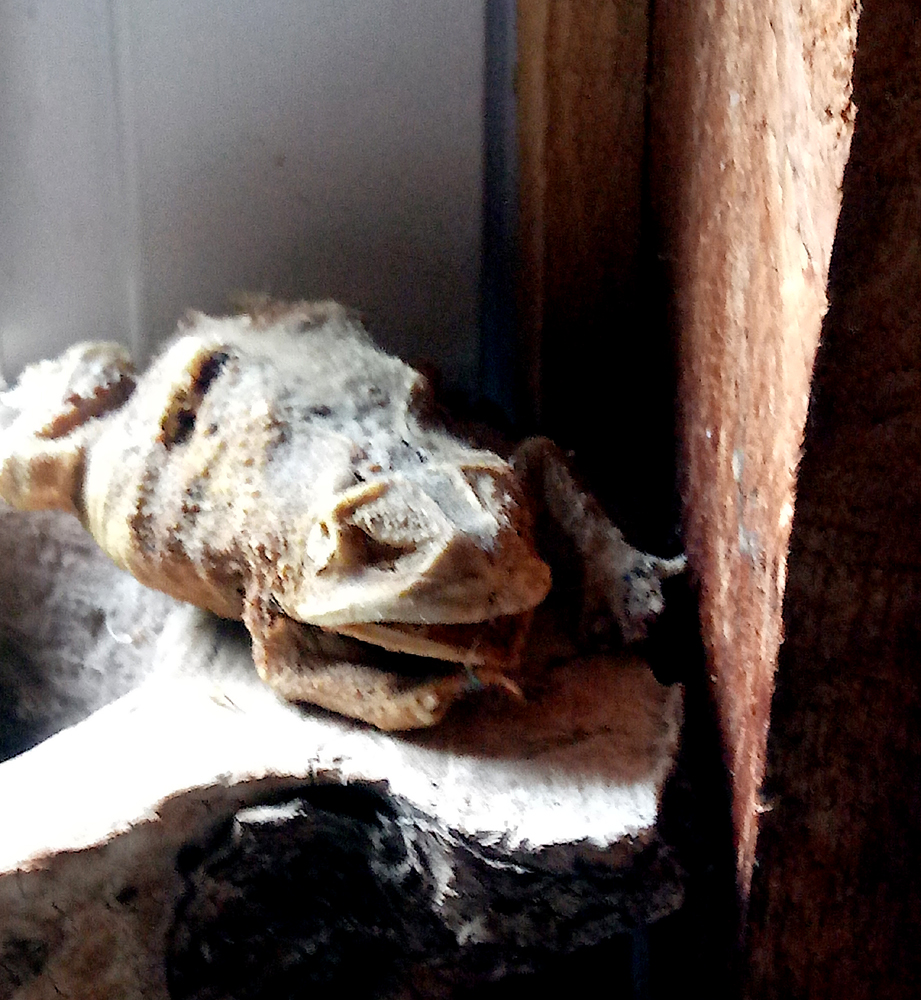
One early spring day years ago, out preparing the garden, I found this toad. Frozen and then dried. When my sweetheart, Ron, saw it, he laughed and said I’d found the Buddha incarnate. This toad has been my inspiration for 25 years. When you look at the face, how can you not burst out laughing? Rain or no rain, life seems good, and this wise, funny toad helps me face it all.
Addendum: Halleluiah! On the 21st of September, the night before the fall equinox, rain began to fall at 12:40am. It fell hard enough I went inside to close the window by the computer, my desk, and to unplug the phone since the lightning came so close. And now, in the morning, I see a new world, the rain barrels filled, the temperature cooler and the tired world taking on a new hue.
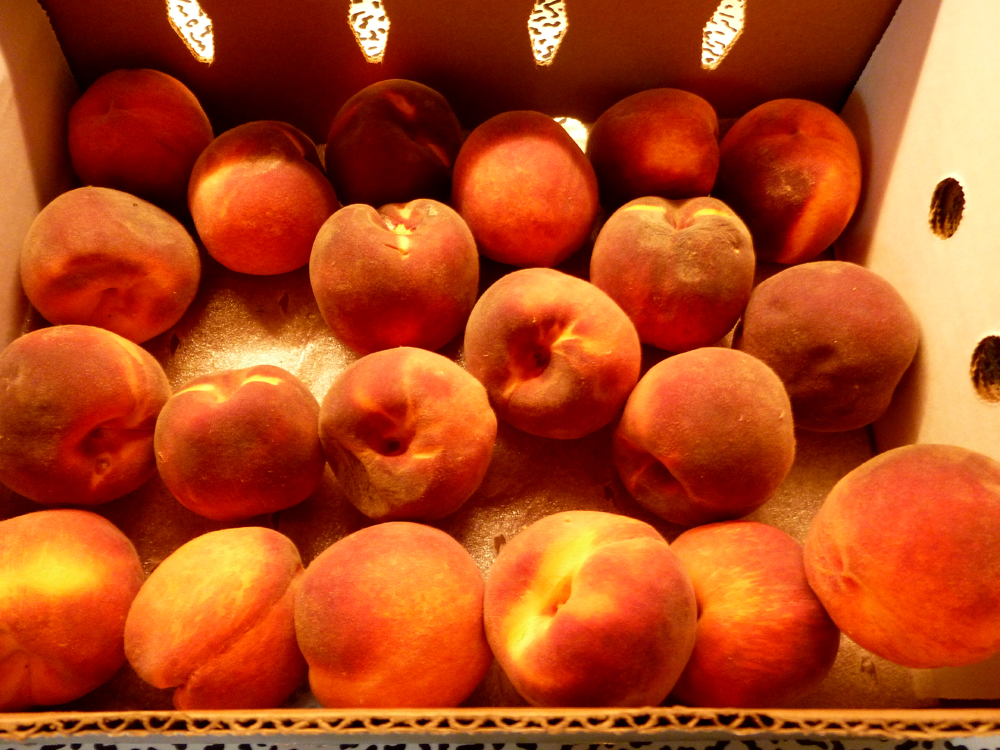
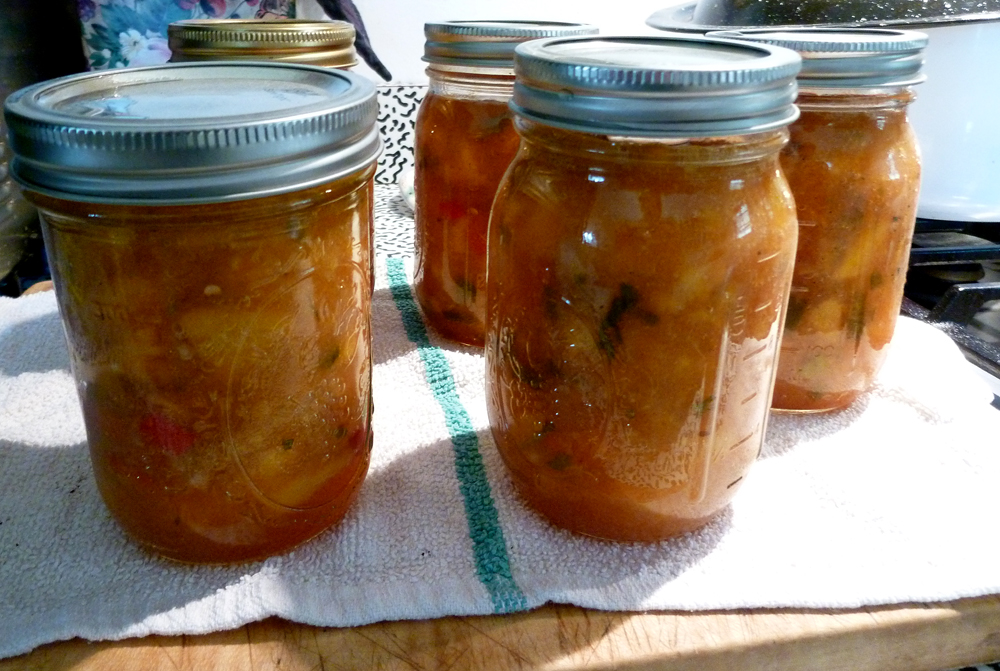
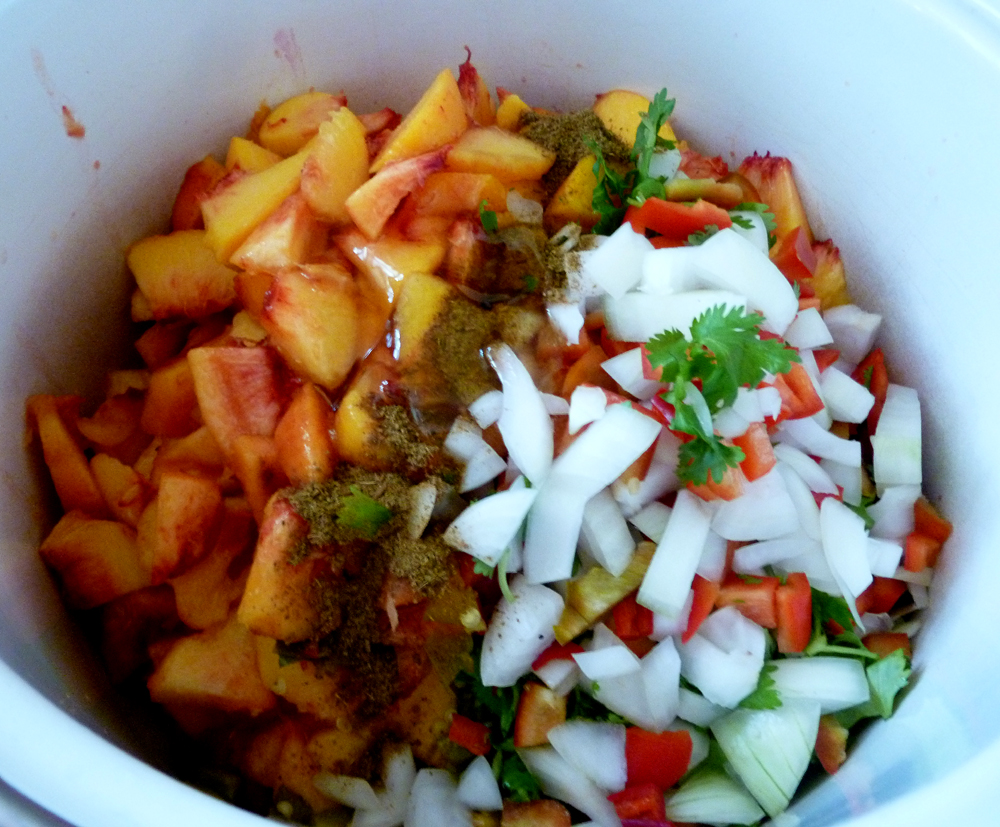
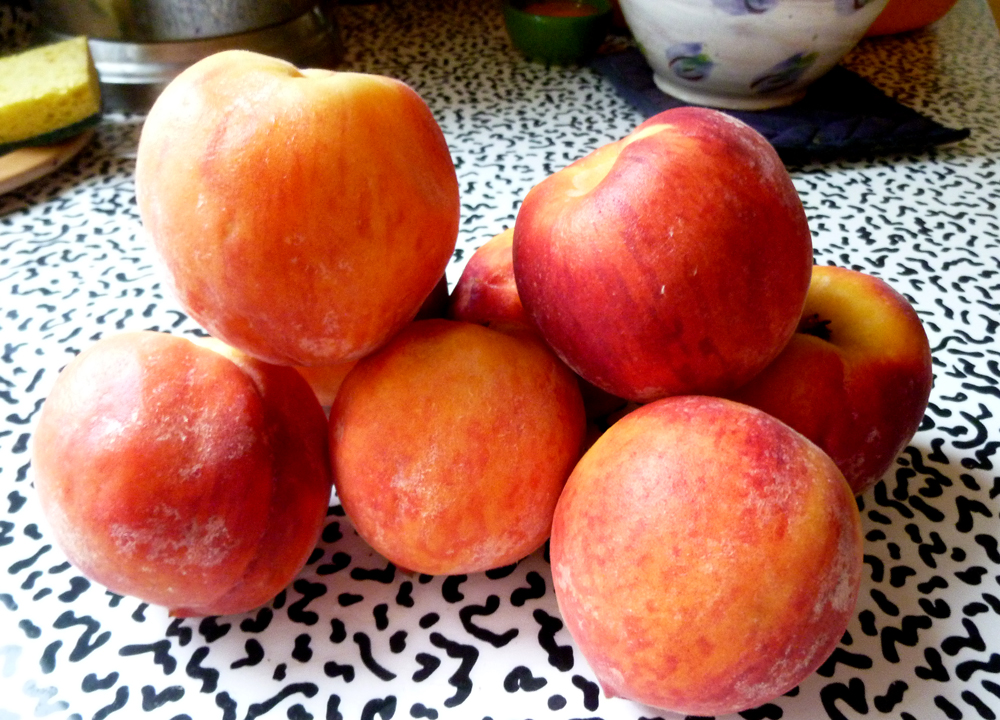
It’s been a great year for Colorado peaches. Zoë brought me a twenty pound box last month and Bud’s assistant, Evan, a keen bargain hunter, has scored several boxes for himself and me. We’ve eaten many pounds of fresh peaches on our granola, with ice cream and out-of-hand. I have made a dozen jars of sunny peach salsa to eat on cold, grey winter days and I’ll make a peach pie this week with the last of the crop.
Zoë makes this salsa and kindly shared her recipe.
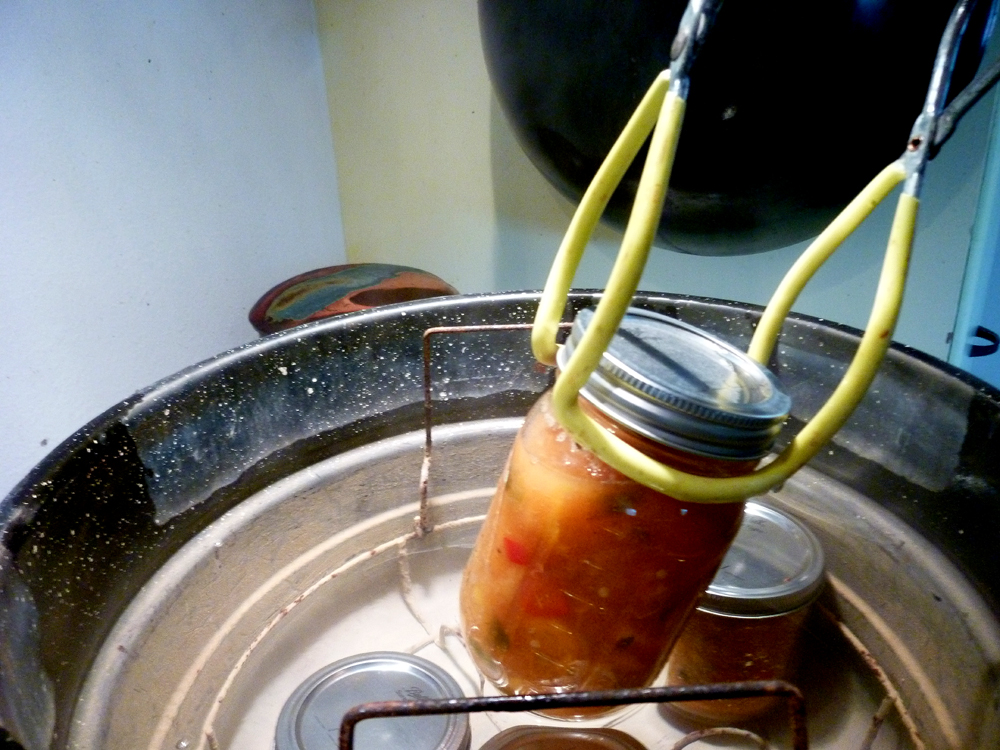
After peeling and chopping 12 peaches add 1/2 cup white vinegar, 2 tablespoons honey, 4 chopped jalapeños, a chopped red pepper and 1 1/2 cups chopped red or yellow onion, 1 1/2 teaspoons ground cumin, a handful of chopped cilantro. Mash some of the peaches. Cook until thickened 5 – 10 minutes. Put into hot jars and process in a hot water bath for 22 minutes (or 15 minutes at sea level). Makes 4 pints plus some for eating right away.
I don’t have many specialized tools in my kitchen but this jar lifter and wide funnel are invaluable when canning.
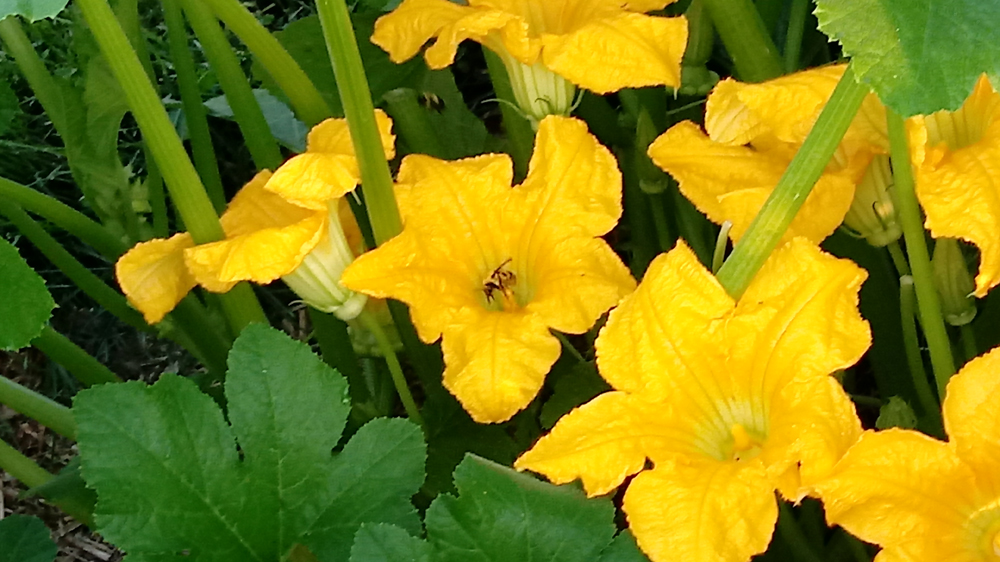
As the summer slowly turns to fall, my zucchini plants have sprawled over their garden bed. Big, prickly leaves hide just the right size squashes – if I spot them before they become unwieldy clubs. The stealthy giant zucchini is a challenge for all of us vegetable gardeners.
My considerate plants have put out fruit at a reasonable pace. I can keep up with their production if I am vigilant in my harvesting. The fat one on the right was hiding.
One of our favorite zucchini dishes comes from Yotam Ottolengi’s cook book Plenty, a marvelous compendium of vegetable recipes.
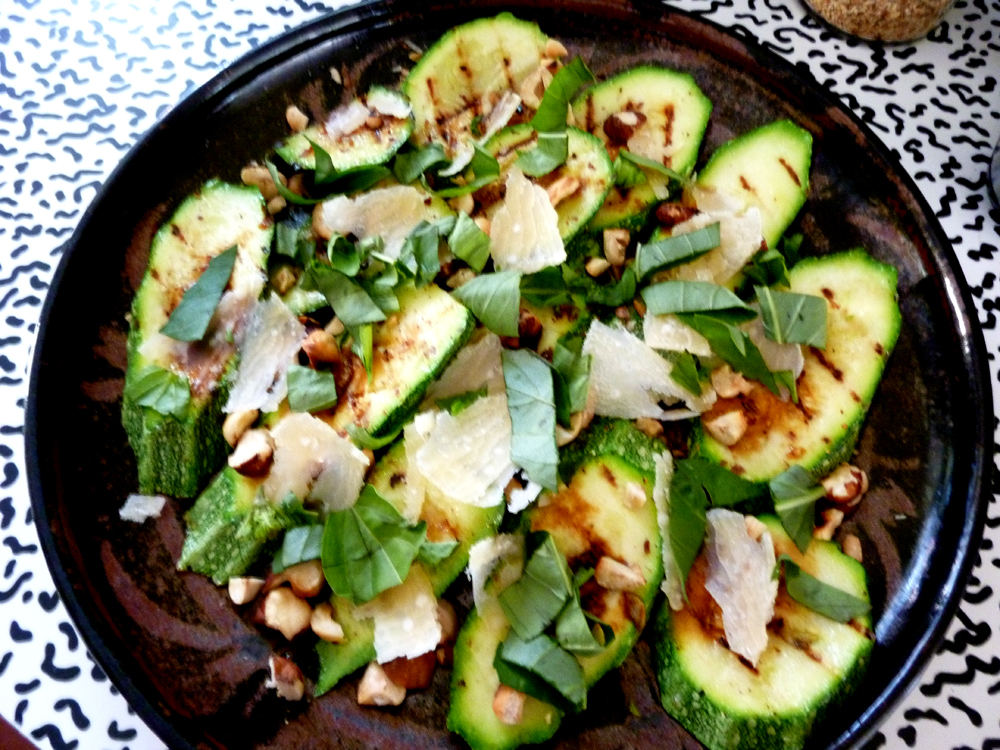
Zucchini and Hazelnut Salad
(This recipe is for two-three servings but can easily be multiplied.)
Cut 2 medium sized zucchini into long skinny strips 3/8 inches wide, either diagonally or along their length. Toss with a tablespoon of olive oil, salt and pepper.
Heat a grill pan or a cast iron skillet until very hot. Lay the zucchini on the dry pan and sear until grill marks appear, just a minute or two on each side. You don’t want to cook the zucchini but rather barely soften it and get a bit of char.
Spread the strips on a platter and sprinkle with a teaspoon of your best balsamic vinegar. Top with ¼ cup chopped, toasted hazelnuts, shaved parmesan and torn basil leaves.
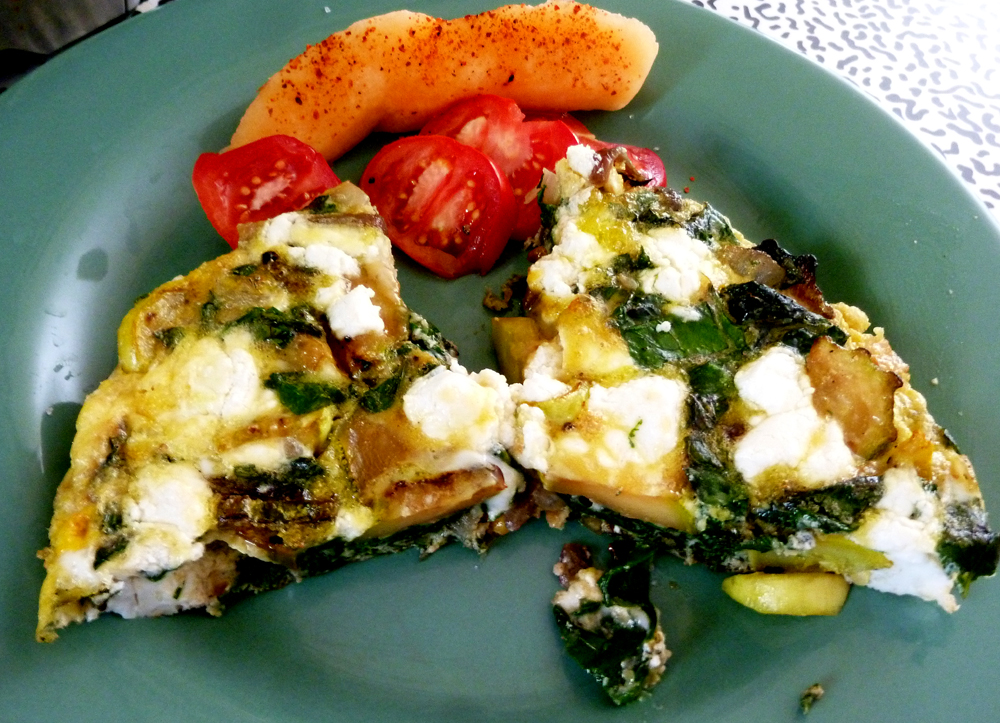
ZucchiniFrittata
A zucchini frittata makes a delicious lunch or supper. For two servings saute a smallish zucchini, a yellow squash and a small onion, chopped, and some slivered beet greens in olive oil until tender. Season to taste with salt and pepper.
Add a bit more oil or a hunk of butter to the skillet tipping the pan to oil the sides. Beat together 4 large eggs and add to the skillet, shaking the skillet to distribute around the veggies. Dot with crumbles of goat cheese and cook over medium heat until edges are almost set. Put skillet under the broiler for a couple minutes to finish cooking the eggs. They will continue to set off the heat so don’t over broil.
Cut into wedges and serve hot, warm or at room temperature. Buon appetito.
Every summer about the first week in August, the memory of autumn creeps in. A cool breeze, dill going to glorious seed, pawpaws ripening, all signals that summer will bid us good-by. The abundance of the earth and jungle-like conditions in our gardens will not endure. Because we’ve suffered through intense heat, some of us through fires, the thought of autumn buoys us. We’ll welcome the end of mosquitoes, ticks, chiggers and inferno-like conditions. Until, of course, winter arrives and we fondly remember glorious summer nights. Call us fickle.
Before the arrival of this cooler weather, we’ll have to endure more extreme heat and humidity. The cucumbers have slowed down, especially with no rain for several weeks. Instead of picking twenty cucumbers a day, I’ll find one and feel grateful. Blessedly, a summer squash plant has succumbed to squash bugs (we planted over zealously) and one melon plant up and died too. We survey our gardens and watch the changes. Everything looks a bit tired, like the head gardener, but we plod on, hoping rain will come and give the gardens their second wind.
Truly, I see myself as a gardener. My calling is to take care of this piece of earth. Now I realize we have too much earth to handle. Eighty acres for one person and a head gardener, with no machines but a push mower, hmmm – not so good. Seed drifts about the countryside. Only mowing and poisoning keep any plant in check. The homestead, the gardens on the three acres, we maintain, we watch for unwanted seedlings of all stripes and colors. It’s the big fields, the twenty-five acres, where natives have been planted that cause anxiety. My neighbors don’t have the luxury of time to think about invasive plants except my new neighbors, the young couple, who I have high hopes for. Now they’re too busy building their house to deal with autumn olive, multiflora rose, Hollis’ thistles and…
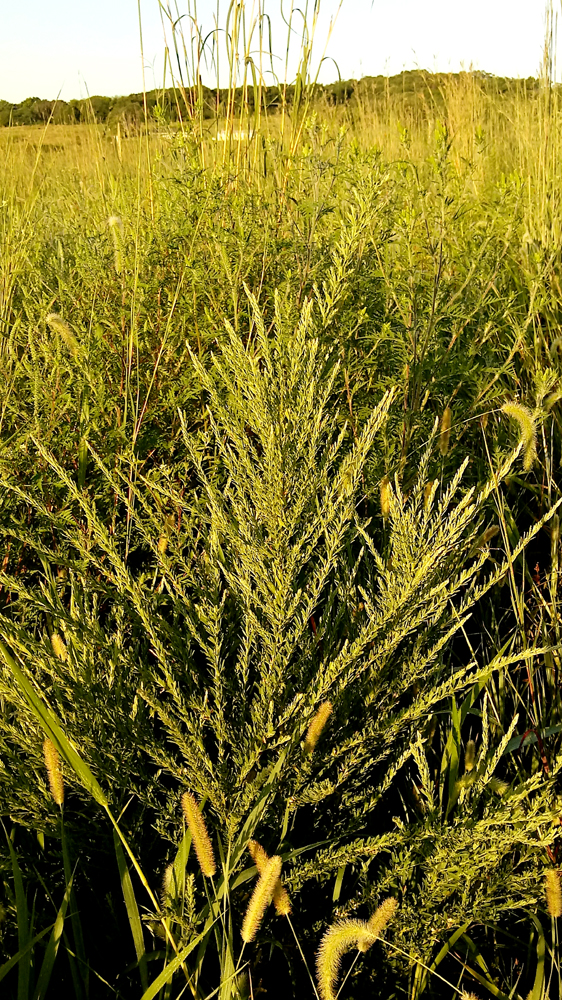
Now, sericea lespedeza. Sericea has taken center stage. I could make a list of offending plants we’ve battled. Most of them due to my enthusiasm, uncurbed by thoughtful research. In other words, being seduced by a plant’s beauty, fragrance, grace, whatever, to the point I was unable to foresee the future assault it would carry out. No offensive seed drifted to the fields, only to the gardens. And we’ve stopped their assault over the years. However, with sericea, I had no hand in its introduction to our fields.
Sericea lespedeza was initially planted at the North Carolina Agricultural Experiment Station in 1896. They were looking for a plant that could survive drought, control erosion and add to the soil’s fertility. After 125 years, sericea has done more than that. It’s taken over vast tracts of land, from Michigan to New Jersey, south to Texas and Florida and even in Hawaii. It has become a curse word to farmers and land owners in general. Like many non-native plants, there are no controls, no natural predator or eater of, no mite, no bug or anything to keep it in check. So now we have another catastrophe on our land, one of many I may add. It’s a bit of a nightmare, like letting the genie out of the bottle.
Sericea lespedeza
Until now, Strawdog has been unbothered by this legume. In fact, quite frankly, I didn’t even know what sericea looked like. But oh boy and howdy! I do now. Friends came over for dinner and as they walked around the gardens, Clayton casually looked out into the fields and said, “I see you have a healthy specimen of sericea.” He stopped me in my tracks. “What!!” I exclaimed. “No!!!” I go into crisis easily. I always think the worst will happen. So for me, he could’ve said the world is coming to an end. This seems crazy and it embarrasses me to confess, but it’s true. I slid into doomsday mode. Clayton tried to convince me to just forget it, but I couldn’t. I knew I had to confront this new menace.
I managed to put my anxiety in a box for the rest of the night. The next day, obsessed, I walked the fields. I realized our twenty-five acre field of natives had a veritable infestation of sericea. How did the seed arrive so quickly and perniciously? The extent of the infestation nearly drove me crazy. There was so much of it, I couldn’t believe it could be a bad guy. In fact, I had the folks who we bought the native seed from send me a list of all the seed they’d sent when we planted the field in 2018, just to make sure it couldn’t be something else. I scoured the internet for sericea look-alikes. I didn’t want to believe we really had this dreaded plant. I was still in denial.
I spent one to two hours, down on my hands and knees, early in the morning, snipping each woody stalk with my Felco pruners. When my friend Agnes helped for the first time, she declared “This is so rewarding, to clear a patch.” “Rewarding?” I replied. “It’s a curse. And it goes on and on.” Her company made the task more pleasant and after two weeks, maybe five of the twenty-five acres seems clear of this legume. For now. Of course it will return, just not go to seed this autumn. All the bad guys come back; the good guys just disappear. Sigh…
And that was the easy five acres. The rest of the field has big patches of 100 square feet. Each one would take me three hours to cut down only to have it come back and be ready to flower this time next year. There’s no way I or we, could cut it all down yet this fall. I was beginning to see the reality. I was beginning to feel overwhelmed.
Sericea’s attractive. It has soft green leaves with a silvery back coat. No prickles, no thorns, nothing unpleasant. I can see why the pedologists in North Carolina admired this plant, not realizing its aggressive nature. (Keep this in mind in all things plant and human!) I could take up sericea eradication as my mission, neglect the homestead gardens. Such a thought made me realize maybe I had lost my good sense.
My neighbors and friends, John and his son Jeremy, came by at my bidding. I told them about my problem and asked them if they’d use their zero turn mower to cut down the big patches. I’d do the isolated plants. First they told me, “Mimi, sericea’s everywhere, you won’t get rid of it.” I said I realized this, but I signed a contract to take care of this field and I feel responsible to my neighbors too. If, I continued, after five years of continually cutting and burning, sericea returns, I will admit defeat. “I know I’m crazy, but I feel compelled to do this. I love this land.” And Jeremy, who has hunted here for twenty-five years said, “I do too.” And they also laughed and agreed I was crazy. Nice to get the small talk out of the way. They said they’d mow the patches.
A few days after this conversation I drove to Linn for our drive-through electric co-op meeting. I slowly drove the back way, noticing all the sericea in fields, along the roadsides, even in folks’ yards. If we could see Covid, it might look like sericea. I felt physically sick at the sight of so much sericea but also oddly calm. With something so common, how could I possibly expect to be a sericea-free island?
Over a week has passed and they haven’t mowed the big patches. I walked out into the field this morning, as the sun was coming up, and saw beauty as well as an unstoppable force. Maybe Jeremy saw that too. The only way to temporarily get rid of sericea, is to use poisons. After 4 or 5 years of poisoning sericea, it supposedly will die. Then birds, the wind, seed on a tractor, will reintroduce it and you’re back to square one. I will not use poisons. Period. Just like farmers with picture perfect fields, poisons become a way of life in order to maintain the perfection. That explains some of why we’re now in such trouble with the earth.
Like our Pandemic, some things can’t be eliminated, only contained, managed through clever and careful techniques. We simply have to accept that which we can’t control and learn how to live with it. We all face these challenges, with our bodies, our families, our jobs, our mental health, whatever. Part of living happily comes from accepting our limitations and moving on.
I have spent hours thinking about infestations, reading about taking care of the land, and now have admitted defeat. I simply can’t fight it. Every time I think about sericea taking the field, infecting the neighbors’ fields, I get an anxiety attack and want to cry. It will drive me crazy if I don’t accept the reality. Our fields have sericea. I will watch the battle between it and big blue stem, Canadian rye and the other lovely forbs. The bob whites call many times every day. They don’t seem concerned about sericea, nor do all the pollinators, floating above it all.
Native peach
So I focus on the homestead. I think about where I want to plant an alder copse, a smoke tree. I watch the Indian pinks go to seed and calculate when the seed will be ripe. I pick the beautiful grapes and native peaches and feel grateful for the bounty of this piece of land. The earth doesn’t care what plants grow in the fields at Strawdog, along the road sides or anywhere else. The earth has millennia to sort it all out.
Only we humans care. We think we know what to do, like the soil specialists, or pedologists, did when they advocated using sericea lespedeza to solve an erosion problem. Just as we have to think about what we plant, we have to carefully consider how we will contend with plants we don’t want. It can’t be all about US. The earth, the universe has its own ways. We must respect them or bear the consequences. I feel humbled and ready to cooperate, to accept invasives and try to control them where possible. It was a painful trip, coming to this acceptance, and I feel sure I’ll have moments of backsliding.
Lushness of the gardens
As the days shorten and the time to plant fall crops comes, the head gardener and I bound around the gardens with a bit more vigor, though a bit ragged looking and still bearing the red splotches from one insect and another, scratches from blackberry canes, and blisters from over-use of the pruners. It’s in the job description. We welcome it all, grateful for our able bodies so we can experience this piece of land going through its changes, as willing caretakers. In fact, she and I seem to have found a place of harmony. Maybe she sees how hard I’ve worked and how devastated I feel by the presence of another invasive. Whatever, I welcome the friendly gestures, however long they may last.
Kite Flying on the Cape 1988, pastel on paper, 41 x 30 inches
Our summer has been busy with artist visitors. In late June Claire Sherman, Jon Cancro and their daughter Iris were with us for eleven days. Claire made a lovely new litho with Bud while Jon and Iris took many hikes in the mountains. At dinner each evening, 19-month-old Iris entertained us with her unusual tastes including spicy chile crunch, pickles and, her favorite, olives. She discovered cherries and ate them with gusto. One night she enjoyed red beets and cherries ending up with a vampirish red mouth. Delightful.
Robert Kushner is here now working on a large two-paneled print. I enjoy cooking for Bob who is an appreciative eater and knowledgeable cook. We have had lots of vegetables ─ zucchini and beets from my garden, and green beans, eggplant, lettuces and cabbage from Zweck’s farm stand.
The big news is that it’s peach and apricot season. I scored a box of organic, Colorado apricots and made 17 jars of glorious deep orange jam. While jam making, I remember my friend Maggie who delighted in apricot season and always gave me a jar of her concoction. This is how I make it.
For each cup of sliced apricots add ½- ¾ cup of sugar. (I use ½ cup sugar then add an additional cup to the batch). Stir and let sit until sugar starts to dissolve. Crush some of the fruit with a potato masher or a pastry cutter. Cook over medium heat, stirring often, until the fruit is translucent and the juices thickened. Crack apricot seeds to extract the kernels and add two to each jar. (I use a hammer on the stone wall outside my kitchen). Ladle the hot fruit into hot, sterilized Ball jars and seal with the lid and ring. Twelve cups of fruit and 7 cups of sugar yielded about 12 pint jars of jam.
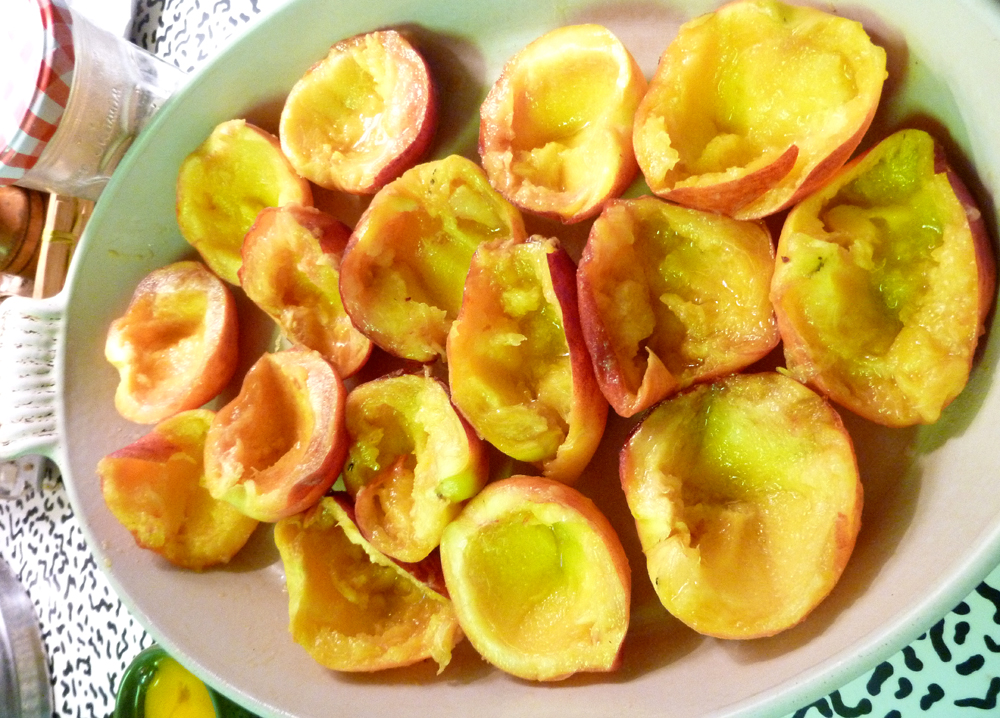
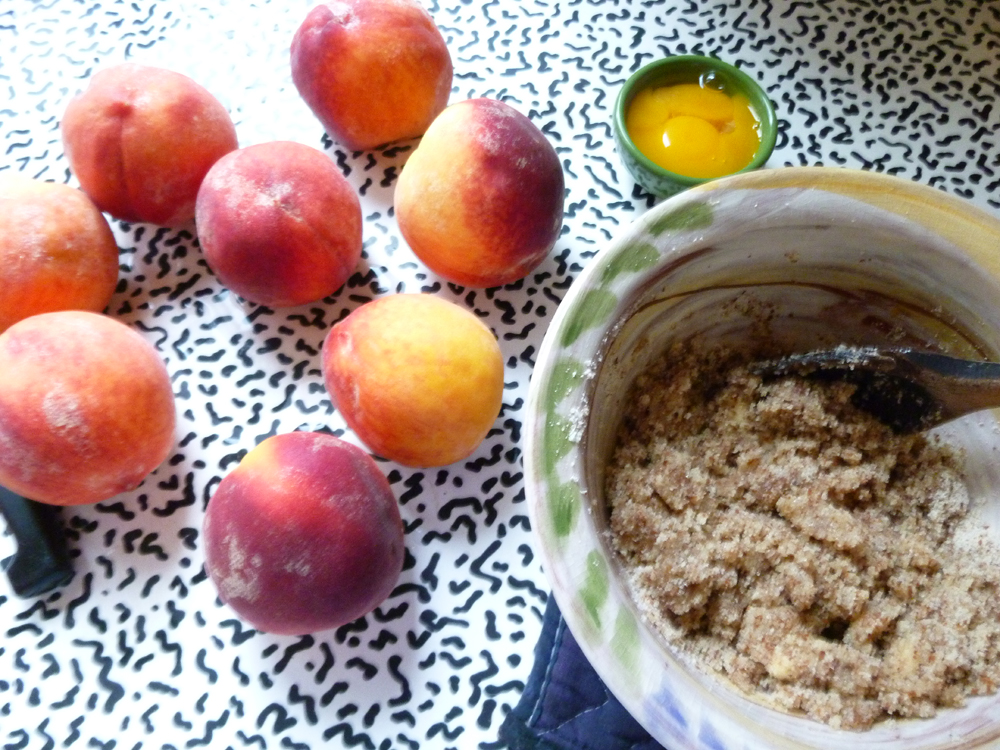
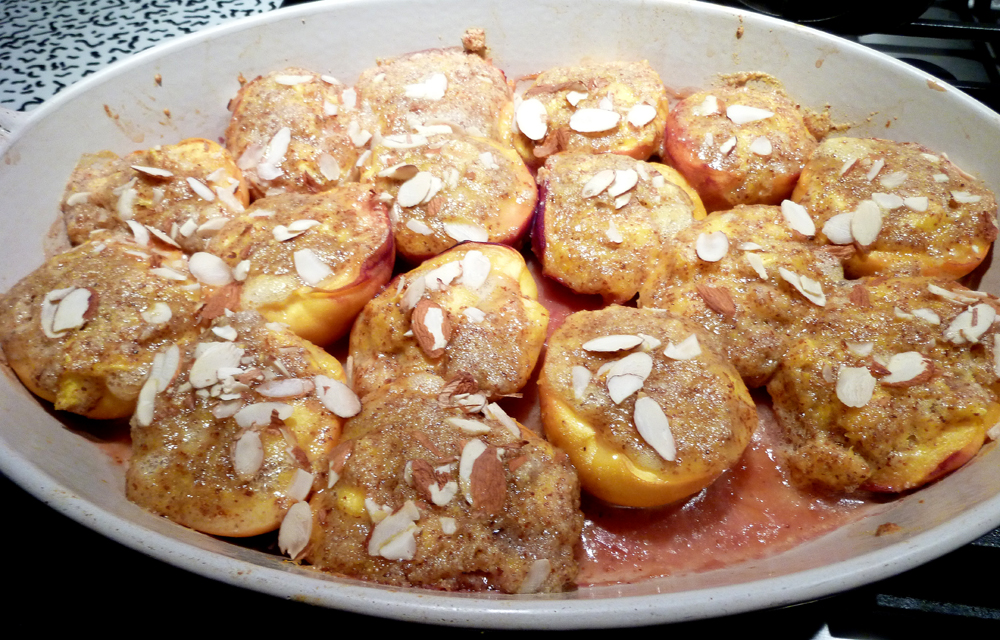
Dinners with friends have brightened the summer after many months with no socializing. I am often called on to bring dessert and have made a couple of peach sweets ─ a peach and apricot crisp using ground almonds in the topping instead of flour to accommodate a gluten-sensitive friend, and stuffed peaches, an Italian recipe from my book.
For four servings, halve and pit four peaches. Scoop out some of the flesh to form a cavity. Mash this with ½ cup ground almonds, 2 tablespoons softened butter, 1 egg yolk and 1/4 cup sugar. Mound the filling in the peach shells, top with sliced almonds and bake in a buttered baking dish at 350° for 20-30 minutes until the filling is set and the peaches soft. Serve warm or at room temperature with a dollop of créme fraiche, plain yogurt or ice cream.
Blackberry season has begun. The head gardener picked the first batch a few days ago. I reminded her, as I looked through the berries, that the berries won’t ripen anymore after picking, so we need to carefully choose the berries we pick. She glared at me. A ripe blackberry is sweetness personified, an unripe blackberry makes you pucker and use far too much sugar.
To pacify her, when she complained about all the dead canes in the patch and how difficult it was to decide which berry was ripe and those that needed a few more days in the sun, I told her I’d clean up the patch. Frankly, I should have done this task weeks ago, but summer has a way of tripping us up and unless we have explicit lists, and honor them, we will forget many, many chores until they look us straight in the eye. And the blackberry patch was a mess! A real, horrible thorny mess.
Armed with long pants, long sleeved shirt, leather gloves and my trusty pruners, I spent a cloudy Saturday morning, with more rain promised, cutting, then pulling out one dead cane after another. Needless to say, the ripe blackberries rebelled and fell off the canes. I felt bad, but I knew our friendly turtles would have a feast. You say, why didn’t you pick the berries first? Because I would’ve had to pick them with heavy leather gloves, necessary to navigate in and out of the dead canes without getting mercilessly stabbed. Can you imagine how many berries I’d manage to get in my basket? The head gardener had an impossible task. I should apologize, but…
Not only did many dead canes interfere with the picking process, but Virginia creeper, that beautiful 5-leaved vine neophytes mistake for poison ivy, had also moved in, crept in. Climbing in and out of the canes, I had to explore the terrain to find the source of the creeper, and then extricate it. Some vines were just too strong, they’ll require a fork to dig them out. Later, I promised, when the blackberries quiet down.
The head gardener picked all the berries with red. Bowl by sister Susan Hopkins.
By lunch time the patch looked picture perfect. I picked the ripe berries and now have a quart, enough to make a generous blackberry cobbler, using Edna Lewis’ wonderful recipe, a recipe I’ve used for almost 40 years. When Zoë and Hilary, my niece and daughter, were young, they loved blackberries, maybe not picking them so much, but yes! To the cobbler.
Mary Tindall and I used to go blackberry picking together, all over the woods. She and her husband Ray were our good friends (Ray died and Mary moved away). He was a back yard mechanic who could just tap a pliers on the engine block and make ‘Ol Red, our ‘62 International, purr. Mary had a sweet heart, loved company and had us over for countless barbeques. Their daughter, Tara, became one of Hilary’s Belle friends. Every Saturday when the Tindalls would drive to Wal-Mart in Owenvsville to do their shopping, Hilary would ride along and be gleeful over the candy and soda and then TV she could watch at their house. We deprived her of those essential building blocks and she was beyond grateful the Tindall’s gave her what she needed.
I don’t think Mary liked the picking of the blackberries as much as the company and the chance to chatter away. We’d get into the thick of blackberry patches and before I knew it, my greedy hands had touched poison ivy. There wasn’t hardly a blackberry expedition that didn’t end in a good case of the rash. That is, until I learned to identify jewelweed.
Jewelweed has hollow stems with sticky sap inside. This sap contains, among other things, a substance called lawsone that gives the mighty blow to both poison ivy and stinging nettles. Rub this sap on your skin, and like magic, poison ivy and nettles become neutralized. And often, blackberries and jewelweed will grow in a similar habitat, shady and damp.
I remember one year we took our nephew Corey and one of his friends blackberry picking. They got into the poison ivy and I spied the jewelweed close by. I had the boys rub the stems all over themselves and they never broke out into the rash. Phew!!! I thought to myself; one disaster avoided. Still plenty more to contend with, like ticks and chiggers and wasp stings and blood suckers… Shall I go on? No one will want to come visit!
Bee on native rose
With the 4th of July a week behind us, summer seems well on the move. When I was in high school I remember marking this date as summer half over before school began again. Groan. Now as I tend the gardens, it’s more of a time to observe, make mental notes of tasks to do in the future, watch caterpillars feeding on their special plants and wondering where they’ll go to spin their chrysalis.
The male cardinal has been making eyes at a female lately. They’ll mate one more time this year and it looks like that will happen soon. It’s hilarious to watch their antics and wonderful to pause and take it all in.
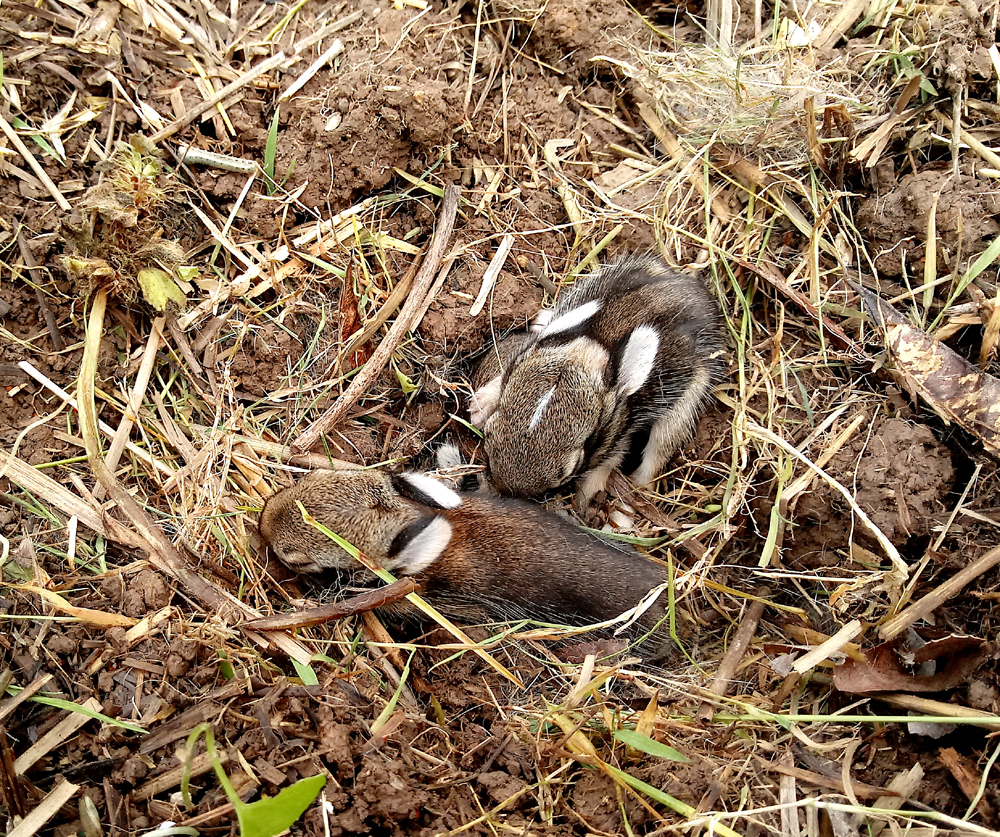
Earlier this spring as I was preparing a site for the okra, I came across this rabbit nest. Look at the sweet little bunnies! As much as I don’t like them eating my plants, I do like seeing them bop around. As my friend Jessie observed when she saw a hawk sitting close to her garden, that hawk will help keep everything in check. It’s only when things get out of balance that we have problems.
So I observe the hawks stalking the area and I know a kind of balance exists. Nothing turns out just like I would program it, thank goodness, as I do get distracted by one thing or another, and couldn’t maintain order like Mother Nature when she’s unfettered by chemicals and poor conservation. I feel grateful to observe the order, the health of the plants, the life cycle of so many insects and other creatures.
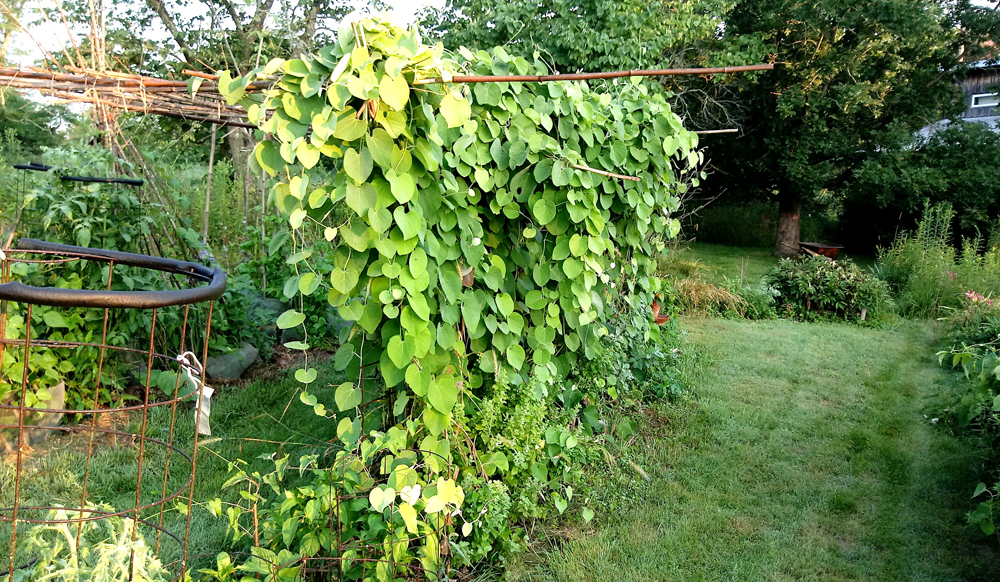
To watch the pipevine swallowtails feed on the pipevine and become partners in these gardens,
to see the honey bees pollinating,
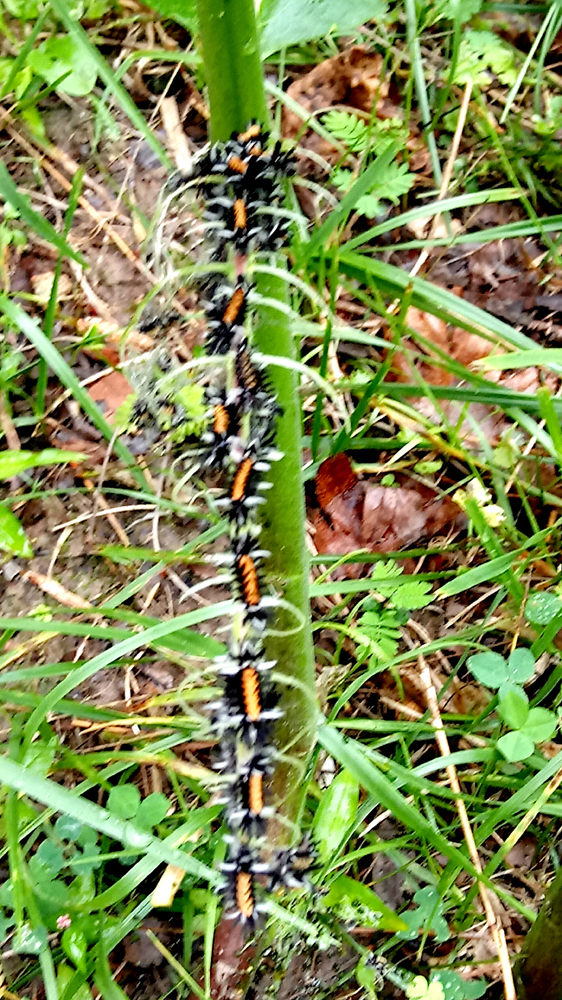
and the milkweed tussock moth caterpillars devouring the milkweed, (what an amazing single file),
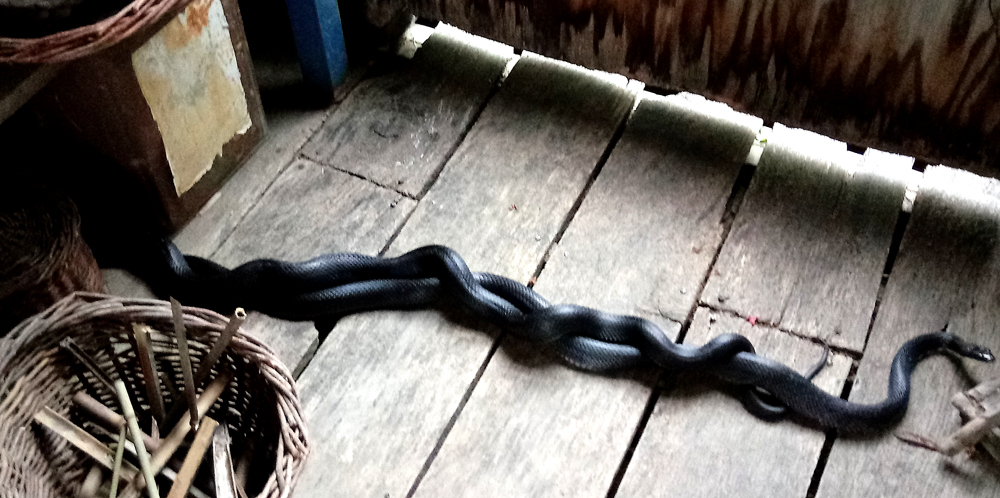
to watch black snakes in flagrante delicto,
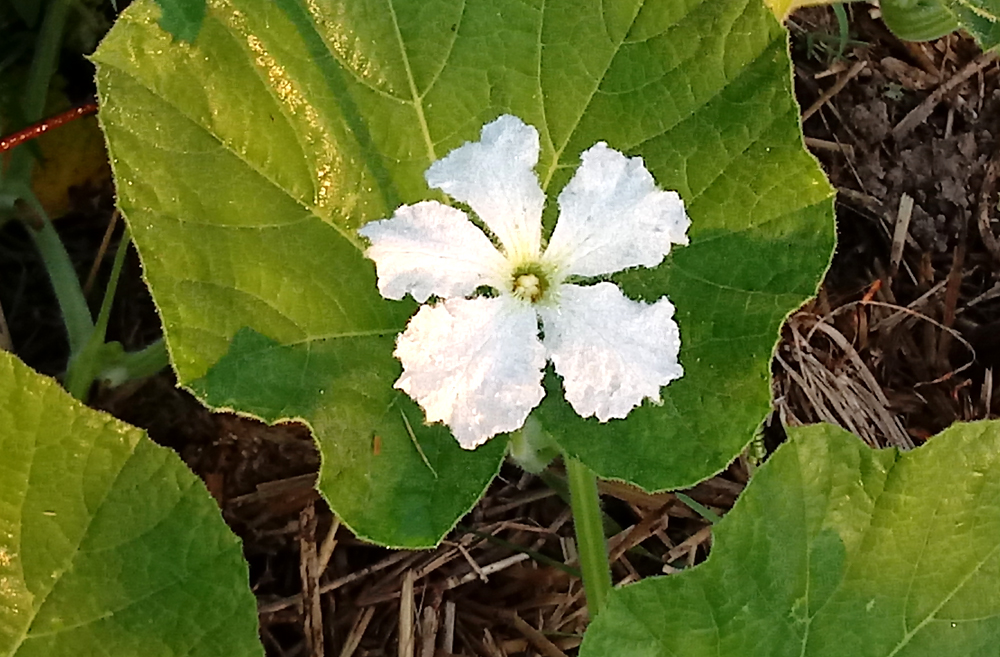
and to see this bushel basket gourd flower at sunrise.
How does one count her blessings but in all these small scenes of beauty? Especially with a blackberry cobbler in the oven.
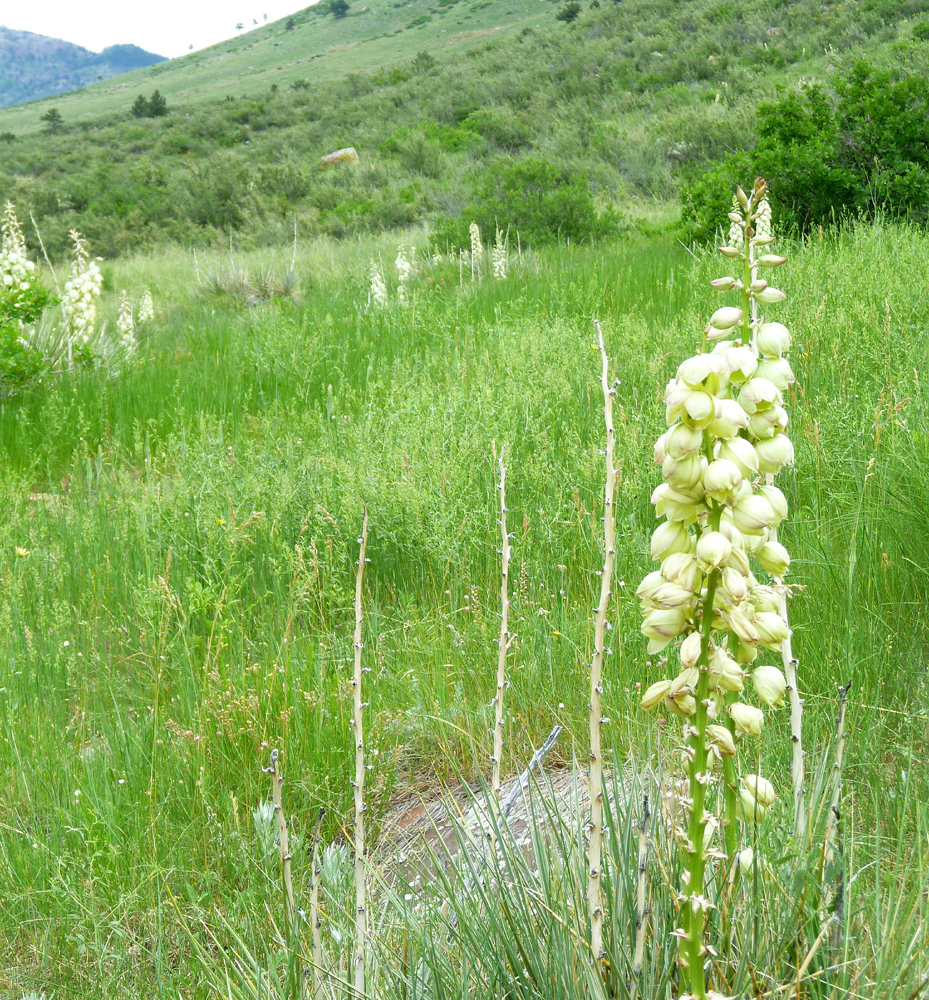
We have had a whirlwind of changeable weather. After the rains that draped our hills in green cloaks, the heat bore down making record temperatures. The last week has been rainy and cool. An abundance of wildflowers are blooming including our many yuccas. The hillside is dotted with their tall spires of creamy-white blossom. The deer and rabbits feast on these delectable petals and so do we.
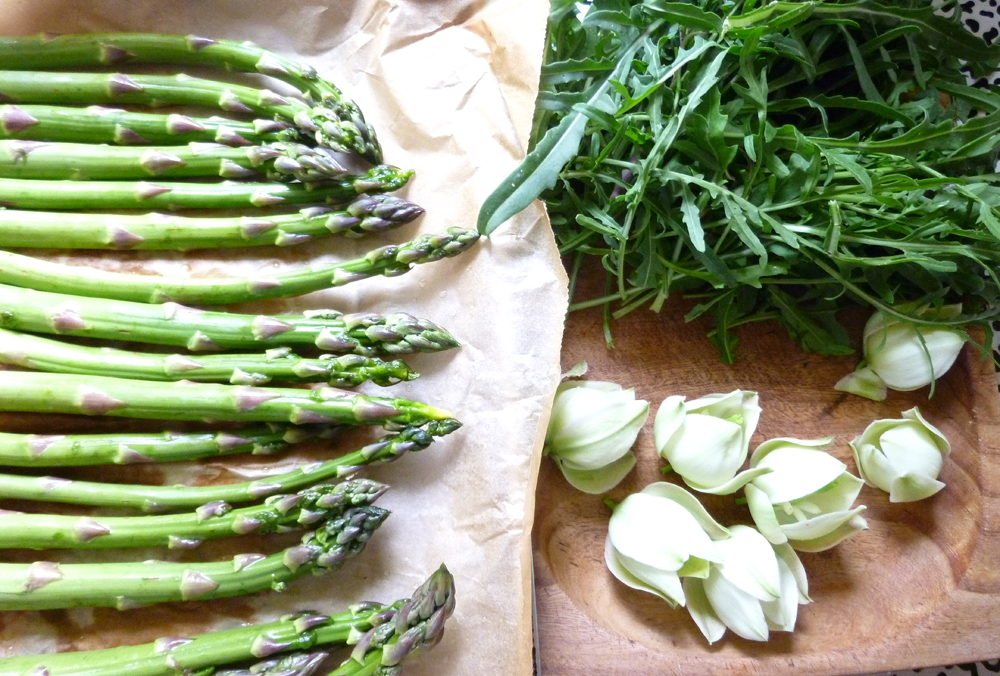
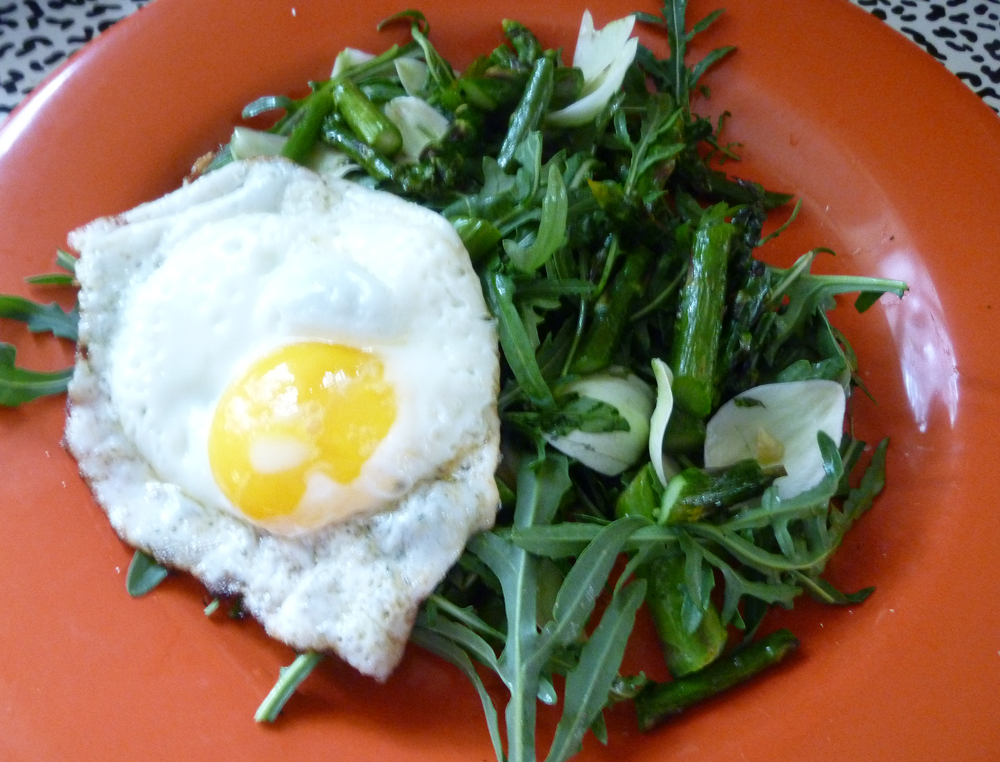
We eat a lot of salad, my favorite food. My concoctions take many forms and when once a year the yucca bloom I include the petals. I was inspired to add them to a NYTimes recipe for an arugula and roasted asparagus salad. The once-a-year flowers are crisp and slightly bitter.
I roast asparagus in my toaster oven, a quick, simple way to achieve great flavor. Snap off the tough bottom part of the asparagus stalks and arrange on the oven pan on a piece of parchment. Sprinkle with olive oil and roll the stalks in the oil. Add salt and pepper. Put into cold toaster oven and roast at 400° for 3-5 minutes until just tender. Cool and cut into 1 1/2 inch pieces.
Toss with arugula, cut into bite-sized bits, the petals of 6-8 yucca flowers, and a vinaigrette made with a crushed and minced clove of garlic, red wine vinegar, olive oil, salt and pepper. Serve with a crispy fried egg.
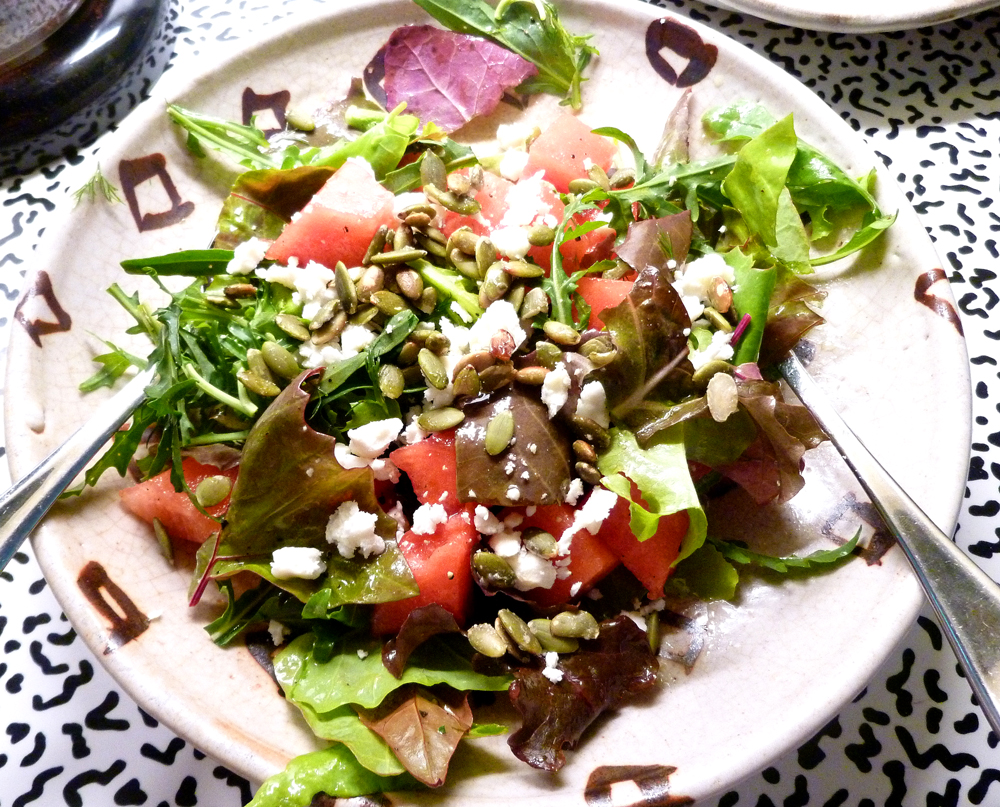
During our heat wave, salads were my go-to dish for supper. This watermelon and feta combo tastes great in the heat and is a complement to any grilled meat or fish. With the arugula going wild in my garden, I include it in all my salads. It’s particularly good with the melon and feta – a lovely, bitter counterpoint to the sweet, salty tastes.
Cut watermelon into bite-sized cubes. Add to salad greens and dress with olive oil, lemon juice, salt and pepper. Top with crumbled feta and a handful of toasted pepitas.
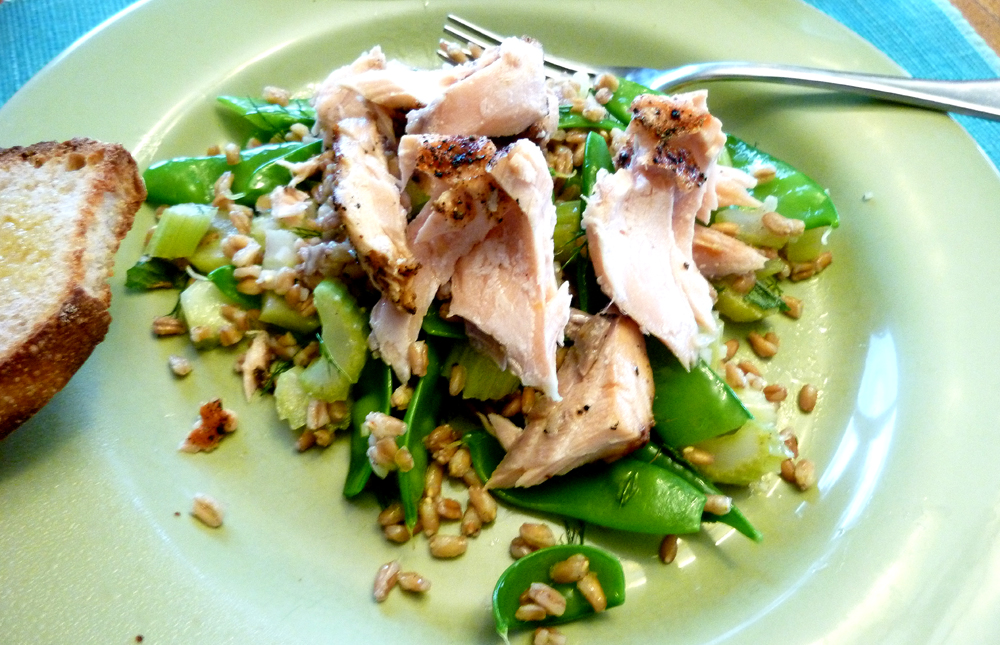
Then our weather changed to cool and rainy. The hills retain their green glow and we wear socks and long pants. I thought of cold weather ingredients and made a farro and celery salad.
Have ready a bowl with three stalks of celery sliced thin, a crushed and minced clove of garlic, the juice of half a lemon and some grated zest, several tablespoons olive oil, salt and pepper. Add hot chile flakes to taste. Cook a cup of farro until tender. Pour the drained, hot farro over the celery and dressing and leave to cool.
To make the dish more summer-like I added the first snow peas from the garden, lightly cooked, a few slivered mint leaves and fresh dill. We had leftover grilled salmon flaked on top. Toasted sourdough to accompany.
Who knows what the weather will be but I am thankful for the rain that helps my usually dry, struggling garden thrive.
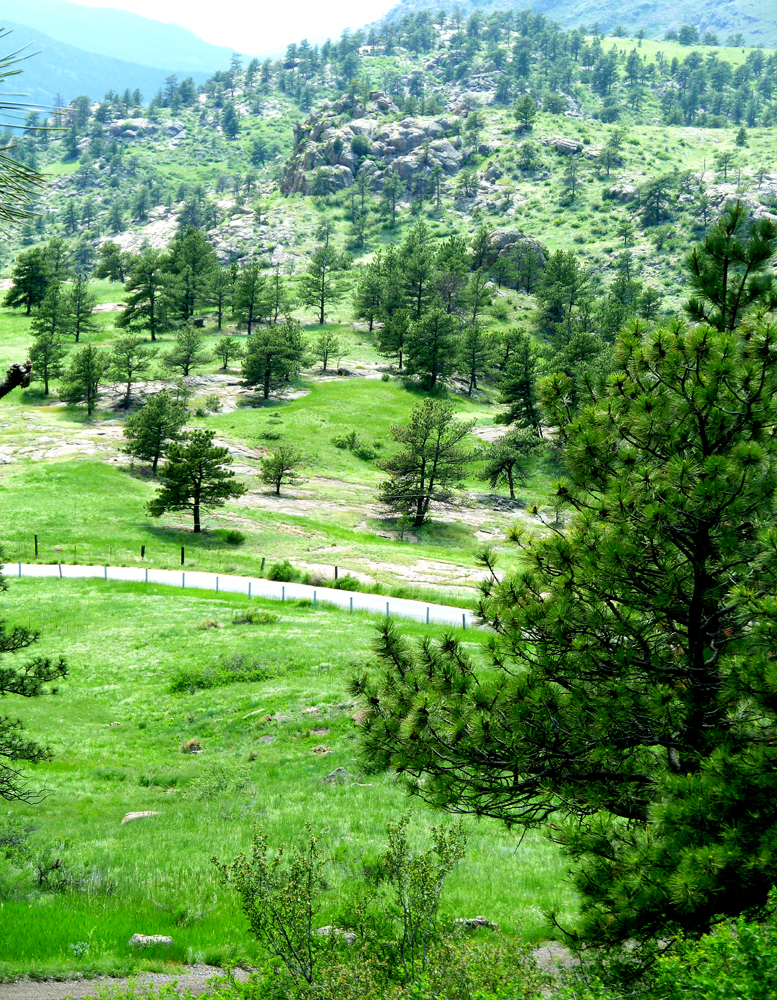
Our hillsides look like they could be in Ireland, a green carpet, at least to a Coloradan accustomed to our brown, sere landscape. Spring is busting out all over with an abundance of wildflowers, lilacs and apple blossom. I’m cooking with early produce from my garden, arugula, lettuces, baby bok choy, parsley and chives. Soon the snow peas and snap peas will flower. I look forward to zucchini, tomatoes and Colorado cherries and peaches. But not quite yet.
In the meantime I made a simple lemon buttermilk pound cake to go with store-bought strawberries and homemade yogurt.
This cake recipe is from Marion Cunningham in The Fanny Farmer Baking Book, a book I return to again and again for a range of dependable recipes for baked goods. I make it in my Cuisinart but a mixer or a wooden spoon would do just fine.
Buttermilk Lemon Pound Cake
Preheat the oven to 350°. Grease and flour an 8-9 inch loaf pan.
Cream together ½ cup butter, softened, and 1 cup sugar. Stir in 2 large eggs and beat until light and fluffy. Have ready 1 ½ cups unbleached flour mixed with ¼ teaspoon baking soda, ¼ teaspoon baking powder and ½ teaspoon salt. Add this to the butter mixture alternately with ½ cup buttermilk, 1 tablespoon lemon zest, ½ teaspoon vanilla. Stir until smooth and well blended.
Pour into prepared pan and bake at 350° for 40 – 45 minutes. Check with a toothpick or skewer for doneness. Cool on a rack for 10 minutes then unmold and cool completely. Serve slices with fresh berries, peaches or other fruit and a dollop of homemade, maple syrup-sweetened, yogurt.
Homemade Yogurt
I’ve made yogurt for years. We eat it with our granola each morning and I use yogurt in other preparations from tuna salad to cucumber raita to a sweetened garnish for cake, pie, or fruit. Since we moved to Blue Mountain Road (24 years ago) I make fewer trips to the grocery store. I have a well-stocked pantry and freezer and make bread, crackers, salsas and cookies to insure that I can put together a meal without relying on a far-off store. Plus, I couldn’t stand the pile of plastic tubs I accumulated when buying commercial yogurt. So I make my own, two quarts at a time. The two quarts last us about eight days.
I like Siggi’s whole milk yogurt for my starter and 2% milk as the main ingredient but use what you prefer – whole milk, 2% or 1%. Choose any live yogurt you enjoy eating for your starter. Whole milk yogurt provides the best culture.
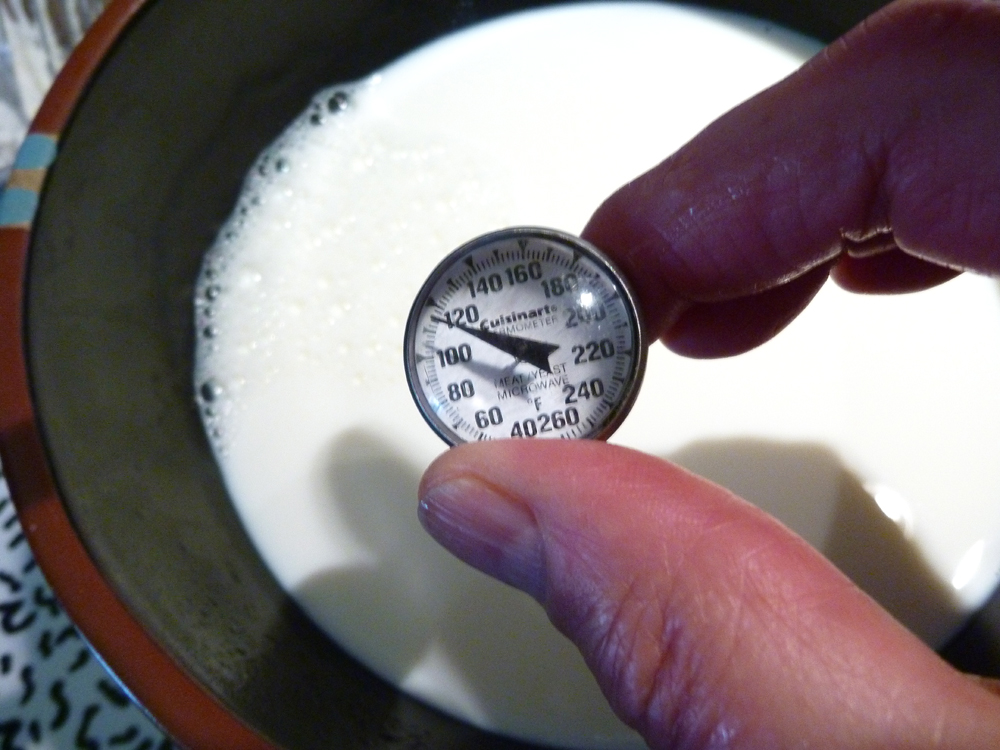
First, heat a quart of milk to about 130°, until it begins to form a skin. Watch so that it doesn’t boil over. I have spent many minutes cleaning up my stovetop after a milk volcano erupted. Pour into a large ceramic bowl or Mason quart jar and let cool to 115-118°. I use an instant read thermometer here. (At this temperature you can hold your finger in the milk for the count of five. It will feel hot but tolerable.)
In a small bowl combine 1/3 cup of the starter yogurt and a dipper-full of the warm milk and whisk until smooth. Pour back into the large bowl or jar of milk and stir well.
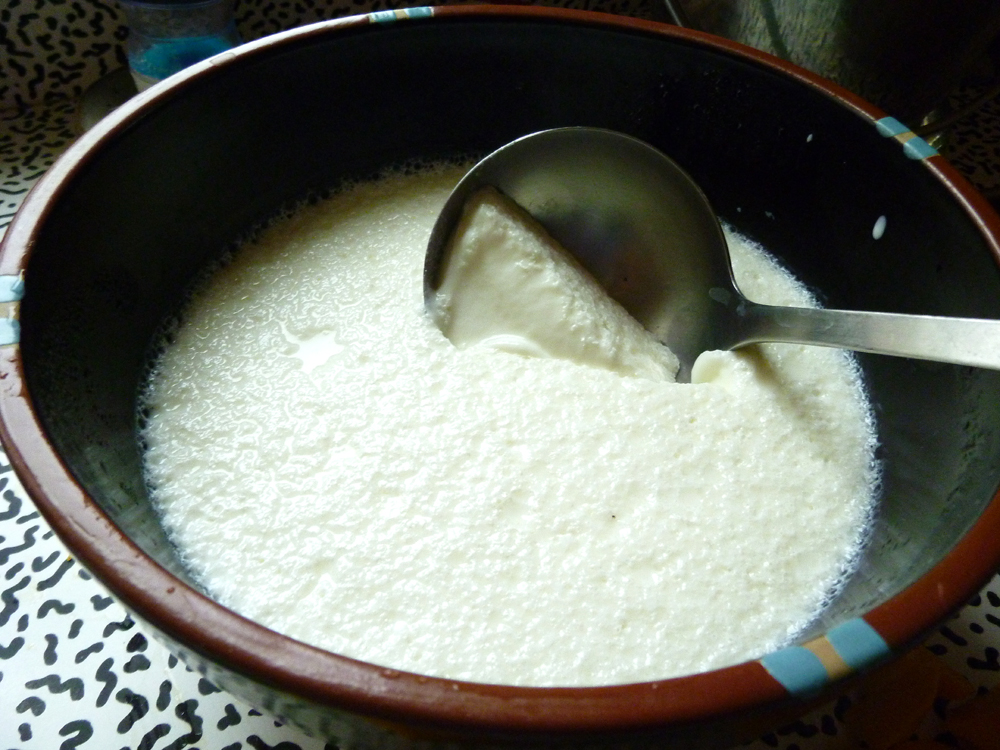
Cover with a plate or lid and place in a warm spot. I use a picnic cooler into which I put a jar of boiling water to maintain the warmth. An oven with a pilot would be a nice warm spot too. Leave for 6-8 hours until cultured and thickened. Gently place the bowl or jar in the fridge and leave until firm – usually overnight.
From the Irish-green foothills of the Rockies, I send you my best wishes for a delicious and bountiful late spring.
Spring has simply exploded. The scenes change more quickly than my eyes can absorb. I feel like a mother with quintuplets trying to keep up with the essentials of feeding and changing, though in my case, it’s weeding and more weeding. The compost bins hungrily gobble up all the greenery we haul in wheelbarrow after wheelbarrow. After a winter’s diet of dried stalks and meager contributions from the compost bucket, all this green stuff makes the changing of straw into gold a reality. The compost pile feels eager for the task at hand.
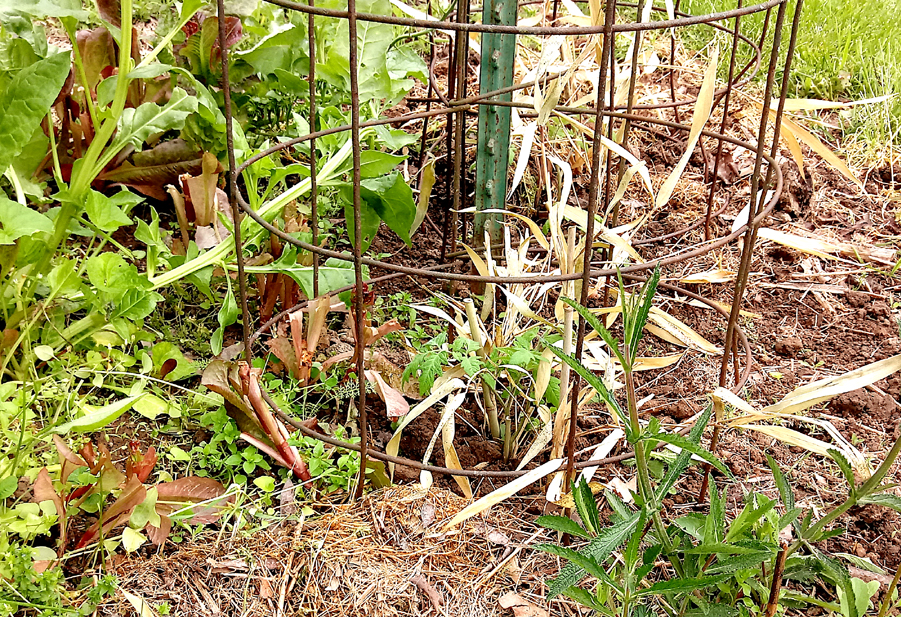
A day finally arrived when the forecast didn’t include any below 50° temps for a solid ten nights. OK tomatoes, let’s rock and roll! And that’s just what we did, from 8 am to 5 pm, with civilized breaks and naps for this less than youthful gardener. By the end of a lovely Friday, 22 tomato plants found their new home in the earth, planted up to their necks, with bamboo tops to disguise their presence.
Protected tomato
You’ll remember the head gardener and I fight critters of every sort, including each other. The cutest, tiniest bunnies run around now. I mean, they are as adorable as any baby ever could be. When I see their sweet noses twitch, I melt. Of course the head gardener scowls at me. She knows what these little monsters, (her words, not mine), can do to the plants we set out. In order to avoid a serious quarrel, I came up with strategies, similar to my teepeenies that worked well for the cabbages and early lettuces. I showed her my plans and she grunted but didn’t quite approve.
I always feel nervous when I think I’ve come up with a solution for someone who lives in the same world I do, but with different values. I recognize these creatures have 24 hours of every day to do as they please. I accept that raccoons harvest each ear of corn as it reaches its sweetest. We don’t plant corn any more. This year we’re using potato boxes to grow both Irish and sweet potatoes because we can’t control the voles underground. How can you control something you can’t see? There’s no vaccine for vole control. No doubt more data, and maybe tears, will become available when potato harvest arrives…
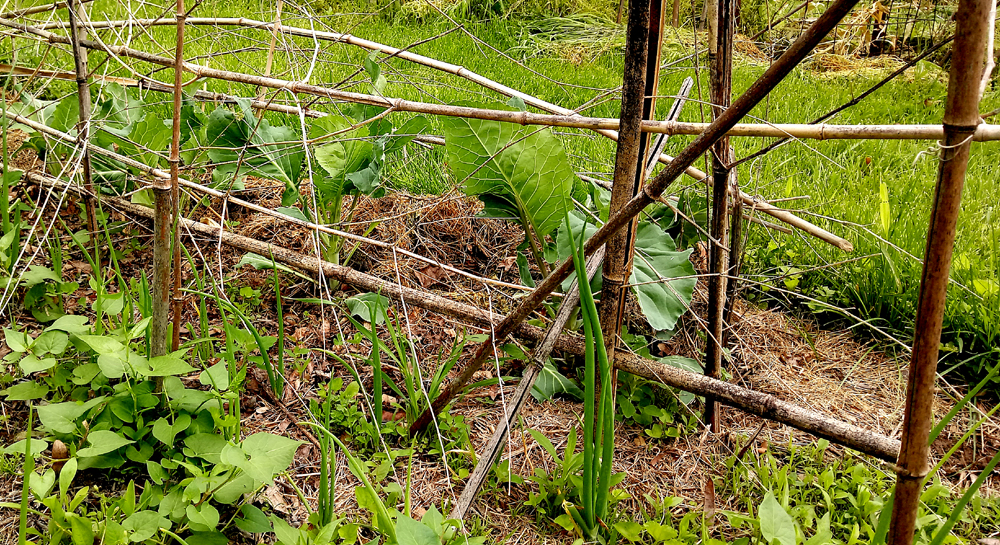
Cabbages with bamboo barriers
However, we can protect above ground plants. It may seem tedious. We went from the teepeenies to these bamboo barriers for the cabbages. Deer can’t get in and rabbits haven’t squeezed under. Granted, it may not look like a photo shoot for a fancy gardening magazine, but then neither does leaving lots of weeds to disguise the presence of choice plants. ‘Confuse them with abundance’ has become our new mantra. Who cares what the garden looks like if it produces delicious food – for you!
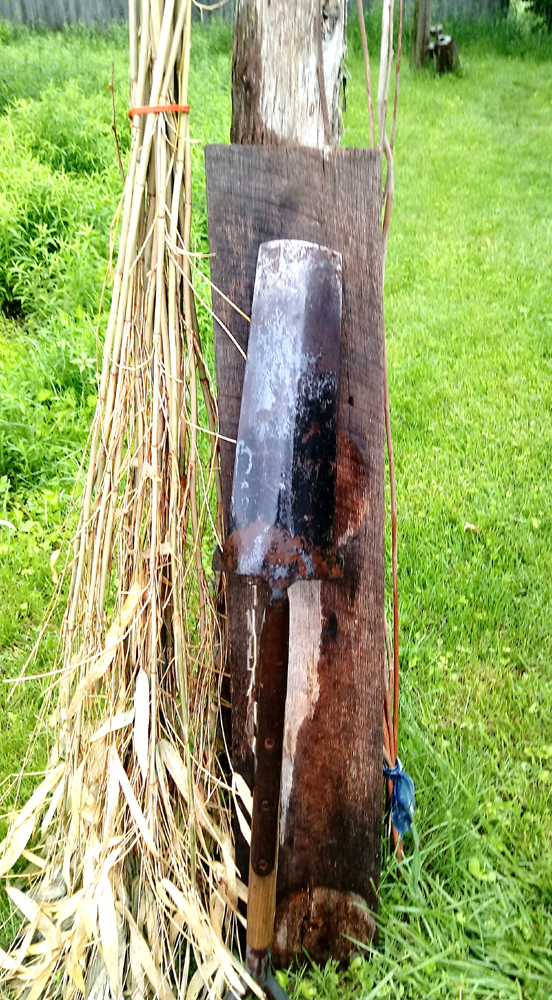
And that’s partially what the bamboo tips do, confuse. With all these fluttering dried bamboo leaves bending down over the tomato plant, surely nothing could be hidden there? The shovel you see with the bamboo is called a sharp shooter. Because the tomatoes had grown 16” tall, it would take a regular shovel to dig the initial hole, and then the sharp shooter to go the extra few inches so the tomato would have its entire stem in the earth where roots will grow in all directions, securing the tomato from winds and enabling the plant to find trace minerals down under.
Sharpshooter and bamboo leaves
This tomato planting day was possible because my friend Agnes had come the day before. She teaches physics at the university and gave her last final early that morning and needed garden time to relax and unwind. I encouraged her to dig plants to take home to her new gardens as we’d have rain over the week-end and into the next week and the plants could settle in nicely.
Coral Bells
She went about her pleasant task and I weeded cheat grass out of the Medicinal Garden. It makes the compost pile smile. So many seed heads, abundant protein and easy to digest. It’s an annual grass and makes tremendous growth in the spring. Really, it’s impossible to get rid of. Kinda like chickweed. I see it all as fodder for the compost. I slide an old butcher knife under the roots of this grass to release its hold and into the wheelbarrow goes the clump, after clump, after clump.
We broke for lunch and while I cooked, Agnes mowed. Then after our lunch, she mowed. In fact, I had a tough time keeping up with her. She would empty the mower bag so often it seemed like she dumped more grass into the waiting wheelbarrow than she mowed. I’d push it out to the Park where I’d weeded and spread those luscious clippings over the bare earth. When I’d return, the second wheelbarrow would be filled up. And I’d race back out to the Park with that. This went on for well over an hour. I felt tired from hustling to get the next wheelbarrow back to her, but she barely broke sweat. Youth. Blessed youth.
Honeysuckle flava
When she left, she thanked me profusely for the car load of plants. I looked at her with surprise, “Shouldn’t I be thanking you?!” But she doesn’t see it that way. She sees the opportunity to move about the gardens as a gift even though I tell her repeatedly that she’s the gift. No doubt a win-win relationship.
Agnes drove back to Rolla, 35 miles away, set out plants until she had to meet with a student, then went home and set out the rest of the plants, put paving stones in the new garden, mowed all her grass and put the grass clippings on THAT garden!! She finished at 8:15 that evening.
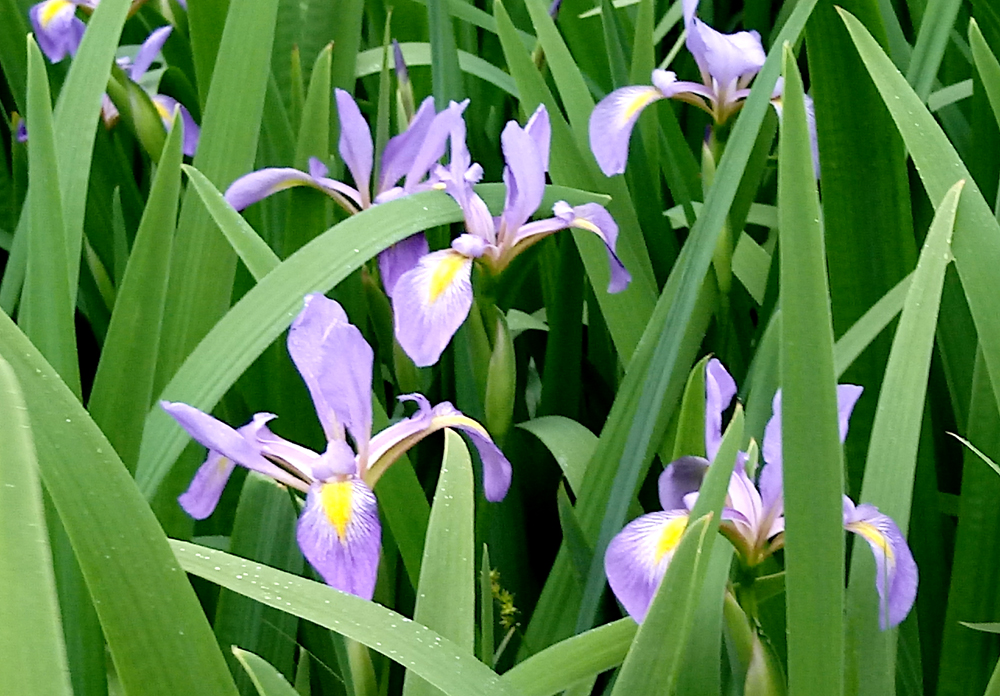
Iris virginica
While Agnes was doing her evening gardening, I was sitting quietly, watching the hummingbirds do their incessant feeding and dancing, getting up now and then to look at one beautiful scene after another. Grateful to watch spring unfold, to devote time to spring viewing. To know that because of Agnes, I could dedicate tomorrow to tomato planting and during breaks, walk around and admire what springs forth after a long winter’s nap.
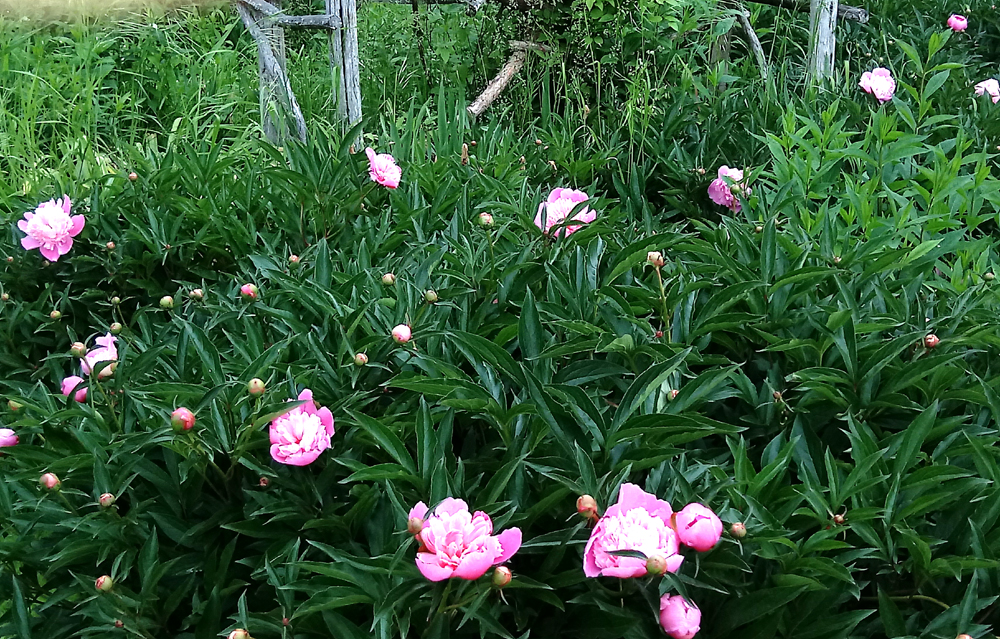
Gladys’ peony
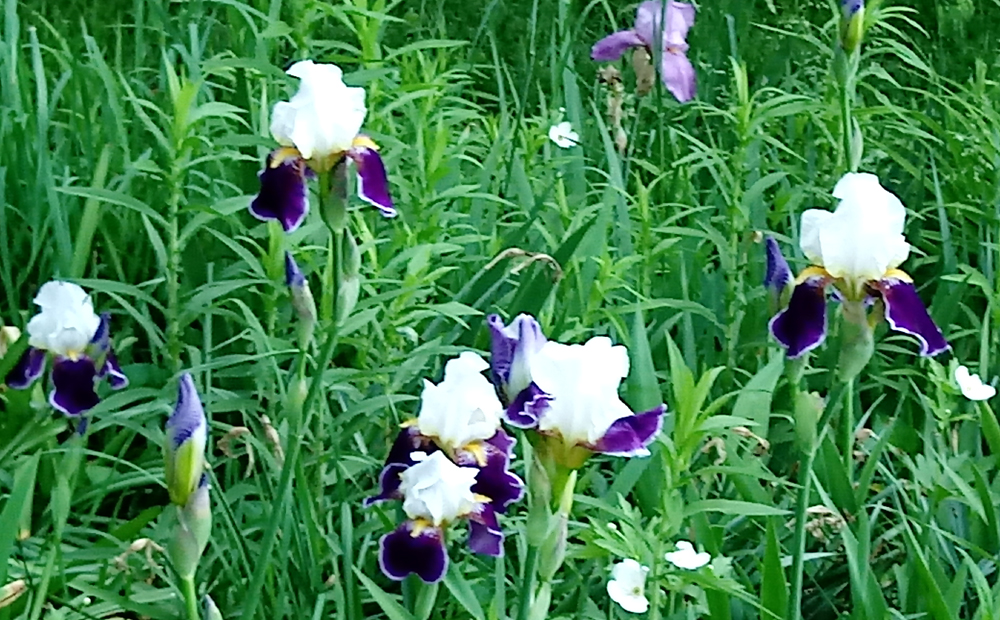
There’s Gladys’ peony, really her mother’s, well over 100 years old. I can see Gladys downing a cold beer after we picked cherries so many years ago, she was 85 at that time. And Elmer, our incorrigible neighbor who telephoned for fish as a young man. Even though blind and crippled, he still told the best stories and gave me this iris, the Wabash. I hear his stories every spring. Like so many who have gone to their reward, they come back to me when spring reminds me of their moment. Glorious spring.































 How I Learned to Cook, an Artist's Life ─ Barbara Shark