Leaving Hawai’i 2004, charcoal on paper, 40 x 72 inches
Here in Colorado we are in the thick of winter. Most other years, lucky us, we have spent my February birthday in the tropics and cut our winter short by a few weeks. Not this covid year. The weather has been very cold with lows below zero. We can only dream of Hawai’i while listening to Gabby Pahunui play his melodious slake-key guitar. Here on Blue Mountain Road, the insulated shades are drawn and I listen to jazz and the blues on KUVO – the ‘Oasis in the City’.
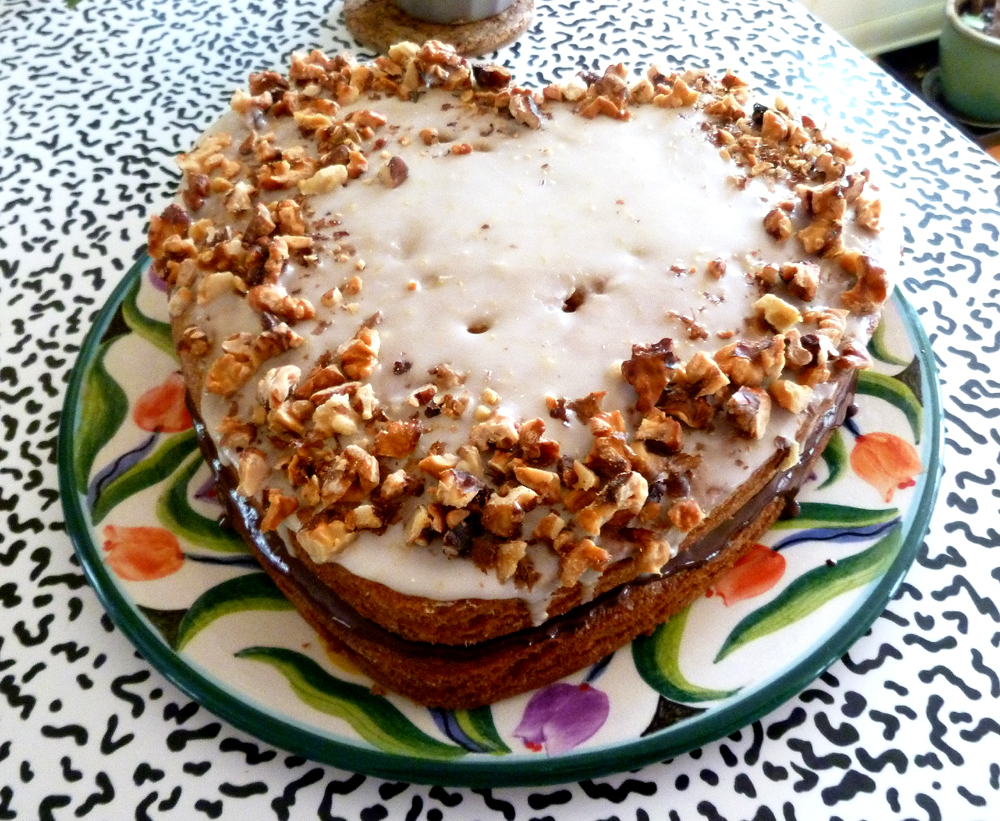
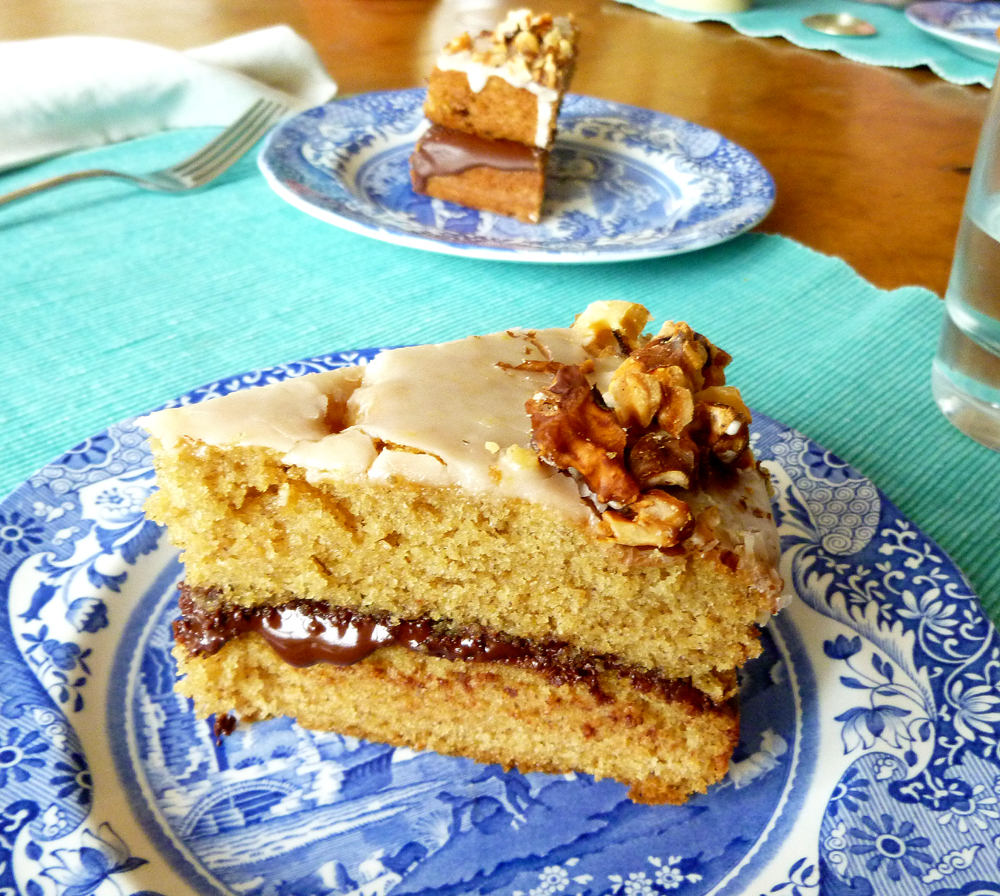
I like to bake and we often have cookies for our lunch dessert. But sometimes, cake is just the thing to cheer us up with delicious baking aromas and the satisfying flavors of lemon, banana or vanilla. In these pandemic times, I’ve read that folks have eaten a lot of bananas, in banana bread and muffins and on breakfast granola. In Hawai’i, I celebrate a friend’s birthday with a banana cake, made with the small apple bananas we love. I recently fancied it up with walnuts and chocolate for a mid-February Colorado treat. This cake is also delicious on its own, simply topped with the lemon glaze. I call it ‘Everyday Cake’ in my book.
Banana Cake
Preheat oven to 350°
Grease and flour two 8-9 inch layer cake pans, a fluted pan or a 9 inch springform. I used heart shaped layer cake pans in honor of Valentine’s Day.
Cream together 1 cup unsalted butter and 1 cup brown sugar (packed). Add 2 large eggs, then 1 cup mashed, ripe banana (2-3 medium-sized).
In another bowl or on a piece of wax paper, combine 1 3/4 cups unbleached flour, 1 teaspoon baking soda, 1/2 teaspoon salt. In a cup, combine 1 teaspoon vanilla and 5 tablespoons buttermilk, yogurt or soured milk (1/2 teaspoon lemon juice in 5 tablespoons milk. Let sit a few minutes until curdled.) Add to the butter mixturealternately with the flour mixture.
Pour into prepared pans and bake for 25-30 minutes, 35-40 minutes if using a tube pan or springform. Checkdonenesswith a toothpick.
Let the cake sit in it’s pan on a rack for 10 minutes. Unmold. When cool, spread bottom layer with 2-4 ounces of melted dark chocolate. If you used the springform or fluted pan, split the cake horizontallyand proceed with filling
Pour glaze over top layer ─ combine two teaspoons lemon juice, 1 cup sifted powdered sugar and some grated lemonzest. Sprinkle with toasted, chopped walnuts.
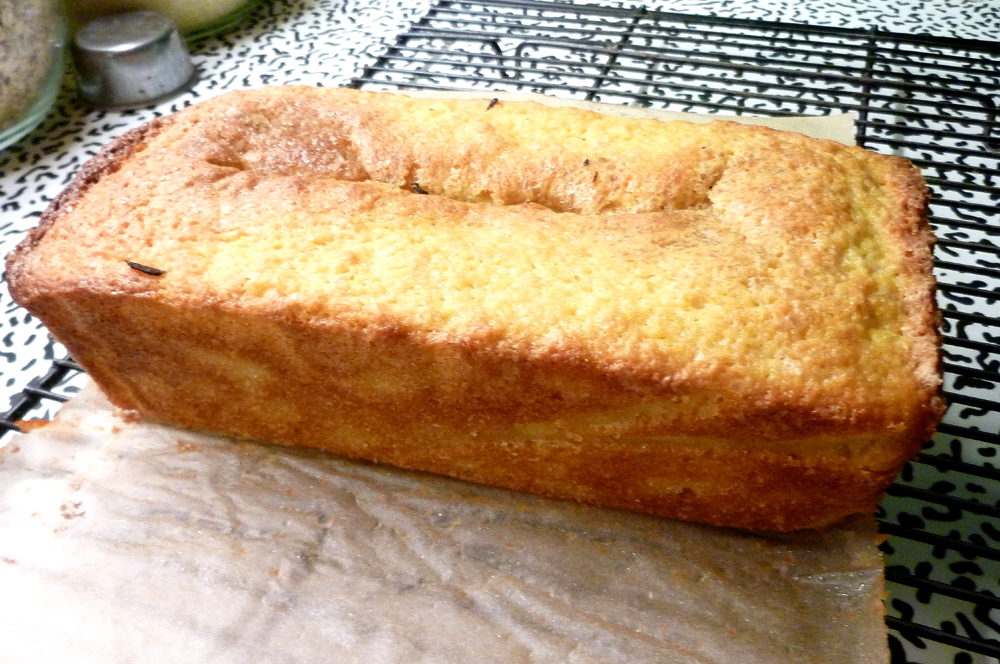
Roseanne brought me luscious, juicy lemons from her folks’ tree in Phoenix. Of course I had to make a lemon cake. I searched my cookbooks and came up with a hybrid recipe using olive oil.
Lemon Loaf Cake
Preheat the oven to 350°. Grease a 8-9 inch loaf pan and line with parchment, leaving extra on the long sides for easy unmolding.
Stir together 1/2 cup of olive oil and 1 cup sugar. Add 2 large eggs and the zest from a large lemon, about 1 tablespoon. Stir in 1 1/4 cups unbleached flour, 1/4 cup cornmeal, 1/4 teaspoon baking powder, 1/4 teaspoon baking soda and 1/2 teaspoon salt. Then add 1/4 cup lemon juice, 3/8 cup (1/4 cup plus 2 tablespoons) yogurt, and 1/2 teaspoon vanilla.
Spread in prepared loaf pan and bake for 45-60 minutes. Test with a toothpick for doneness.
Glaze while warm. (Combine 1 tablespoon lemon juice, 1 cup sifted powdered sugar and some grated lemon zest.) Cool on a rack.
So, I wish you were coming ’cause I baked a cake! One day…..
Mimi 1986, pastel on paper, 22 x 30 inches (excuse the poor photo)
In rain, snow and the heat of summer people from the past show up at Strawdog. With a knock on the door or a look up from mowing I’ll see a strange face. After a few moments as I travel down once well-trodden paths, the memory’s rekindled. I can usually attach a name to the face. Sometimes it’s shocking to see what time has done, other times, like the latest, pure joy.
Since I’ve started writing for Barbara on her blog, I’ve had several of these knocks on the door, via an e-mail. Barbara figured out, by Googling Strawdog, that my writings come up and people who know about this piece of paradise, can enter. And this is what Saori did.
Saori was one of three Evergreen State College classmates who came to Strawdog in 1992. My niece Zoë, Barbara’s daughter, had asked Ron and me if they could come. They were 19 years old. They came for 3 weeks to do some sort of research project. We all know how much research most of us would do at this age. Still, it sounded like a fun adventure for them, and us.
Saori, Stacy, along with Smasher, her dog, and Zoë came with boundless energy and enthusiasm. We had lived on Strawdog for 10 years in what most Americans, even in 1992 would consider, old school ways. Cooking on a wood cook stove, doing laundry with a wringer washer, no television or stores close by, and an old truck for transportation. I can only imagine the shock for Stacy and Saori. Zoë had come to Strawdog often, with Hilary, my daughter, flying together from Boulder.
Now, and over the 29 years since their visit, I’ll flash on something about that June, stimulated by who knows what, just the fickle way memory works, and laugh. Sometimes I’ll cringe because my step-daughter Suzy didn’t give me the name of ‘Commandant’ for nothing. She gave me this title with affection and humor, but I don’t think everyone who has dealt with me sees me in the same light, and I may have pushed these neophytes too hard. No one complained to me directly, but….
Saori struggled with English back then. In the letter she wrote a few weeks ago, her English flowed smoothly and effortlessly. Still living in the North West, she makes jewelry and grows spring ephemerals from seed ─ mostly seed of bulbs that thrive in rocky locations, many from her native Japan. Her letter was thoughtful and filled with gratitude for the experience she had here. She also offered condolences for my loss of Ron. Needless to say, her letter filled me with longing and happiness. What a gift to be remembered, fondly, after so many years.
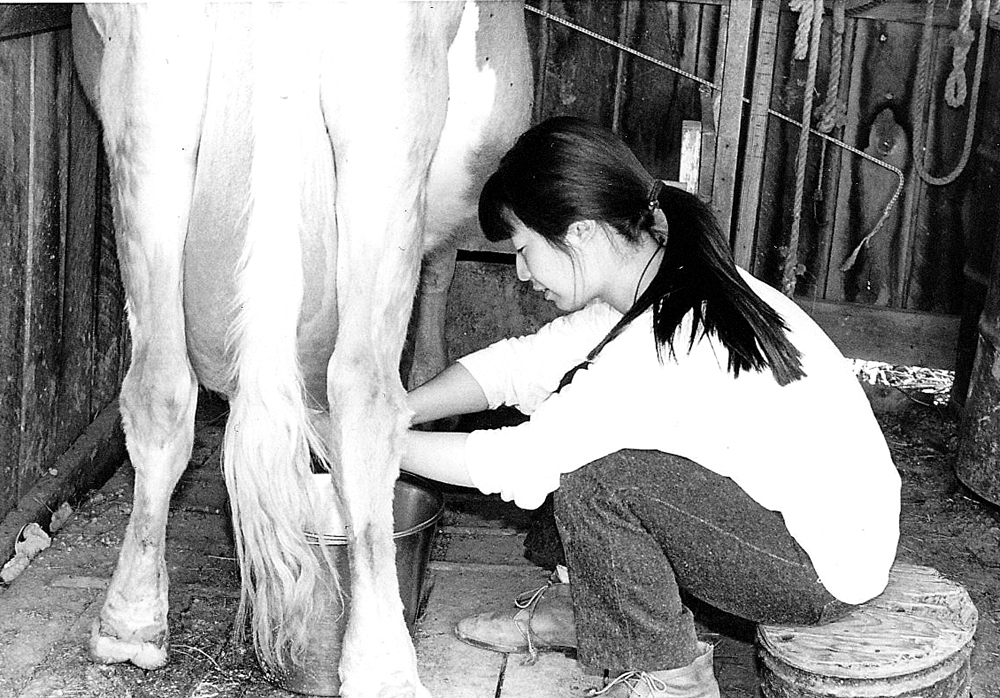
Saori sent photographs too. This one, of her milking Flora, is my favorite. When she came to Strawdog, she had one ambition ─ to learn how to milk a cow. None of the others shared her enthusiasm. I don’t remember how her lessons fit in with her schedule because rising early was not on her radar, and Flora came in early and expected to be milked and have her breakfast. I do know Saori succeeded and was so happy. In fact, to this day, when I’m really happy, I’ll shout “I so happy!” because this is what Saori said and it was infectious.
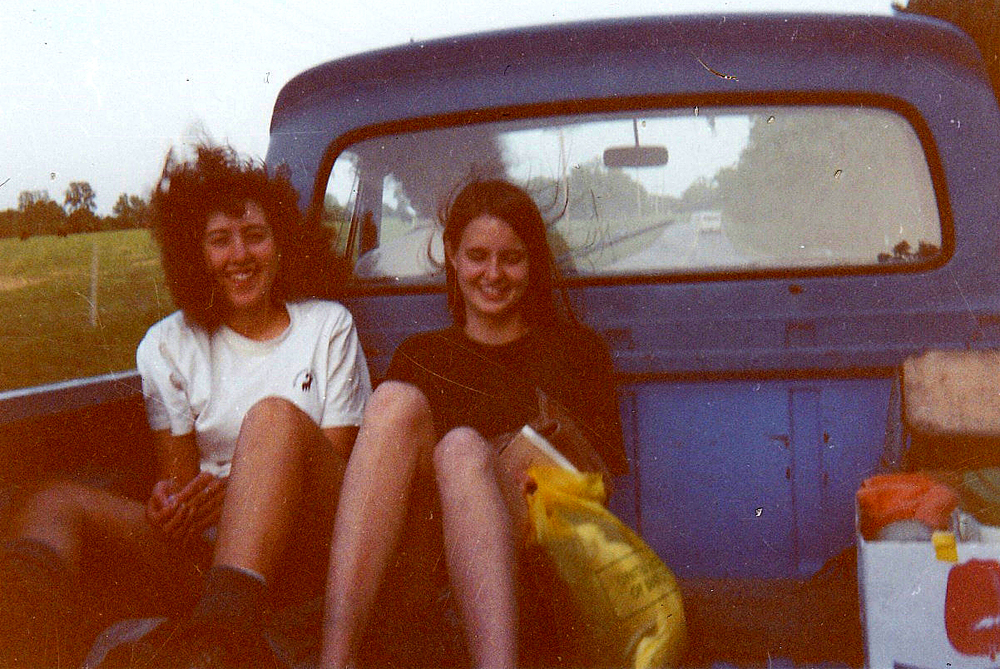
Zoë and Stacy in Ann Elizabeth
We’d drive to Westphalia, a German-Catholic town about 20 miles away to buy feed for Flora and the chickens. On our way, in the Ann Elizabeth, a truck we bought with money my mother won in the lottery, the girls would sit in the back, singing and mooing at the cows as we drove by. Here you can see Zoë and Stacy.
When Ron and I drove this way, we’d always stop in a little town before Westphalia, another German-Catholic town, Rich Fountain, where we bought a double-dipped ice cream cone for a nickel. When the older woman who ran this tiny store out of the bottom floor of her beautiful stone house died, we mourned her loss and the wonderful moments we had buying a treat from her. Zoë couldn’t remember if the store was in business when they visited. In my imagination, it was.
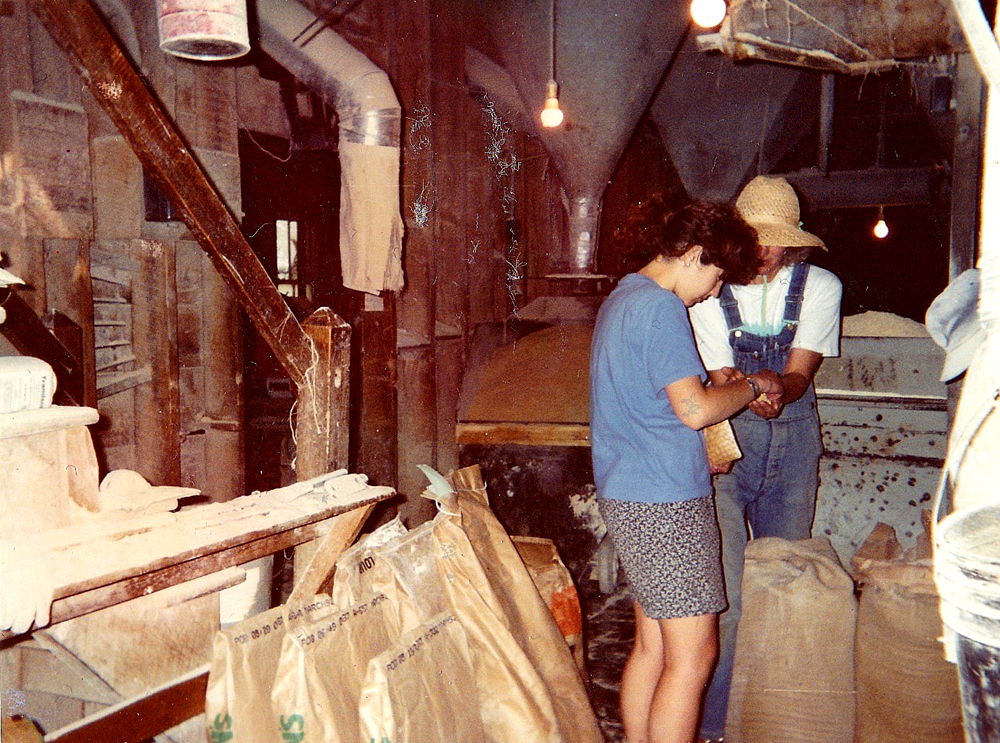
Zoë and Mimi at the mill
Ron loved this grain mill. He became friends with the men who ran it, always covered in dust from head to foot, the eyebrows especially, coated, covered, thick with this grain dust that had a lovely fragrance. The entire mill felt like a relic of the past that these folks in rural Westphalia kept alive. Ron would visit with the men over the sound of the grinding gears as I’d walk around, admiring the view from the hilltop where the steeple from this Catholic Church competed with the one in Rich Fountain.
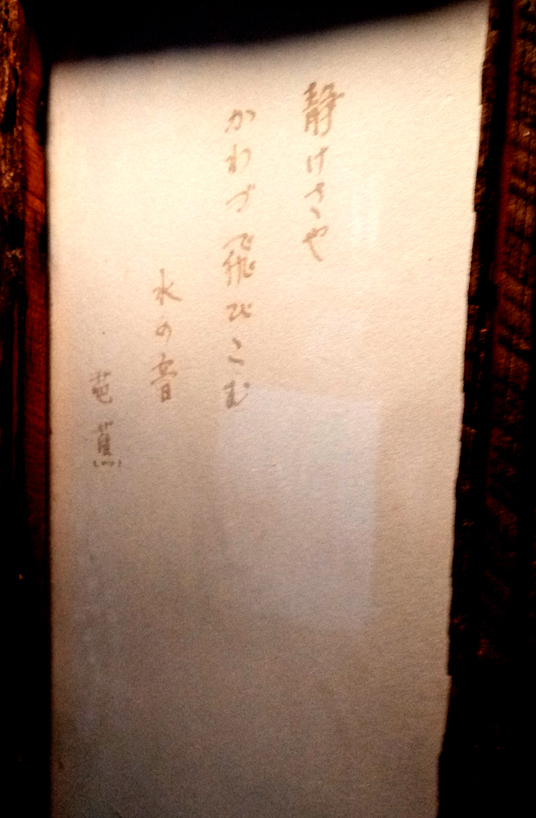
The five of us spent quiet summer evenings. I remember one evening especially. All of us were sprawled over the sofa or chairs, maybe on the floor. I knew Saori wrote in Kanji, a logographic script. (That means that a character, instead of letters, represents a word or thought.) I had begun to study and enjoy haiku. I loved Basho. I asked Saori if she’d write Basho’s famous haiku about a frog jumping into a pond. She agreed and we proceeded to find a proper pen and paper.
Saori’s beautiful kanji in this 29 year old work.
Watching Saori quietly collect herself, and practice a few times before committing the haiku to paper, I watched a self-assured, confident, skilled young woman. Quite frankly, I was mesmerized. Inside me, the desire to learn kanji began to form. Seven years later I would meet a young Chinese woman at the library in Jefferson City who would help me begin the journey that Saori’s poise inspired.
These are the Japanese words for Basho’s haiku, and the English translation:
furuike ya old pond…
kawazu tobikomu a frog leaps in
mizu no oto water’s sound
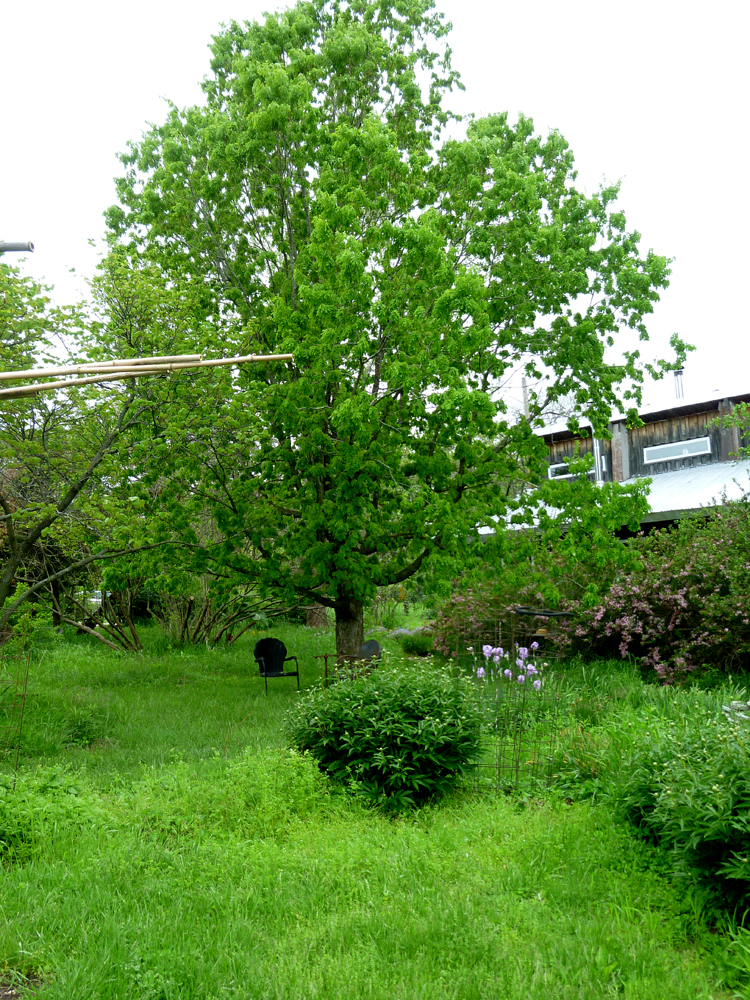
the farm circa 1991
As I admired the photographs from all those years ago, I was struck by the plants growing in the first quarter-acre. Everything looks so well-mulched and luxurious, especially the bed of comfrey and the garlic. Now that quarter-acre slowly returns to nature. I can no longer take care of so many gardens, and little by little, I give back what we once took.
Redbuds have volunteered in this plot. I’ve said yes to a half-dozen of them, pulling weeds and grasses from around their base. I’m still debating what large deciduous tree I’ll plant, maybe a pecan, maybe an oak of some kind. Or perhaps I’ll see what volunteers and take that as a sign of divine intervention. Whatever happens will seem good and lovely. To watch a piece of land you’ve grown to love become a new character seems as beautiful as watching a young woman grow into her beauty, like the three young women who came to Strawdog all those years ago.
During these months of staying at home when cooking has become an incessant daily chore, I have moments of kitchen fatigue when no food or recipe appeals. Those days we have scrambled eggs and toast for dinner. Then I get excited by a new recipe from the Smitten Kitchen, the New York Times or King Arthur Baking. I try a chicken curry or a loaf of Harvest Bread.
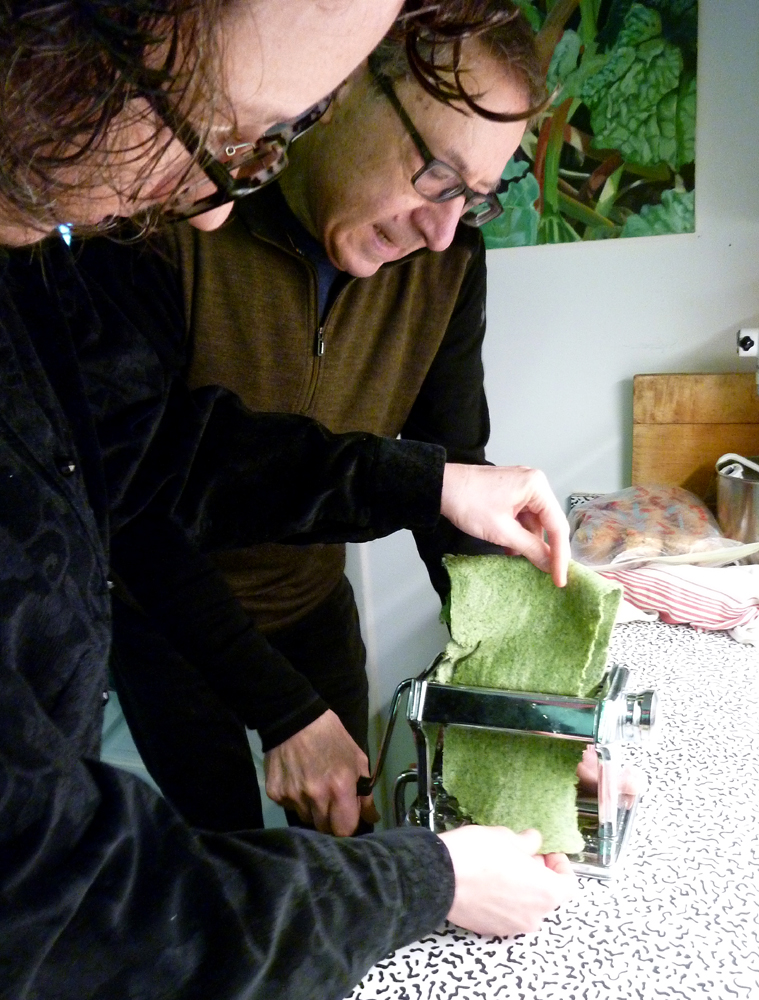
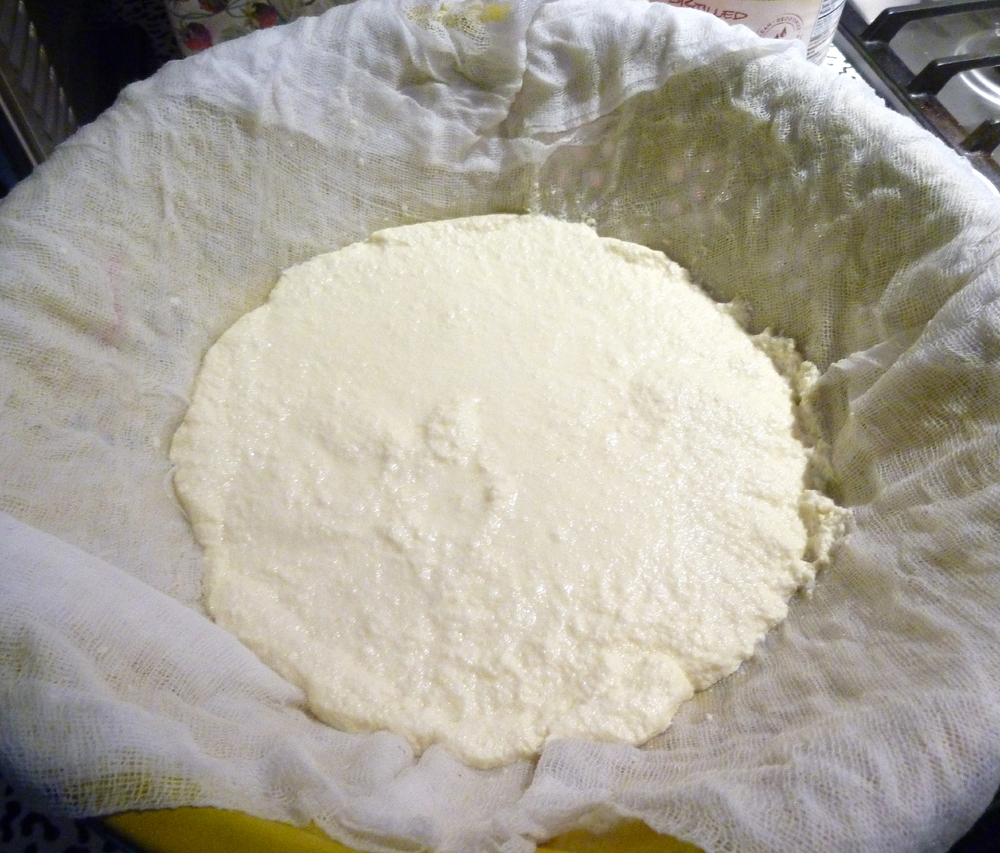
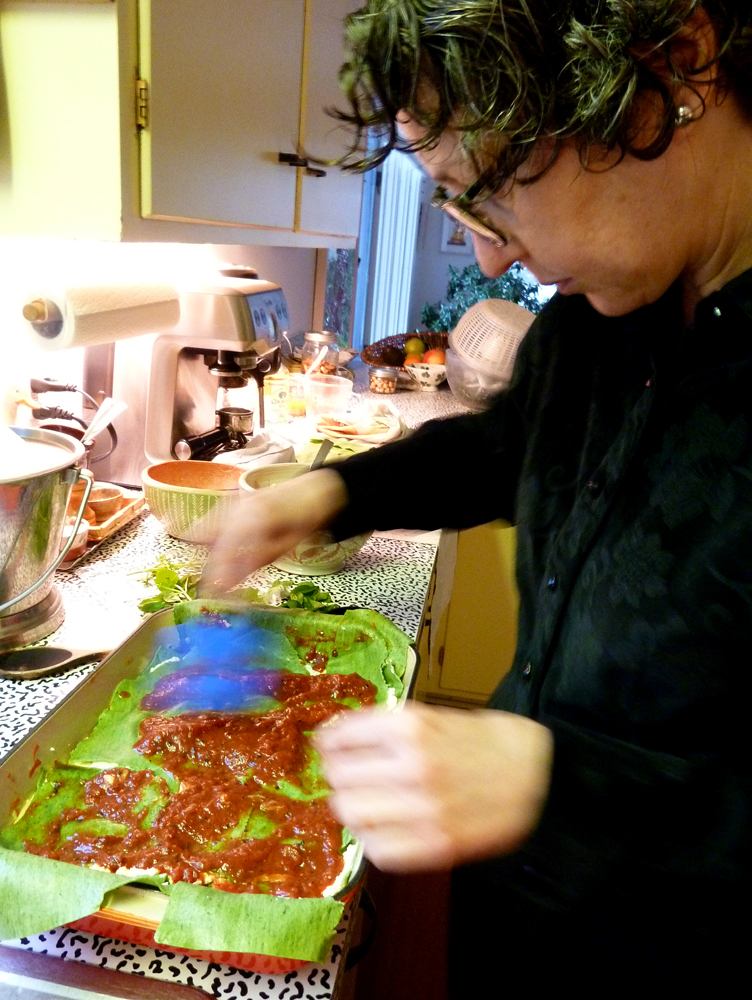
During the holidays I cooked a lot, sometimes with my daughter and husband as assistants. We made smoked salmon for Christmas dinner and spent the afternoon of New Year’s Eve making spinach pasta sheets and ricotta for a big pan of lasagna.
Zoë and Bud rolled the pasta dough into sheets. I cooked the milk and cream for ricotta.
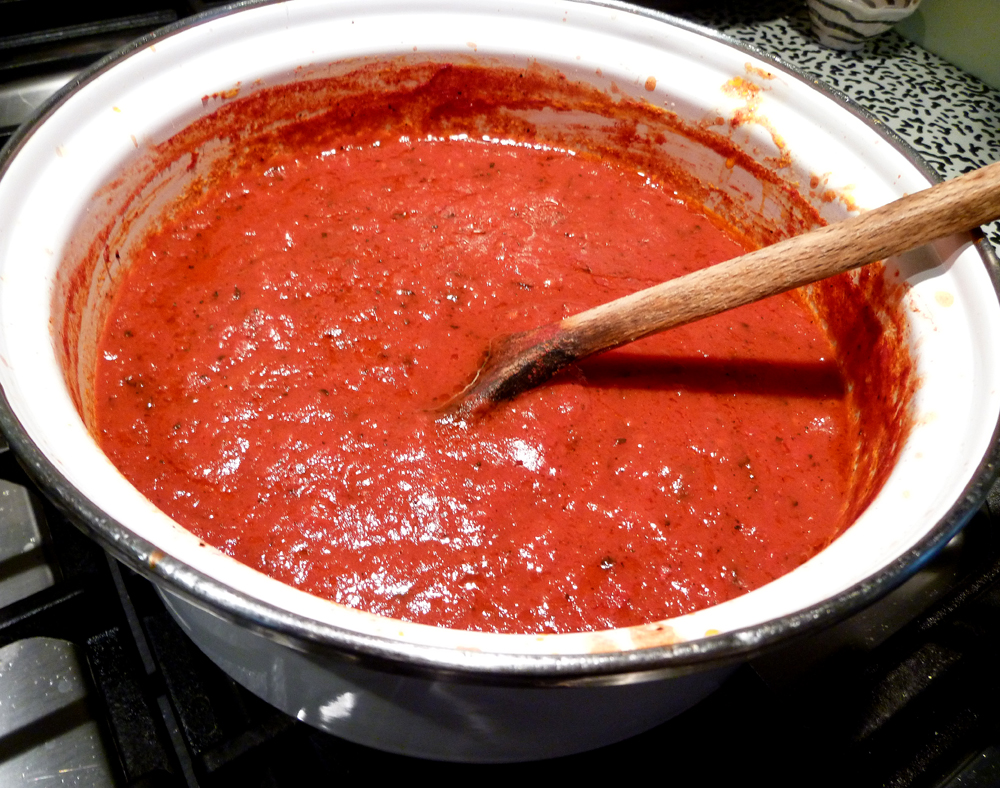
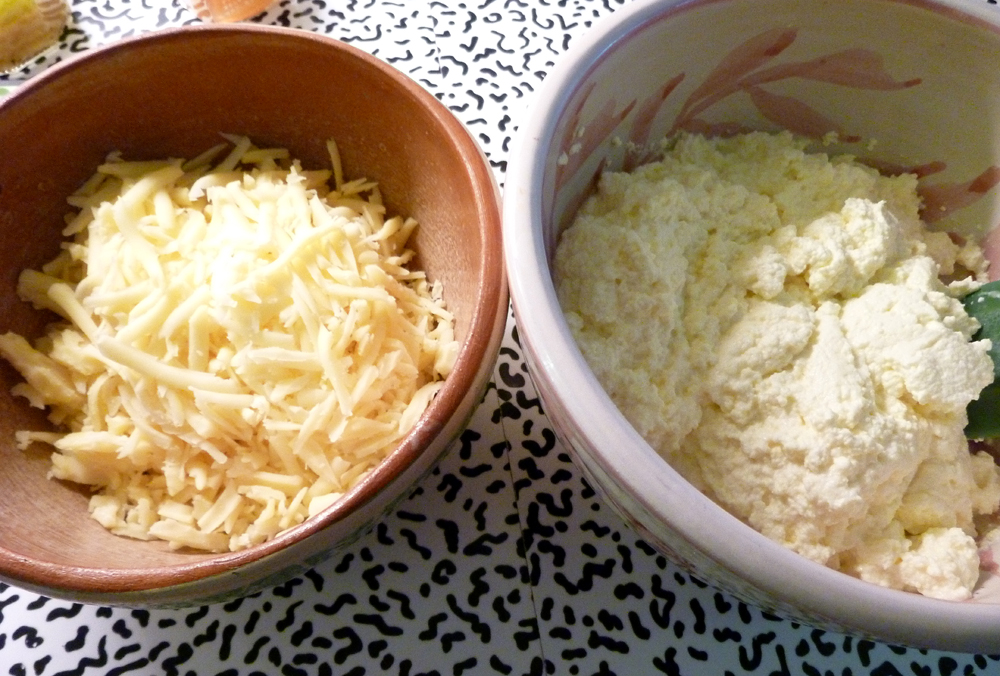
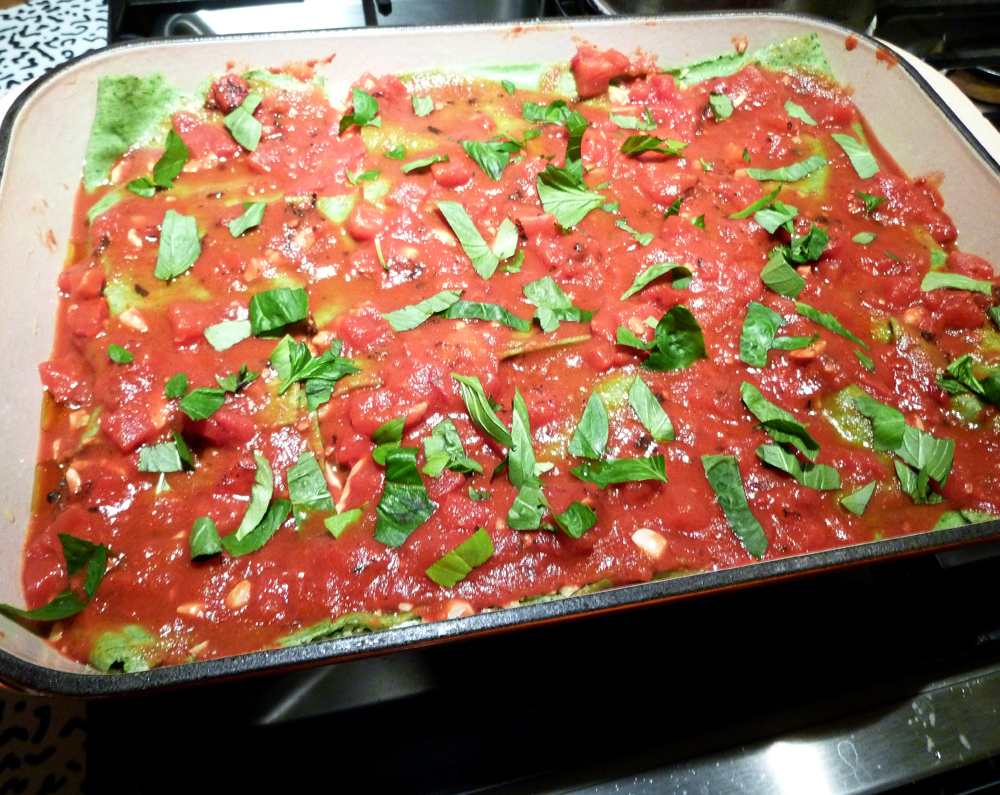
With a simple tomato and garlic sauce, grated mozzarella and fresh basil, we were ready for the assembly.
Many layers later, we baked the lasagna and enjoyed it for our New Year’s Eve dinner.
Now I’m ready for simpler meals. One of my favorites is a savory tart accompanied by a salad. I use a wonderful, easy recipe from Patricia Wells for a simple, crisp, crust.
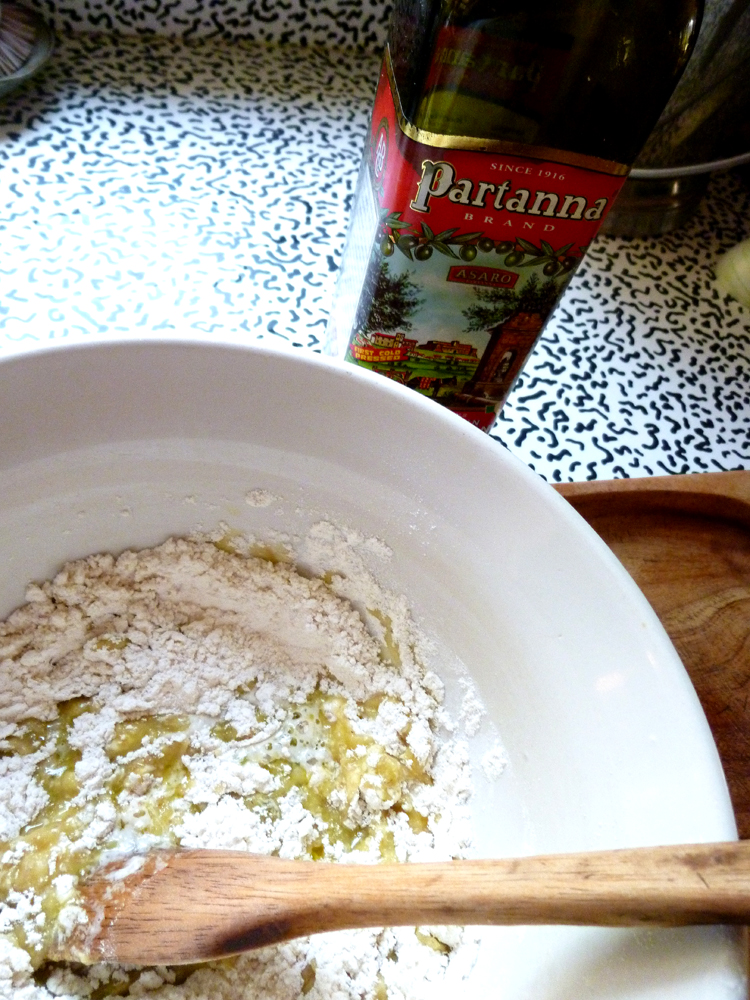
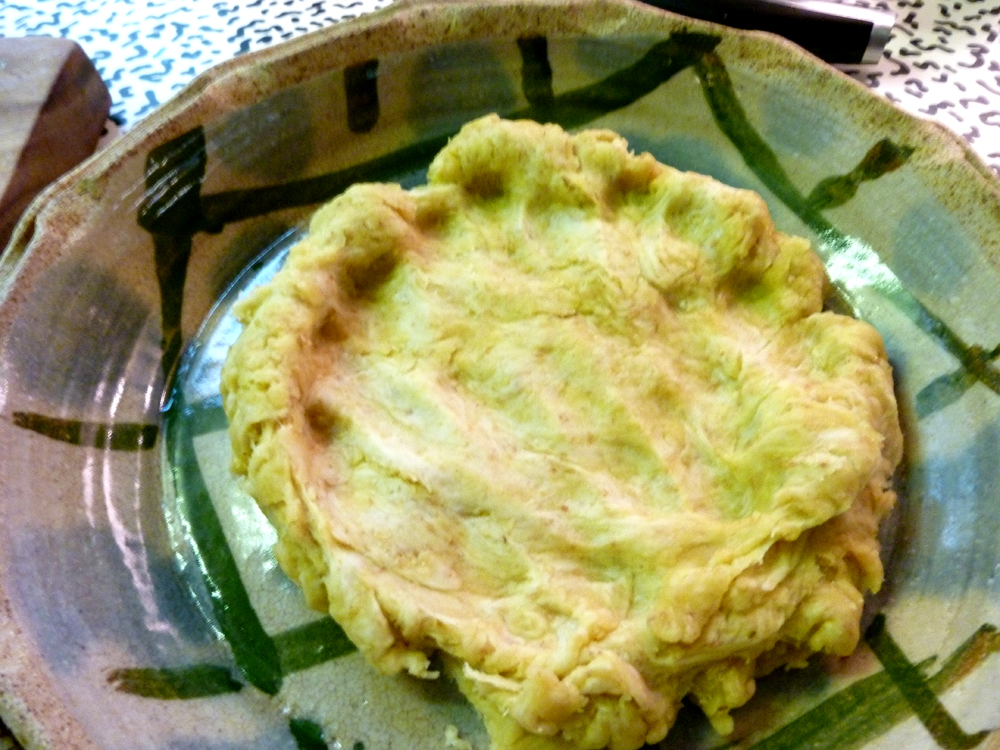
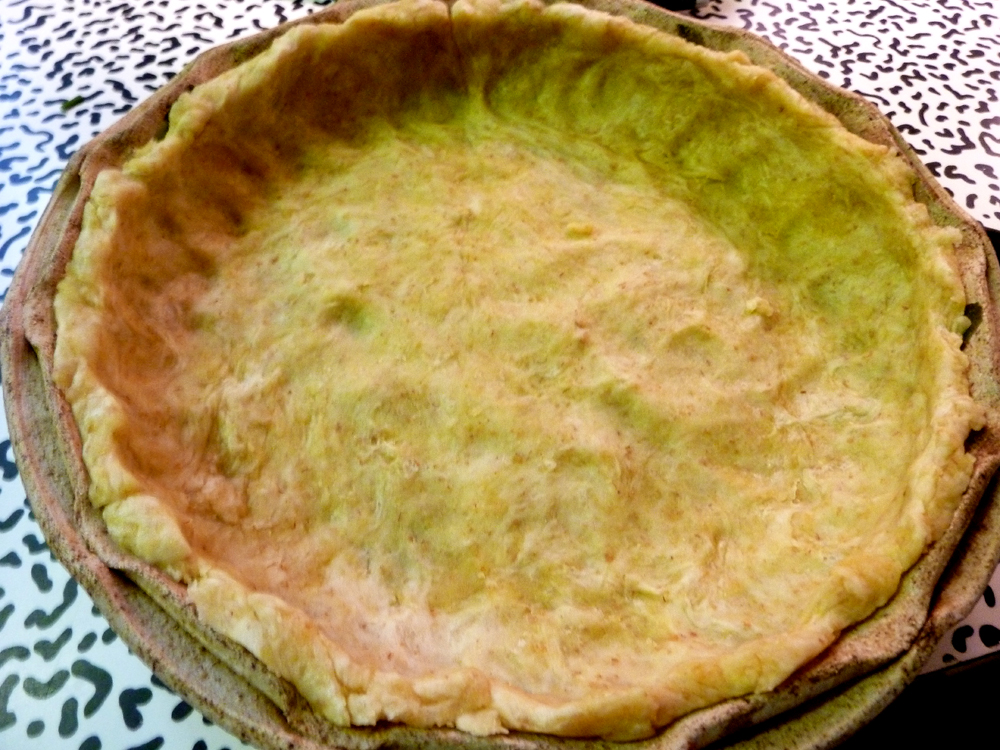
Combine 1 cup unbleached flour, a big pinch of salt, 1/4 cup olive oil and 1/4 cup water. Press the dough into a 8 – 9 inch pie plate or tin. (I used a Betty Woodman dish.)
I don’t prebake the shell. If you do, prick the bottom but there’s no need to weight the pastry as this does not shrink (another recommendation for using the recipe). I make spinach, asparagus, tomato or cheese tarts with this dependable crust. Lately I’ve had a yen for caramelized onions.
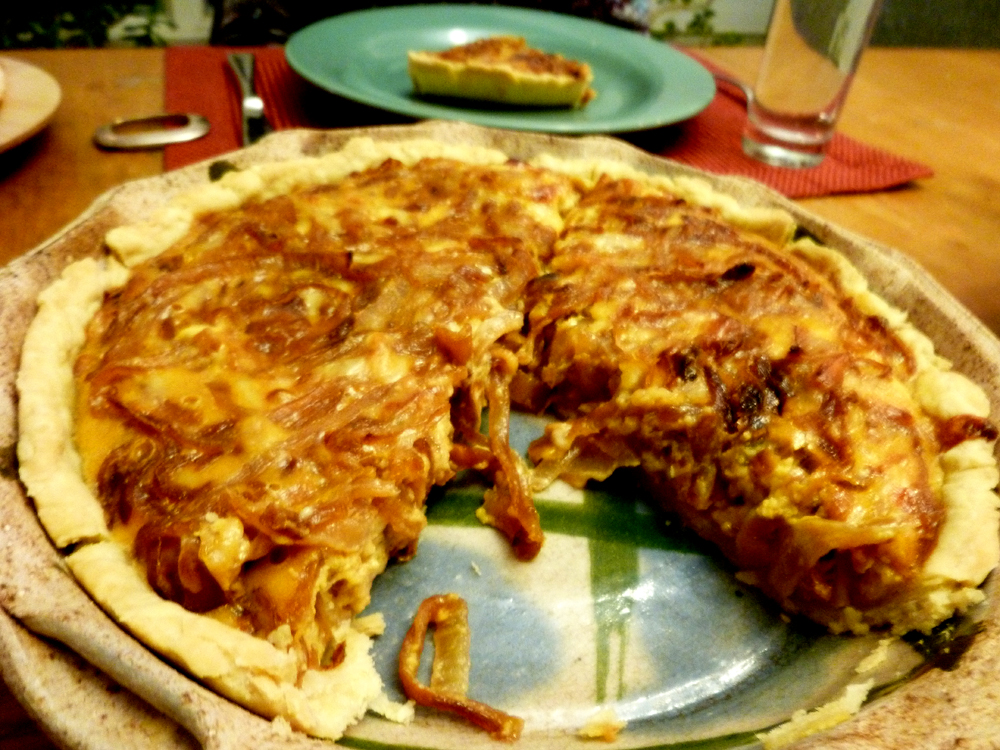
Thinly slice two largish yellow onions and sauté over medium high heat in two tablespoons olive oil. When the onions have begun to soften, lower the heat and cover the pan. Continue to cook over low heat, about 25 minutes, until browned and caramelized. Watch so they do not burn, stirring every now and then.Uncover in the last 5 minutes and raise the heat a bit to further brown. Stir frequently.Cool.
Use a spoon to paint the bottom of the tart shell with a good tablespoon Dijon mustard.
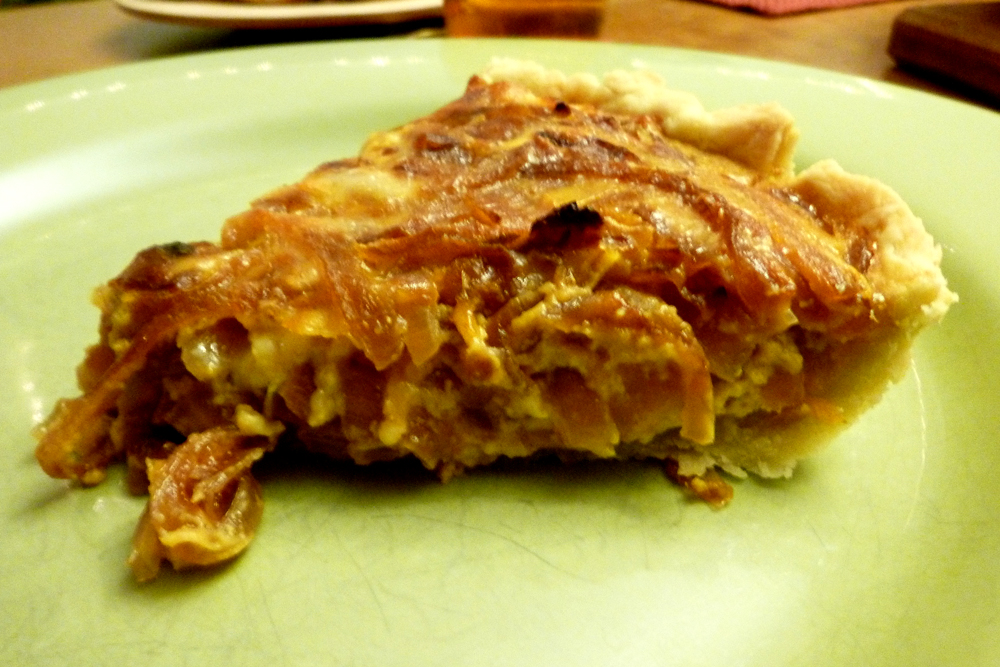
Combine the cooled onions with 1/2 cup half-and-half or milk, 1 large egg, 3 ounces grated Gruyere or cheddar, and five or six grinds of black pepper. Fill the shell and bake at 375° for 25 – 30 minutes. The center may be slightly jiggly but will firm up as the tart settles.
Happy New Year and happy cooking ─ even if you make scrambled eggs for dinner.
Now that I’ve finished holiday duties, I can retreat into my little world, where the greatest satisfaction comes from little things. Like a vest I wear every day and a zipper that refused to cooperate. I’d washed the vest in the Maytag washer, and the zipper must’ve suffered some abuse when it went through the wringer. For a few days, I slipped the vest over my head, as I couldn’t unzip it. Once, I finally, after Herculean efforts, zipped it up. With free time, not dedicated to any special chore, I decided to figure out this zipper. We deal with these frustrations/challenges, countless times a day, especially if children and partners are involved, probably pets too. My solution came from oil. I applied a thin stream of sewing machine oil to the entire zipper, and then slid the zipper tab up and down, up and down, until it zipped like a well-oiled machine. That simply made my day.
I don’t work with a microscope, looking for ways to interfere with a virus trying to invade our bodies, I don’t drive a school bus for our children, and I don’t stand in an assembly line preparing chickens for supermarkets. I live a quiet life on an 80-acre piece of Ozark land where I gather twigs in the winter and steer off poison ivy in the growing season, not quite sure of what my role should be, but grateful to live in a country where I can follow my own path and celebrate, with loud shouts, my small victories.
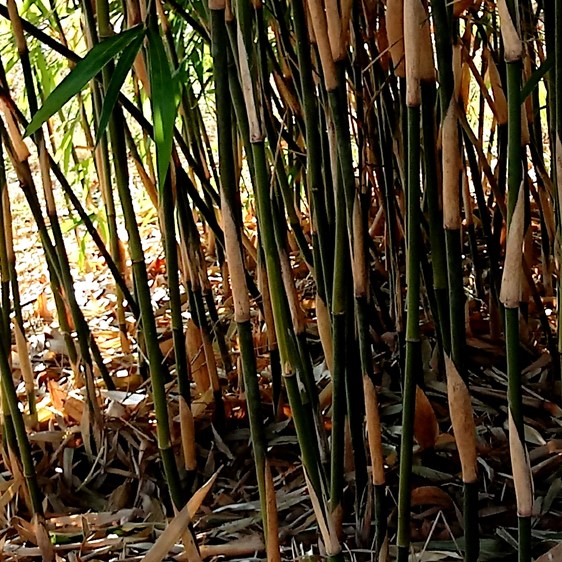
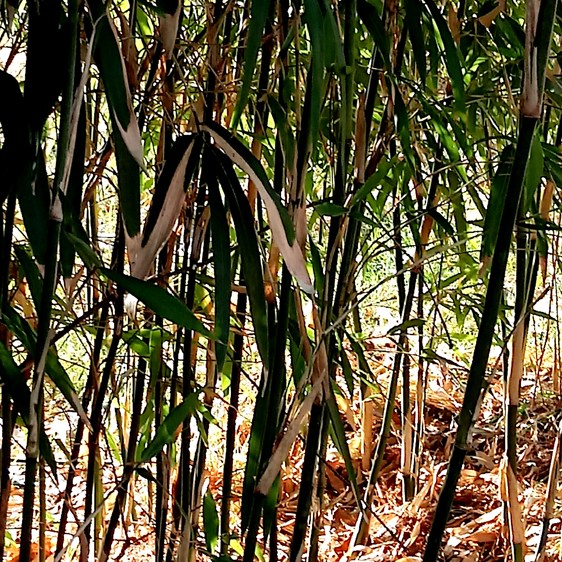
I’d set a goal of cutting 20 canes of what I call our native bamboo. But it’s not a true bamboo, rather a giant cane that looks like miniature bamboo. The canes grow tall, like 10’, but not fat, so the head gardener can cut them with her hand-held pruners. If we don’t cut them, in one short year, the grove becomes so dense I can’t crawl inside to hide from her, the head gardener. Often she’ll do the cutting, but this year, with a mild late autumn, I’ve enjoyed the task.
So far I’ve cut 240 canes. They don’t quite fit in the shed I’ve designated for them, so I began to cut the tippy tops off, skinny but bushy. Since the grandsons won’t be here, I’ve decided to build a fort with these tops on the low limbs of the bald cypress, right next to the cane grove. I’ll pretend, something we’ve all become pros at during this time of our durance vile, they’re with me, by making this fort and sitting inside it. I can easily conjure the conversations, the requests for a sheet, more cookies, and couldn’t I smooth it out a little… In no time I’m laughing and carrying on like the goofy old lady I’ve become, convinced those boys are right here with me.
How about this new attraction on the front deck? I finally found the right material to string the spools on, the white wire from a three-wire electrical cord. A chickadee discovered it today and perched on one of the spools for a few seconds. I giggled with delight.
Several years ago my friend Kit sent me this quote from Mr. Longfellow: “The holiest of holidays are kept by ourselves in silence and apart; the secret anniversaries of the heart.” She knows I spend most holidays like this, and kindly sent me this well-worn quote to validate my solitude. Now, we all celebrate with this sentiment.
“The Hit Man”, on a Jefferson City radio station, just played Gladys Knight and the Pips performing “Let there be peace on earth”. The next line is, “and let it begin with me”. Amen and hallelujah.
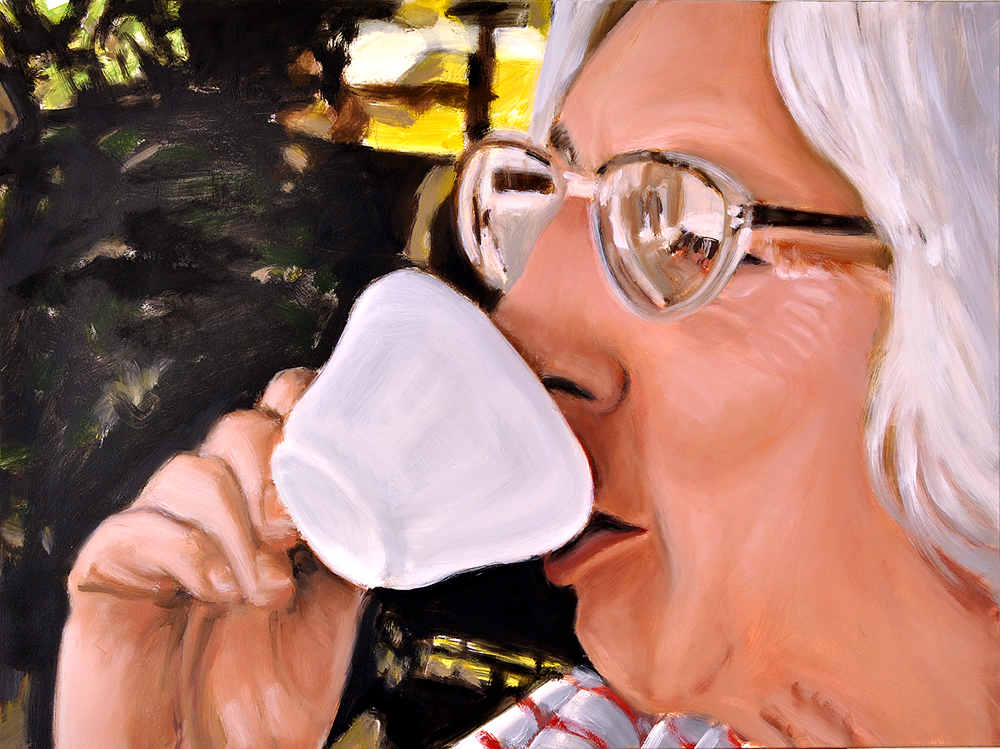
Coffee in Venice 2010, oil on board, 12 x 16 inches
It’s cold and snowy today on our Colorado hillside. I’m dreaming of vacations and wishing I could have coffee with my pals. Alas. I look forward to a brighter new year and the possibility of gathering with friends.
What a year it’s been. I’ve cooked and baked more than perhaps any other time. And mostly for the two of us. First thing each morning I think about the day’s menus and make a mental inventory of the fridge, pantry and freezer. What is at its use-by date? Do we have lettuce? Or parmesan? Should I defrost a package of chicken for a pot pie? What do I want to eat?
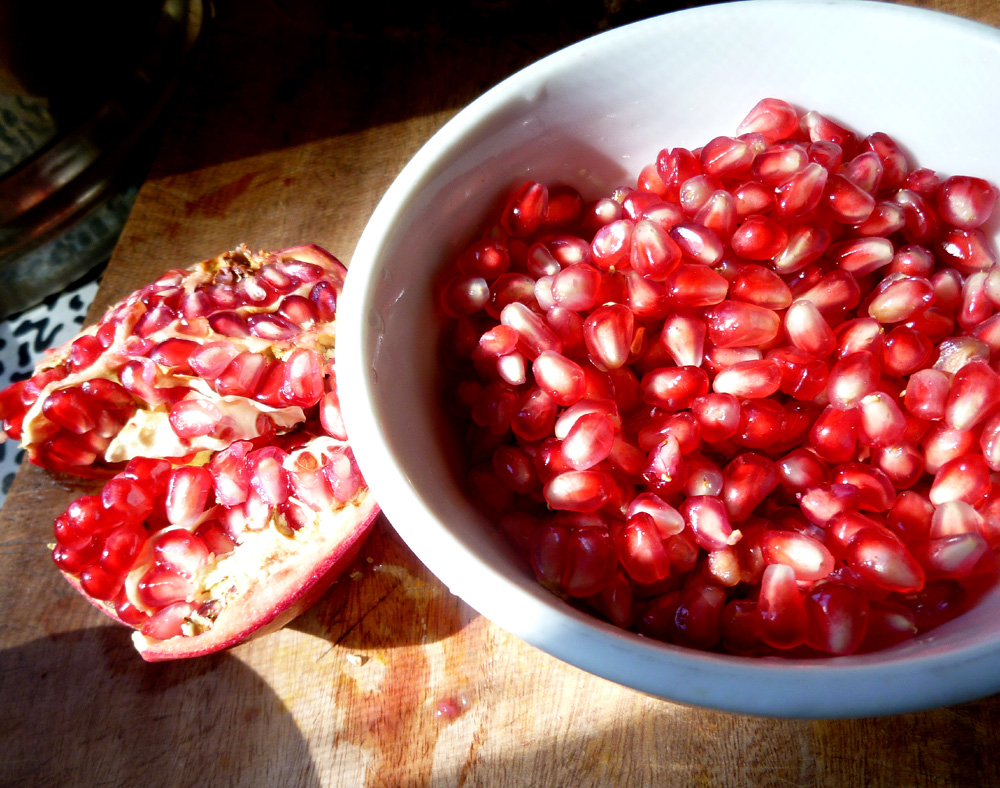
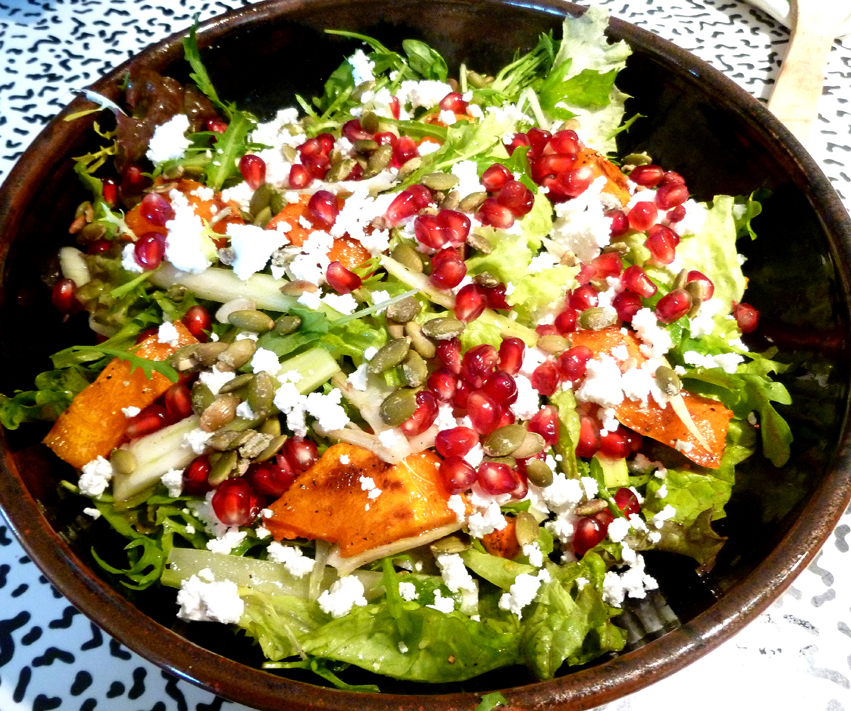
This time of year, the choice of produce is limited, but it is pomegranate and squash season, two of our favorites. Amidst the flurry of holiday baking, packing the boxes Bud has made out of rejected prints for delivery to friends, and making a trip to the post office to send a gift box to my sister, I squeezed in time to prepare this seasonal salad for our lunch. And it’s a beauty with the various greens, burnished gold squash, white fennel slivers and feta, and ruby red pomegranate seeds.
First, roast the butternut squash. Peel and seed a small squash, (or use half of a large squash). Cut into ½ inch slices, toss with a bit of olive oil, salt and pepper. Roast at 400° for 15 minutes on a baking sheet lined with parchment – or on a grill pan. Turn and roast for an addition 5 – 10 minutes until tender and browned. (I often do this in my toaster oven.) Cut the slices into 1 ½ – inch, bite-sized pieces. These taste best at room temperature so cool but don’t refrigerate.
Prepare a bed of greens – a combination of red lettuce, romaine, endive, and best of all, arugula. Add the squash pieces and ½ a head of fennel, thinly sliced.
Toss the salad with a simple dressing of olive oil, red wine vinegar, salt and pepper, all to taste. Add a light blanket of crumbled feta or goat cheese. Sprinkle with a handful of pomegranate seeds and one of toasted pepitas.
(Remember, this recipe is a guide, a template, not a rule. Use a proportion of the ingredients that suits the number of diners and your appetites.)
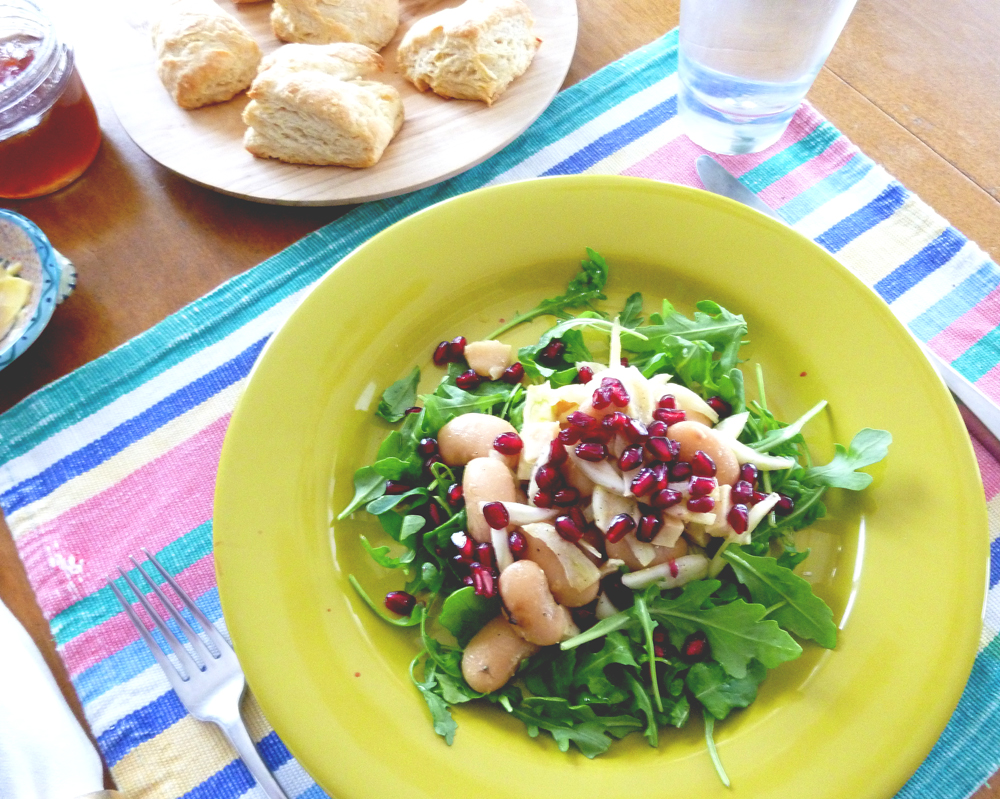
For a variation on this salad I marinated big Royal Corona beans from Rancho Gordo in a mustardy vinaigrette that included the zest of a lemon. At lunch time, I added some slivers of fennel and diced cheese – gruyere, cheddar or a Manchego. Arranged on a bed of arugula and topped with pomegranate seeds. (The biscuits are Buttery Sourdough Sandwich Biscuits, recipe at www.kingarthurbaking.com , recommended by my sister Susan. Delicious.)
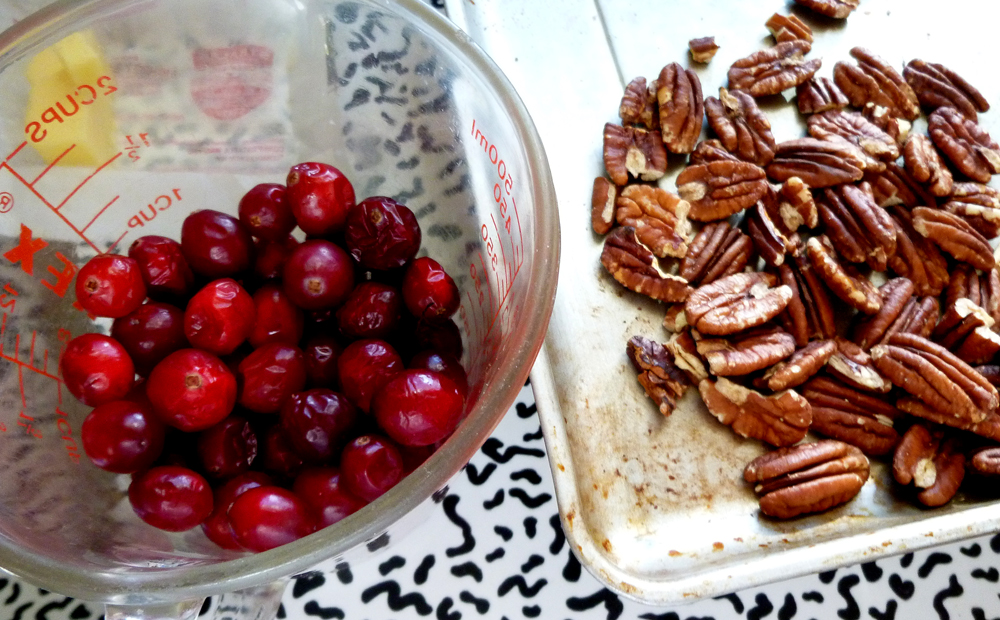
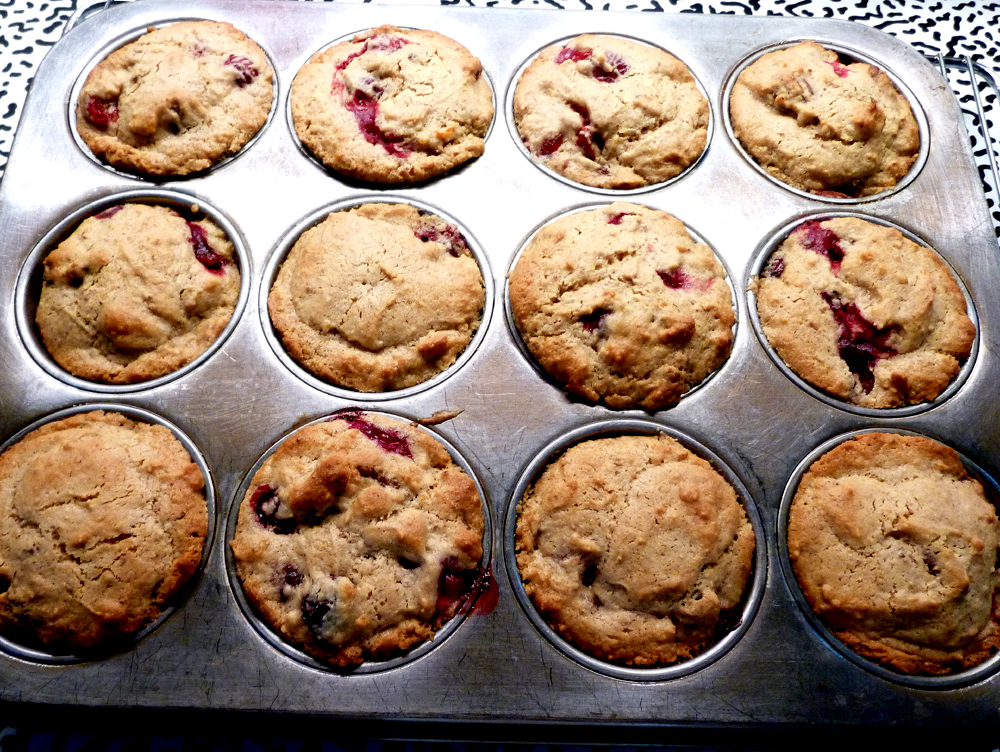
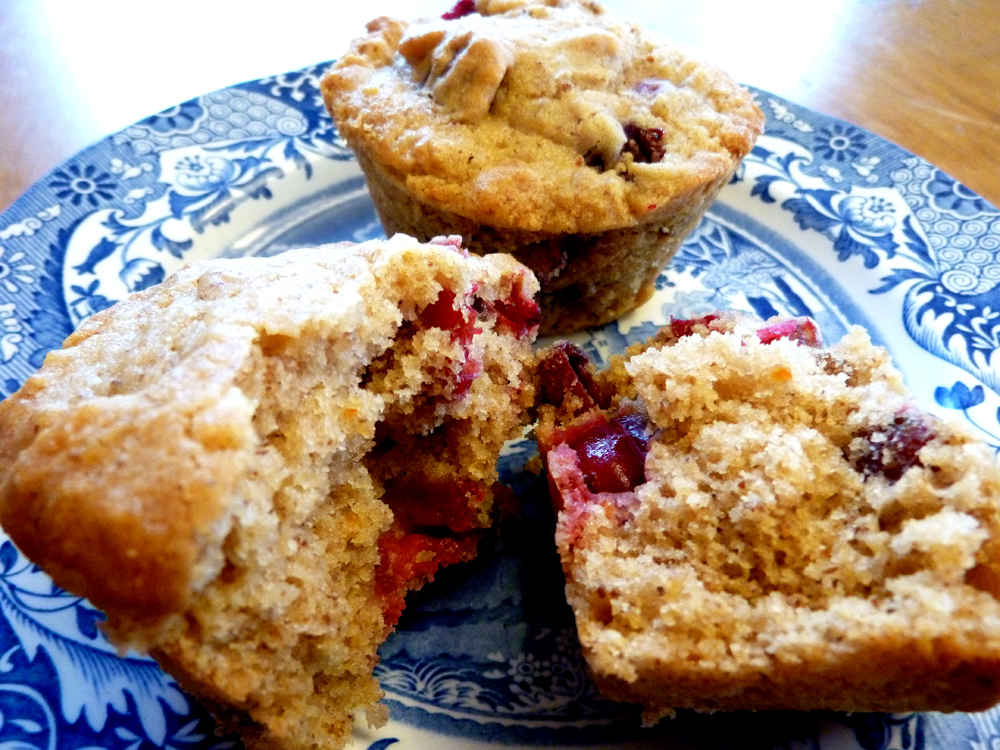
For another delicious, festive treat I used the fresh cranberries and pecans left over from my traditional Thanksgiving preparations to make these muffins. Serve them with salads or enjoy with your morning coffee.
Cranberry Pecan Muffins
Prepare a 12-cup muffin tin by greasing the cups or adding paper liners. I prefer the crispy outside of muffins baked without paper. Preheat oven to 350°.
Toast 1 cup of pecans, then whizz half of them in the Cuisinart or blender until finely chopped. Coarsely chop the rest and set aside.
Cream together 6 tablespoons butter and ¾ cup brown sugar.
Stir in a large egg and ¾ teaspoon vanilla.
Add the ground pecans, 1 3/8 cups unbleached flour, 1 ½ teaspoons baking powder, 1 teaspoon salt.
Stir in 3/8 cup milk and the zest of ½ an orange.
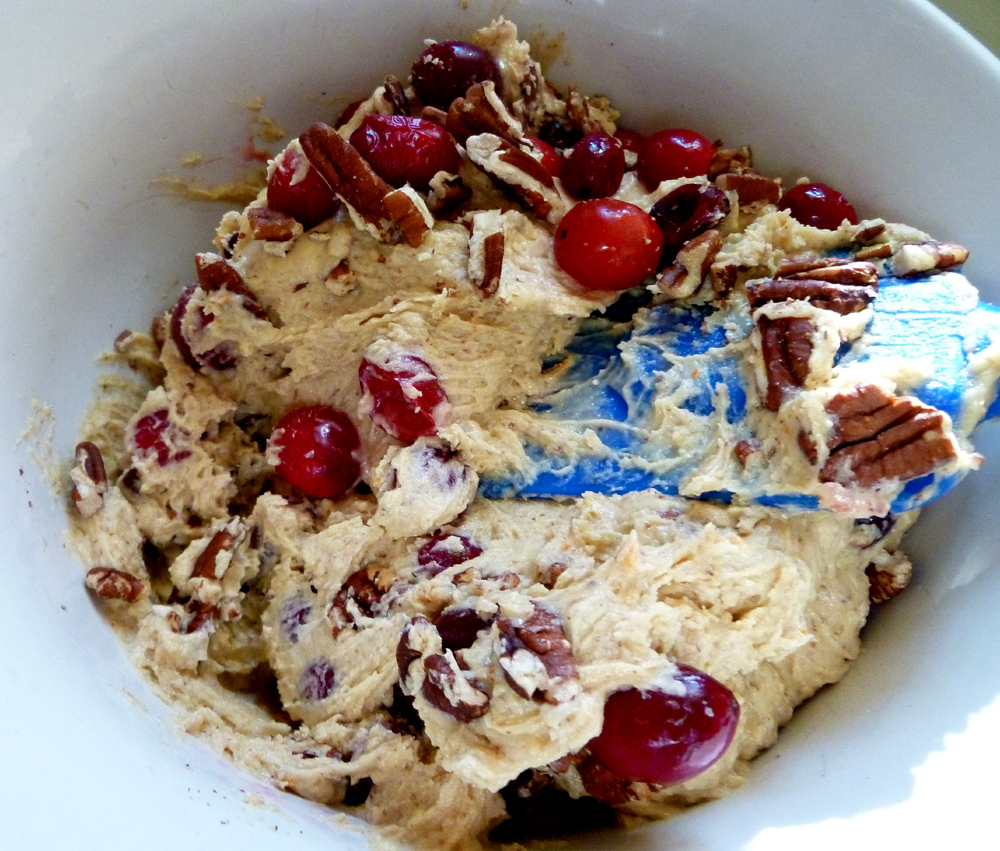
Add 1 cup fresh cranberries, thawed if frozen, and the chopped pecans.
Bake at 350° for 25- 30 minutes until brown and set when tested with a skewer. Makes 12 muffins.
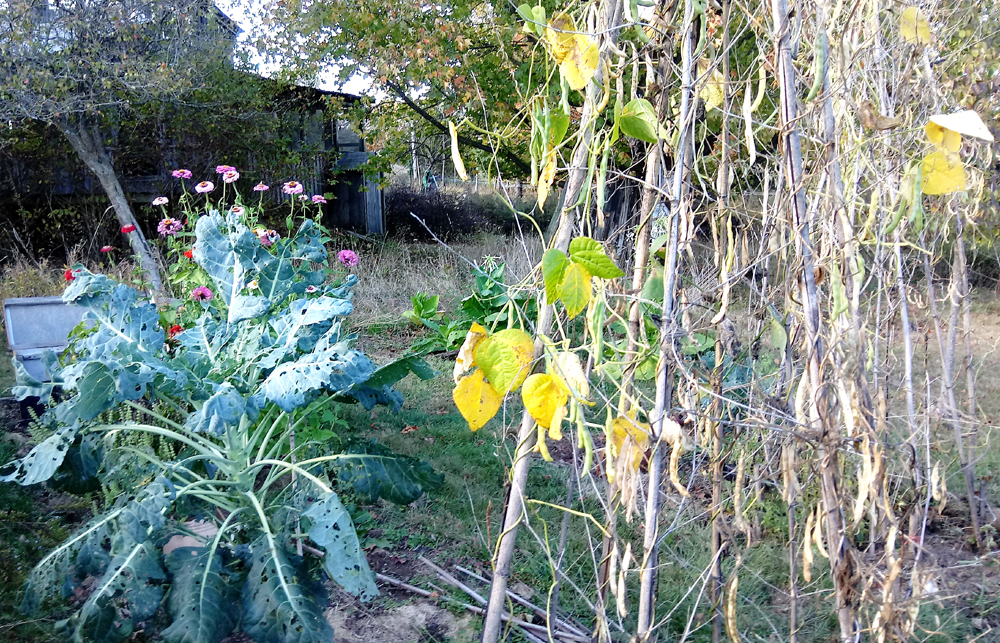
On warm autumn days, after freezes and temperature drops, the garden takes on a new complexion, one I haven’t seen for a year, one that startles me a bit, but like an old friend, soon I remember this face. The familiar gestures, dried stalks of once vibrant tomato plants, bean pods draped high up on the bamboo tepees, (so high I’ll need a rake to dislodge), and zinnia seed harbored inside seed heads that look utterly dead, remind me of other autumns. So many secrets these plants hold about water, disease and fertility. Like reading tracks in the snow, a seasoned gardener learns about her garden as she dissembles it.
As I fill the wheel barrow with compost, I add bags and baskets, bowls too, for seed or seed pods I want to save. It looks a little confusing, so many containers, and still I have to run into the house for pen and paper as the head gardener made a rule: EVERYTHING MUST BE LABELED. PERIOD. And I see her spying me with that look in her eye. She well knows how many times I’ve puzzled over a collection of seed I simply KNEW, positively, absolutely no problem, and didn’t take the time to label. Sigh…
I cut a few heads off each zinnia plant as many folks have requested seed and then said, “that crimson one” or “the white one”. I could do this, but in order to save a special color I’d’ve needed to bag the flower so it wouldn’t get cross pollinated. Needless to say, I didn’t, and will let everyone know they’ll receive a mixed bag and tell them what they need to do if they want a pure strain.
Soon I have a half-filled grocery sack, more seed than my friends and I could ever use. When I pull off a dried petal, the seed clings to that petal, stout and unbendable if viable. It looks like a witch’s fingernail to me. I will keep the bag by the heating stove so the seed heads dry out completely before I thresh.
I save more native flower seed than domesticated. My friends at the wild flower nursery will advise me ─ sometimes the seed and the chaff look indistinguishable ─ and a quick call to Mervin or Michael will enlighten me. What a treasure to have experts to consult and learn the tricks of threshing, scarifying and other secrets that ensure a new crop of plants.
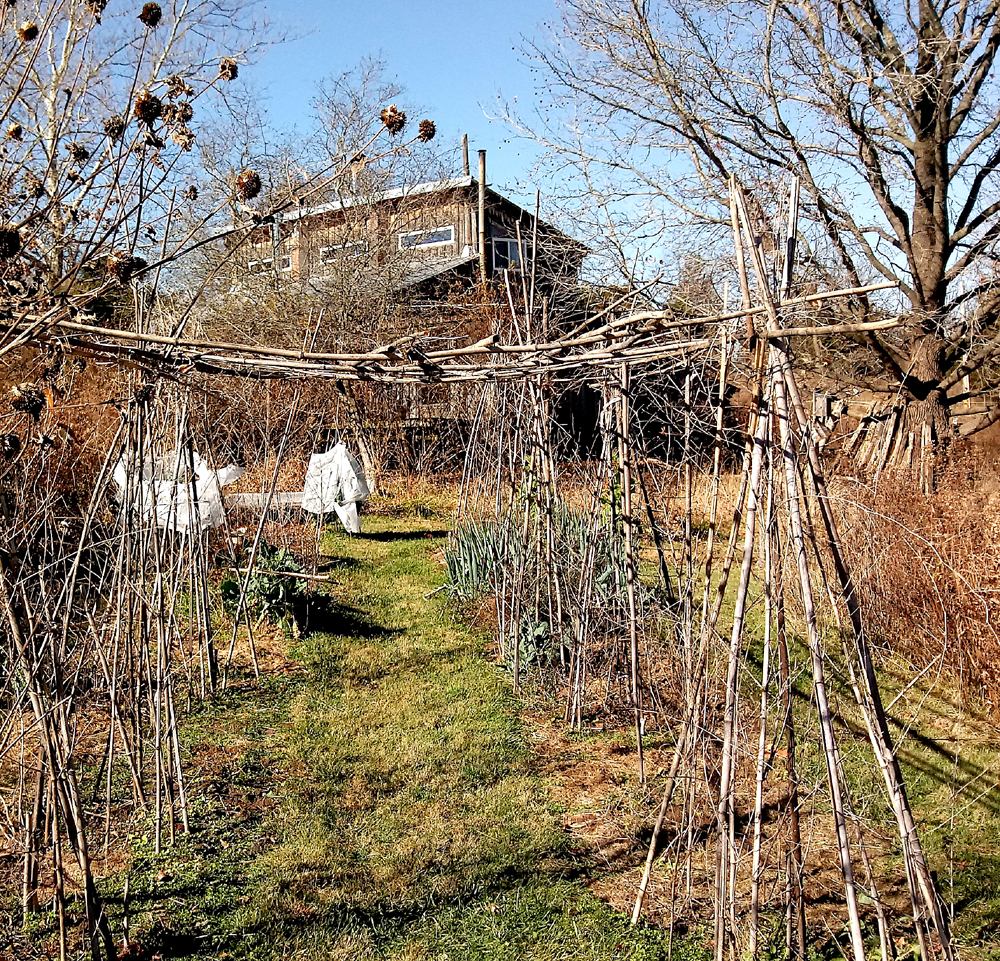
Bean vines twine around the trellis in a counter clockwise direction, easily observable in the autumn, when my attention can focus on such details. I use my pruners to cut the vines every foot and then pull them around the bamboo. They curl in such a neat way I think of making a wreath with them, and then good sense takes over and I toss the bits in the wheel barrow. It takes time to clean one teepee but with sunshine and blue skies, the task feels perfect and the clean trellis beautiful, ready for next spring.
The barriers I had put at the base of each teepee to keep the rabbits from nibbling, also get rolled up, tied and stored in the hay barn. Pieces of bamboo, from short to long also go in special places. This year they went into tomato cages, placed around the cattle panel trellises, that act like bins at a lumber yard. Why did it take me years to see this obvious solution? And the long, long pieces of bamboo? They simply go on top of the bamboo arbors, something I couldn’t do when we built curved arbors. It’s such fun to see my workshop prepared for winter. I smile with delight and appreciation of good weather to do the fussy work.
Order and organization give me great comfort. I remember cleaning my mom’s herb and spice shelf when I was 13, in Mom’s dream house on Clark Drive. I put everything in alphabetical order, combining duplicates and feeling so proud of the neatness. I don’t know if Mom kept it in good order, but if she did, like the head gardener, she could go about her chores without pause, looking for one thing or another.
And it’s the way of the woods, of nature. Think of all the micro-organisms, the fungi busy assimilating the detritus on the forest floor. So many busy workers, keeping everything under control, in order, often without the cooperation of man. We know something has gone amiss when forest fires rage or flooding occurs. The universe is often described as an orderly, harmonious organism and I do my best to cooperate and learn from all the systems.
The garden clean-up takes days, even weeks as there are so many piddly jobs. Sacks and bowls of seed clutter the summer kitchen. Everything has to be protected both from rain and mice. Every day a good breeze blows, I winnow a few varieties, a task I love. I go into an area of the gardens where if I lose some seed, it will fall on welcoming ground. Cleaned seed. I find this as beautiful as the seed pods. Would you laugh at me if I told you I’d rather have a bouquet of seed pods than jewels?
For years, when we first came here, I couldn’t bear to toss all the seed pods in the compost and began to hang them in the house, on 10’ long strings, ten feet high, near the library, over the desk. I ended up with 12 strings, 120’ of seed pods, dangling seed pods. When I’d lay on the floor to do my stretches, I’d look up into my vision of the universe. When people entered the house for the first time, they were drawn to this display. They thought I was drying herbs and it was difficult to explain my passion, so I demurred and let it pass, smiling and nodding.
Several years ago, I sensed my mortality and the chores the kids would have divesting my life. I decided it was time to take down these dust collectors. Phew!! and what a messy job! My son-in-law, Kerry, would be appalled at the dust and I could just hear him gasp. I happened to meet an artist interested in paper making and other fiber projects. She and her boyfriend came and took all the seed pods, with gusto.
The last blooming plant in the fall gardens is shungiku, the garland chrysanthemum. One year I took a bag of the dried flowers to my Chinese acupuncturist. She told me that during the Cultural Revolution she worked alongside many other young Chinese, picking the flowers of the chrysanthemum. She smiled as she remembered. When I said, how tedious, as the flowers are the size of a small fingernail, she said, no, no, it was good, it was fun and a peaceful job, we sat on little stools, and she giggled. She humbled me and I vowed not to complain.
Parsley in one cold frame, German winter lettuce in another, and Cimarron in yet another cold frame mark my morning and evening chores. I open the lids on sunny days, and by 3pm, have them closed. I’ll harvest enough fresh greens from these simple boxes to keep chlorophyll on my plate in the winter. The color cheers me when the rest of my plate looks bland.
I’ve started putting socks around the bases of the fig trees. Last year deer positively girdled every sprout before I realized what was going on. So this year they’ll receive protection. I’ll even try using pieces of soaker hose I can cut and wrap around the lower section of the sprouts.
Mulching with leaves and straw comes next. I mow through all the leaves and empty the mower bag on the gardens. Once I cut down the asparagus fronds, straw will cover this bed, and like the garlic bed, will look like one prepared in heaven. Good night, I say to them all. I won’t desert you. I’ll come by to admire the silent work you do as snow flies and hibernation invites us all.
From mid-August until recently our valley was filled, off and on, with smoke and ash, yellow light. We were surrounded by the threat of three fires. With nearby Apple Valley under a pre-evacuation order we began to make a plan ‘in case’. In 2002, during the nearby Big Elk fire, we had watched flames just a couple ridges away and prepared boxes with important papers and objects, passports, insurance docs, high school yearbooks(!) and photographs to grab if we had to leave. This year, we revisited those choices of what was important. I threw out early versions of ‘How I Learned to Cook…’ and added my painting inventory books and our artist guest books.
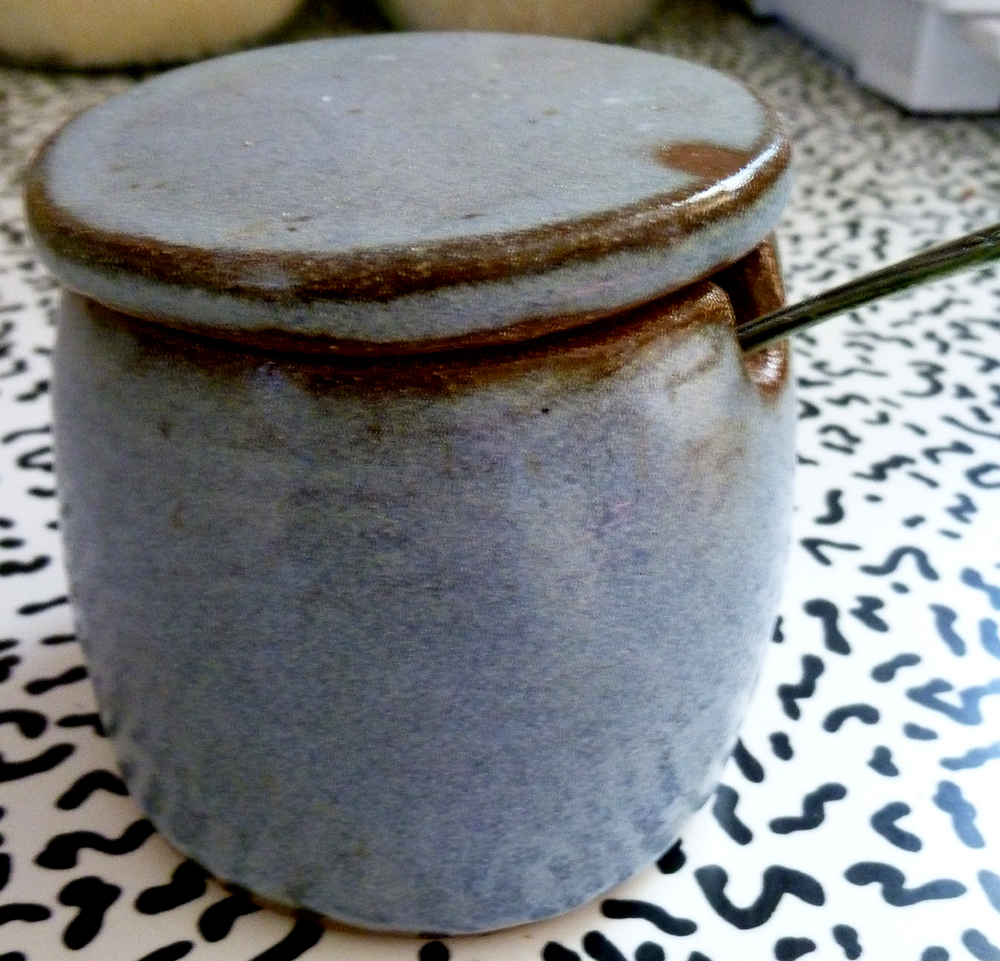
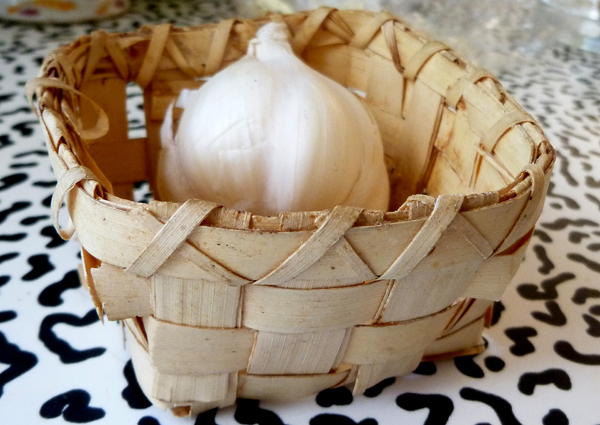
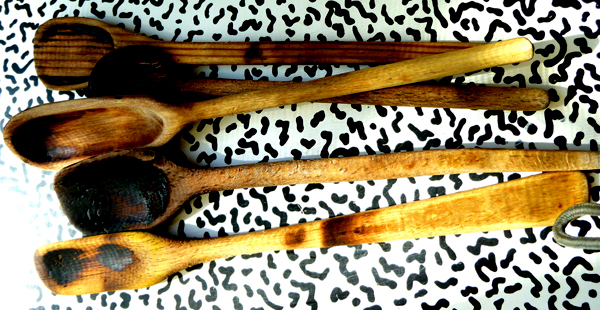
Each day as I prepare meals, I regard the ordinary objects that I use. The small, orange Le Creuset saucepan, perfect for so many things, my patina-ed wooden spoons, the sugar bowl made by my sister Susan, and the tiny basket Mimi wove so long ago with holy palms. They would all be gone in a fire. They have no value but the value I assign with my daily appreciation of these, in the scheme of things, insignificant objects.
La Espina 1991, pastel on paper, 41 x 30 inches
Our daughter Zoë is a naturalist who works as the acting director of the Fort Collins Natural Areas program. Since girlhood, she has introduced Bud and me to many wonderful places in the West ─ Canyonlands in Utah, the Colorado National Monument, various hiking spots in her neighborhood ─ Red Mountain, Soapstone Prairie, and Bobcat Ridge. The fires have changed many of these places. Trees and shrubs are gone, landmarks are transformed. She wrote this:
One of our natural areas, Bobcat Ridge, burned on Saturday. All the structures are okay, but it’s totally blackened. Today the ash is raining down from the fire by Grand Lake (was evacuated today, along with Estes Park because the fire crossed the Continental Divide), East Troublesome it’s called.
As I rode home on my bike from my one day a week at the office, the sky was an eerie grey yellow, street lights were on, and bits of ash were hitting me in the face, swirling on the pavement. I thought to myself, those are the remains of living beings. Those ashes are cremated remains of trees, grasses, wildflowers, insects, animals. We are surrounded by death. It is profoundly, deeply sad.
Even more sad that we knew this was coming due to the beetle kill, fire suppression and a century of mismanagement. We didn’t do enough. 2020 is the year of reckoning, the comeuppance year in so many ways. We are reaping what we have sown.
Things WILL get better. In the meantime, one day at a time. That seems manageable. We are surrounded by beauty and kindness too.
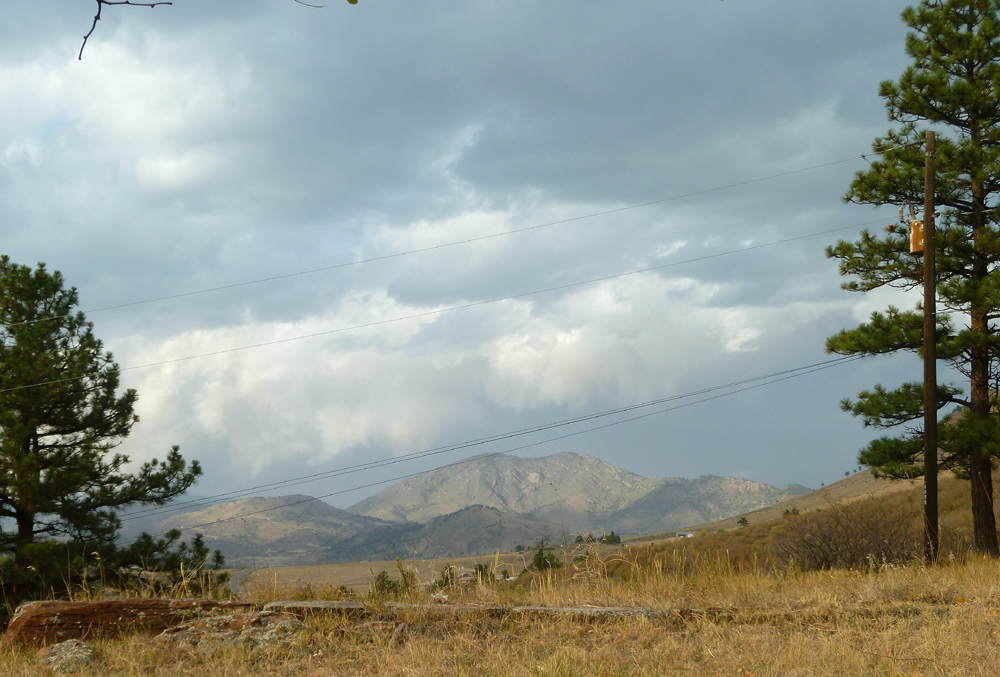
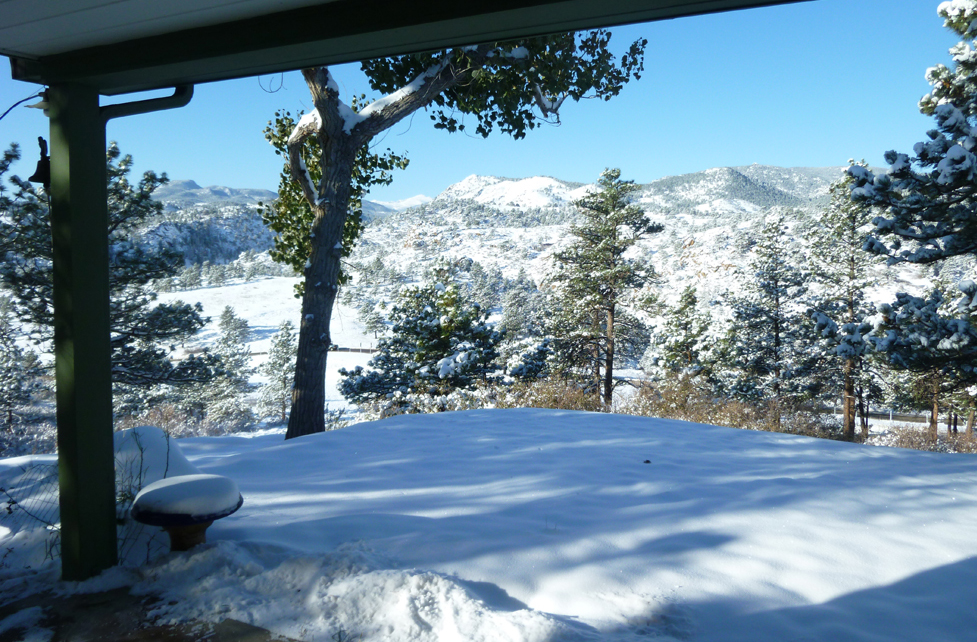
So, again, our daughter has taught me. She sees the big picture as I see the small. After this snow fall, the fires seem to be under control. The fire fighters are such heroes. I gaze at the ponderosas that shelter my tai chi space and thank them. I smell the fresh, clean air and watch the snow slowly melt from the slopes of Mt. Audubon, grateful to be here with all this beauty.
This scene is repeated a hundred times at Strawdog Farm.
I know it’s going to happen. I’ve watched summer become autumn more times than I can believe, but still, every time, every time there’s an ending to what I’ve grown accustomed to, it feels like it’s never happened before.
Yesterday, the 3rd of October, I had the first fire in the heating stove, a date I record year after year. That night the temperature dipped to 39°. I wore heavy socks, a sweat shirt and sweat pants to bed. I haven’t abandoned the summer kitchen, the screened-in porch where I live in the summer time. That’ll happen when I can’t sleep because my brain keeps telling me I’m cold.
I still want that gold star the Universe bestows on those who soldier on, believing that enduring the cold earns me a star by my name. I loved those stars in elementary school, gold, red, silver and blue and it still feels good when one comes down from the Universe. Plus, living on the porch, I have a kinship with the moon and stars, the wind and all the night sounds. Once I fold up my bed and put it away for the winter, I’ve said farewell to it all.
When I do give in and retreat to the house, the sequestered heat makes me feel cozy and loved. Deliciously so. I may mourn the end of my adventures outside, but I feel grateful for a warm home.
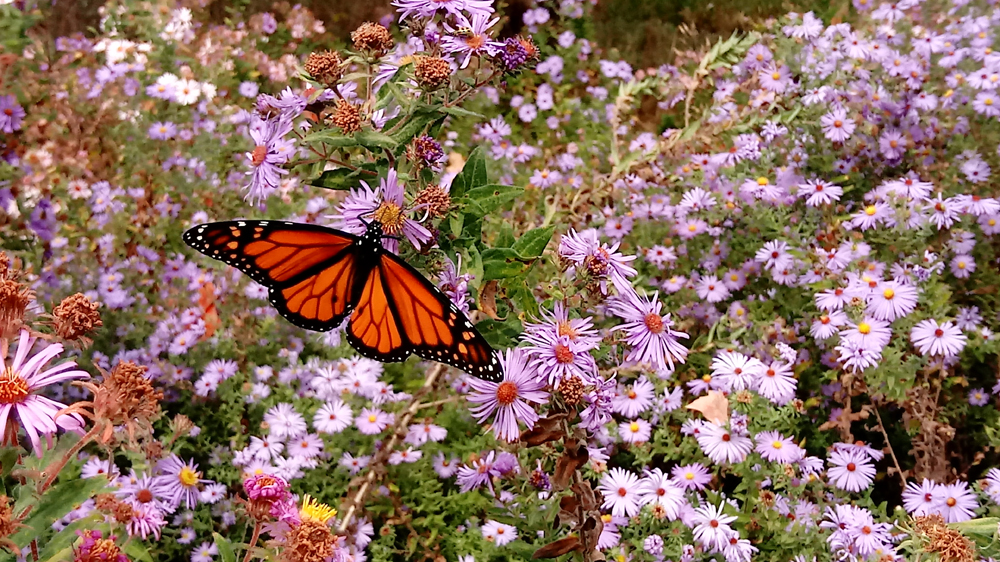
I mark the end of summer when the monarchs leave. I’ll watch their numbers grow from one day to the next when the asters begin to bloom in mid-September. I’ll see 20 monarchs, then 40 and suddenly the monarchs increase exponentially. They’re everywhere. I know some serious business goes down.
On the last day of September, hundreds of monarchs dipped into the asters. I can’t tell you how exciting it is to see so many butterflies bouncing from flower to flower. It’s a celebrity sighting. I called several friends to let them know the migration seemed in full force and to come. They said they couldn’t visit that day but would come Friday or Saturday. I told them I had no control of what might happen.
And sure enough, the next day the temperature dropped and the scores and scores of monarchs I saw bedding down in the red bud trees the evening before, disappeared. Just like that. I’ve seen a few stragglers since, but I imagine what I witnessed on that September day was the sign they were on the move, looking for a spot to lay more eggs for another batch of monarchs to continue the journey to Mexico. We’ll have more 80° days and 50° nights next week. I’ll be watching for stray monarchs but don’t expect to see any but those who tarried too long further north and now try to catch up with the swarm.
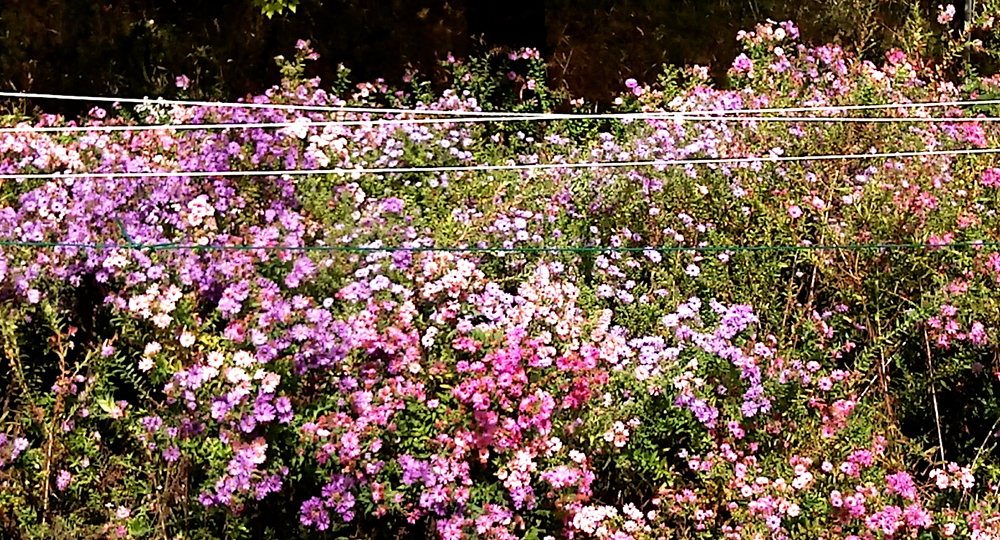
The thousands of asters on Strawdog grew as a tribute to these winged creatures until I realized how the many species of bees used them far more than the monarchs. The monarch migration may last a week, but the asters and other fall flowers continue to bloom long after the chilly nights and the departure of the butterflies. The many species of bees, less flamboyant and eye-catching, take over the task of pollinating and gathering nectar. As in the human world, it’s the quiet, more humble ones who do the work of keeping our lives organized and efficient, usually receiving little recognition. I will not be guilty of this in the future and will honor the bees as well as the monarchs.
The goldenrod, rich with pollinators.
My neighbor John came over today with a gift of paw paws. He kept looking at the flowers with a look of disbelief. I pointed out the bees to John, their pollen sacs or scopa and the color of the pollen. When he couldn’t find any pollen on the sacs of one bee, he looked perplexed. I told him that bee was collecting nectar. He was fascinated and we walked around looking at what seemed like one bee per flower, an astonishing quantity, doing their work quietly and diligently, filling the air with a sound only bees can make.
The abundant seed from the asters, well-fertilized, will drift into the 25-acre meadow below the homestead and, in time, that area will be a rich source of nectar and pollen. Some asters and showy goldenrods have already taken up residence there, close to the fence row. Every year more will appear, just like they did in the homestead, when I stopped mowing and let the natives come in.
Asters and goldenrod
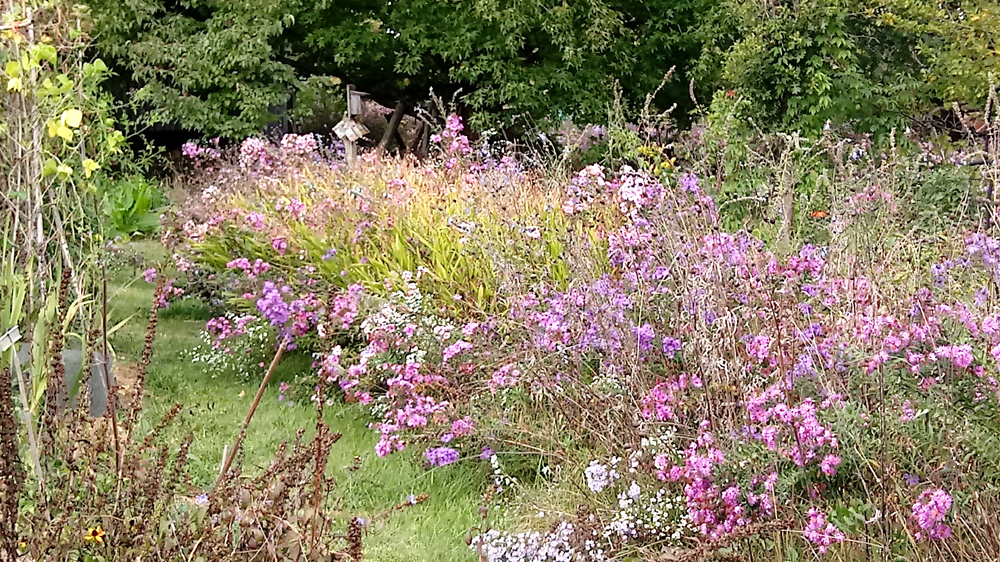
When my partner developed Parkinson’s disease and could no longer do the mowing, I simply couldn’t take care of all the labors. I decided to mow paths wide enough to walk on and let the rest grow as it might. I had no idea then that a maze would be created. Now, some of the natives grow over 6’ tall. As I walk through the narrow pathways, the plants fall over on me and children literally get lost in the jumble of foliage. I remember Logan and Brady, my grandsons, yelling for help when they weren’t sure where they were.
I like to not look where I’m going and meander from one path to another, ambling about seeing interesting insects, trying to find the bird whose call I just heard. I’ll spot a poison ivy or bittersweet and mentally mark the spot for eradication duty. I notice plants I hadn’t seen before as the quadrants continue to develop character and they settle into themselves, “Oh look! A royal catchfly.”
Blue sage and sea oats
Of course I lent a helping hand, transplanting asters, showy goldenrod, coneflowers and other natives into the fescue. The forbs slowly pushed out the fescue grass and asserted themselves. In ten short years, the homestead has gone from having maybe a hundred asters to so many I could never count them. It could’ve been the bad guys, like invasive thistles or Johnson grass, that some farmers I will not name let grow in their fields, instead of the beautiful asters. It’s truly a wonder to watch a field, a plot of earth return to native plants, as if they’ve waited patiently for just the chance to thrive. Stand back and watch it happen.
Before a hard frost comes, I’ll visit the gardens daily, feasting on the beauty. In the dead of winter as I look out, I find it difficult to remember what the gardens looked like through the growing seasons. Let them sleep. Let me rest too. Come spring, I’ll have that same sense of disbelief when suddenly the sleeping gardens come alive.
Recently, an old friend tracked me down on the internet. The richly detailed letter she later sent with a family update reminded me of this painting, Naming Zoe, (her daughter, named on this occasion after ours). And I was reminded of the wonderful letters we once exchanged. There is nothing like an envelope arriving in the mail with a friend’s handwriting, a postmark from afar, an interesting stamp. Few people write letters any more. I send thank you notes and try to write email messages as though they were letters. My sister Mimi is a wonderful correspondent, her letters full of her life and musings on it. Her evocative words put me right there with her. I have saved every one.
During these trying times, encounters with friends make my day, whether they are via emails, phone calls or letters. I resolve to be a better communicator knowing how much these connections can change my mood from sad to elated.
So, after a long gap in writing this blog, here are some of the foods I have been preparing. I hope they inspire you.
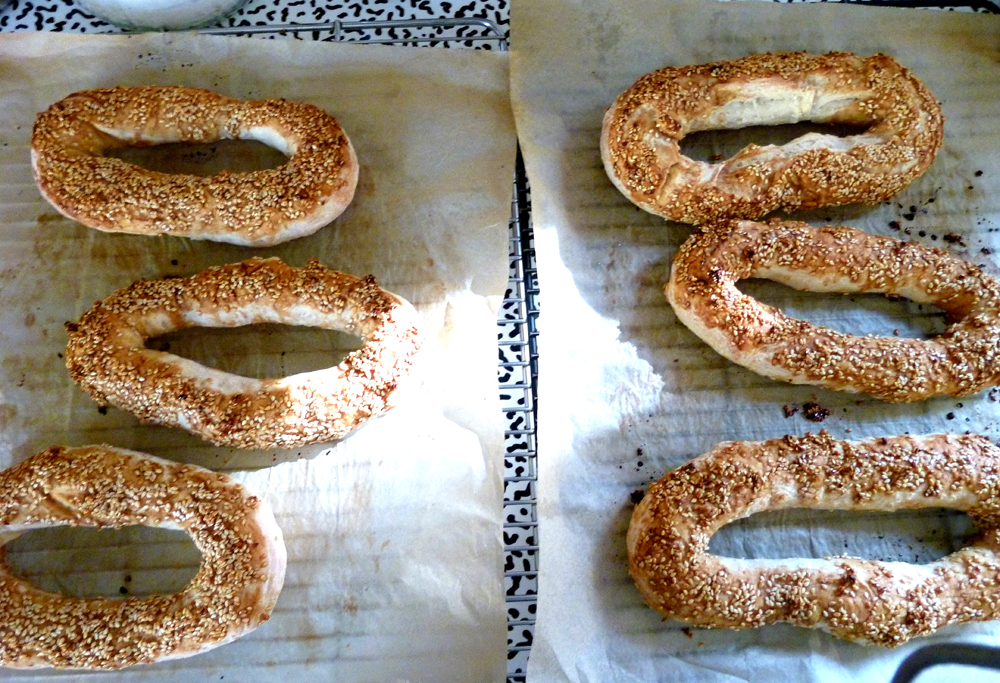
One of the tasks I have accomplished in these strange times is to cull recipes that I do not use or cannot imagine making, from my books full of clippings and print-outs, scrawls on bits of paper. One of the keepers is a recipe for Jerusalem Bagels. I found this on a wonderful blog ─ http://davidlebovitz.com . Reading David’s posts is like hearing from a friend, plus the recipes are dependably delicious. The dough is simply made, then the stretched bagels are finished with a pomegranate molasses glaze before being dipped in loads of sesame seeds and baked.
The Shark’s Ink studio is in editioning mode with prints by Amy Ellingson and Enrique Chagoya in the works. For hard working printers I like to offer a little sweet dessert, a lemon sablé, a slice of banana bread, or simply a piece of dark, dark chocolate at lunch time. Or this ─
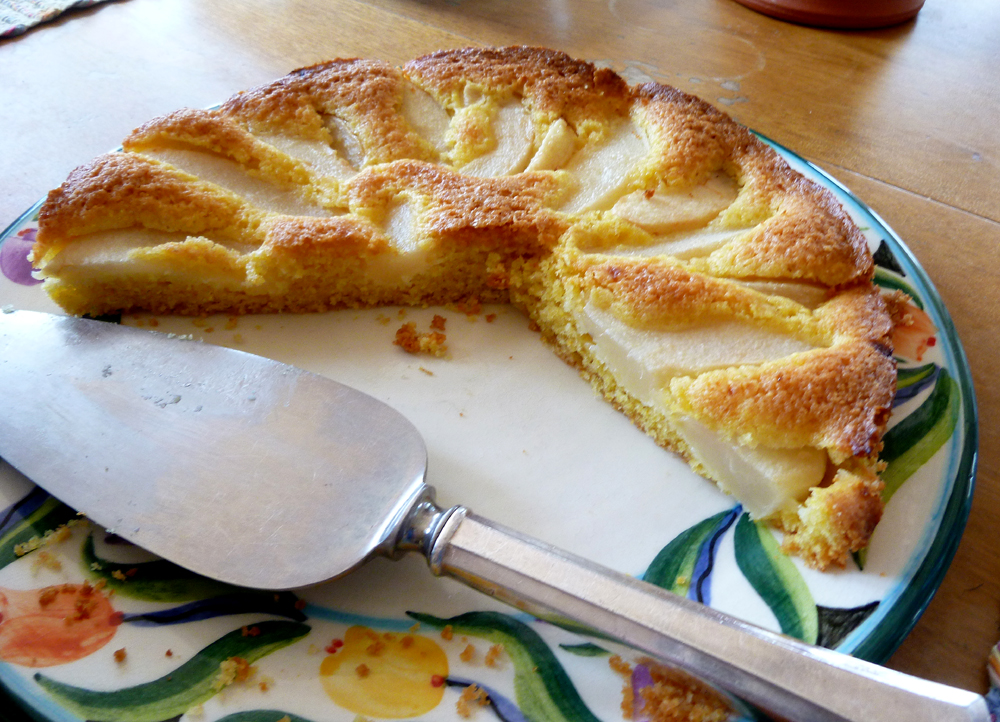
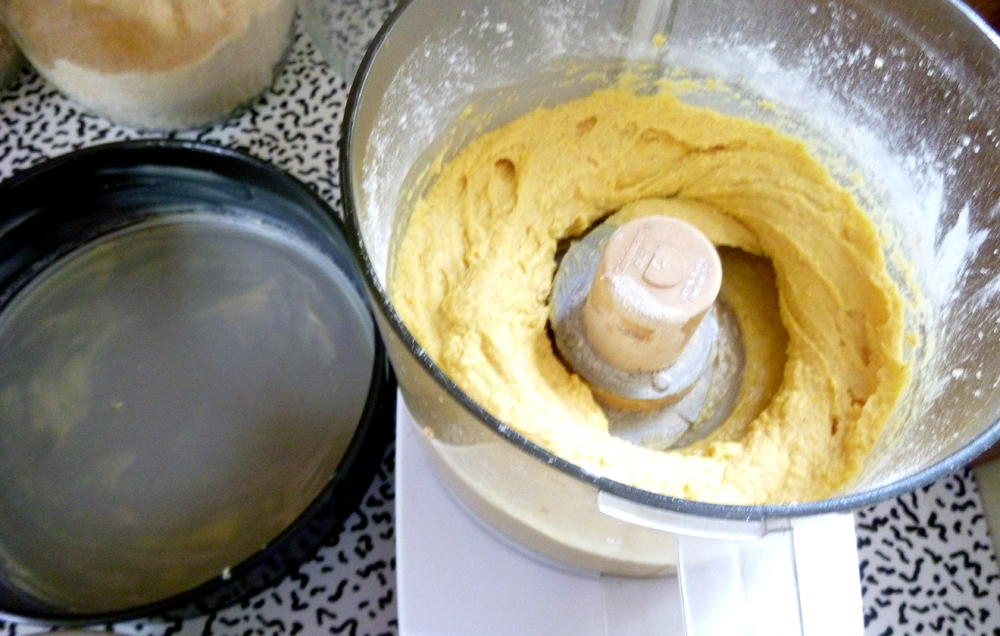
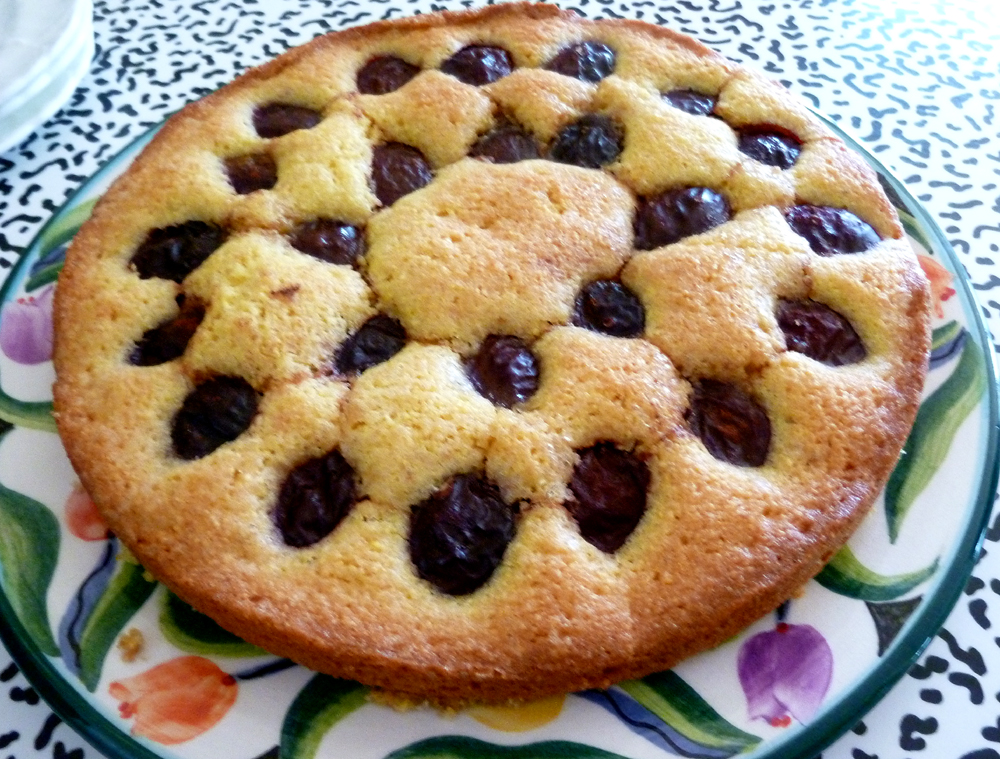
My favorite fall fruit is plums, especially so-called prune or Italian plums. Here is a plan for a plum cake, adapted from a classic Marion Burros recipe. I make the batter in my Cuisinart.
Combine 1/2 cup butter and 1/2 cup sugar and pulse until smooth.
Add 2 large eggs, 1/2 teaspoon vanilla.
Then mix in, until just combined, 2/3 cup unbleached flour, 1/3 cup cornmeal, 1 teaspoon baking powder and a pinch of salt.
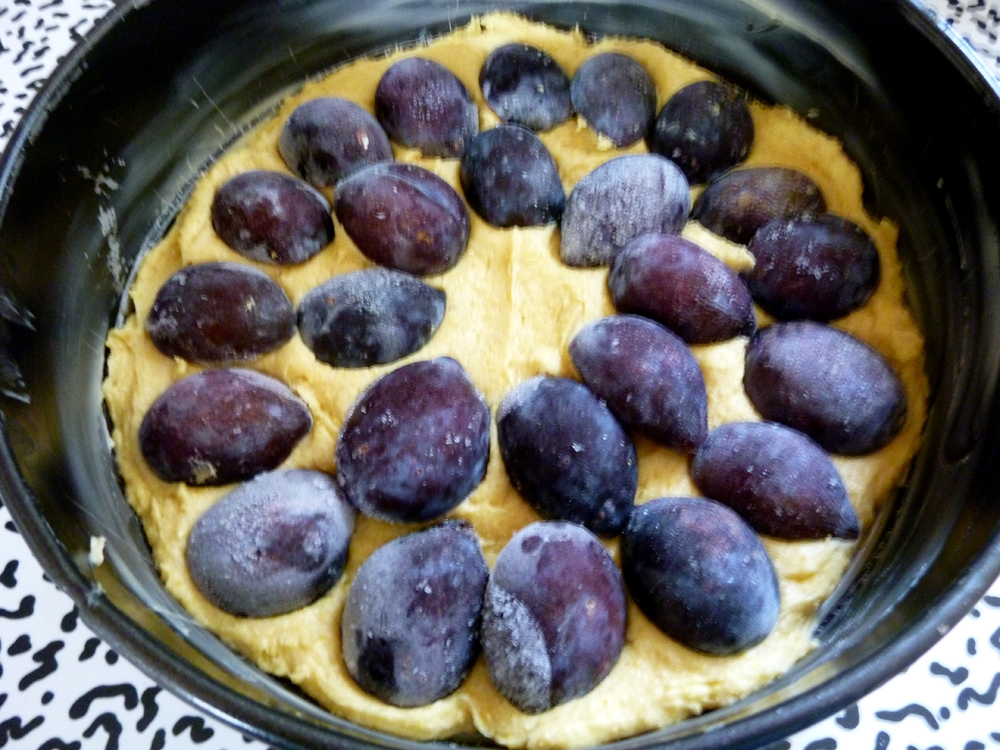
Scrap this thick batter into a buttered springform or other cake pan. Arrange 24 plum halves on the batter, then sprinkle with a teaspoon or so of cinnamon sugar.
Bake at 350° for one hour or until firm when tested with a toothpick or skewer.
This simple recipe is adaptable to other fruit ─ I made it with peaches and raspberries and I think pears or champagne grapes would be delicious.
So, my friends, stay well and maybe write a letter!
My sister Mimi Hedl joins me again with this post from her farm in central Missouri.
My friend Jenny has often written about her temenos, her garden, her sacred enclosure. At Strawdog, my temenos, the gardens expand to three acres and within those boundaries, many special places exist, nurtured and cared for as if only they mattered.
Only wealthy people have this kind of luxury, this form of wealth, to tend a small kingdom and watch it thrive. My richness comes not in the normal sense of money and power, but rather in my freedom to do what I love, take care of this piece of earth. When I write about my surgical maneuvers, removing shrubs, eradicating this or that, it may not sound glamorous to you who don’t garden with the same passion, but for someone trying to find the harmony of their land, to put what will grow well in each micro-environment, it feels like solving an impossible puzzle. The thrill of finding a seedling growing in a spot I never thought of putting it, seems like a hand reaching out and ever so gently guiding me.
The compost piles have always impressed, especially children. Firstly, they can’t believe a pile of weeds and coffee grounds, lemon peels and melon rinds, will turn into the soil they see in the next bin, ready to spread, so light and fluffy it looks good enough to eat.
The last 8 years I’ve dedicated to giving more ground to all the critters, from bees and butterflies, to deer and turkey. It shouldn’t have surprised me when rabbits and squirrels and chipmunks and even armadillos moved in. Many screaming fits have resulted. They solve nothing and make me feel foolish. So now I realize I simply have to get smarter, plant more and share with everyone.
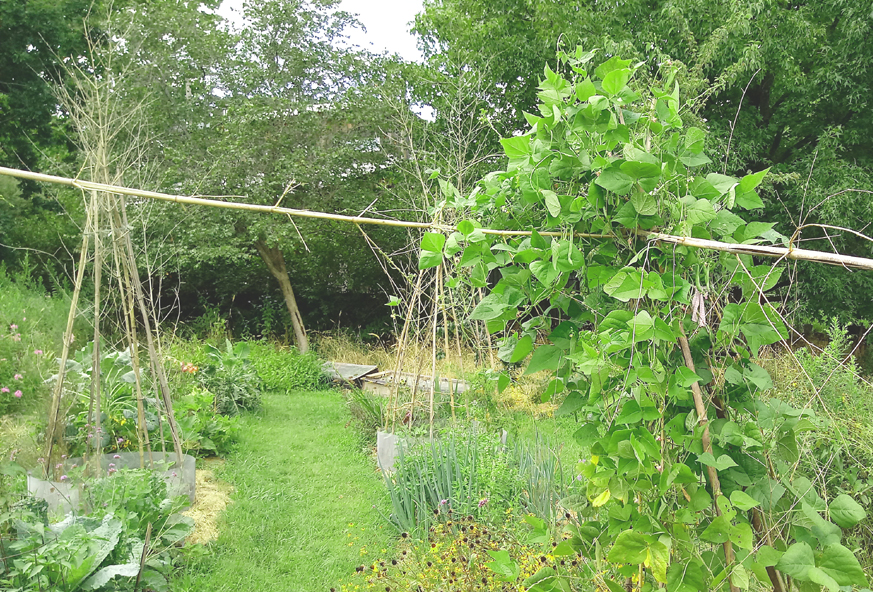
I figured that growing vertically might make a good move. With my largesse of cut bamboo, from a lengthy eradication campaign a few years ago, I have plenty of material for trellises of all types. I like teepees. I like the way they look, how easily they go up and how I can secure the base with a 10” tall strip of old screen wire, looking for a purpose in life.
At last count, a dozen teepees stand tall, my own village. These enchant children and if not for Covid I’d see Brady and Logan, my grandsons, running around them, trying to pick the beans and cucumbers from on high. Of course they’ll want to go inside and of course they can’t. So I decided to erect a wire cattle panel as a refuge for them, for children of all ages. When the heat bears down, going inside a shaded area, even for a short period, extends the time a gardener can endure. Plus it’s nice to watch the bees going about their work, a butterfly flitting here and there, as you stand still, inside a quiet cocoon.
The cattle panels had stood behind the asparagus, where, come high summer, the ferns fall over and the head gardener complains of having to push the mower through the jungle. To keep her content, at great trouble I put up the cattle panels to keep the ferns out of her way. Now, years later, the asparagus crowns push under the panel and she can’t easily weed, so it’s been requested I remove these panels.
I sigh and comply as I feel grateful for any and all help. But where to store the panels? They’re 16’ long, 4’ wide and made of steel, heavy. I lug three of them over to the daffodil bed, now quiet, pound in 2 fence posts with my handy post driver and manage to angle them up against the fence posts, tying them in place. I still have one more, at the head of the bed and I hate to drag it the 100’ down to the corralled panels, so I say, “the arbor!”, as I remember my plan for the children.
These wire panels are awkward, heavy, tough to navigate through all the shrubbery and gardens. I so wish for help but with this pandemic, don’t think of hollering for any unless I have an emergency. Ron put up 4 arbors, did I help him? I don’t remember. If I did, I probably didn’t pay attention but rather was thinking of the next job I’d do, or navel gazing… I could’ve saved myself much misery, in countless ways, if I’d paid more attention. Sigh….
I find the spot in the second 1/4 acre where I want the arbor and proceed to try to bend it into an arch. It would’ve made a funny video to watch my clumsy attempts. As I said, this panel is not only heavy, it’s strong and seemingly unbendable. I’m ignoring some basic principle, I mutter as I try again and again to put it in place. Oh how badly I want to call Mark, my helper. I persevere. I have no luck and in an hour simply wear myself out trying. I lay the panel on the grass, sigh again and go about other tasks.
As I work, I think of all the adages Ron used to repeat: “The job’s not too tough, the hammer’s just not big enough”; “If I had a lever long enough, I could move the earth.” I stopped at that one. I don’t want to move the earth, I just want to bend that panel. Hmmmm…I said to myself. And thought on it until the next day.
Fresh and inspired by Archimedes, I pounded two stakes into the ground with my trusty post driver, lugged the panel in front of the stakes, went to the other end of the panel, and lifted it up, pushing it against the stakes. I won’t exaggerate and say it was easy, I was sweating bullets to push it into place, but I did it, and shouted so loud, “I’m a genius!!” anyone nearby must’ve wondered who got hurt and if they should come help. Once I had it bent, I pounded in the other two stakes, secured them to the panel with wire, and admired my brilliant work.
Now moon flowers grow along with a Thai kang kob squash. I hadn’t planned on the squash, but it saw the panel, grabbed ahold with its tendrils, and climbed over the top. It’s such fun to see the squash hanging down, the flowers rich and glorious in their gold, that I’ll let melons and whatever, grow over the panel in the future.
Now I realize part of the adage Ron left out is necessary, “give me a lever long enough and A FULCRUM ON WHICH TO PLACE IT and I shall move the earth.” Thank you, Archimedes. You’re welcome to come into this wonderful temenos anytime you want relief from the burdens of understanding the universe.
























 How I Learned to Cook, an Artist's Life ─ Barbara Shark