by Mimi Hedl
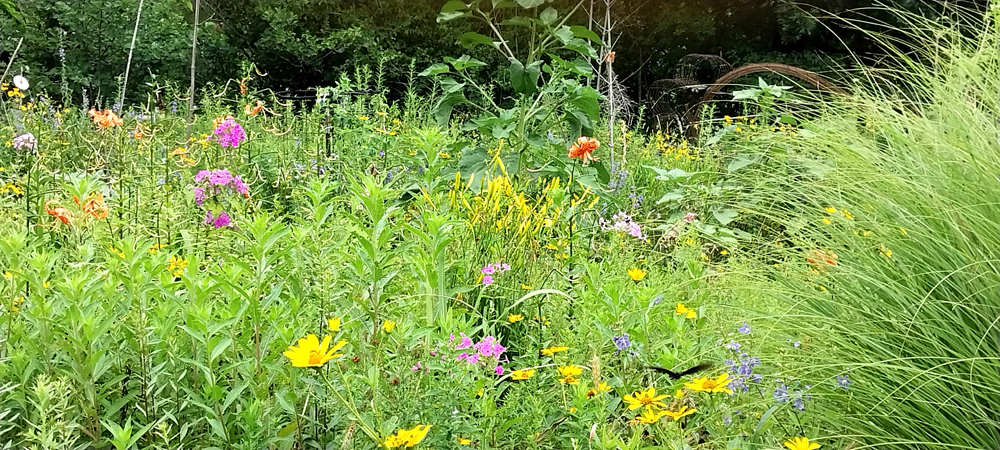
Lost in quiet contemplation, the shouts from the head gardener knock me out of my reverie. “What are you doing down on your hands and knees, staring at the ground? Have you lost your wits? What’s going on, we have serious weeding to do. The vitex needs pruning. There are thousands of mimosa seedlings everywhere. When will we get rid of those nuisance trees?!” I’m looking at her as she delivers her diatribe, amused, but trying to look castigated and ashamed, like a child whose hand is caught in the cookie jar.
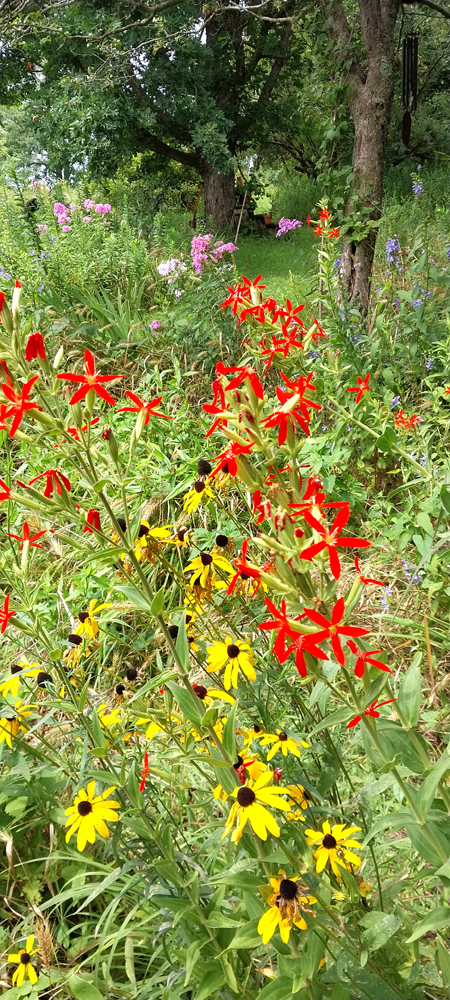
I’m doing what I’ve watched many people do as a way to relax, breathe deeply, and let everything float away, a mindless task. For my dad, it was looking for four-leafed clovers. He’d be down on all fours, looking, and always find one maybe two or three. We’d come home from school and find Mom sitting peacefully on the sofa, doing absolutely nothing.

For me on the morning the head gardener found me, I was digging out plantain, the broad-leafed weed the English brought to America. Granted it’s a medicinal plant. I’ll chew a leaf when I get in the way of a wasp and get a nasty sting or when I run my arm through a blackberry bramble, eager to get that juicy berry in the middle of the canes and have a bloody mess. I want to have a few select plantains around.
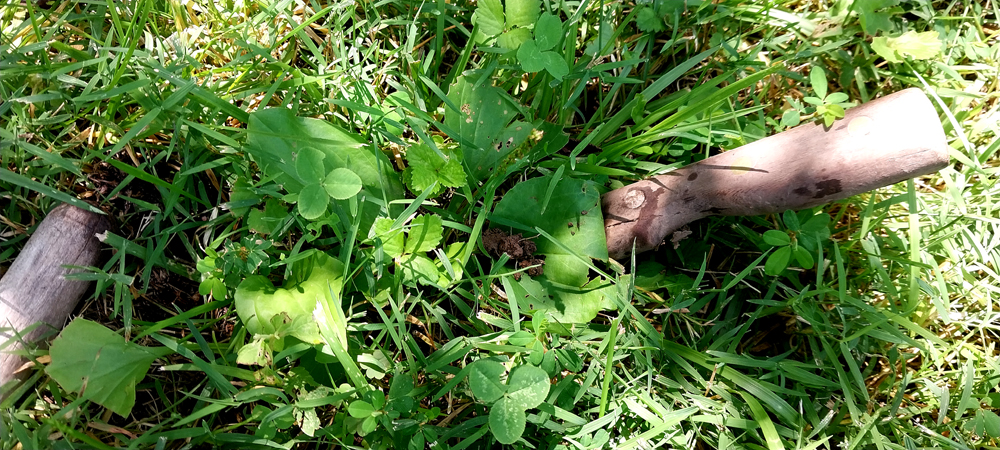
Longfellow talks about plantain in Hiawatha, calling it the white man’s foot. Everywhere the English stepped they left plantain in their wake. Because it’s a broad-leafed weed, nothing else will grow where it does. When I walk the maze of our gardens, I’ll notice plantain in all the paths. It’s been so wet this summer that I found I could bend over and pull out a plantain, effortlessly. I feel like a kid when I’m doing that, erasing the white man’s foot print. When I find a colony of six or more I kneel down to do the job. I carry an old butcher knife with me in case I encounter stubborn weeds and sometimes the grandmothers need convincing, their fibrous roots firmly established. The seed heads look like miniature cattails. Eunice, a crabby older friend from our early days, used to cuss at the seed heads and call them those “dratted weeds”. She took personal affront at their appearance and Ron would get out her lawn mower and cut them down. Her mood changed immediately and she became demure and sweet until the next offender assaulted her. Believe me, it could be anything!

I stood up, looked at the head gardener as all kinds of explanations rippled through my mind, but I know her, know how she’ll react and knew if I started philosophizing, which I love to do, she’d go into a tail spin. So, instead, I said, “Shall we get on with it?” And we did.
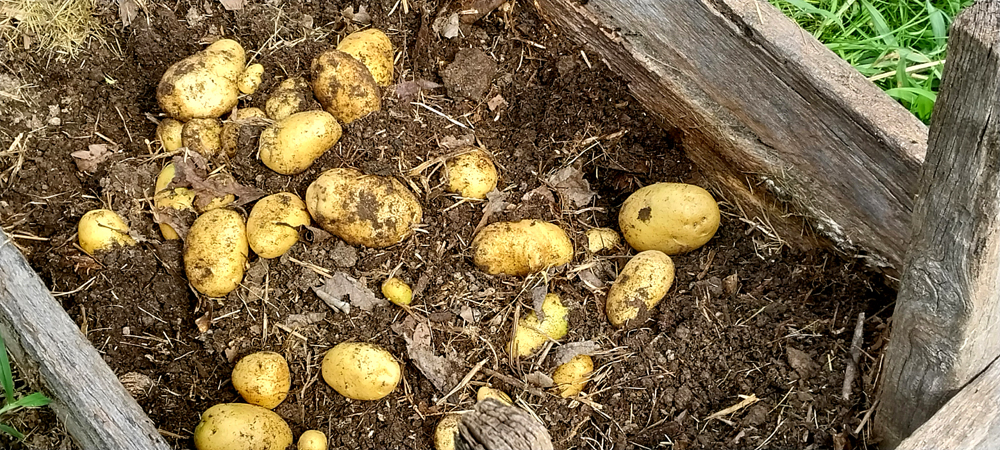
As we weeded, lifted the potatoes out of the straw, marveled at the beautiful summer kale, and admired the palette of color everywhere we looked I thought about how I’ve learned to love cantankerous people and even appreciate their take on this crazy world.

We never know everyone’s full story and my joke is, it’s always hemorrhoids that turns us into monsters of sorts. (I still remember that from giving birth.) We need each other even when we drive each other crazy. Always good to have a friend, or a professional, to help us see the light and navigate troubled waters.

No doubt the gardens, working with the earth, give me great pleasure and comfort. I eat simple summer meals, the heat making it unpleasant to make a fire for any longer than cooking a grain, roasting a few peppers or an eggplant, a patty pan squash. Soon I’ll have beans.
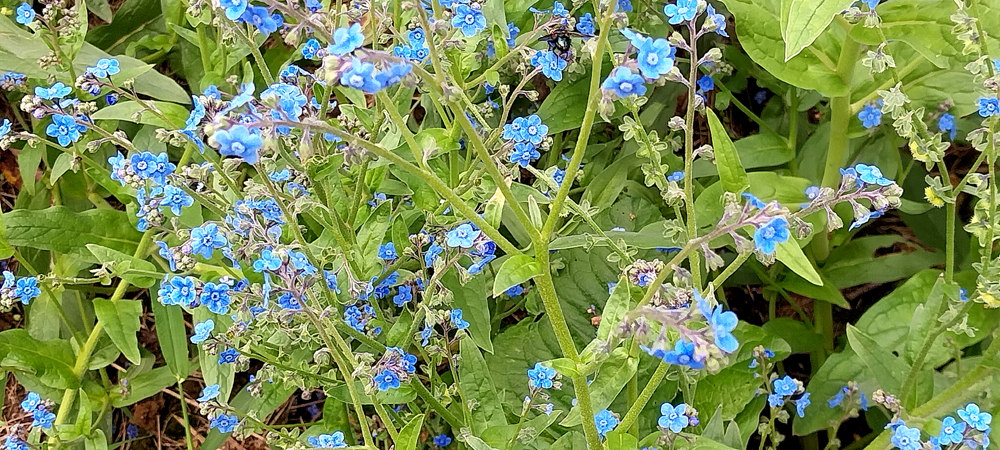
I sit on the summer kitchen when the sun’s in the west and look out at the colors enticing the pollinators. When it cools down enough, I walk the paths, picking and admiring the jungle-like growth as a new batch of pipe vine swallowtails flit in and out, dazzling me again and again. And if you see me bending down, you know another foot print has disappeared.


 How I Learned to Cook, an Artist's Life ─ Barbara Shark