by Mimi Hedl
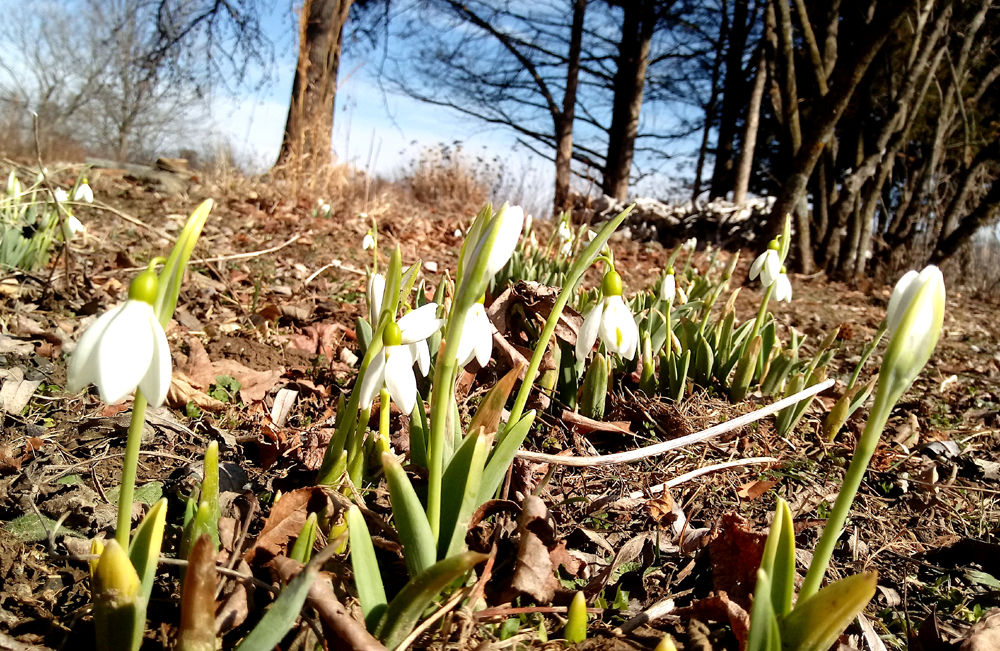
My daughter called while she drove Brady, my grandson, to school and I had a moment to say hello. I told him one week ago, it was 80° colder than today. He couldn’t believe it and said, “Wow!” On a 70° day, with sun pouring in, I try to remember what -10° felt like and the mindset I lived with those 3 weeks when the polar vortex made an appearance and decided to stay. Lots of the country was courted by a similar assault. We’ve learned new words to describe the uninvited guest.
In order to keep my sanity more or less intact, and to spend some time thinking about the coming spring, I decided to sit close to the fire and create woven plant protectors for some of my spring seedlings, the ones planted close to where the baby rabbits bed down. Last year they chose these young plants to play with, devastating the seedlings and the head gardener. It was not a pretty scene when she discovered the tyranny of the bunnies.
Over the years I’ve collected all kinds of vines and branches, roots and fibers, experimenting with their qualities. Some require drying and then re-soaking, as they shrink too much if not dried first, others, like honeysuckle, provide long weavers you can use fresh, or dry and then reconstitute. It’s a wonderful process to become acquainted with these materials and my fascination never ends. I find myself bending and weaving almost anything my hands touch.
For these teepeenies, or little teepees, I had fresh willow, dried willow, dried wisteria, and fresh native bamboo, plus some hazelnut branches Agnes and I had cut in warmer weather. I soaked what needed soaking and made a jig, then tried it out, making my first teepeenie. Hmmm, not so great. I made another and another.
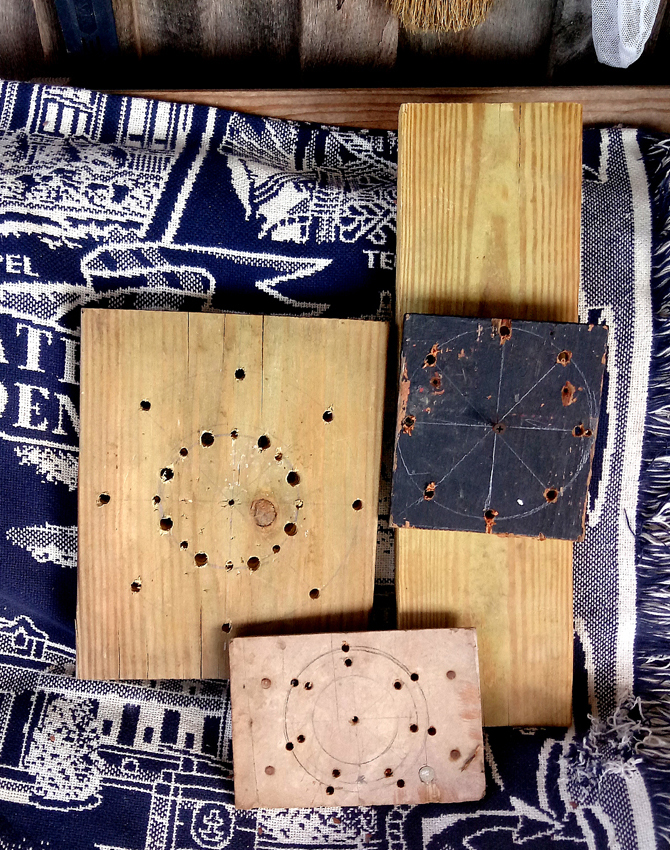
As I learned, I realized I needed stouter uprights and a bigger diameter for an adequate teepeenie. I drilled larger holes in the jig to hold the stout uprights that I’d weave together to form the structure of the teepenie. I saw more clearly what I needed to do as I worked with the materials. I made accommodations by the hour as some things didn’t work, with some materials too flimsy or not flexible enough. Only when I began to feel chilly did I realize I had another job to do and should haul in more wood before continuing.
This concentrated effort kept my fingers engaged, my mind on spring and my admiration for weaving materials, and of weaving, alive. I would regroup each morning after my chores, a good breakfast and coffee, and see what I could come up with. From this photograph you can see the different materials and the different results.
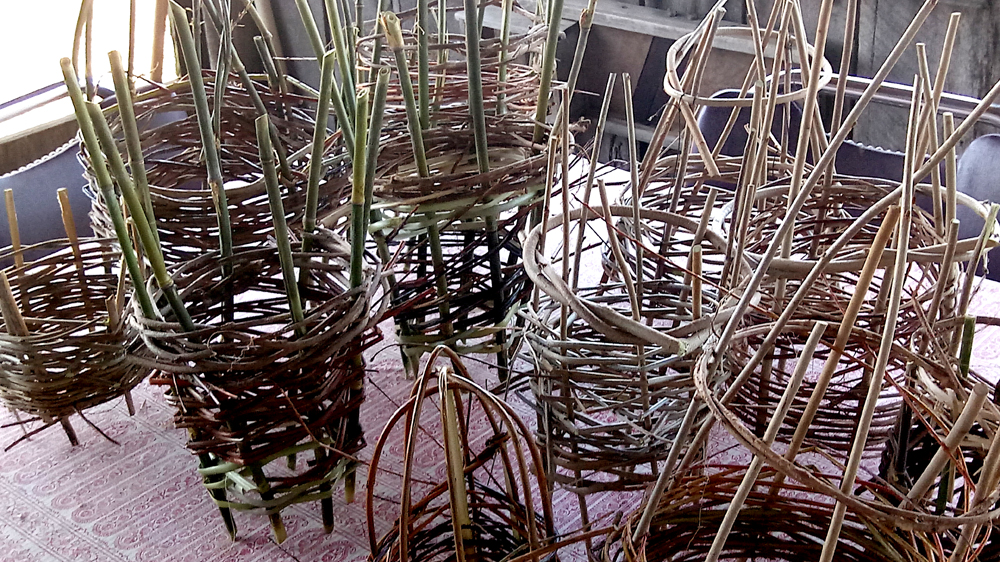
The teepeenie who won first prize has fresh, green, native bamboo uprights and split green bamboo weavers at the base. The strength of the uprights and the weavers made this teepeenie a winner. It held together tightly so I could weave the rest using a randing weave* that will keep rabbit paws from reaching inside the frame. The way the bamboo uprights stick straight up, will keep the deer from nosing in to see if there’s anything good to eat. I’ll push the 8 uprights into the soil, adding a couple more bamboo pieces to stake the teepeenie firmly in place so no one can tip it over. Then I’ll watch the critters disprove my theories ─ a common event for any gardener who thinks she’s outfoxed the fox.
These supports will come out once the plants grow large enough to fend for themselves and rabbits have other delicacies to nibble on. Most of the teepeenies will survive for another season or two and in the meantime, more data will be collected for future frames.
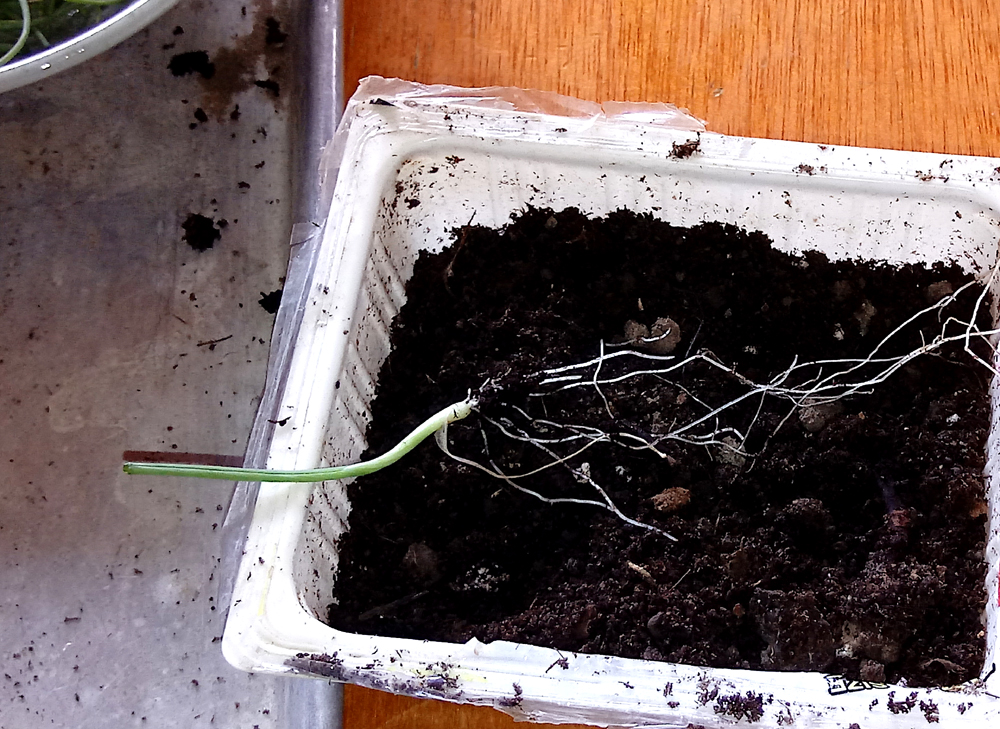
When the weather warmed up to a high of 15°, I ventured away from the fire and onto the kitchen table, my winter transplanting site. The onion and asparagus seedlings had outgrown their flats and needed more room, the onions a haircut to stimulate bulb growth. Roots on seedlings mimic tree roots, the only difference being size. The roots have to anchor this onion and have succeeded, with loose soil to guide them. Once the seedlings go into the garden they will plow through the earth and find their home in deeper ground. The worms have created tunnels for them to glide through and for the rootlets to pick up nutrients, a process I marvel at when I see brand-spanking-new roots.
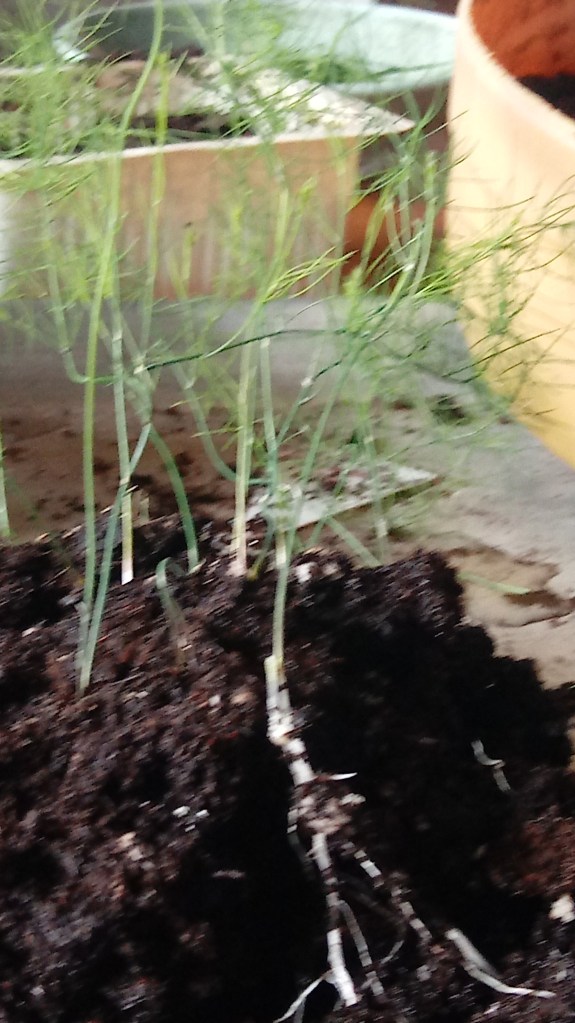
This asparagus seedling has another baby asparagus popping up. I know the focus is poor on this photograph, but I wanted you to see the lilliputian spear. And the roots too! This seedling, one month old, is 8” tall and has roots to match. We’ve grown all our asparagus from seed and a patch will produce reliably for 20 years, plus. After that, the crowns tend to crowd each other and the production declines, though you’ll always find some asparagus, just not prime spears.

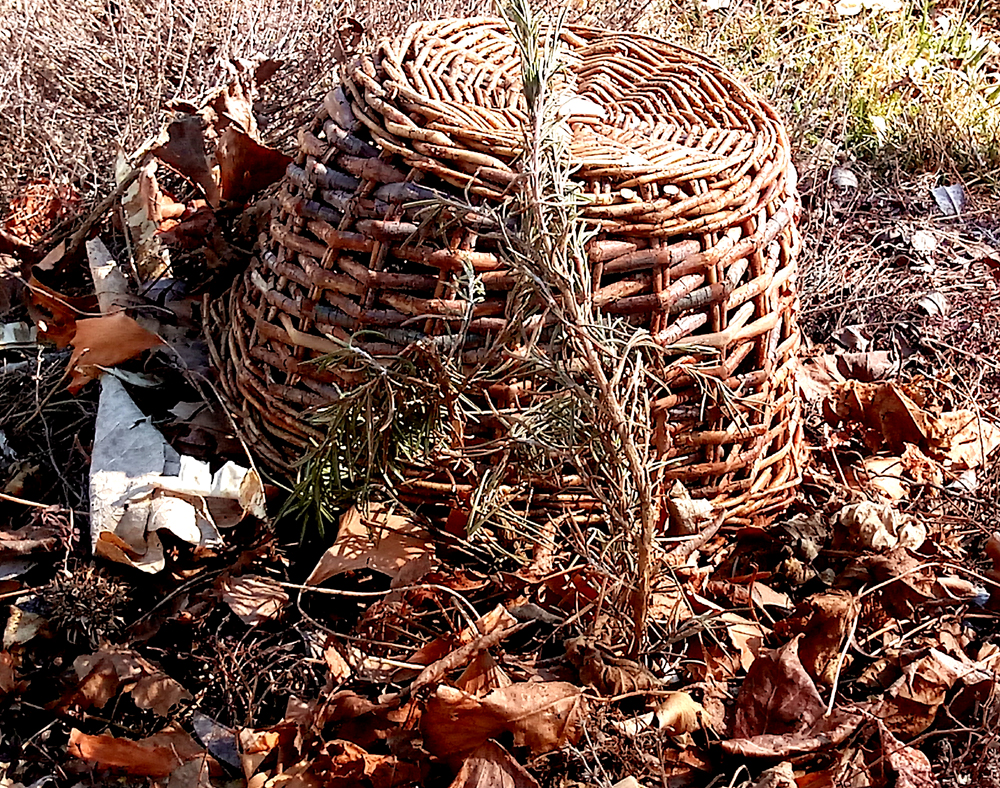
One of the other jobs Agnes and I did before the “visitor” arrived was to cover the snowdrops that had begun to bloom. We raked leaves over them, as well as the rosemary plant in the culinary garden. After the vortex left, going wherever it goes after it’s done it’s work, I went out to see the snowdrops, undaunted, and the first of the winter aconites in bloom. The rosemary survived, if a little worse for wear. After such an ordeal, I feel more like the rosemary than the snowdrops.
*When you rand, you have one rod for each upright, and you weave one after the other. For these frames, I used two rods instead of one, so I could build the walls faster, as they didn’t need to be strong, simply a barrier.



 How I Learned to Cook, an Artist's Life ─ Barbara Shark